Hunting Manitoba’s Sandhill Crane Fields
The sight of immense flocks of sandhill cranes descending on Manitoba’s grain fields is something truly unforgettable, and the hunt for these wary birds offers a unique challenge unlike any other. Many hunters, accustomed to waterfowl or big game, find themselves scratching their heads when it comes to consistently decoying these intelligent birds. This guide aims to break down the specific tactics and preparations needed to successfully hunt sandhill cranes in Manitoba, helping you unlock the secrets to a rewarding field experience.
The Allure and Challenge of Hunting Sandhill Cranes in Manitoba
Manitoba stands as a critical staging ground for hundreds of thousands of sandhill cranes during their annual migration, making it a prime destination for hunters seeking this distinctive experience. While undeniably rewarding, crane hunting presents its own set of puzzles that require careful thought and adaptation. These birds are incredibly intelligent, possess keen eyesight, and often exhibit patterns that can shift daily, leaving many hunters frustrated if they don't understand the nuances.
Understanding Crane Presence and Patterns
Sandhill cranes, often called "ribeye of the sky" for their surprisingly delicious meat, are a truly magnificent bird. They arrive in Manitoba typically starting in late August and through September, making a crucial stopover on their southbound journey. Unlike ducks and geese, which often respond well to large, aggressive decoy spreads and loud calling, cranes tend to be more reserved. They often prefer to observe a field for a good long while before committing, circling high above and meticulously scrutinizing the setup below. This means a successful hunt hinges less on sheer numbers of decoys and more on realism, concealment, and understanding their flight dynamics. Their patterns are dictated primarily by food availability in harvested fields, prevailing winds, and their internal migratory clock. Observing their undisturbed behavior is key to understanding where they want to be.
Why Manitoba is a Sandhill Crane Hotspot
Manitoba's vast agricultural landscape, particularly its endless grain fields, acts as a gigantic buffet for migrating sandhill cranes. The province sits squarely in the Central Flyway, a superhighway for migratory birds heading south from their northern breeding grounds. As they travel from places like Alaska, the Yukon, and the Northwest Territories, they find abundant energy-rich food sources in Manitoba's wheat, barley, and pea stubble fields, allowing them to refuel before continuing their long journey. This combination of prime habitat and a strategic geographical location means that during the peak migration, certain areas of Manitoba can hold incredible concentrations of these birds. The sheer volume of cranes passing through, combined with often stable early fall weather, creates fantastic opportunities for hunters willing to put in the work. Understanding "Manitoba's Sandhill Cranes and Their Migration" is foundational to timing your hunt correctly and knowing which regions hold the most promise.
Essential Scouting for Field Success
You simply cannot overstate the importance of diligent scouting when it comes to hunting sandhill cranes. These birds are highly mobile, and their preferences for specific fields can change daily based on pressure, weather, and food availability. A field that was hot yesterday might be cold today, making real-time intelligence crucial.
Pre-Season Digital Scouting and Tools
Long before you even set foot in a field, a significant amount of scouting can be done from the comfort of your home. Satellite imagery and digital mapping tools are indispensable. Platforms like GoHunt, for instance, allow you to pore over aerial views of potential hunting areas, identifying large grain fields, particularly those with standing water nearby, or areas with distinct topographical features that might influence bird movement. You'll be looking for large, open fields that have been harvested, especially those that historically hold large numbers of waterfowl or other migratory birds. Identify potential roosting areas (often large, shallow water bodies) and connect the dots to feeding fields. This initial digital pass helps you narrow down vast tracts of land into manageable zones for in-person reconnaissance, saving you valuable time and fuel. It's a fantastic way to begin Scouting Fields for Manitoba Waterfowl, which often overlap with crane preferences.
In-Field Reconnaissance and Observation
Once you have your digital targets, it's time to hit the road. This is where the real work begins. The absolute best way to locate active crane fields is to drive around during the late afternoon and early evening, observing flight patterns and where birds are landing to feed. Cranes often fly in distinctive V-formations or long, undulating lines, and their unmistakable calls carry a long way. Look for fields where cranes are actively feeding, noting their numbers, specific areas they prefer, and the general direction they are coming from and going to. Pay attention to how they approach fields, often circling several times before committing. Morning scouting is also valuable to see where they fly from their roost. Drive slowly, use binoculars or a spotting scope, and keep a respectful distance so as not to spook the birds you intend to hunt. Patience during this phase is paramount, as a rushed scout can lead to a wasted hunt.
Securing Landowner Permission
This step is critical and often overlooked, but without it, all your scouting is for naught. Most of Manitoba's productive grain fields are on private land, which means you must obtain explicit permission from the landowner before hunting. Never assume access. The best time to ask for permission is often well in advance of the season, or during the mid-day when farmers are less busy. Be polite, well-dressed, and be clear about your intentions. Offer to share some of your harvest or help with any crop damage the cranes might be causing. A good relationship with a landowner can secure you hunting access for years to come. Remember, "Manitoba Landowner Permission Law" dictates that you need permission, and failure to get it can result in trespassing charges and fines. For more tips on approaching property owners, check out our guide on Getting Permission for a Goose Field, as many principles apply.
Gear Up for a Successful Crane Hunt
Having the right gear is non-negotiable for a comfortable and productive sandhill crane hunt in Manitoba. These birds present specific challenges, and your equipment should be tailored to meet them.
Decoys and Concealment Strategies
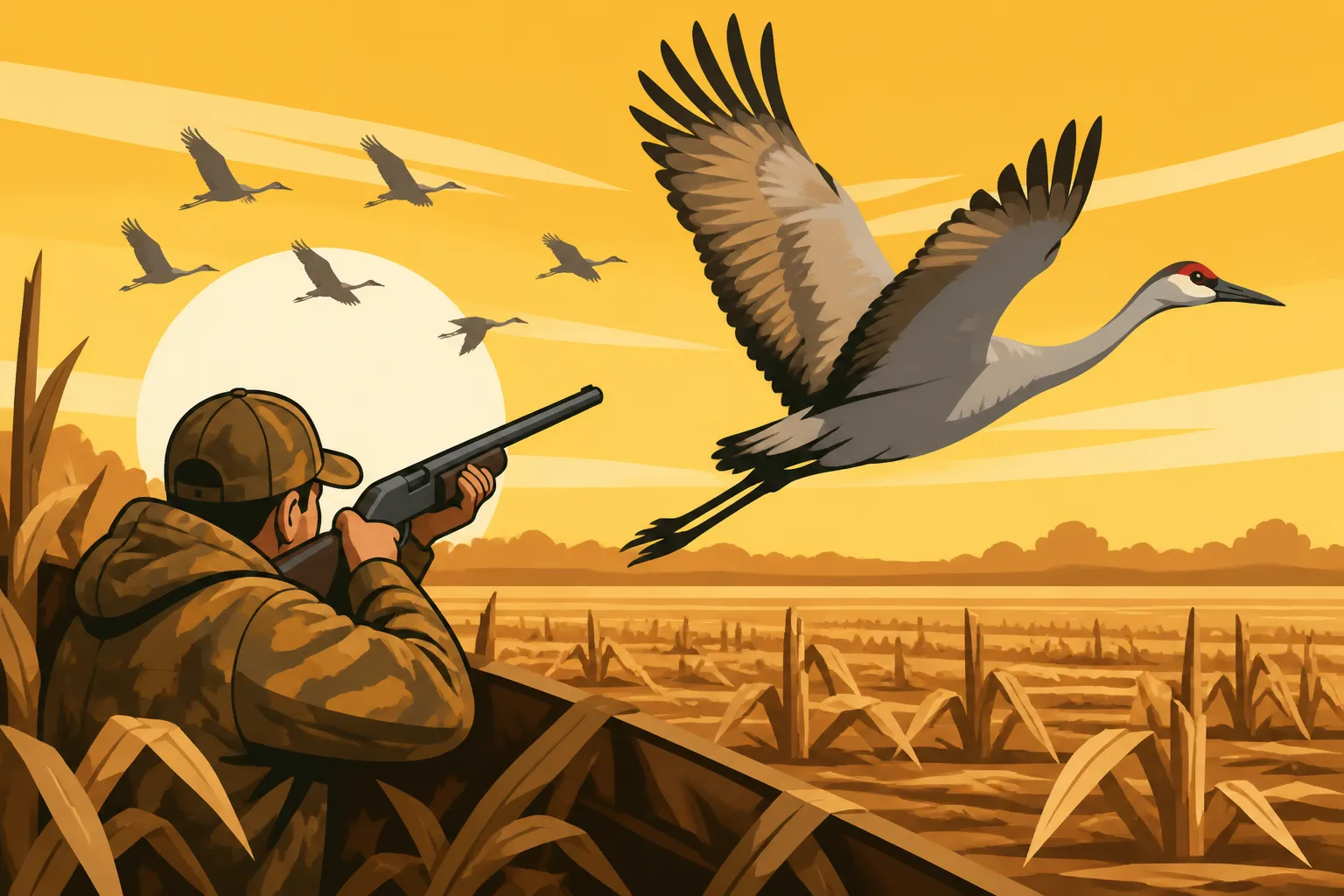
Sandhill crane decoys are a specialized item, and while you might be tempted to use goose decoys, dedicated crane decoys are much more effective due to their unique size and profile. Full-body decoys are generally preferred for realism, though well-placed silhouettes can also work. You’ll want a minimum of 12-24 decoys, but larger spreads (30-50+) can be even more effective in drawing in large flocks. Positioning them in realistic family groups or feeding clusters adds to the illusion. As for concealment, cranes have exceptional eyesight. Layout blinds are the go-to choice for field hunting. They allow you to lie low and pop up when the birds are committed. However, simply having a blind isn't enough; you must brush it in thoroughly. Use local vegetation from the field you’re hunting—stubble, grass, corn stalks, whatever is available—to break up the outline of your blind. Even a slight glint or unnatural shape can flare wary birds. Consider using a thin layer of mud or dull paint on any exposed parts of your blind to eliminate shine.
Shotgun and Non-Toxic Ammunition Choices
When it comes to firearms, a 12-gauge shotgun is typically the standard, though a 10-gauge can offer a bit more punch. Make sure your shotgun can handle 3-inch or 3.5-inch shells. For chokes, modified or improved modified are good starting points, offering a balance of pattern density and spread at typical shooting ranges. However, the most critical consideration for sandhill cranes, like all migratory game birds, is the use of non-toxic shot. Steel shot, bismuth, or tungsten-iron blends are all acceptable. Lead shot is strictly prohibited for migratory birds across Canada. For sandhill cranes, given their large body size and tough feathers, you’ll want a larger shot size, generally BB, BBB, or even T shot in steel. If you’re using denser, more expensive non-toxic alternatives like bismuth or tungsten, you might be able to drop down to a 1 or 2 shot size and still achieve excellent penetration. Always confirm "Non-Toxic Shot Requirements for Waterfowl" before heading afield, as rules are strictly enforced. The goal is a clean, ethical kill, and that starts with the right ammunition.
| Gear Category | Recommended Item | Key Considerations |
|---|---|---|
| Decoys | Full-body Sandhill Crane Decoys (12-50+) | Realism, size, quantity for visibility, realistic placement |
| Concealment | Layout Blinds or A-Frame Blinds | Must be brushed in with local vegetation, eliminate shine |
| Shotgun | 12-gauge (3" or 3.5" chamber) or 10-gauge | Reliable, appropriate choke (Modified/Improved Modified) |
| Ammunition | Non-Toxic Shot (Steel BB, BBB, T; Bismuth/Tungsten 1, 2) | Legal requirement, sufficient knock-down power for large birds |
| Optics | Binoculars (10×42) or Spotting Scope (20-60x) | For scouting, identifying distant birds |
| Calls | Quality Sandhill Crane Call (mouth or electronic) | Realistic vocalizations, ability to vary tone |
| Apparel | Camouflage clothing, layered for warmth/comfort | Blend with surroundings, protect from elements, blaze orange rules for other hunting might apply outside crane fields |
| Accessories | Dog (trained retriever), Headlamp, Water, Snacks | Essential for bird recovery, safety, comfort |
Master Your Field Setup and Calling
Once you’ve scouted your field and gathered your gear, the next critical steps involve the precise deployment of your decoys and the art of calling to bring those wary cranes within range.
Effective Decoy Spreads and Landing Zones
Setting your decoy spread isn't just about putting them out; it's about telling a story that makes approaching cranes feel safe and confident. Cranes typically feed in family groups, so avoid scattering your decoys uniformly. Instead, create several smaller, distinct clusters of 3-5 decoys each, mimicking natural feeding behavior. Crucially, pay attention to the wind. Cranes, like all large birds, prefer to land into the wind. Therefore, create a large, open "landing zone" in your spread directly upwind from your blinds. This funnel directs them right into your shooting lane. A common effective layout is a "J" or "U" shape, with the hook or opening facing upwind, and the blinds positioned at the bend or base of the "J" or "U." This naturally funnels birds over your position. Sometimes, adding a few Canada goose decoys on the periphery can add another layer of realism, as cranes and geese often feed in the same fields. Consider how Hunting a Swathed Grain Field at Dusk often involves similar decoy strategies to attract wary birds.
Blending In and Calling Techniques
Your concealment needs to be absolute perfection. As mentioned, cranes possess incredible eyesight. Any shine, unnatural movement, or exposed skin can instantly flare a flock. Ensure your layout blinds are completely covered with local stubble or vegetation. Wear face masks and gloves, and make sure no bright clothing is visible. Once you’re hidden, the calling begins. Sandhill crane calls are distinct – a loud, trumpeting, rolling sound. Unlike ducks and geese, you generally don't need to call as aggressively. Start with soft, contented feeding clucks and a few low rumbles to imitate birds already on the ground. When you see birds in the distance, use a louder, more urgent call to get their attention, mimicking a greeting or a flock calling to others. As they get closer, ease off the aggressive calling and revert to softer, reassuring clucks and purrs. If they start to circle, a few well-timed, pleading calls can sometimes be enough to tip them over the edge. It’s a delicate balance, and over-calling can be just as detrimental as not calling enough.
The Hunt: Strategy, Ethics, and Recovery
The moment of truth in a sandhill crane hunt is exhilarating, but it's essential to maintain focus on ethical shooting, efficient recovery, and proper meat care to honor the bird.
Making the Shot and Ethical Practices
Once cranes commit to your spread and are working their way into your landing zone, patience is paramount. Don't call the shot too early. Let the birds get close, ideally with their feet down and wings cupped, before anyone rises. Cranes are large targets, but their vitals are not as extensive as their body mass might suggest. Aim for the head and neck or the forward half of the body. Take your time, focus on one bird, and swing through the target. If hunting in a group, communicate clearly. Designate a "caller" who also calls the shot, ensuring everyone rises simultaneously and shoots at different birds to maximize success and avoid unnecessary wounding. After the shot, be prepared for follow-up shots if necessary. Maintaining ethical practices means ensuring a quick, humane kill and minimizing cripples. When hunting areas that might also hold other species, always identify your target clearly. For example, if you're Hunting a Standing Canola Field Edge, you might also encounter geese, so positive identification is critical.
Efficient Retrieval and Meat Care
Sandhill cranes are big birds, and if not anchored, they can run a surprising distance, even with a mortal wound. A well-trained retrieving dog is an invaluable asset for recovering downed birds quickly and efficiently, especially in thick stubble or tall grass where a bird can vanish in seconds. If you don't have a dog, mark where each bird falls and walk directly to it without deviation. A prompt recovery not only prevents lost game but also ensures the highest quality meat. Once recovered, field dressing should happen as soon as possible. Remove the entrails and, if conditions allow, breast out the bird immediately. The breast meat is often the prize. Cranes have a robust flavor, and proper care prevents the meat from spoiling. If temperatures are mild, bring a cooler with ice to store the breasts, especially if you're planning on being in the field for an extended period. For guidance on preserving your harvest in fluctuating temperatures, our article on Meat Care in Manitoba's Cold Snaps offers valuable advice, even for early fall hunts.
Disclaimer
Please be aware that hunting regulations, seasons, and licensing requirements can change. Always consult the most current Manitoba Hunting Guide and relevant federal regulations (such as those for the Federal Migratory Game Bird Permit and Manitoba Game Bird Seasons and Limits) before planning any hunt. Ensure you understand and comply with all rules regarding non-toxic shot, bag limits, and legal hunting hours. Safety should always be your top priority in the field.