Tipping the Cook and Camp Staff
One common source of anxiety for hunters embarking on a guided trip, especially to a new place like the vast wilderness of Manitoba, isn't just about bagging that trophy. It's often the unspoken social graces of camp life, particularly when it comes to expressing gratitude to the hardworking individuals who make the whole experience possible. Many hunters stress over the expectation of tipping the guide, but often overlook or feel confused about how to properly acknowledge the cook, the camp hand, and other support staff who work tirelessly behind the scenes. This guide will help demystify the art of tipping your camp staff, ensuring you can show your appreciation without any awkwardness, allowing you to focus on the thrill of the hunt.
Understanding the Camp Ecosystem and Why Tipping Matters
When you arrive at a remote lodge or camp in Manitoba, ready to pursue Whitetail Hunting in Manitoba or Black Bear Hunting in Manitoba, it's easy to see your guide as the primary point of contact and the person most directly responsible for your success. And while that's certainly true, the reality is that a successful, comfortable, and memorable hunting trip is a collective effort, a true team sport. The camp operates like a well-oiled machine, and every single cog in that machine plays an indispensable role.
The atmosphere, the food, the cleanliness, and the sheer logistics involved in running a hunting camp, especially in Manitoba's wilder regions, are immense. You're not just paying for a guide's expertise; you're paying for a full-service experience that starts long before you arrive and continues long after you've departed. Recognizing this broader contribution helps contextualize why tipping extends beyond just your personal guide. It's about acknowledging the entire support system that makes your adventure seamless.
The Unseen Labor Behind Your Hunting Experience
Think for a moment about everything that happens in a hunting camp. Before you even set foot in the door, someone stocked the pantry, ensured the propane tanks were full, and perhaps even cleared snow from the access road if you're Hunting Safely in Deep Winter Cold. During your stay, while you're out in the bush or calling for Calling Moose in Manitoba's Boreal Forest, someone is back at camp making sure a hot, hearty meal is ready for your return. They're scrubbing pots, cleaning cabins, and often handling the less glamorous but absolutely essential tasks that keep everything running smoothly.
Consider the cook: they're not just whipping up basic grub. In many Manitoba camps, cooks prepare incredible, often homemade meals, sometimes catering to dietary restrictions, all from a remote kitchen. They start early, often before the guides and hunters are even stirring, and they finish late, after everyone else has gone to bed. Their efforts directly impact your energy levels, your morale, and frankly, how much you enjoy your downtime in camp. A good cook can turn a good hunt into a great memory. Then there are the cleaners who ensure your cabin is tidy, your bed is made, and the shared spaces are comfortable – vital after a long, cold day in the field. This level of service is a huge part of the overall value of a guided hunt.
Beyond the Guide: Who Else Makes Your Hunt Possible?
Beyond the cook and the cleaner, there can be a host of other dedicated individuals making your hunt a success. This might include dedicated camp hands who maintain the facilities, chop firewood, haul water, or ensure the generator is running. In some larger operations or specialized hunts, you might also encounter assistant guides who help with tracking or retrieving, or even dedicated skinners who ensure your trophy and meat are handled properly back at camp. For instance, after a successful Black Bear Hunting in Manitoba trip, the effort involved in skinning and getting that hide properly cooled or salted is substantial, and often done by specialized camp staff.
These individuals often work incredibly long hours, frequently in challenging conditions, and their efforts directly contribute to the safety, comfort, and logistical success of your hunt. While your main guide is out spotting game and strategizing, these folks are ensuring you have a warm bed, clean facilities, and delicious food. They are the backbone of the operation. When you book a trip through platforms like BookYourHunt or GoHunt, the listed price often covers the guiding service, lodging, and food, but the expectation of acknowledging these additional service providers through tips is a deeply ingrained custom in the hunting industry. It's their way of earning extra income and recognizing their hard work, much like in the restaurant or hospitality industry.
Deciphering Tipping Norms for Camp Staff in Manitoba
So, you understand why you should tip the camp staff, but the big question always boils down to how much and how. Unlike a guide, where a percentage of the hunt cost or a daily rate is often discussed, tipping for camp staff can feel a little more ambiguous. However, there are general norms that most reputable Manitoba outfitters and hunters adhere to, and understanding these can alleviate a lot of that pre-trip stress.
It’s important to remember that these are gratuities – an expression of appreciation for service. While there are expectations, the amount can and should reflect the quality of service you received. If you felt exceptionally well-cared for, and the camp staff went above and beyond, that should be reflected in your tip. Conversely, if service was substandard (though this is rare in well-run camps), you have the discretion to adjust.
The Standard Percentages and Daily Rates
For camp staff, tipping is generally handled in a couple of ways: either as a flat percentage of the overall hunt cost, which is then distributed amongst the staff, or as a daily rate per staff member. A common practice is to allocate a smaller percentage of the total tip pool (separate from your guide's tip) to the camp staff, or a fixed daily amount per person.
A good rule of thumb for support staff (cook, cleaner, camp hand, etc.) is often in the range of $50-$100 per staff member for a typical 5-7 day hunt, or perhaps $15-$25 per day, per staff member. This might seem like a broad range, but it accounts for different levels of service and varying camp sizes. For instance, in a very small, intimate camp where the cook might also be the cleaner and camp hand, their contribution is even more significant. Often, outfitters will provide guidance on this, which can be immensely helpful. Don't hesitate to ask your outfitter about their recommended tipping practices when you're making arrangements, perhaps during your Manitoba Trip Planning Timeline. This shows you're prepared and considerate.
Factors That Influence Your Tipping Decisions
Several elements can and should play into your decision on how much to tip the camp staff. It’s not just a blanket rule; it's about context.
- Quality of Service: This is paramount. Did the cook go out of their way to make your favorite dessert? Was the camp always impeccably clean? Did a camp hand help you with a minor issue above and beyond their duties? Exceptional service warrants a more generous tip.
- Duration of the Hunt: A longer hunt means more days of service, more meals, more cleaning, and more sustained effort from the staff. A seven-day hunt generally warrants a higher total tip than a three-day excursion.
- Camp Size and Staffing: In a smaller camp with fewer staff members, each individual's role is often more encompassing and demanding. In larger lodges, tasks might be more specialized. Consider the workload each person is taking on.
- Overall Cost of the Hunt: While not a direct factor for camp staff as it is for a guide, sometimes hunters consider their overall expenditure. However, try to decouple this somewhat, as the staff's efforts are independent of the hunt's price tag.
- Difficulty of the Work: Operating a camp in a remote northern Manitoba location, or during extreme weather conditions like those experienced when Hunting Whitetails at Thirty Below, adds a layer of difficulty to every camp chore. Acknowledging this can be part of your tipping decision.
Here's a general guide to help you consider your tipping strategy for camp staff:
| Staff Role | Typical Daily/Hunt Contribution | Suggested Tipping Range (per hunter, per day/hunt) | Notes |
|---|---|---|---|
| Cook | Meal preparation, dietary needs, kitchen cleanup, morale booster | $15 – $25 per day / $75 – $150 per hunt | Often the most vital non-guiding role; directly impacts comfort and energy. |
| Camp Hand/Maintenance | Firewood, water, generator, general repairs, heavy lifting, logistics | $10 – $20 per day / $50 – $100 per hunt | Keeps the camp infrastructure running; invaluable in remote settings. |
| Cleaner/Housekeeper | Cabin tidiness, shared facility cleanliness, laundry | $10 – $15 per day / $40 – $75 per hunt | Ensures a comfortable, hygienic environment after long days in the field. |
| Skinner/Meat Handler | Field dressing assistance, skinning, meat care, caping | $15 – $25 per day / $50 – $100 per animal | If not the guide, this role is crucial for trophy and meat preservation. Tip per animal if they handle multiple. |
Note: These are general ranges and can vary based on individual camp practices, overall hunt cost, and the specific duties performed by staff.
Practical Advice for Handling Tips in Camp
Now that you have a better idea of who to tip and roughly how much, the next step is actually executing it in camp. This can sometimes feel a bit awkward, especially if you're not used to it. The goal is to be discreet, respectful, and ensure your gratitude reaches the intended recipients. Remember, a tip is a token of appreciation, not a transactional payment.
Being prepared before you even leave home is key. Having cash, properly organized, can save you a lot of hassle and potential embarrassment once you’re in the field, far from any ATMs or banking facilities in Manitoba's more remote areas. Outfitters typically address this topic in their pre-trip information, so make sure to review anything they send you, as it might include specific advice on How Tipping Works on a Guided Hunt for their operation.
Cash Versus Other Methods
Cash is king when it comes to tipping in a hunting camp. Period. Most camp staff members aren't set up to accept debit, credit, or e-transfers, and handling those logistics in a remote setting is often impossible. Having crisp, new bills in various denominations allows you flexibility and discretion.
When preparing your cash:
- Separate Envelopes: A great practice is to put each staff member's tip in a separate, clearly labeled envelope. This ensures privacy and clarity. You can also label one "Camp Staff" if you intend for the outfitter to distribute a collective pool.
- Outfitter's Preference: Some outfitters prefer to collect all tips for camp staff and distribute them evenly. This ensures no one is missed and that tips are handled fairly, especially if staff rotate or are behind the scenes. Others prefer you tip directly. Always check with your outfitter beforehand. This might be a question to ask when you are vetting a potential outfitter, or looking into Manitoba Outfitters in the Parkland or elsewhere.
- Discretion: While showing appreciation is good, making a grand public display of handing out cash can sometimes be uncomfortable for everyone involved. Try to find a quiet moment to pass on your thanks.
While some outfitters might accept adding tips to a final bill paid by credit card, this is less common for camp staff tips than it is for the head guide. Always assume cash is preferred and necessary unless explicitly told otherwise by the outfitter.
When and How to Present Your Tips
The timing of your tip presentation can also make a difference. Generally, it's best to tip towards the end of your trip, but before you actually depart. This gives you time to observe the service and decide on the appropriate amount, and it gives the staff time to receive and acknowledge your gratitude before they get busy with the next group of hunters.
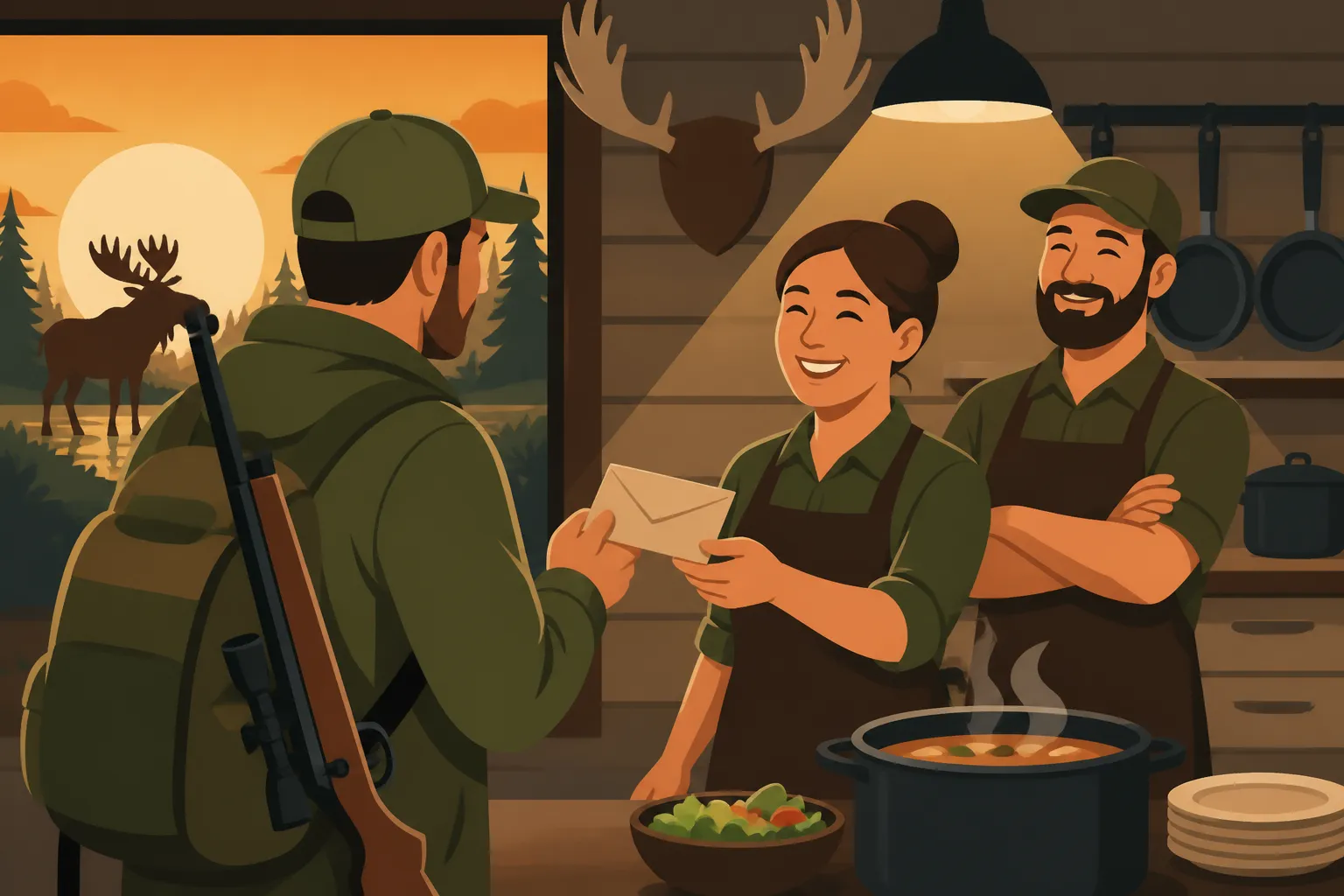
- For the Cook/Hostess: Often, a good time is after your last dinner or at breakfast on your departure day. You might catch them in the kitchen or dining area. A simple "Thank you so much for the incredible food and hospitality, we really appreciate everything you've done" along with the envelope is usually perfect.
- For General Camp Staff: If you've had direct interaction with a specific camp hand or cleaner, you can hand them their envelope directly. If you don't interact with certain staff often, or if the outfitter prefers, you can give a collective camp staff tip to the outfitter (or the head guide) and ask them to distribute it. This is a common and perfectly acceptable practice.
- In Your Cabin: If a cleaner has been exceptionally attentive, sometimes leaving a small, personal note with cash in your cabin on the last day is a thoughtful gesture, similar to how one might tip housekeepers in a hotel.
The key is sincerity. A heartfelt "thank you" goes a long, long way when accompanied by a well-deserved tip. It’s not just about the money; it's about recognizing their contribution to your overall memorable experience, whether it was Hunting the Rut in Early to Mid November or enjoying a late-season Rifle Hunting Manitoba's Whitetail Rut.
Avoiding Awkward Situations and Ensuring Fairness
Tipping should be a positive experience for both the giver and the receiver, a genuine expression of gratitude. No one wants to feel awkward or unsure when they’re trying to do something good. Being proactive and having a clear plan will help prevent any uncomfortable moments and ensure that everyone who contributed to your fantastic Manitoba hunting adventure is appropriately recognized.
Remember that these individuals often rely on tips to supplement their income, and your thoughtful contribution can make a real difference to them, especially after a season of hard work in remote areas of Manitoba. Good communication with your outfitter is truly the best defense against any confusion.
Communicating with Your Outfitter About Tipping
Before your trip, whether you've booked directly with one of the many Manitoba Hunting Lodges and Camps or through a booking platform, take the initiative to ask about their specific tipping policies for guides and camp staff. This is not an intrusive question; it shows you are a considerate client who respects their operation and their team.
Questions you might ask:
- "What is the typical tipping etiquette for the cook and camp staff?"
- "Do you prefer that I give tips directly to staff, or should I leave a collective amount for you to distribute?"
- "Is there anything specific I should know about tipping in your camp?"
- "Are there any staff members whose roles are less visible but equally deserving of recognition?"
An ethical and well-run outfitter will appreciate your proactive approach and will be happy to provide clear guidance. This helps set expectations for everyone involved and ensures that your generosity is directed appropriately. It’s also a sign of a professional outfit when they can transparently discuss this aspect of their business.
Tipping as a Group versus Individual Contributions
Deciding whether to pool tips with other hunters in your group or to handle your contributions individually is another consideration. Both approaches have their merits.
- Group Tipping: This can be simpler logistically, especially for larger groups. One person can collect funds from everyone and present the collective tip. It can also ensure a more consistent tip level per staff member. However, it requires good coordination within your group, and individual hunters might feel their specific appreciation (or dissatisfaction) isn't adequately reflected. If going this route, decide early on who will be the "treasurer" for the group.
- Individual Tipping: This allows you to personally thank each staff member you interact with and tailor your tip based on your individual experience and assessment of their service. It provides a more direct personal connection. The downside is that it can feel more cumbersome if there are many staff members, and some less visible staff might be overlooked.
Ultimately, there's no single "right" answer, but clear communication within your hunting party is crucial if you opt for group tipping. Before you head out on your hunt, perhaps after discussing what to pack for What to Bring to a Manitoba Deer Camp, have a quick chat with your hunting buddies about how you’ll handle tips for both the guide and the camp staff. Agreeing on a strategy beforehand removes any last-minute scrambling or misunderstandings. Whatever method you choose, the sentiment behind the tip – your genuine appreciation for their hard work and dedication – will be what truly resonates with the incredible team that made your Manitoba hunting trip possible.
Disclaimer
This article is for general informational purposes only and does not constitute professional advice. Laws, prices and regulations vary by location and change over time. Consult a qualified professional for guidance on your specific situation.