How Waterfowl Guides Scout Fields Daily
One of the most challenging aspects of waterfowl hunting, especially for those new to Manitoba's vast expanses, is consistently finding where the birds want to be today. You can spend hours driving roads, glassing fields, and still come up empty-handed, leaving you wondering if you're even in the right country. This guide is all about pulling back the curtain on how professional waterfowl guides in Manitoba dedicate themselves to daily scouting, ensuring their clients are always in the prime spot when the hunting day begins.
The Relentless Pursuit: Why Daily Scouting is Non-Negotiable
Hunting migratory birds like ducks and geese in Manitoba is a game of constant change. Unlike deer that might stick to a specific woodlot or moose that prefer certain boreal pockets, waterfowl are here today, gone tomorrow, driven by feed, weather, and hunting pressure. For a guided operation, showing up without birds means unhappy clients and a damaged reputation. This isn't just about finding a field with birds; it's about finding the best field with the right concentration of birds that are actively feeding and callable. This constant, almost obsessive, pursuit of fresh information is what sets a top-tier waterfowl guide apart.
The Dynamics of Migratory Bird Movement
Imagine the sheer number of ducks and geese that pass through Manitoba on their journey. These birds aren't just sitting idle; they're constantly moving, seeking optimal feeding grounds, resting areas, and sanctuary from disturbance. A guide understands that what was a hot field yesterday might be completely devoid of birds today if a strong north wind pushed them further south, or if local farmers finished harvesting and tillage completely changed the landscape. It's a living, breathing chess game, and the birds are always making the next move. This dynamic requires daily re-evaluation, not just once a week.
For instance, early season Canada geese might be hammering a specific pea field for days, but as soon as that field is tilled under, they'll shift immediately to a freshly swathed barley or wheat field. Pintails might be favoring a shallow wetland, only to move to a deeper lake after a few days of intense hunting pressure on their usual stomping grounds. When Manitoba's Duck Season Dates change, so do the patterns. A guide lives and breathes these changes, knowing that even a slight temperature drop or a fresh snowfall can completely alter bird behavior and preferred locations overnight.
Building a Network of Local Intelligence
No guide, no matter how dedicated, can cover every single square mile of prime waterfowl habitat on their own. That's why building a robust network of local intelligence is absolutely critical. This isn't just about casual chats; it's about cultivating relationships with farmers, landowners, local residents, and even other ethical hunters who can provide invaluable real-time information.
A farmer, for example, might call a guide to say, "Hey, the sandhills just moved into my barley field this morning, first time all week!" That's gold. This kind of intel complements direct scouting efforts, helping guides narrow down their search areas and prioritize which fields to check first. It's a two-way street; guides often build trust by respecting private land, offering assistance, or even sharing stories and successes. Many outfitters listed on platforms like BookYourHunt emphasize their deep local connections as a cornerstone of their success, a testament to the power of these networks. These relationships also often smooth the way for Getting Permission for a Goose Field, which is a crucial step once birds are located.
Tools of the Scouting Trade
Scouting isn't just driving around aimlessly; it's a systematic process that utilizes a variety of tools and techniques. From high-powered optics to advanced mapping software, guides employ a range of resources to gain an advantage.
Optics and Observation: The Eyes of a Scout
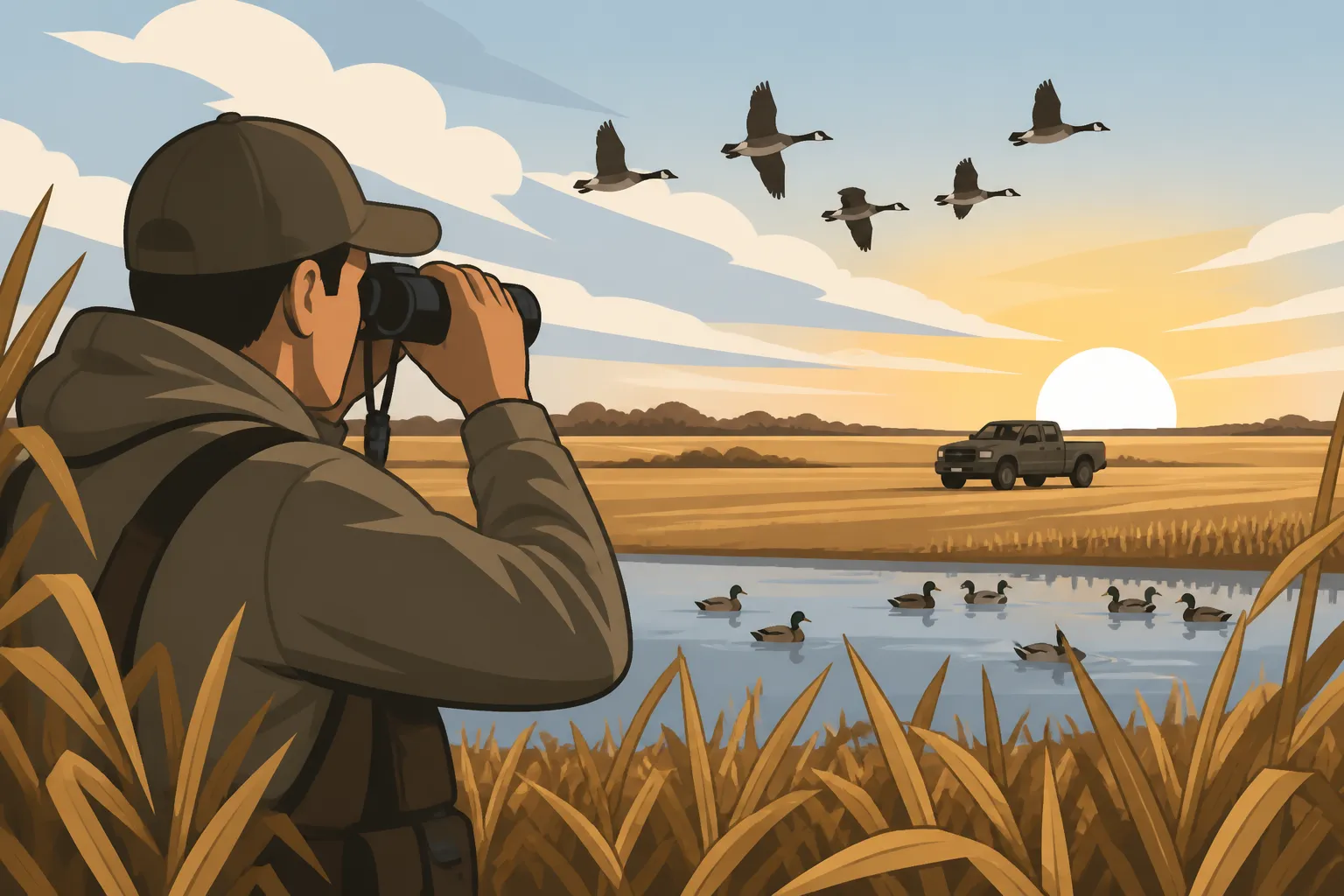
The most fundamental tools in a waterfowl guide's arsenal are high-quality optics. This includes binoculars, spotting scopes, and even dash-mounted cameras for quick scans. Guides spend hours, often at dawn and dusk, posted up at strategic vantage points, glassing immense stretches of farmland and marshland. They're not just looking for birds; they're observing flight patterns, identifying species, estimating numbers, and discerning feeding behaviors.
A guide can tell from a mile away if a flock of Canada geese is simply flying over, or if they're committed to landing in a particular field based on their wing beats and descent angles. They'll notice if ducks are nervously circling a stubble field or confidently dropping into a water body. Scouting Fields for Manitoba Waterfowl often involves watching how birds react to changing light conditions or subtle changes in the landscape. It's an art refined over years of observation, and it allows them to make informed decisions about where the best opportunities lie.
Mapping Software and Digital Resources
In the modern age, technology plays an increasingly vital role in efficient scouting. Guides heavily rely on satellite imagery, GPS mapping apps, and even weather forecasting tools to optimize their efforts. Apps like GoHunt, or other similar platforms, allow guides to pinpoint potential hotspots from their truck, mark specific fields, identify access points, and even track their movements for future reference.
Before even leaving camp, a guide might spend an hour reviewing satellite images, looking for unharvested corners, water sources, or flight corridors that could be holding birds. They'll use these tools to identify potential new feeding areas that weren't there a week ago or to avoid areas that have recently been harvested or tilled. Combining digital maps with real-world observation helps them create a comprehensive picture of bird distribution and movement, saving valuable time and fuel. This is especially true when scouting areas for Field Hunting Geese in Manitoba Stubble or Hunting a Swathed Grain Field at Dusk.
The Daily Scouting Ritual
A waterfowl guide's day often starts long before their clients even stir, and it doesn't end until well after dark. The daily scouting ritual is a meticulous dance between anticipation, execution, and adaptation.
Early Morning Reconnaissance
The pre-dawn hours are often the most crucial for scouting. Guides are usually out in the dark, heading to pre-determined observation points or driving known bird routes. They want to witness the morning flight firsthand. Where are the birds leaving their roost? Where are they heading to feed? How long are they staying in a particular field?
This early morning run provides vital clues. If a guide sees thousands of mallards pouring into a standing cornfield, that's a strong indicator. If they see a small group of pintails working a specific low spot in a stubble field, that's another piece of the puzzle. They're also listening intently, distinguishing between the distant chatter of a thousand geese and the contented murmur of birds settled in for a meal. This information dictates the morning hunt plan, often with a rapid call back to the camp to adjust setup locations based on what was seen minutes before sun-up.
Mid-Day and Evening Follow-Up
Scouting doesn't stop after the morning hunt. Once clients are back at camp, fed, and resting, the guide often hits the road again. Mid-day scouting involves checking those fields that looked promising but might have been too far for the morning. They're looking for birds returning to feed after resting, or new birds that have moved into the area. They'll also drive through local farming communities, looking for fresh harvest activity or newly tilled ground, which are major attractants for certain species.
The evening is just as critical as the morning. Guides will observe the evening flight, noting where birds are heading for their night roosts. This helps confirm patterns seen in the morning and gives an indication of where birds might stage for the next day's feeding. If a field was hit hard in the morning, they'll check to see if birds are still using it in the evening, or if hunting pressure has pushed them elsewhere. It's a continuous feedback loop that informs the next day's strategy.
| Scouting Activity | Typical Timeframe | Key Objective | Tools Used |
|---|---|---|---|
| Pre-Dawn Drive/Glass | 1-2 hours before sunrise | Identify morning flight patterns & feeding fields | Binoculars, Spotting Scope, Vehicle |
| Post-Morning Hunt Scan | Mid-morning/Early afternoon | Check secondary fields, fresh harvest, new arrivals | GPS/Mapping Apps, Vehicle, Landowner Network |
| Evening Roost Observation | 1-2 hours before sunset | Confirm daily patterns, locate roosts, future spots | Binoculars, Spotting Scope, Thermal (if allowed) |
| Digital Map Review | Throughout the day/night | Analyze satellite imagery, weather, plan routes | GoHunt/Mapping Apps, Weather Forecasts |
| Local Network Contact | Throughout the day | Gather real-time intel from farmers/residents | Phone, Personal Visits |
Adapting to Unpredictable Conditions
Manitoba weather, as any local can tell you, is a law unto itself. From scorching late summer days to bone-chilling November blizzards, conditions can change dramatically and rapidly. A good waterfowl guide isn't just scouting birds; they're constantly scouting the weather and its profound impact on bird behavior and accessibility.
Weather's Impact on Bird Behavior
A sudden cold front can send thousands of geese packing south, while a warm spell might extend their stay. Heavy rain can flood dry fields, creating new loafing ponds, or make muddy access roads impassable. Strong winds can drastically alter flight paths and make birds "skittish," changing their approach to decoy spreads. Hunting Safely in Deep Winter Cold requires a different scouting approach than a mild fall day.
Guides pay close attention to wind direction and speed, temperature fluctuations, and precipitation forecasts. They know that a north wind often means a push of new birds, while a south wind might mean birds are heading out. They'll scout areas that offer protection from strong winds or that have open water when everything else is freezing up. This constant environmental assessment is integral to predicting bird movements and deciding where and how to set up.
Navigating Changing Agricultural Landscapes
Manitoba's agricultural landscape is a constantly evolving canvas. Fields are harvested, stubble is tilled under, and crops like sunflowers or corn are either standing tall or lying in swaths. These changes are massive attractants (or deterrents) for waterfowl. What might have been a prime duck field when it was full of standing corn can become barren and unappealing once it's harvested and worked.
Guides are always on the lookout for fresh cuts or tillage. A newly harvested pea field, with its scattered leftovers, is like an all-you-can-eat buffet for geese. A freshly swathed barley field will draw ducks and sandhill cranes like a magnet. Hunting Manitoba's Sandhill Crane Fields or Hunting a Field of Standing Corn each require specific scouting knowledge about what the birds prefer at different stages of the agricultural cycle. The guide's job is to stay ahead of these changes, finding the freshest food sources before other hunters, or even the birds themselves, completely deplete them. This dynamic, coupled with bird migration, ensures that yesterday's hot spot might be today's empty field, necessitating that constant, daily grind of scouting.
Disclaimer
This article is for general informational purposes only and does not constitute professional advice. Laws, prices and regulations vary by location and change over time. Consult a qualified professional for guidance on your specific situation.