Baiting Black Bear in Manitoba
For many hunters, the pursuit of a black bear is a true wilderness adventure, but consistently finding these intelligent animals can be incredibly challenging without a strategic approach. It’s not just about stumbling into one in the bush; it’s about understanding their habits and creating an irresistible draw. This guide will walk you through the ins and outs of baiting black bears in Manitoba, offering practical advice to increase your chances of success and ensure you're hunting responsibly.
Understanding Black Bear Behavior for Successful Baiting
Before you even think about setting up a bait site, it’s absolutely crucial to dive deep into the mind of a black bear. These aren't just opportunistic eaters; they're incredibly intelligent creatures with keen senses and predictable patterns that, once understood, can be leveraged for effective baiting. Ignoring their natural tendencies is a recipe for a barren bait barrel and a lot of wasted effort.
Seasonal Foraging Patterns and Hunger Gaps
Black bears are driven by their stomachs, and their dietary needs shift dramatically throughout the year, primarily dictated by the availability of natural foods. In Manitoba, understanding these cycles is paramount to successful baiting. When they first emerge from hibernation in the spring, typically around late April or early May, bears are absolutely ravenous. Their bodies are depleted, and their first priority is to replenish lost calories. At this time, natural food sources are often scarce. Fresh green vegetation is just starting to sprout, and berries are months away. This creates a significant "hunger gap" where bears are highly susceptible to an easily accessible, high-calorie food source like a well-placed bait. This makes the spring bear season, especially in the early weeks, prime time for baiting.
As the season progresses into late spring and early summer, natural foods like saskatoon berries, blueberries, and pin cherries become abundant. During these periods, bears might show less interest in your bait, as they have a smorgasbord of natural options. However, even then, a particularly appealing, high-calorie bait can still draw them in. Then, as fall approaches, bears enter a hyperphagia phase – essentially, a feeding frenzy – to pack on weight for the coming winter. While many hunters prefer to focus on the spring, Hunting Manitoba's Fall Bear Season can also be incredibly productive if you know how to capitalize on this intense drive to consume calories. They’re still very active, constantly searching for food, and a consistent bait site can become a crucial part of their pre-hibernation routine.
Bear Intelligence, Memory, and Scent Awareness
Black bears possess an intelligence that often surprises first-time baiters. They learn quickly, remember locations, and are incredibly wary of anything that seems out of place or signals danger. Their sense of smell is legendary, estimated to be seven times greater than a bloodhound's, allowing them to detect food sources from miles away, especially when the wind is right. This incredible olfactory prowess is the cornerstone of baiting. The more pungent and appealing your bait scent, the farther it travels, and the more likely a bear is to investigate.
However, their intelligence also means they'll quickly associate human scent or disturbance with danger. A bait site isn't just a restaurant; it's a place they need to feel safe visiting. If you're constantly stomping around, leaving strong human odors, or making excessive noise, bears will become nocturnal or abandon the site altogether. They'll also remember negative experiences. If they visit a bait and encounter a hunter multiple times without feeling secure, they’ll become "bait shy." This is why consistency, stealth, and a deep respect for their senses are non-negotiable for anyone looking to successfully bait bears in Manitoba. Using tools like the GoHunt app can help you track bear visits and understand their patterns, making your approach more scientific.
Essential Components of a Manitoba Bear Bait Site
Setting up a black bear bait site isn't as simple as just dumping a pile of donuts in the woods. There's a method to the madness, requiring strategic planning, the right equipment, and a keen understanding of what makes a bear feel secure and eager to return. The goal is to create an irresistible, consistent, and safe dining experience for them.
Location Selection: Key Terrain Features
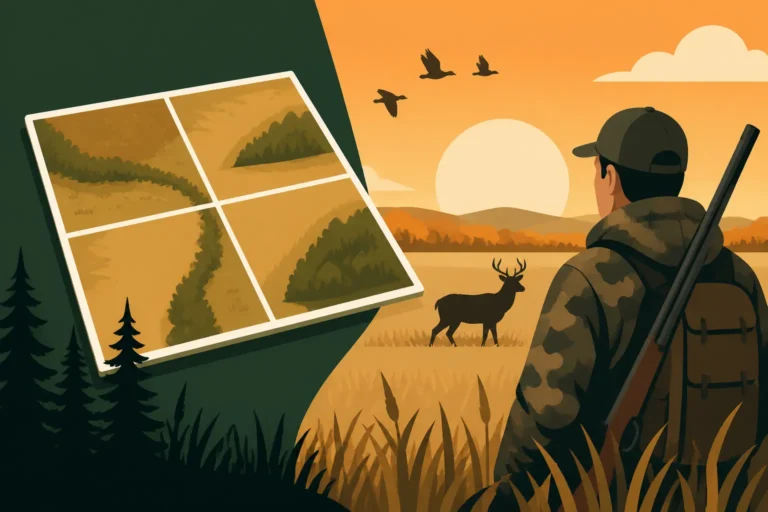
Choosing the right location for your bait site is perhaps the most critical step. You're not just looking for a spot off the road; you need to consider natural travel corridors, water sources, and prevailing wind directions. Bears, like most big game, prefer to travel along paths of least resistance – old logging roads, creek bottoms, natural funnels between dense cover, or the edges of swamps and muskegs. These are often excellent places to intercept them. Water is also a huge draw; bears drink frequently, especially when consuming high-calorie foods. A bait site located near a small pond, creek, or slough can be incredibly productive.
Consider the prevailing wind, especially if you plan to Timing a Manitoba Spring Bear Hunt. You want your bait scent to carry into areas where bears are likely to be, not away from them, and definitely not towards your stand. Use topographical maps, satellite imagery, and on-the-ground scouting to identify these features. Look for dense cover nearby where bears can feel secure bedding down after a meal, or where they can approach the bait site undetected. A good resource like the GoHunt app can help you mark potential locations, analyze terrain, and monitor wind patterns from afar. Don't forget about access for you; you'll need to haul in bait, and a long, arduous trek every few days can quickly become unsustainable. For more general advice on finding promising spots, check out Scouting a Manitoba Game Hunting Area.
The Importance of a Secure Bait Station
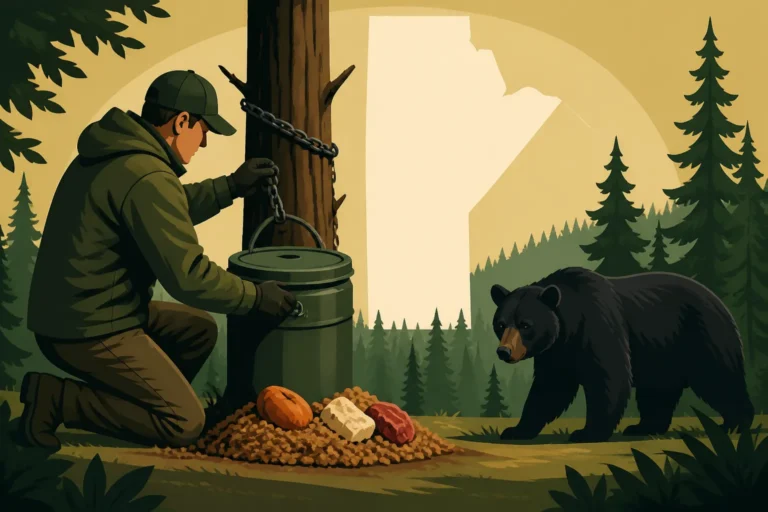
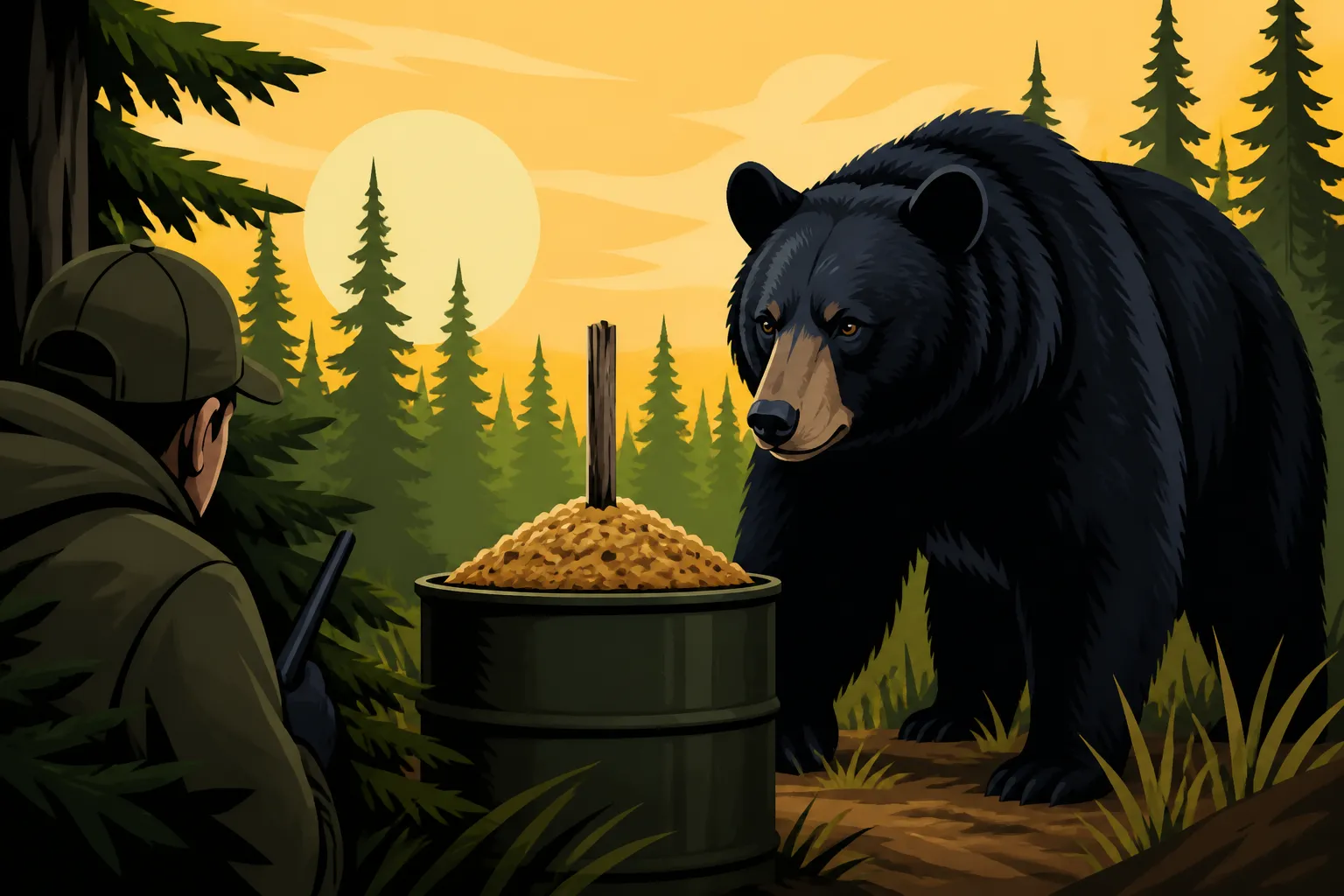
Once you've found your ideal location, the physical setup of the bait station itself needs careful thought. This isn't just about containing the bait; it's about making it difficult for the bears to consume it all too quickly, forcing them to spend more time at the site and encouraging them to return. A common setup involves a heavy steel drum or a sturdy wooden crib, securely chained or wired to a large tree. The opening should be small enough that bears have to work at it to get the bait out, or the bait is placed inside in such a way that they can only get small portions at a time. This prolongs the life of the bait and forces them to commit to the site.
Avoid just tossing bait on the ground where it can be quickly consumed, scattered by scavengers, or spoiled by rain. Some hunters also dig a shallow pit and line it with rocks or a heavy wire mesh before placing bait, covering it with logs or a heavy grate that bears have to move. The goal is to make it a bit of a challenge, but not so challenging that they give up. A durable container also helps prevent non-target species like raccoons or coyotes from completely cleaning out your bait before a bear even has a chance. This careful design is key to establishing a long-term, productive bait site.
Choosing Your Bait: What Really Attracts Bears
When it comes to bait, bears are not picky, but some items are far more effective than others. High-calorie, strong-smelling foods are your best bet. Sweets are incredibly effective due to their high sugar content and appealing aroma. Think stale donuts, pastries, candies, and molasses. These are typically cheap to acquire from bakeries or grocery stores and hold up well in the elements. Molasses, in particular, is a phenomenal attractant; its thick, sticky nature makes it cling to trees and scent wicks, and its potent sweet smell carries for long distances.
Meat scraps, especially rancid ones, are also highly attractive. Old grease, bacon, fryer oil, and expired meat from butcher shops can be very effective, though they can also attract other predators. Combining sweets with a fatty, greasy component often creates the most irresistible concoction. Many successful baiters create a "stink hole" – a buried bucket of meat scraps or old fish oil that slowly leaches scent into the ground, providing a long-lasting attractant. Remember, consistency is key; once you start, keep replenishing the bait regularly with similar items. Varying your bait too much can sometimes make bears wary. For general information on the species you're pursuing, check out Black Bear Hunting in Manitoba.
Here's a quick comparison of common bait types:
| Bait Type | Pros | Cons | Best Use |
|---|---|---|---|
| Sweets | High calorie, strong appeal, widely available | Can attract raccoons, ants; can be expensive | Primary bait, continuous attraction |
| (Donuts, Pastries) | |||
| Grease/Fats | Potent smell, high calorie, long-lasting | Messy, can attract unwanted scavengers | Scent trails, initial attractant, "stink hole" |
| (Fryer Oil, Lard) | |||
| Molasses | Extremely pungent, sticky, long-range attractant | Can be sticky to handle, attracts insects | Scent wicks, pour on logs, mixed with other bait |
| Meat Scraps | Very high appeal, especially when rancid | Attracts wolves/coyotes, can spoil quickly | "Stink hole" starter, mixed sparingly with other bait |
| Dog/Cat Food | Convenient, decent calorie content | Less pungent, can be expensive | Supplement, mix with grease or molasses |
Establishing and Maintaining Your Bait Effectively
Once you've done your initial scouting and chosen your bait, the real work begins. Baiting isn't a one-and-done activity; it's a commitment. The success of your hunt will hinge on how diligently and strategically you establish and maintain your site. It’s all about creating a routine that bears learn to trust and rely upon.
The Pre-Baiting Phase: Getting Started Right
The pre-baiting phase is absolutely critical for success, especially in a region like Manitoba where bears have vast territories. You can't just throw out a barrel a week before your hunt and expect results. Ideally, you should start baiting at least two to three weeks before you plan to hunt, if not earlier. This allows enough time for the scent to permeate the area and for bears to discover the site, overcome any initial wariness, and integrate it into their feeding routine. In the earliest days of spring, bears might be moving through a larger range, and getting that scent out there is paramount.
When you first set up your bait, focus heavily on creating a strong scent trail. This is how you "call" bears to your site. Hang scent wicks soaked in strong attractants like anise oil, concentrated vanilla, or even old bacon grease on trees in the direction you expect bears to travel, stretching out a hundred yards or more from the main bait. Drizzle molasses or old fryer oil on the ground and trees around the bait. The goal is to create a scent cone that funnels bears directly to your station. Place a good amount of appealing bait – high-calorie sweets and greasy items – in your secure bait container to reward their discovery. This initial burst of scent and food is what gets the ball rolling.
Consistency is King: Refilling and Monitoring
Consistency truly is the golden rule of bear baiting. Once bears start hitting your site, they quickly learn that it’s a reliable food source. If they arrive and the bait is empty, they might move on to another natural food source or even a competitor's bait. Aim to replenish your bait every two to three days, or as often as necessary based on consumption. The ideal scenario is to have a small amount of bait remaining when you return to refill, signaling to the bears that the well never truly runs dry. This builds trust and encourages daytime visits.
Monitoring your bait is also vital. This doesn't mean sitting on it every day, but checking game cameras if legal and feasible in your GHA, or looking for tracks and scat. Game cameras, like those offered by Cuddeback or Browning, can be invaluable for identifying individual bears, understanding their patterns (e.g., whether they're nocturnal or daylight visitors), and gauging the volume of activity. Knowing if you have multiple bears, a sow with cubs, or a large boar will inform your hunting strategy. Pay attention to how quickly bait is consumed; if it's gone in less than a day, you might need to increase the volume or make the feeder more bear-proof. This ongoing observation allows you to adapt your strategy, which is critical for a successful hunt during the Manitoba bear season dates.
Managing Multiple Bears and Problem Animals
It's common to have multiple bears visiting a single bait site. This can be exciting, but it also presents challenges. Larger, more dominant bears, usually boars, will often chase off smaller bears or sows with cubs. If your goal is to harvest a large boar, this dominance can work in your favor as the larger bear will likely claim the bait. However, if you're seeing a consistent sow with cubs, it's paramount to exercise extreme caution and avoid harvesting the sow, as this would orphan the cubs. Judging a Boar From a Sow With Cubs is a skill that takes practice, and it’s especially important when baiting.
Sometimes, you might encounter what’s known as a "problem bear" – one that becomes overly aggressive towards other bears, or excessively nocturnal. If a bear is consistently hitting your bait only after dark, try moving your stand or adjusting your approach to the bait to minimize human presence during the day. If a particular bear is driving all other bears away, you might have to decide whether to target that specific bear or move your bait site if you’re looking for a different animal. This type of nuanced management is part of the art of successful baiting. Using a mapping platform like GoHunt can help you visualize bear activity hotspots and adjust your plans accordingly if you need to set up a secondary bait.
Legalities and Ethical Considerations for Baiting in Manitoba
Hunting in Manitoba is a privilege, and with that comes a responsibility to understand and adhere to the regulations designed to ensure sustainable wildlife populations and fair chase. Baiting, specifically, has its own set of rules and ethical considerations that are critical for every hunter to know and follow. Ignorance of the law is not an excuse, and ethical missteps can reflect poorly on all hunters.
Manitoba's Baiting Regulations and Permitting
In Manitoba, baiting for black bears is a legal and common practice, but it's not without its specific rules. First and foremost, you must possess a valid Manitoba hunting licence and bear tag. Beyond that, the province has clear guidelines on what constitutes legal baiting. While specific regulations can shift, generally, you are permitted to use bait for black bears. However, there are restrictions on where you can bait and the type of bait that is allowed. For instance, specific animal parts, like brain or spinal cord material from deer (due to CWD concerns), may be prohibited. It's also critical to remember that baiting for other big game species like deer or moose is generally not permitted. Always check the current year's Manitoba Hunting Guide or the provincial website for the most up-to-date information on Manitoba Rules on Baiting Big Game to ensure full compliance.
It's also important to understand property boundaries. Baiting on private land requires explicit permission from the landowner, and baiting on Crown land needs to be done in an area where hunting is permitted and without interfering with other recreational users. In some areas, there might be specific setbacks from roads, trails, or residential areas. Some Game Hunting Areas (GHAs) may have unique restrictions, so it's vital to know the rules for your specific GHA. Failing to adhere to these regulations can result in significant fines, loss of hunting privileges, and even confiscation of equipment. Always err on the side of caution and double-check before you deploy your first bait.
Responsible Baiting Practices and Conservation
Beyond the legal minimums, ethical baiting practices are paramount. A responsible hunter understands that baiting is a tool to improve success, not a guarantee, and it must be done with respect for the animal and the environment. One key ethical consideration is ensuring you are targeting an appropriate animal. As mentioned, avoiding sows with cubs is a widely accepted ethical standard. When Judging a Boar From a Sow With Cubs, take your time, observe their behavior, and be absolutely certain before taking a shot.
Another aspect of responsible baiting is minimizing your impact on the environment. Use containers that are secure and don't litter. Remove all baiting materials, including barrels, chains, and any refuse, once your hunting season is over. Leaving trash in the woods is not only illegal in many areas but also an eyesore and can attract unwanted scavenging animals. Furthermore, consider the potential for habituating bears to human-provided food. While baiting for hunting is permitted, allowing bears to become overly reliant on human food sources outside of hunting seasons can lead to human-wildlife conflicts. Ensure your bait sites are only active during legal hunting periods and are cleaned up afterward. The goal is a fair chase opportunity, not creating a dependency. For a broader look at bear populations, check out Manitoba's Black Bear Numbers and Where They Peak.
Landowner Relations and Public Perception
If you're hunting on private land, fostering good landowner relations is absolutely non-negotiable. Always obtain clear, explicit permission before setting up any bait. Discuss your plans with the landowner, explain how you will manage the site, and reassure them that you will clean up everything at the end of the season. Respecting their property and being a good steward of the land will ensure you maintain access for future seasons. A simple gesture, like sharing some wild game meat, can go a long way in building trust.
Baiting, like any hunting method, can sometimes face scrutiny from the non-hunting public. It's our responsibility as hunters to ensure our practices are above reproach and that we represent the hunting community in a positive light. This means adhering to all regulations, being ethical in our decisions, and being prepared to explain why we bait (e.g., to create a shot opportunity on a specific animal, ensure a clean kill, or target a specific animal like a boar). By being transparent and responsible, we can help educate others and maintain the public acceptance of this valuable hunting method.
Strategic Hunting from a Baited Site
Setting up a productive bait site is only half the battle; the other half is successfully hunting from it. This requires strategic stand placement, careful attention to wind and scent, and the patience and discipline to wait for the right shot opportunity on the right animal. Many factors that are critical to Whitetail Hunting in Manitoba are equally important for bear hunting.
Stand Placement and Wind Direction
Your stand placement in relation to your bait site is absolutely critical, arguably as important as the bait itself. Bears have an incredible sense of smell, and if they catch your scent, your hunt is over before it begins. Therefore, you must place your stand downwind of the bait, considering the prevailing winds. But it's not always that simple. Winds can shift, especially in Manitoba’s varied terrain, and thermals can play tricks, particularly during early morning and late evening hunts when air currents move up or down hillsides. Always check a reliable weather forecast for wind direction on the day of your hunt. A useful tool like the GoHunt app can provide real-time wind forecasts, helping you decide if a particular stand is viable for your chosen hunting window.
Your stand should offer a clear shooting lane to the bait, without compromising your ability to stay concealed. Consider both elevated tree stands and ground blinds. Tree stands offer a better vantage point, can help your scent dissipate above a bear’s nose, and often provide a safer shot angle into a bear’s vitals. Ground blinds, on the other hand, offer excellent concealment and are often easier to set up quickly, but require meticulous scent control. Position your stand far enough away from the bait to remain undetected but close enough for a confident, ethical shot, typically within 20-30 yards for archery or 50-75 yards for rifle hunters. Having multiple stand locations ready for different wind directions can significantly increase your chances of success.
Approaching and Leaving Your Stand Undetected
The approach to and departure from your stand are often overlooked but are moments when many hunts are ruined. Bears are incredibly wary, and any sudden noise, unnatural movement, or lingering human scent can turn a daytime visitor into a nocturnal ghost. Always approach your stand using a route that keeps you downwind of the bait as much as possible, avoiding directly crossing the bear's anticipated travel paths. Walk slowly, quietly, and pay attention to every twig underfoot. Wear scent-free clothing and use scent-eliminating sprays, even on your boots. Consider using rubber boots, as they carry less scent than fabric footwear.
Avoid disturbing the bait site itself on your way in or out. If you need to check the bait, do so from a distance or on a separate trip outside of hunting hours. When you're in your stand, remain as still and quiet as possible. Resist the urge to fidget, check your phone, or make unnecessary movements. Bears are surprisingly observant. When it's time to leave, do so just as carefully as you arrived. Don't immediately jump down and walk straight to the bait. Take a route that minimizes your impact and preserves the integrity of the site for future visits. These subtle habits are often the difference between success and a frustrating silence at the bait.
Judging a Bear at the Bait Site
Once a bear arrives at your bait, the real test of patience and skill begins: judging the animal. Not only do you need to wait for a clean, ethical shot, but you also need to identify if it's the animal you want to harvest. This is particularly crucial for ethical reasons, like avoiding sows with cubs. Bears can be notoriously difficult to size up in the wild. A lone bear might look enormous when it's the only one present, but it could be an average-sized sow.
Look for key indicators of a mature boar:
- Body Shape: Boars often have a blockier, more muscular build, especially in the shoulders and neck. Sows tend to be more slender, especially around the waist.
- Head Size: A large boar will typically have a relatively small head in proportion to its body, often appearing long and pointed. Sows usually have larger, rounder heads relative to their body size.
- Ear Placement: On a mature boar, the ears might appear small and widely set, often looking like they're barely protruding from its massive head. On a sow, the ears will appear more prominent.
- Behavior: Boars often approach bait with a swagger, asserting dominance. Sows, especially with cubs, will be more cautious and frequently look around. If you see cubs, no matter how small, under no circumstances should you shoot the sow. What a Big Boreal Black Bear Weighs can give you an idea of the potential size you might encounter.
Always wait for a broadside or slightly quartering-away shot when the bear is calm and unaware. Aim for the vitals: the area just behind the shoulder, where the heart and lungs are located. A clear, ethical shot is paramount. If you have any doubt about the bear's sex, size, or if you can't get a clean shot, do not shoot. There will always be another opportunity. This discipline is the hallmark of a responsible hunter.
Disclaimer
Please be aware that hunting regulations, including those pertaining to baiting and seasons, can change. This article is intended for informational purposes only and should not be considered legal advice. Always consult the official Manitoba hunting regulations guide and the provincial government's wildlife division website for the most current and accurate information before planning any hunt. It is your responsibility to know and follow all applicable laws.