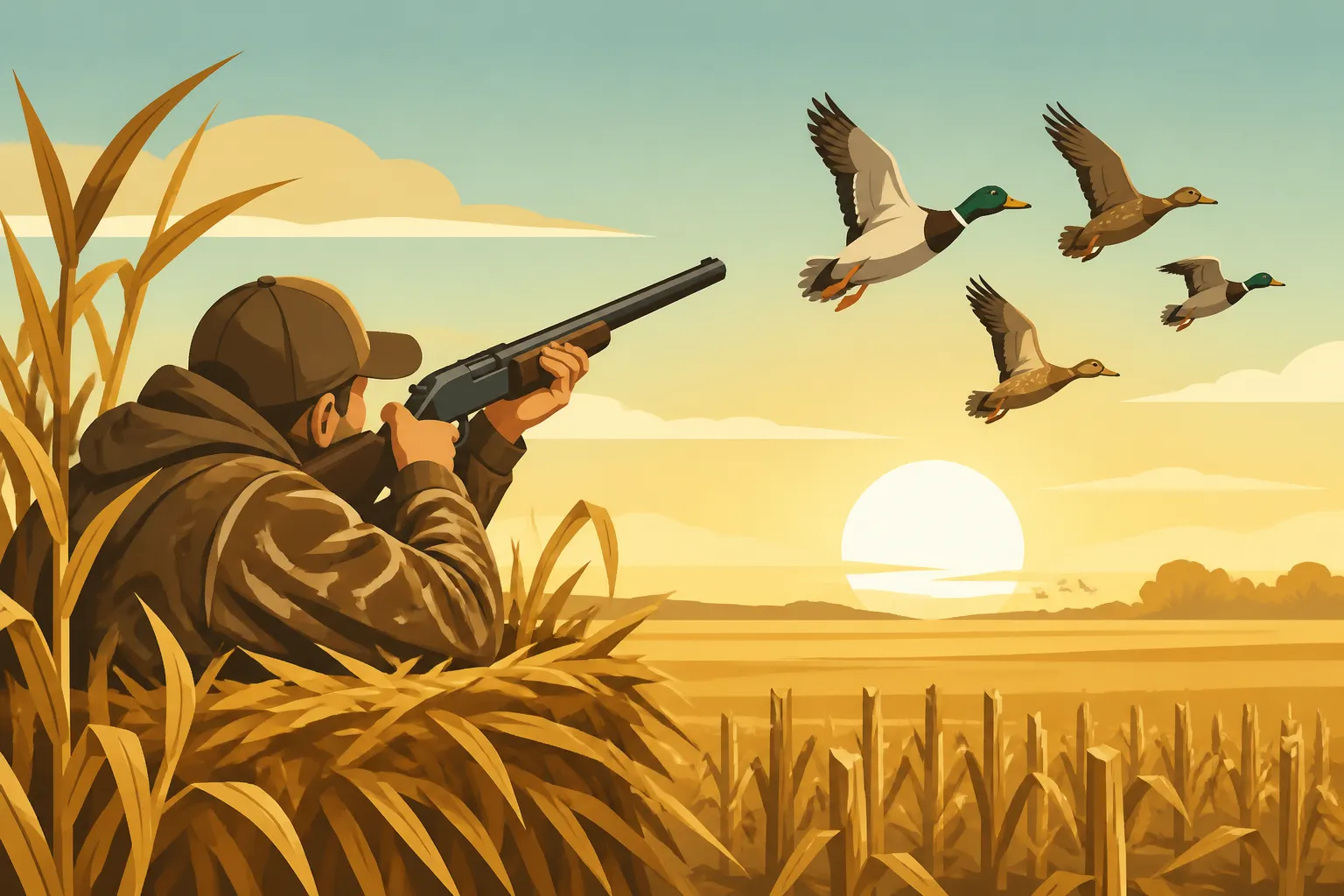
Waterfowl Hunting Manitoba’s Grain Fields
That feeling, when the air is crisp, the sun just barely peeking over the horizon, and you hear that distant, unmistakable murmur of thousands of wings in the sky – it’s a sound that resonates deep within every waterfowler. But what happens when those birds aren't working the marsh, but instead are focused on the vast, golden expanse of a Manitoba grain field? Suddenly, your typical marsh setup won’t cut it, and a whole new set of skills and strategies comes into play. This comprehensive guide is here to walk you through everything you need to know to successfully hunt waterfowl in Manitoba's grain fields, from understanding bird behaviour to perfecting your setup and ensuring a memorable, ethical hunt.
The Unrivalled Allure of Manitoba's Grain Fields for Waterfowl
Manitoba is, without a doubt, a mecca for waterfowl hunters, and a huge part of that reputation comes from its incredible agricultural landscape. It’s not just a pretty picture of rolling fields; it’s a vital, strategic pit stop on a continent-wide journey for millions of birds. Understanding why these fields are so attractive is the first step in unlocking successful hunts.
Why Manitoba is a Waterfowler's Paradise
Manitoba sits squarely in the heart of the Central Flyway, a massive migratory corridor that funnels birds from the Arctic breeding grounds all the way down to their wintering havens in the south. This geographical advantage alone makes it special, but when you couple it with the sheer abundance of cereal grains and other crops grown here, you create an irresistible magnet for waterfowl. Think about it: mile after mile of energy-rich food sources, laid out like a buffet for birds preparing for a long journey. Fields of wheat, barley, canola, peas, and corn become critical refueling stations. These aren't just small patches; these are vast, uninterrupted feeding grounds that can support enormous flocks.
The flat or gently rolling terrain of much of southern Manitoba also provides expansive sightlines, making birds feel secure as they feed, while offering open spaces for large numbers to land and take off without feeling constrained. The presence of countless potholes, sloughs, and larger lakes, like Lake Manitoba and Lake Winnipeg, scattered across this agricultural belt, provides essential roosting and loafing areas, perfectly complementing the feeding in the fields. It's this dynamic interplay between abundant food in the fields and safe water nearby that truly solidifies Manitoba's status as a waterfowler's paradise.
Understanding the Migratory Superhighway
When we talk about waterfowl in Manitoba's grain fields, we're primarily talking about geese and dabbling ducks. Canada geese, specklebellies (greater white-fronted geese), and snow geese are the stars of the show, but you’ll also find plenty of mallards and pintails. Each species has its own nuances when it comes to field feeding. For instance, Canada geese are often among the first to arrive in the late summer and early fall, taking advantage of maturing and harvested grain fields. They'll frequent fields close to their roosts, often in smaller, family groups, but can quickly amass into formidable flocks.
Snow geese, on the other hand, often arrive later in the fall in mind-boggling numbers. Their sheer presence can turn a stubble field into a living, moving blanket of white. They are notoriously gregarious and will often utilize massive spreads to feel safe. Specklebellies, perhaps the most sought-after by many a gourmand, tend to be a bit more selective, often favoring pea fields or specific grain stubble, and they can be incredibly wary. As for ducks, especially mallards and pintails, while they love a good marsh, they also make regular forays into harvested grain fields to feed, particularly in the mornings and evenings. They're often looking for spilled grain or green shoots, especially after a rain. Understanding these patterns and the specific behaviors of these different species is key to effective field hunting. You can learn more about specific species by reading about Manitoba's Ducks and Geese by Flyway.
Scouting: The Most Critical Step for Field Hunting Success
If you talk to any successful waterfowl hunter who focuses on grain fields, they'll tell you the same thing: scouting isn't just important, it's everything. You can have the best gear, the most expensive decoys, and be a world-class caller, but if you're not where the birds want to be, you're not going to be successful.
Pre-Season Intelligence Gathering
Scouting for waterfowl in Manitoba starts long before the season opener. Think of it as intelligence gathering. Begin with maps, specifically looking at agricultural areas. Modern tools like satellite imagery (available through platforms like GoHunt) can be incredibly insightful. You can identify large tracts of grain production, potential flight lines between major water bodies and feeding grounds, and even spot concentrations of small potholes or sloughs that might serve as loafing areas adjacent to prime fields. Look for patterns: where are the major stubble fields, what crops are being grown, and where are the water sources the birds are likely to use?
Sometimes, a drive through a new area in the summer, even months before the season, can give you a lay of the land and a sense of potential hotspots. You’re looking for general areas that hold birds year after year. Farmers in the area are often your best source of information, even if you’re just chatting at a gas station or local store – they see the birds daily. This long-term, strategic scouting helps you narrow down regions and develop a mental map of where birds should be when the season arrives. It's about setting yourself up to quickly find birds once the real work begins.
Day-to-Day Field Reconnaissance
This is where the rubber meets the road. Once the season is in full swing, your pre-season intel becomes a framework, but real-time, on-the-ground scouting is paramount. This means dedicating time, often many hours, to driving and observing. The best times to scout are typically at first light, as birds leave their roosts to feed, and in the late afternoon/early evening, as they return. You're looking for birds actively feeding in a field. Not flying over, not sitting in a distant slough, but eating.
Pay close attention to the specific field, the type of stubble, the concentration of birds, and their flight path coming in and out. Note the wind direction – this is crucial, as birds almost always land and take off into the wind. If you find a hot field in the evening, that’s your target for the next morning. However, be aware that birds are unpredictable. What they do today, they might not do tomorrow, especially with changes in weather or hunting pressure. You might need to Scouting Fields for Manitoba Waterfowl every single day of your hunt. This constant vigilance and adaptability are what separate consistently successful field hunters from those who just hope for the best.
Gaining Access: Navigating Manitoba's Landowner Relations
Finding the birds is one thing; getting permission to hunt them is another, and often the biggest hurdle. Manitoba is predominantly private land in its prime agricultural zones, and respecting landowners is non-negotiable. Building relationships is key.
The Importance of Respectful Communication
Approaching landowners requires courtesy, respect, and a genuine understanding of their perspective. Farmers work incredibly hard, and their land is their livelihood. Never just drive onto someone's property assuming you have permission, even if you don't see "No Hunting" signs. The best approach is to knock on their door (or call, if you can get their number) during a reasonable time of day – avoid early mornings or late evenings when they're busy with chores or winding down. Dress presentably, speak clearly, and be polite, whether they say yes or no.
When you ask, be specific. "Hello, my name is [Your Name], and I'm interested in hunting waterfowl in your harvested stubble field on the north side of your property. Would you be open to allowing me to hunt there tomorrow morning?" Be ready to show them your hunting license and ask about any specific rules they might have (e.g., specific entry points, areas to avoid, no driving on wet fields). Offering to share some of the bounty, or even just leaving a small thank-you gift (like a gift card for a local coffee shop) after a successful hunt, can go a long way in building goodwill. Remember, you're a guest, and a good reputation travels fast in rural communities.
Understanding Local Permissions and Posted Land
In Manitoba, it's generally understood that you need explicit permission to hunt on private land. While not all private land is required to be "posted" with signs to prohibit trespass, it's always best to assume you need permission unless it's designated public land. Ignoring this can lead to serious legal repercussions and quickly ruin your reputation. If you see "No Hunting," "No Trespassing," or "Posted" signs, those mean exactly what they say. Do not attempt to contact the landowner; respect their wishes.
Sometimes, you might find a fantastic field, but the landowner won't grant permission. It's frustrating, but it's part of the game. Don't press the issue. Simply thank them for their time and move on. The good news is that Manitoba has vast agricultural areas, and with diligent scouting and persistent, polite requests, you can often find willing landowners. Keep an eye out for fields that aren't immediately adjacent to homesteads, as these might be owned by absentee landowners or those less bothered by hunters. You can learn more about Getting Permission for a Goose Field and other land access rules.
Decoy Spreads and Blind Setups: Crafting the Perfect Deception
Once you've found the birds and secured permission, the real artistry of field hunting begins: creating a decoy spread and blind setup that convinces wary waterfowl to commit. This isn't just throwing out a few decoys; it's about painting a picture of safety and abundance.
Decoy Strategies for Geese
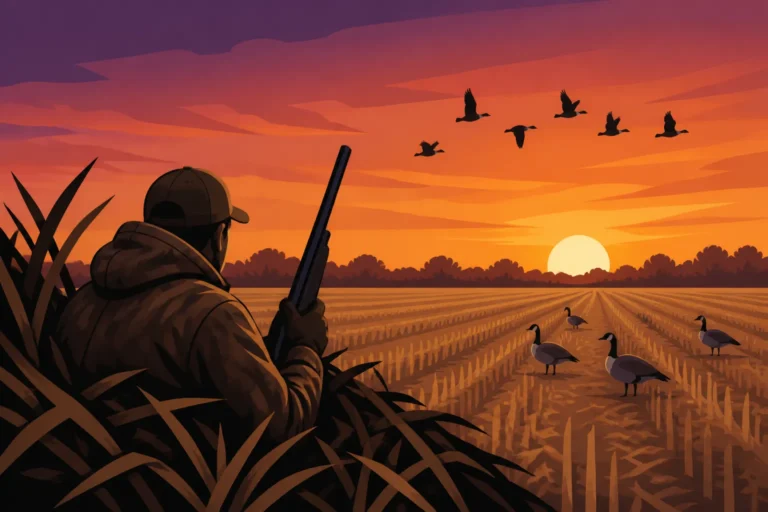
Geese are incredibly social, and their decoy spreads need to reflect that. For Canada geese, natural-looking spreads are key. Think family groups, birds feeding, and some sentry positions. A common and effective pattern is a loose "U" or "J" shape, with the open end facing the direction you expect birds to approach (usually into the wind). This creates a natural landing zone right in front of your blinds. Start with 2-3 dozen decoys, but don't be afraid to go larger if you have the numbers. Mix full bodies with shell decoys for depth. Motion is critical, so incorporate flags or simple windsock decoys. You can read more about Setting a Goose Spread in Swathed Barley.
Snow geese are a different beast entirely. They often travel in flocks of hundreds, even thousands, and they need to see mass to feel safe. We're talking hundreds, sometimes thousands, of decoys. Rags, silos, and windsocks are common for snow goose spreads due to their portability and ability to convey sheer numbers. Electronic callers, where legal, can be incredibly effective, combined with rotary machines or kites to simulate landing birds. When Hunting Snow Geese Over a Big Spread, the goal is overwhelming realism in terms of volume and movement. Specklebellies often respond to smaller, more realistic spreads than snows, but they are equally wary. High-quality full-body decoys in family groups, often with a dedicated "kill hole" in the spread, work well. Authenticity and meticulous hiding are paramount when Hunting Specklebellies Over Decoys.
Decoy Tactics for Ducks in Fields
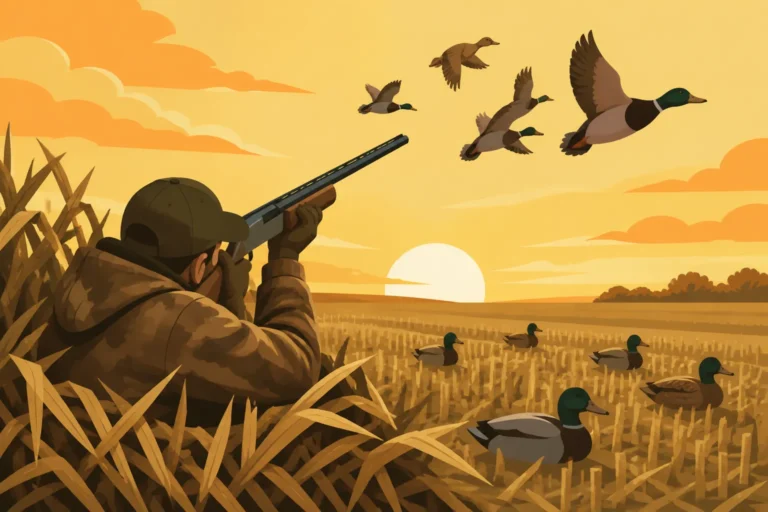
While many ducks are shot over water, mallards and pintails are frequent visitors to grain fields. When targeting them in fields, your decoy spread should mimic small, contented groups feeding. A dozen or two mallard and pintail full-body decoys, placed loosely with a few drakes facing into the wind as if loafing, can be very effective. Spinners (motion decoys with spinning wings) are incredibly attractive to ducks, especially mallards, and can add a lot of realism and draw power, especially on calm days.
If the field has a small dugout or a temporary puddle from rain, positioning some duck decoys in the water and others on the edge of the field, simulating them walking out to feed, can be deadly. The key is to convey a sense of safety and easy access to food. Ducks are often less tolerant of huge, overwhelming spreads and respond better to a more subtle, natural look.
Blinds and Concealment for Field Hunting
No matter how good your decoys are, if the birds see you, the hunt is over. Concealment is paramount. For field hunting, layout blinds are the most common and effective choice. These low-profile blinds allow you to lie down, disappearing into the stubble, and spring open when it's time to shoot. The crucial part of using layout blinds is brushing them in properly. Don't just set them on top of the stubble; weave natural field material (stubble, grass, dirt clods) into the blind's stubble straps until it blends seamlessly. The goal is for your blind to look like another natural lump in the field, not a foreign object.
Other options include natural cover like large round bales, fence lines, or deep ditches, provided you can position yourself safely and blend in. Hay bales, if positioned correctly and broken up with natural material, can provide excellent concealment, especially for goose hunting. Always ensure your blind material matches the surrounding field perfectly. A flash of unnatural colour or shape will send wary birds veering off. Even a well-brushed blind won't hide movement, so hunters need to remain still and only sit up when the birds are fully committed and within range.
| Decoy Type | Best For | Key Strategy | Typical Quantity | Motion Aids Recommended |
|---|---|---|---|---|
| Full Body Geese | Canadas, Specs | Realistic feeding/loafing, "U" or "J" spread | 2-6 dozen | Flags, wind socks |
| Shell/Silo Geese | Canadas, Specs | Cost-effective volume, mixed with full bodies | 4-10 dozen | Flags |
| Windsock Geese | Snows, Canadas | High volume, excellent motion in wind, mass effect | 100-1000+ | Rotary machines, flags |
| Full Body Ducks | Mallards, Pins | Small, natural feeding groups, near water sources | 1-3 dozen | Spinners |
| Duck Shells/Floater | Ducks (field edges) | Supplement full bodies, for puddle edges/small water | 1-2 dozen | Spinners |
| Silhouette Geese | Canadas, Snows | Quick setup, large numbers for distant visibility | 5-10 dozen | N/A |
Calling and Decoying Techniques for Different Species
Calling is the voice of your spread, and when done correctly, it can bring birds right into your lap. However, just like with decoys, different species respond to different calls and techniques. It's about speaking their language and knowing when to talk, and when to be quiet.
Mastering Goose Calling in Manitoba
For Canada geese, a versatile short-reed call is your best friend. Start with quiet clucks and murmurs to imitate contented feeding birds. As a flock approaches, transition to greeting calls to get their attention, followed by a comeback call if they start to veer off. The key is rhythm and realism. Don't overcall; let the birds work your spread. Once they're turning and committed, often a few soft clucks are all you need. You're trying to sound like a flock that's already happy in the field.
Snow goose calling is a completely different ballgame. Given their massive numbers and often frantic energy, calling can be a cacophony. High-pitched chattering, squawks, and general loud vocalizations are the norm. Electronic calls, where permissible by regulation, are often used to create the sheer volume needed to compete with thousands of wild snow geese. Combine this with aggressive flagging, mimicking landing birds, to pull them in. For specklebellies, their unique yodel-like call requires a specific call. Speck hunters often use a series of short, sharp yodels, followed by contented clucks. They are incredibly wary, so calling needs to be precise and realistic, paired with a convincing spread. Less is often more with specklebellies; once they commit, stay quiet.
Effective Duck Calling for Field Hunts
When targeting ducks in grain fields, mallard calls are paramount. A good mallard call can produce everything from soft greetings to urgent comeback calls and contented feed chuckles. Start with a soft greeting call to attract attention, then switch to feed chuckles to suggest a safe, food-rich environment. If birds are passing by or not committing, a short series of comeback calls can often turn them. However, just like with geese, don't overcall. Once ducks are locked on your spread and cupping their wings, let them come.
Pintails, with their distinctive whistling call, can be lured in with a pintail whistle. This is a subtle call, often used in conjunction with mallard calls, to add diversity to your sound. For all ducks, combining calling with the visual appeal of spinners or other motion decoys is highly effective. The visual cue of moving wings tells them that other ducks are happily feeding, creating a powerful illusion. Often, the soft feed chuckles are what ultimately seal the deal, signaling a calm and abundant feeding spot.
Essential Gear and Safety Considerations
Hunting in Manitoba, especially in the variable conditions of fall, demands the right gear and an unwavering commitment to safety. Being unprepared can quickly turn a memorable hunt into a miserable or dangerous one.
Must-Have Gear for Manitoba Waterfowlers
First and foremost, your shotgun. A 12-gauge is the standard for waterfowl, capable of handling the larger loads and patterns needed for geese and ducks. For chokes, a modified or improved modified is a good all-around choice. Crucially, Manitoba, like the rest of Canada, mandates Non-Toxic Shot for Manitoba Waterfowl for all migratory birds. Steel shot is the most common and affordable, but bismuth or tungsten-matrix options offer superior performance, especially at longer ranges or for larger birds like geese. Always carry enough shells for your hunt, and then some – nothing is worse than running out when the birds are flying.
Beyond the firearm, layered clothing is essential. Manitoba's fall weather can be notoriously fickle, swinging from mild to frigid in a matter of hours. Start with a good base layer that wicks moisture, add insulating layers, and top it off with a waterproof and windproof outer shell in a camo pattern that matches stubble or natural field colours. Good, insulated, waterproof boots are critical, as are warm gloves or mitts, and a hat. Don't forget eye protection and hearing protection; these are non-negotiable safety items. Comfort items like a hot thermos of coffee, hand warmers, and a comfortable seat in your blind can make those long waits much more enjoyable. And, of course, your The Federal Migratory Game Bird Permit and provincial licence must be carried with you.
Safety First in the Grain Fields
Safety in the field is paramount. All hunters must have completed their hunter education course and understand safe firearm handling, including muzzle control, trigger discipline, and knowing your zone of fire. When hunting in a group, clearly define each person's shooting lane to prevent accidents. Never swing on a bird if it means pointing your muzzle at another hunter. Always identify your target clearly and ensure nothing is beyond it that could be accidentally hit.
Beyond firearm safety, environmental awareness is crucial. Manitoba's weather can change rapidly. Be prepared for sudden drops in temperature, rain, or even early snow. Have a winter truck kit for a Manitoba hunt ready in your vehicle, including extra warm clothing, emergency supplies, and a means of communication (cell service can be spotty in rural areas, so a satellite messenger or two-way radio might be wise). Be mindful of farm equipment – give tractors and combines a wide berth. Remember to check local regulations for specific rules on Manitoba Shooting Hours for Big Game and waterfowl. Always tell someone where you are going and when you expect to return. Being safe means being prepared for anything.
Post-Hunt Responsibilities and Continued Conservation
The hunt doesn't end when the birds hit the ground. Ethical hunters have responsibilities that extend well beyond the shot, encompassing proper game care and leaving the land better than they found it. These actions are vital for ensuring the future of hunting.
Proper Game Handling and Field Care
Once you’ve retrieved your bird, prompt field dressing is crucial, especially in the warmer temperatures of early season. Getting the guts out quickly helps cool the carcass, preserving the meat quality. In colder weather, this isn't as urgent, but still good practice. Make sure you understand the regulations regarding Meat Care in Manitoba's Cold Snaps and how to properly transport game birds. Some regulations require that you leave a wing or a specified amount of plumage attached to the bird until you're home, to aid in species identification and to prove you haven't exceeded bag limits.
Additionally, be mindful of any requirements for evidence of species and sex, especially if you're close to daily or possession limits for certain types of ducks or geese. Misidentification can lead to violations. Pack your birds carefully to prevent bruising, and get them cooled as quickly as possible. This ensures you honour the animal by utilizing its meat to the fullest.
Leaving the Fields Better Than You Found Them
This is perhaps the most important ethical consideration for field hunters. The trust landowners place in us is fragile, and it’s our duty to uphold it. This means picking up every single spent shell casing. Not just most of them, but every single one. Farmers do not appreciate finding spent shells in their fields, which can damage their equipment or injure their livestock. Similarly, pack out all trash, including empty shell boxes, food wrappers, and anything else you brought in. If you used temporary blinds or set up gear, ensure you leave no trace behind.
If you had to move a bale or open a gate, put it back exactly as you found it. If you drove in a field, be mindful of crop rows or wet spots that could get rutted. Always thank the landowner again before you leave, letting them know you appreciate their generosity. Leaving a field pristine not only reflects well on you but also on all hunters, helping to maintain access for future generations. Supporting conservation efforts, such as purchasing The Habitat Conservation Stamp Requirement, is also a vital part of being a responsible waterfowler. By upholding these standards, we ensure that the privilege of hunting in Manitoba's incredible grain fields remains for years to come.
Disclaimer
Please remember that hunting regulations can change frequently. Always consult the most current Manitoba Hunting Guide and relevant federal regulations before heading into the field. This guide is for informational purposes only and does not supersede official government documentation.