Where Manitoba Cell Coverage Ends
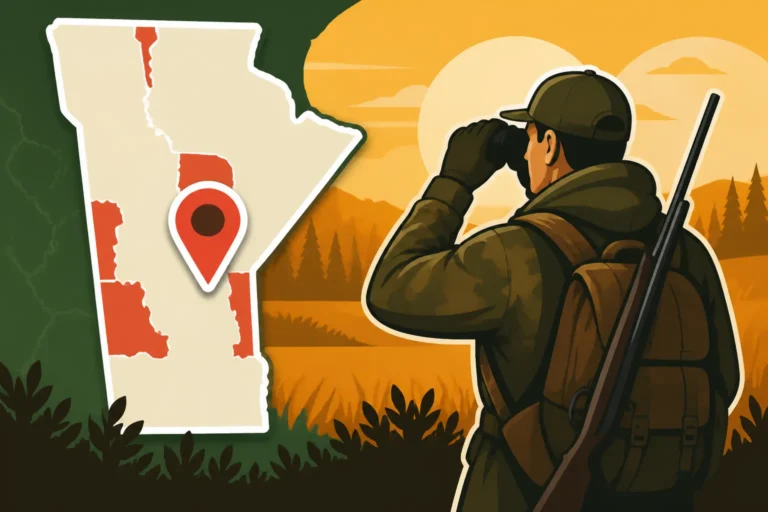
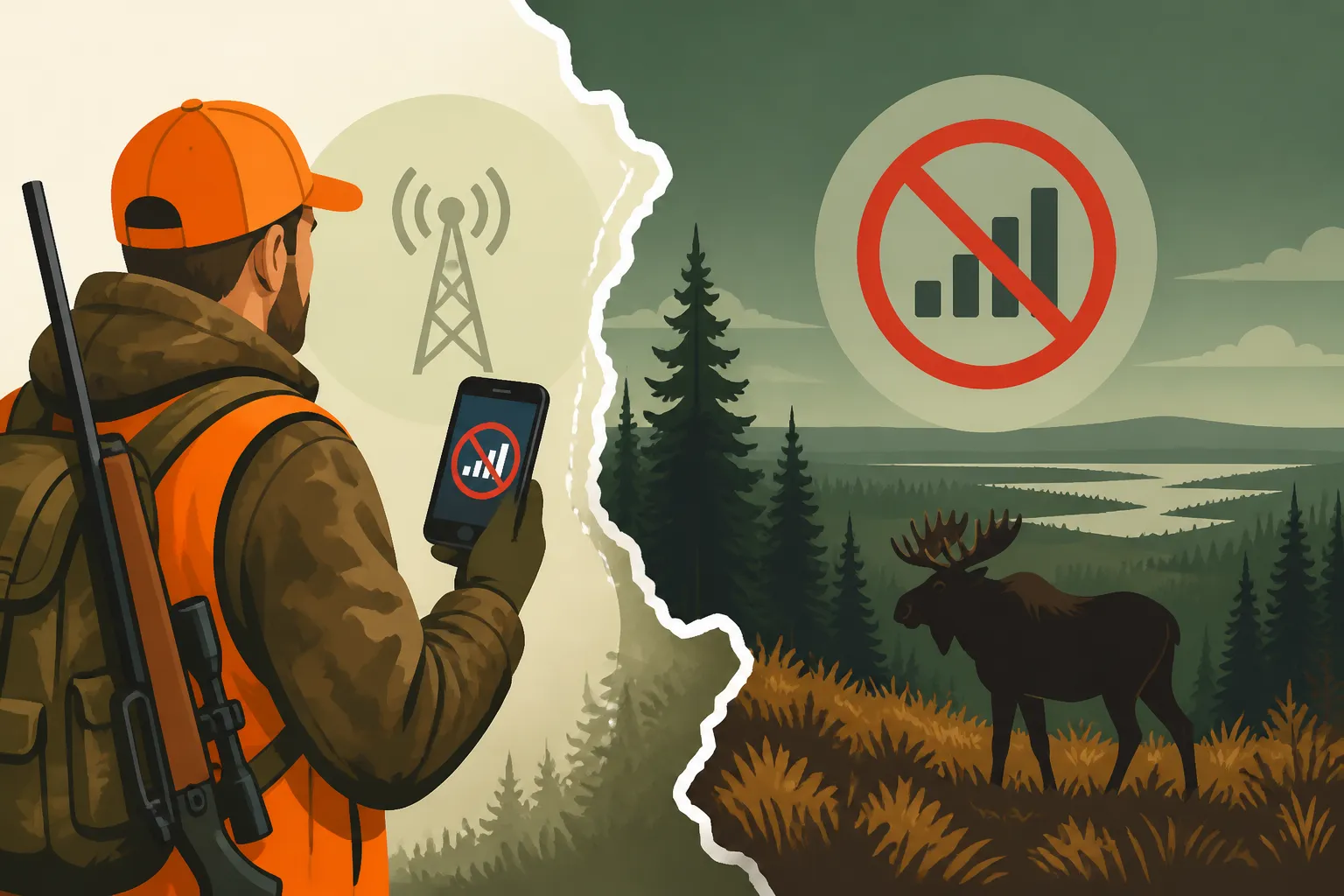
There's nothing quite like the sudden, stomach-dropping realization that your cell phone has become an expensive brick in the middle of nowhere. For hunters in Manitoba, hitting those cellular dead zones isn't just an inconvenience; it can be a genuine safety concern, hindering communication, navigation, and coordination. This guide is here to shed some light on where you're most likely to lose signal across Manitoba's vast hunting landscapes and how you can best prepare for that inevitable disconnect.
The Inevitable Signal Fade: Understanding Manitoba's Cell Dead Zones
Manitoba is a huge province, stretching from fertile prairies to dense boreal forest and even up into the tundra transition zone. With all that wild expanse, it's simply impossible for cellular networks to provide seamless coverage everywhere. As hunters, we often seek out those untouched, remote areas where game thrives, and those are precisely the places where cell service often gives up the ghost.
Why Cell Service Drops in the Bush
When you're out chasing whitetails in the bush country or tracking moose through the boreal, several factors conspire against your cell signal. Think about it: cell towers need to be somewhat close, and the signals need a clear path.
First, dense forest cover, like the thick stands of spruce and aspen, can act like a giant sponge, absorbing or deflecting those radio waves. It's not just the trees themselves, but the sheer volume of biomass that interferes. Then there's the terrain. Even in seemingly flat areas, subtle rises, depressions, or the slopes of a river valley can create significant shadows where signals can't penetrate. Imagine you're hunting in the deep folds of the Pembina Valley or tucked into a low-lying area near a beaver pond; your phone might show "No Service" even when a few hundred yards up on a ridge, you might grab a bar or two. In the rocky Canadian Shield country of eastern Manitoba, the granite outcrops themselves can block signals, creating very localized dead spots that are tough to predict. The infrastructure simply isn't there to cover every square mile of our wild lands, especially in areas with low population density.
Common Frustrations and Realities for Hunters
We've all been there. You've just downed a nice deer, the light is fading, and you desperately need to call your hunting partner to help with the pack-out, only to find you have no signal. Or maybe you're trying to check the radar for an incoming storm, or perhaps, most critically, you need to contact emergency services for a situation that has gone sideways. The frustration is real. It's not just about convenience; it's about safety, coordination, and peace of mind.
Hunters often rely on their phones for quick map checks, weather updates, or even to share a triumphant photo. When that lifeline vanishes, it can create anxiety and add an unexpected layer of challenge to an already demanding activity. Knowing that cell service is often unreliable in prime hunting areas forces us to be more prepared, more self-reliant, and to have solid backup plans in place, which, let's be honest, is part of the allure of hunting in the first place, but it's crucial to acknowledge the practical implications. Losing signal often means you can't coordinate a ride, let family know you're safe, or look up crucial regulations on the fly. It's a disconnect that needs proactive management.
Regional Breakdowns: Where Coverage Thins Out Across the Province
Manitoba's diverse geography means a highly varied experience when it comes to cell coverage. What might be strong in one region can vanish entirely a short drive away. Understanding these regional tendencies is key to planning your hunt effectively.
The Parkland and Interlake Regions
The Parkland region, encompassing areas like the Duck Mountain, Porcupine Hills, and Riding Mountain fringe, as well as the Interlake region between Lake Manitoba and Lake Winnipeg, generally offers decent cellular coverage around major towns and along primary highways. You'll likely have service in communities like Dauphin, Swan River, or Ashern. However, venture off the beaten path, into the vast provincial forests, Wildlife Management Areas, or deep into private land bush pockets, and that reliable signal can quickly disappear.
For instance, if you're deep in Hunting Manitoba's Duck Mountain Country or Hunting Manitoba's Interlake Between the Lakes, even a few kilometres from a main road, you can find yourself in a silent zone. The rolling hills, numerous lakes, and dense timber here are excellent at gobbling up weak signals. It’s common to find spotty service even along gravel roads cutting through these areas. While planning a hunt, don't assume that because the nearest town has service, your chosen hunting spot will too. Always check maps and consider alternate communication.
Northern Boreal and Shield Country
This is where the true wilderness begins, and reliable cell service almost entirely ends. Manitoba's Northern Boreal, including areas around The Pas, Thompson, and extending north, and the Eastern Shield country like the Whiteshell and Nopiming Provincial Parks, are vast, remote landscapes with very few cell towers. If you're Hunting Manitoba's Northern Boreal for moose or bear, you should operate under the assumption that you will have no cell service whatsoever.
Areas like the Whiteshell, Hunting the Whiteshell Shield Country, and the Nopiming Provincial Park, Hunting the Nopiming Burn Country, are popular hunting destinations, but they are notorious for signal blackouts. Even around some of the remote communities, service can be patchy and inconsistent. Fly-in camps, by their very nature, are chosen for their remoteness, and they are almost guaranteed to be beyond the reach of any cellular network. If your hunt takes you to these regions, dedicated satellite communication is not just recommended; it's practically mandatory for safety.
Southern Agricultural Areas
The southern and southwestern parts of Manitoba, largely characterized by open farmland, generally have the best overall cellular coverage due to higher population density and more widespread infrastructure. Towns like Brandon, Portage la Prairie, and Winkler, and the major highways connecting them, will typically have strong signals. However, even here, hunters can encounter surprising dead zones.
River valleys, such as the Assiniboine River corridor or the steep slopes of the Pembina Valley, can create localized signal voids where the terrain blocks transmission. Large treed bluffs, shelterbelts, or deep coulees, often prime spots for whitetails in Hunting Manitoba's Southwest Farmland, can also cut you off. If you’re hunting a specific field edge or a treed island in a sea of agriculture, don't assume you'll have full bars. Always have a plan for when that signal inevitably drops, especially if you plan on venturing more than a couple of miles from a paved road. Even a small dip in elevation can make all the difference between a weak signal and none at all.
Here's a quick overview of typical cell coverage expectations by region:
| Region | Typical Coverage Expectation | Hunting Implications |
|---|---|---|
| Southern Farmland | Generally Good (Towns, Highways), Spotty (River Valleys, Dense Cover, Remote Fields) | Can't rely on it for deep bush or valley hunts. |
| Parkland | Fair (Towns, Main Roads), Poor (Provincial Forests, WMAs, Remote Bush) | Assume limited to no service once off main routes. |
| Interlake | Fair (Towns, Main Roads), Poor (Lakeshore, Remote Bush, Large Wetlands) | Very unreliable away from population centres. |
| Eastern Shield | Very Poor to None (Vast majority of area, even some remote communities) | Mandatory satellite communication. |
| Northern Boreal | None (Vast majority of area, except select communities/mining sites with limited service) | Absolutely no cell service; rely entirely on other communication methods. |
| Far North/Tundra | None (Even communities may have satellite-based internet/phone, not cellular broadcast) | Hunting here means being entirely off-grid for cellular. |
Preparing for the Disconnect: Strategies for Staying Connected (or Not)
Given the reality of spotty to non-existent cell service in much of Manitoba's prime hunting country, preparing for the disconnect isn't just a good idea—it's essential for your safety and the success of your hunt.
Essential Pre-Hunt Communication Checks
Before you even leave your driveway, consider what communication tools you'll be relying on. Your cell phone, while a marvel of modern technology, should rarely be your sole means of communication in the backcountry.
First and foremost, communicate your plans to someone reliable back home. Let them know your exact hunting area, your anticipated return time, and who to contact if they don't hear from you. This simple step, often overlooked, is a critical safety net. Next, for navigation, download all your maps for offline use. Apps like onX Hunt and GoHunt are fantastic for this, allowing you to cache detailed satellite imagery, property boundaries, and topography onto your device. This means even if you lose signal, your GPS will still show your location on the map. I can't stress this enough: download those maps at home where you have good Wi-Fi! Trying to do it on the edge of service in the field is a recipe for frustration. Reading a Manitoba GHA Map Before You Go should be part of your routine.
Maximizing Limited Service
Sometimes, you might find yourself in a zone with one flickering bar of service. There are a few tricks to try and squeeze some utility out of it. Turn off your cellular data and put your phone in airplane mode, then try to toggle cellular back on. This sometimes helps it grab onto a weaker signal without constantly searching for data. Text messages require less bandwidth than calls, so if a call won't go through, try a text. Sometimes, simply walking to higher ground – even a small knoll or the top of a rise – can be enough to get a temporary signal. If you're on a multi-day hunt and need to conserve battery, keep your phone in airplane mode until you specifically need to attempt communication.
Navigating Off-Grid: Tools and Tactics for When Your Phone is Just a Camera
When your cell phone truly becomes a glorified camera, you need alternative strategies and equipment to navigate, communicate, and ensure your safety in the Manitoba wilderness.
Offline Mapping and GPS Devices
As mentioned, offline maps are your best friend. Modern hunting apps like onX Hunt and GoHunt are incredibly powerful tools. They allow you to mark waypoints, track your path, and view crucial details like property lines and topographical features, all without cell service. This is invaluable when you're tracking a wounded animal through dense bush, trying to find your way back to camp after dark, or simply want to know if you're straying onto private land. Get familiar with these apps at home. Practice marking points, creating routes, and understanding their features before you're relying on them in the field.
Beyond apps, consider carrying a dedicated handheld GPS unit. These devices are robust, have excellent battery life, and are designed purely for navigation, often outperforming phones in accuracy and reliability in challenging conditions. They don't rely on phone towers at all, just satellite signals. Always carry extra batteries, regardless of whether you're using a phone or a dedicated GPS. Scouting With Satellite Imagery in Manitoba can supplement your on-the-ground navigation efforts.
Backup Communication and Safety Protocols
When cell service is truly gone, you need a different plan for emergencies. Satellite communicators, like those from Garmin inReach or Zoleo, are invaluable. These devices allow you to send and receive text messages and, crucially, activate an SOS signal to a 24/7 monitoring centre, even from the most remote locations. They have a subscription fee, but for the peace of mind they offer, especially when hunting deep in Black Bear Hunting in Manitoba country or any other remote area, it's a worthwhile investment.
For shorter-range communication with hunting partners, reliable two-way radios are a must. They work well within line of sight and through some cover, allowing you to coordinate movements or signal for help if you're separated. Always carry a whistle (three short blasts is a universal distress signal), a signal mirror, and a well-stocked first-aid kit. Hunting with a partner and establishing clear safety protocols beforehand, such as staying within sight or knowing each other's planned routes, is critical. Be prepared for the unexpected; a Winter Truck Kit for a Manitoba Hunt is crucial, and knowing What to Do If You Get Stuck in the Bush could save your life. Emergency Plans in Manitoba's Bush should be a serious part of your pre-hunt discussion.
Disclaimer
This article is for general informational purposes only and does not constitute professional advice. Laws, prices and regulations vary by location and change over time. Consult a qualified professional for guidance on your specific situation.