What Non-Residents Get Wrong About Manitoba
Many non-resident hunters, drawn by Manitoba’s reputation for incredible big game and waterfowl opportunities, often arrive with a few preconceived notions that don't quite align with the reality on the ground. This guide aims to clear up some of the most common misunderstandings, helping you plan a successful and frustration-free hunting adventure in our beautiful province.
Underestimating Manitoba's Unique Regulations and Licensing Nuances
One of the biggest areas where non-residents can stumble is assuming Manitoba's hunting regulations are similar to those in their home state or province. While many principles of ethical hunting are universal, the specifics of licenses, guides, and permissible methods here can be quite distinct. It’s not just about buying a tag; it’s about understanding who needs a guide, what species require specific draws, and how deeply interconnected our hunting management is with conservation efforts.
The Resident vs. Non-Resident Divide
It’s a common misconception that if you’re a Canadian citizen, you can hunt anywhere in Canada with the same ease as a resident. This simply isn’t true, and it’s a crucial point for our friends from other Canadian provinces. Manitoba has distinct categories: "Resident," "Canadian Resident (Non-Manitoba)," and "Foreign Resident." Each has different rules, particularly when it comes to certain big game species. For instance, while a Canadian resident from Alberta might be able to hunt without a guide for some species, a foreign resident from the United States or overseas will almost always need a licensed guide or outfitter for big game like moose, elk, and bear. This isn't meant to be an obstacle; it's a measure to manage hunting pressure and ensure proper ethical conduct, especially for hunters unfamiliar with our unique wilderness. Rules for Non-Residents Hunting Manitoba lays out these distinctions clearly, and it’s a must-read before you even think about booking a trip.
For many non-residents, particularly those crossing the border from the US, the requirement to book with a licensed outfitter can come as a surprise if they're used to self-guided hunts back home. This isn't just a suggestion; it's the law for most big game species. So, if your dream is a do-it-yourself Manitoba moose hunt, you might need to adjust your expectations unless you fall into a specific Canadian resident category. Many reputable outfitters list their services on platforms like BookYourHunt, which can be a good starting point for finding a guide who understands these specific requirements.
The Reality of Draws and Limited Entry
Another area of misunderstanding revolves around our big game draws. Some hunters mistakenly believe that all big game tags are available over the counter, or that a simple application guarantees a chance at a coveted species like moose or elk. The truth is, Manitoba manages its populations carefully through draw systems for these high-demand hunts. It’s not a free-for-all, and success in the draw is far from guaranteed, especially in prime areas.
Our draw system involves specific application periods, fees, and often, long odds for non-residents in popular Game Hunting Areas (GHAs). It's a system designed to spread opportunities and manage herd health. Many non-residents, especially those new to Manitoba, don't realize that simply showing up with a plan to buy an elk tag isn't feasible. You need to apply well in advance, understand the Manitoba's Big Game Draws process, and be prepared for the possibility that you might not draw a tag in your desired GHA, or at all. This means your planning timeline needs to be significantly longer than for an over-the-counter whitetail or waterfowl hunt. Outfitters often help navigate this, but understanding the basics yourself is empowering.
Misjudging Game Species and Trophy Potential
Manitoba has an incredible diversity of game, from world-class whitetails to abundant waterfowl, but non-residents sometimes have specific, often exaggerated, ideas about what they’ll find here. While our reputation for big animals is well-earned, it's essential to have realistic expectations about sizes, population densities, and where certain species thrive.
The Myth of Giant Bucks Everywhere
Manitoba is renowned for its big whitetail deer, and rightfully so. We consistently produce bucks with impressive body size and antler mass. However, some non-residents expect every bush to hold a Boone & Crockett contender, leading to disappointment if they don't see a monster on day one. While the potential for a trophy of a lifetime is certainly here, it's crucial to remember that it's still hunting. These animals are wild, wary, and often found in dense cover.
The average body weight of our northern bucks can indeed be staggering – far exceeding what many southern hunters are accustomed to. Why Manitoba Bucks Grow Heavy Bodies explains some of the physiological reasons behind this. But "big" doesn't necessarily mean "easy to find" or "easy to harvest." Success rates are influenced by weather, hunter skill, and, of course, a good dose of luck. Expect hard hunting, especially if you're targeting those truly mature, heavy-racked bucks that are the stuff of legends. The province holds fantastic deer numbers, but hunting them requires patience and skill, often relying on strategies like Hunting Whitetails in Manitoba's Bush Country or sitting tight in a well-scouted blind.
Overlooking Bear Color Phases and Moose Distribution
Another common misconception relates to our black bears. Many non-residents are pleasantly surprised to learn about the prevalence of colour phase bears in Manitoba – not just the classic black. You might encounter bears that are chocolate, cinnamon, blonde, or even a stunning red. This variety adds an exciting dimension to a bear hunt and is definitely something to anticipate. Colour Phase Black Bears in Manitoba goes into more detail about these beautiful animals.
However, when it comes to moose, some hunters picture them everywhere in our vast wilderness. While Manitoba has significant moose populations, they are not uniformly distributed. There are specific regions, primarily in the boreal forest, where moose thrive, and other areas where populations are recovering or closed to hunting. The province has implemented Manitoba's Moose Conservation Closures in certain areas to help populations rebound, meaning hunters need to be diligent about checking current GHA regulations. You won't find huntable moose populations in the same areas you might chase whitetails or waterfowl. Understanding the specific habitat requirements of moose, and where the herds are strong, is key to a successful hunt.
The Abundance of Waterfowl (But Not Always an Easy Hunt)
Manitoba sits squarely on the Central Flyway, making it a duck and goose hunter's paradise. Non-residents often arrive expecting unbelievable numbers of birds, which we certainly have. What they sometimes underestimate, however, is the skill and effort required to consistently put birds on the ground, especially as the season progresses and birds become wary.
While we are a staging ground for millions of Geese That Stage in Manitoba and a nesting haven for countless ducks, a successful hunt isn't just about showing up in a field. It involves extensive scouting, knowledge of bird behavior, setting up intricate decoy spreads, and often dealing with challenging weather conditions. Many outfitters specialize in waterfowl for this very reason, as their local knowledge and equipment are invaluable. You might see thousands of birds, but getting them to commit to your spread requires finesse.
Overlooking Diverse Terrain and Access Realities
When many non-residents think of Manitoba, they often conjure images of vast, flat prairies. While that’s certainly a part of our landscape, it’s far from the whole picture. Manitoba boasts an incredibly diverse geography, from rolling parklands to dense boreal forests and rocky Canadian Shield country, each presenting unique hunting challenges and access considerations.
Beyond the Flat Prairie Stereotype
It's a common and understandable misconception that Manitoba is solely flat, open agricultural land. And yes, much of our southern and central region is indeed productive farmland, offering fantastic hunting for whitetails and waterfowl. However, step outside these areas, and you'll encounter a completely different world. We have the rugged beauty of the Canadian Shield in the east, with its ancient rock, thick spruce, and innumerable lakes. The western part of the province features the Duck Mountain and Porcupine Hills, significant uplands covered in mixed forest, offering completely different hunting experiences for elk, moose, and bear. Even our "parkland" region isn't flat, but a mosaic of aspen bluffs, sloughs, and agricultural fields.
This diversity means that your hunting strategy needs to adapt dramatically depending on where you plan to hunt. Hunting Manitoba's Eastern Shield Country will be a vastly different experience than Hunting Manitoba's Southwest Farmland. The gear you pack, the calls you use, and even your physical conditioning will all need to be tailored to the specific terrain. This is where detailed maps and scouting tools like GoHunt can be incredibly valuable to visualize the diverse landscapes.
Crown Land Isn't Always Easy Access
Another point of confusion for non-residents often revolves around Crown land. While Manitoba does have a substantial amount of Public Hunting Land in Manitoba, accessing it isn't always as straightforward as simply looking at a map and walking in. Many tracts of Crown land are remote, requiring quads, side-by-sides, or even float planes to reach. Others might be landlocked by private property, requiring permission from landowners to cross.
Furthermore, not all Crown land is equally productive or accessible. Some areas may be swampy, incredibly dense, or recently disturbed by logging or fire, changing game patterns. Manitoba's Crown Land Access rules can also dictate vehicle use or camping regulations. You can't just drive anywhere on Crown land; there are designated trails and restrictions. Hunters unfamiliar with the specific nuances of our public access might spend valuable hunting time trying to navigate seemingly impenetrable terrain or unknowingly trespassing. This is why thorough scouting, whether in person or using digital mapping tools, is paramount.
The Realities of Winter Roads and Remote Hunting
For those hunting later in the season, particularly in our northern regions, the idea of winter access can be another eye-opener. While some main roads are maintained, many secondary and bush trails can become impassable once significant snow falls. Winter Road Access in Northern Manitoba describes how quickly conditions can change. What looks like a passable track on a map in July might be a drifted-in snow tunnel by November.
This can impact everything from getting to your hunting area to retrieving a downed animal. Planning for potential road closures, carrying emergency gear, and understanding that cell service is often non-existent in remote areas are critical considerations. Remote hunting often requires self-sufficiency and a deeper understanding of wilderness survival than hunters from more populated areas might be used to.
Common Misconceptions About Planning and Logistics
Successful hunting in Manitoba, especially for non-residents, requires meticulous planning. Many non-residents underestimate the lead time needed for booking, the full scope of costs, and the specific travel requirements, leading to last-minute scrambles or missed opportunities.
Booking Timelines and Hidden Costs
It's a common oversight to assume you can decide on a Manitoba hunt a few months out and still secure a prime spot with a top outfitter, especially for popular hunts like the whitetail rut or spring bear. The reality is that the best outfitters, particularly those with a reputation for consistent success and quality experiences, often book up a year or more in advance. If you're targeting specific dates, like the peak of Hunting the Rut in Early to Mid November, you need to plan exceptionally far ahead. This is where platforms like BookYourHunt can show you availability, but even then, last-minute openings are rare for high-demand periods.
Beyond the initial outfitter fee, many non-residents underestimate the full "all-in" cost of a guided hunt. They might budget for the package but forget about essential additions:
- Licences and Tags: These are almost always separate from the outfitter's fee. You need to account for Manitoba Big Game Tag Costs which vary by species.
- Travel: Airfare, vehicle rental, fuel, and potential overnight stays before and after the hunt.
- Taxes and Fees: Sales tax, conservation fees, and any other local charges.
- Gratuities: Tipping your guide and camp staff is customary and expected. This isn't a small amount; it’s a significant part of the overall cost and reflects appreciation for hard work.
- Meat Processing and Taxidermy: If you harvest an animal, processing and shipping the meat or getting a trophy handled are additional expenses that can add up quickly.
- Gear: Investing in the right cold-weather gear, quality optics, and a reliable rifle is essential for success and comfort.
A comprehensive budget that covers all these aspects will prevent unwelcome surprises down the line.
Travel Requirements: Firearms and Borders
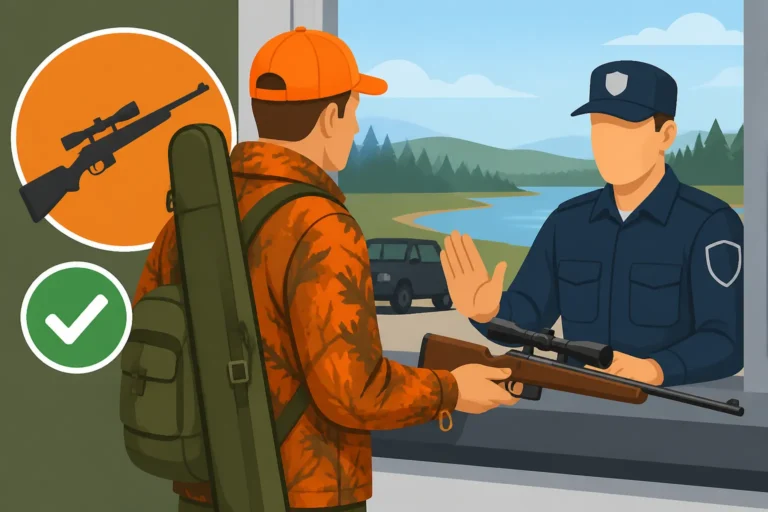
Bringing firearms into Canada as a non-resident hunter is a point of frequent misunderstanding. Many assume it's a simple process, perhaps just declaring it at the border. While it is possible, it requires specific documentation and adherence to Canadian law. It’s not as simple as showing up with your rifle and a hunting license from your home state.
You'll need to complete a Non-Resident Firearm Declaration Form (Form RCMP 5589) in triplicate. This form acts as a temporary firearm permit once confirmed by a border services officer. It's crucial to understand that certain firearms, like handguns, are generally prohibited for hunting in Canada, and ammunition limits apply. Declaring a Firearm at the Canadian Border provides detailed steps for this process. Failing to properly declare firearms or bringing prohibited weapons can lead to serious legal complications, including confiscation and charges. It’s highly recommended to fill out the form in advance but not sign it until you are in front of a Canadian Border Services Officer.
Varying Success Rates and Ethical Considerations
Finally, many non-residents, especially those new to guided hunts, have an unrealistic expectation of success rates. While Manitoba outfitters generally have high success rates, especially for species like black bear, no ethical outfitter can "guarantee" a kill. Hunting is hunting, and variables like weather, animal movement, and hunter proficiency all play a role. A "100% opportunity rate" is not the same as a "100% success rate." It means you had a reasonable chance at a shot, not that you harvested an animal.
It's also important to understand the ethical considerations we hold dear here. Fair chase is paramount. Baiting is permitted for black bear in specific seasons, but it is not allowed for deer or other big game. Understanding and respecting these nuances of local hunting culture and ethics will make your hunt more enjoyable and respectful of our wildlife.
Key Misconceptions & Realities for Non-Resident Hunters
| Misconception | Manitoba Reality |
|---|---|
| All tags are over-the-counter. | Moose, Elk, and sometimes special deer permits require draws with specific application periods and odds. |
| Foreign non-residents can self-guide big game. | Most foreign non-residents (e.g., from the USA) must hunt big game with a licensed Manitoba outfitter. Canadian non-residents have slightly different rules. |
| Manitoba is all flat prairie. | The province boasts diverse terrain: prairies, parklands, boreal forests, and Canadian Shield rock country, each with unique hunting challenges. |
| All public land is easily accessible. | Much Crown land is remote, landlocked by private property, or difficult to traverse. Thorough scouting and landowner permission are often required. |
| Booking a hunt last minute is fine. | Top outfitters for prime seasons (e.g., whitetail rut) often book 1-2 years in advance. |
| Bringing a firearm is a simple border process. | Requires a completed Non-Resident Firearm Declaration Form, payment of a fee, and strict adherence to Canadian firearm laws; some firearms are prohibited. |
| Success is guaranteed on a guided hunt. | Ethical outfitters offer high opportunity rates, but a "kill" is never guaranteed. Hunting remains hunting, influenced by many variables. |
| All animals are trophy-sized. | While Manitoba has trophy potential, it's still hunting. Expect hard work, and remember that quality hunting involves more than just antler size. |
By taking the time to understand these realities, non-resident hunters can set themselves up for a much more rewarding and successful experience in Manitoba. It's an incredible place to hunt, but a little preparation goes a long way.
Disclaimer
This article is for general informational purposes only and does not constitute professional advice. Laws, prices and regulations vary by location and change over time. Consult a qualified professional for guidance on your specific situation.