Hunting Manitoba Ground With Cattle On It
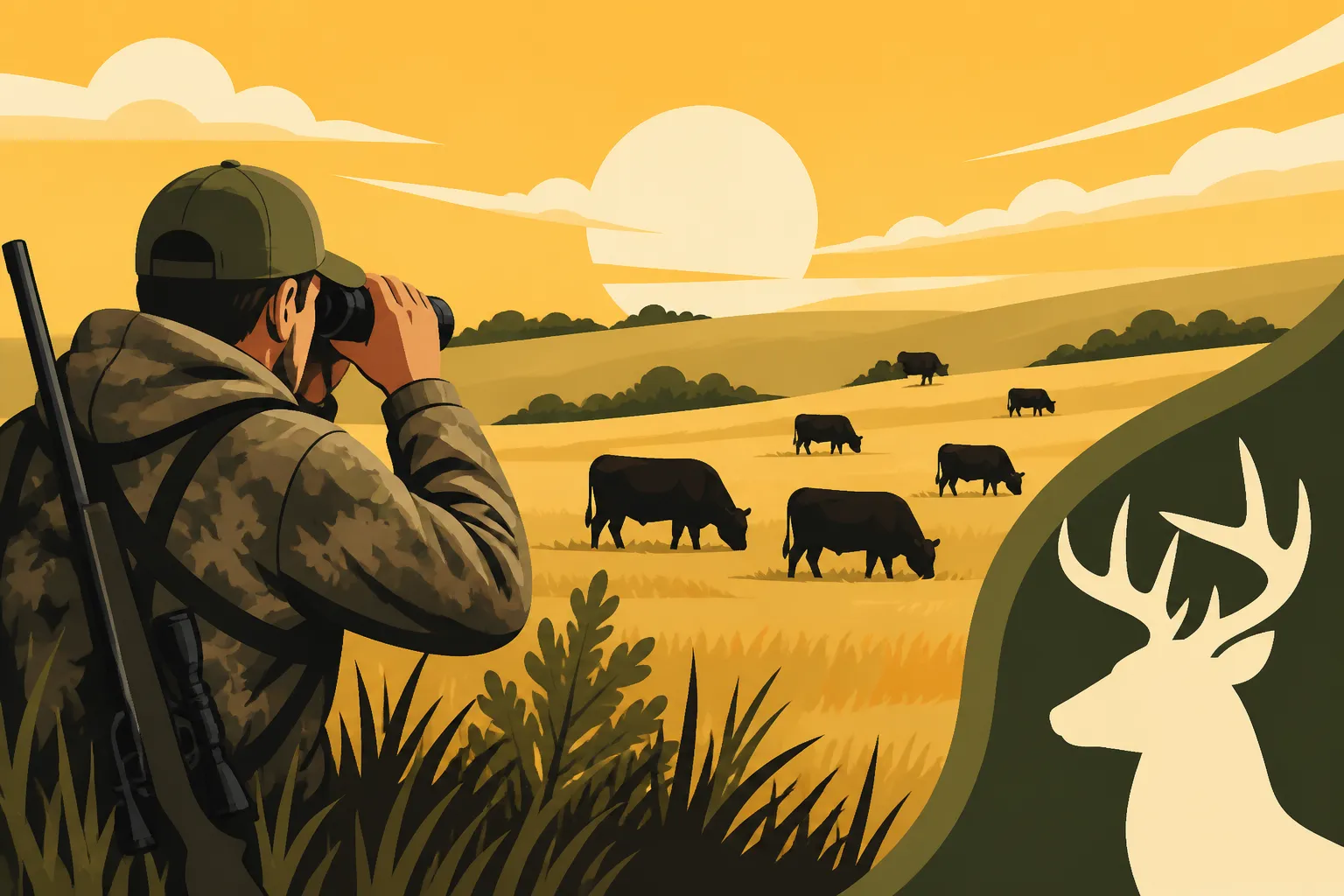
Many hunters feel a pang of uncertainty when they see cattle grazing on land that otherwise looks like prime hunting territory. It's a common dilemma: how do you ethically and effectively hunt deer or other game when domestic livestock are also present? This guide aims to demystify hunting Manitoba ground with cattle on it, offering practical advice to navigate these unique situations safely and successfully.
Understanding the Landscape: Why Cattle and Game Share Space
The Allure of Pasture Edges and Draws for Wildlife
It's not uncommon to scout a beautiful piece of land, full of promising cover and potential game trails, only to spot a herd of cattle lazily grazing. Your first thought might be, "Well, there goes that spot," but I'm here to tell you, don't write it off so quickly! In Manitoba, where agriculture and wild spaces often intertwine, livestock pastures are frequently adjacent to, or even contain, excellent game habitat. Think about it: these pastures are often carved out of the bush, leaving behind natural draws, bluffs, and dense willow rings that wild animals absolutely adore.
Deer, especially whitetails, are creatures of edge. They love the transition zones where open fields meet dense cover. A cattle pasture often provides exactly this. The maintained pasture itself offers forage, while the untouched edges – a deep coulee, a thick stand of aspens, a brushy fence line, or a willow run – offer bedding, security, and travel corridors. These spots are natural magnets for deer looking for both food and safety.
Beyond just the physical edges, many pastures also encompass natural features that wild game use. A small creek winding through, a low-lying slough that holds water, or a series of rolling hills with pockets of dense brush can all be found within or bordering grazed land. These micro-habitats, even with cattle present, are vital for deer, moose, and even elk, offering water, specific browse, and crucial escape cover. It's like finding a hidden gem within an otherwise managed landscape.
Furthermore, the constant grazing by cattle can sometimes improve forage for wild game. By keeping certain grasses and forbs trimmed, it can stimulate new, tender growth that deer find highly palatable. It also creates more open sightlines in some areas, which can benefit predators, but also makes it easier for deer to spot threats from a distance, reinforcing the value of the nearby dense cover. It's a delicate balance, but one that often works in favor of wildlife thriving in these shared spaces.
Common Ground: Overlap in Food and Cover
What might seem like a deterrent – cattle – can actually be an indicator of good habitat. Cattle need food, water, and some form of shelter from the elements, just like wild ungulates. The areas chosen for pasture, especially those on the fringe of agricultural and wild lands, often possess these critical resources in abundance. This inherent quality of the land is what draws both the rancher and the wildlife to the same general locale.
Consider the food sources. While cattle primarily graze grasses, deer browse on a wider variety of plants, including shrubs, saplings, and forbs. However, both benefit from palatable plants that thrive in fertile ground, often found in these mixed landscapes. The proximity of a cornfield, a standing canola field edge, or a swathed grain field at dusk, bordering a cattle pasture, can create an irresistible buffet for whitetails. The cattle might be content with their grass, but the deer are taking advantage of everything else on offer.
Then there's the cover. A farmer isn't always clearing every last bush from a pasture. Oftentimes, particularly in the Parkland region or the Interlake, pastures retain significant pockets of bush, bluffs, or low areas that are simply too wet or too rocky to clear. These untouched natural features provide critical bedding areas and escape routes for deer. The cattle might be out in the open, but the deer are using those dense, unmolested pockets of cover that often exist right there with them. You'd be amazed how close a big buck will bed to a herd of cows if he feels secure in his chosen thicket.
Water is another shared resource. Dugouts, natural sloughs, and creek bottoms are essential for both livestock and game. A hunter who pays attention to these water sources will often find game sign, even if cattle tracks are abundant. The trick is to discern between the two and understand how deer utilize these areas, perhaps moving in at different times of day or using specific trails away from the heaviest cattle traffic. Hunting a Dugout in Dry Country can reveal how critical these points are.
Navigating the Rules and Etiquette of Hunting Near Livestock
The Cruciality of Landowner Permission
Before you even think about setting foot on land with cattle, or any private land for that matter, let me emphasize this: get permission! There's no way around it, and it's absolutely non-negotiable in Manitoba. Ignoring this fundamental step is not only illegal but also ruins opportunities for all hunters. Ranchers and farmers are generally good people, often conservation-minded, but they have a livelihood to protect and they need to know who is on their land. Always remember Manitoba Landowner Permission Law.
Approaching a landowner can feel daunting, especially if you're not used to it. My advice? Be respectful, be clear, and be prepared. Explain what you want to hunt, when you'd like to hunt, and assure them of your commitment to safety and respect for their property and livestock. Sometimes, all it takes is a friendly knock on the door and a genuine conversation. Don't show up with your rifle and camo on, instead come clean and introduce yourself politely. For more tips, check out Asking a Manitoba Landowner for Permission.
Once you have permission, clarify the boundaries. Ask if there are specific areas to avoid, or times when hunting isn't preferred. This is especially important when cattle are present. They might have calves in a certain pasture, or be moving cattle through a lane, and knowing these details can save you and the landowner a lot of grief. Some landowners might grant permission for deer but ask you to avoid areas where their cattle graze heavily. Be prepared to respect those wishes.
What if you hit an animal and it runs onto land where you don't have permission, or onto land with cattle? This is where good planning and clear communication beforehand truly shine. If you haven't secured permission from adjacent landowners for retrieval, you absolutely cannot just follow your animal. You must re-engage with the landowner whose property the animal has entered. This is a critical point of Retrieving Game From Private Land in Manitoba, and respecting this process is paramount to maintaining good hunter-landowner relations. If you are ever unsure, it's safer to avoid this situation entirely and focus your efforts on ground where you have full permission and understanding.
Safety First: Respecting Livestock and Property
Hunting on ground with cattle demands an extra layer of caution and responsibility. Your primary concern must always be the safety of the livestock. A stray bullet or arrow can not only cause immense financial loss to a farmer but also create a dangerous situation for their animals and potentially for you. Always be absolutely certain of your target and what lies beyond it. This means having a clear shot at your intended game animal, with a safe backstop that won't endanger any cattle.
Beyond direct impacts, remember that livestock can be spooked. Loud noises, sudden movements, or even just your presence in an unexpected area can agitate them. A spooked herd can stampede, potentially injuring themselves, damaging fences, or even posing a risk to anyone nearby. Approach any area with cattle quietly and calmly. Avoid getting between cows and their calves, as protective mothers can be unpredictable. If you notice cattle are becoming agitated by your presence, it's best to back off and find another approach.
Property damage is another critical aspect of respecting the land. Close gates behind you, avoid driving off established trails if the ground is soft, and be mindful of fences. Cutting across fields or driving through wet areas without permission can cause significant damage. A good rule of thumb is to leave the land in the same, or better, condition than you found it. This helps build trust and ensures future hunting access for yourself and other ethical hunters. Furthermore, being familiar with Manitoba Trespass Law for Hunters is essential for understanding your responsibilities.
Your gear selection and handling also play a role. Carrying a properly sighted rifle or a well-tuned bow is part of ensuring accuracy, which in turn contributes to livestock safety. Being aware of Legal Firearms and Bows for Big Game and understanding their capabilities and limitations is crucial. If you're hunting with a firearm, knowing your maximum effective range and sticking to it religiously is non-negotiable in these environments. Remember your Manitoba Hunter Education Requirements which always emphasize safety and responsibility.
Strategic Approaches for Hunting Cattle-Grazed Land
Reading the Land: Identifying Key Game Travel Corridors
Just because there are cattle doesn't mean game animals aren't using the same ground, or at least the edges of it. The key is to shift your mindset from "cattle-free zone" to "shared habitat." Start by identifying the areas within or adjacent to the pasture that offer the best cover and food for your target species. Look for those thick willow rings, un-grazed bluffs, deep draws, or fence lines bordering standing crops. These are the natural highways and hideouts for game. Using tools like onX Hunt or GoHunt can be invaluable here, allowing you to identify these features and property lines from above.
Pay close attention to subtle clues. While cattle leave obvious tracks and droppings, deer sign will often be more subtle. Look for tracks along the very edge of the bush line, rub lines on saplings that cattle wouldn't touch, or fresh droppings away from the main grazing areas. Deer tend to move differently than cows; they'll slip through dense brush, follow faint trails, and often parallel the paths of livestock rather than directly mingling with them. Reading Whitetail Sign in Manitoba Aspen can help you differentiate.
Consider the time of day. Deer and other game are often most active during dawn and dusk. This is when they are more likely to move from their bedding areas in dense cover to feed in more open spots, including the fringes of pastures or adjacent crop fields. Cattle might be out grazing all day, but the peak movement times for game often coincide with lower light, offering you prime opportunities to intercept them as they transition. Knowing the specific Manitoba's Game Hunting Areas and their unique characteristics will further enhance your strategy.
Don't underestimate the value of natural funnels and pinch points. Even in a large pasture, there might be a narrow strip of bush connecting two larger blocks of timber, or a natural draw that acts as a protected travel route. Deer will use these features religiously, especially if it means avoiding open areas or heavy cattle concentrations. These are ideal spots for setting up a stand or planning a careful stalk. Hunting a Cattle Pasture Draw is a perfect example of such a funnel.
Patience and Precision: The Hunter's Role
Hunting ground with cattle requires a good deal more patience and precision than hunting completely wild areas. You can't just barrel through, expecting to kick up game. Instead, you'll need to move slowly, observe more, and be prepared to wait for the opportune moment. The presence of cattle means you'll need to take extra care with shot placement and angle to ensure safety and ethical harvesting.
Think about your approach. If you're still-hunting or stalking, move against the wind, using available cover to conceal your movement. If you're sitting in a stand, choose a location that offers a clear view of game trails and feeding areas, but also ensures a safe shot angle away from any livestock. Remember, cattle might move into your shooting lane unexpectedly. Always confirm your target, and what's beyond it, before taking a shot.
Setting up a ground blind or a treestand can be highly effective in these transitional zones. A blind near a Hunting a Shelterbelt Between Two Fields that borders a cattle pasture, for instance, can provide excellent concealment and a stable shooting platform. This allows you to observe the area without spooking game or cattle and gives you time to assess your shot opportunity carefully. Ensure your stand placement gives you plenty of lead time to react to unexpected cattle movement.
Lastly, be prepared for longer waits. Deer might be hesitant to emerge from thick cover if cattle are still very active in the nearby pasture. They might wait until the cattle have moved off, or until after dark. This is where dedication and sitting through those crucial Manitoba Shooting Hours for Big Game pay off. Sometimes the biggest bucks are the most patient, and they expect you to be too.
Essential Gear and Considerations for This Unique Environment
Optics and Observation: Your Best Allies
When hunting alongside cattle, your eyes and ears become your most critical tools, and good optics are their extension. A quality pair of binoculars, say 10×42, will allow you to thoroughly glass the edges of pastures, draws, and treelines from a distance, without disturbing either the game or the livestock. You'll be able to spot that subtle twitch of an ear, the flick of a tail, or the dark patch of a bedded deer amidst the cattle, long before they ever know you're there.
Spotting scopes can also be invaluable, especially if you're covering vast open pasture land adjacent to bush country. They allow you to really pick apart distant cover and confirm whether that dark spot is a shadow, a rock, or indeed a trophy buck. Remember, cattle are big, and spotting a deer among them or near them requires a discerning eye. Using your optics to identify game sign, distinguish between deer and livestock, and confirm a clear shot is paramount.
Besides optical aids, don't underestimate the power of careful Scouting With Satellite Imagery in Manitoba. Before you even leave home, use digital mapping platforms like onX Hunt or GoHunt to identify key features. Look for those hidden draws, the small islands of bush within a pasture, the tight creek bottoms that game will naturally follow. Then, once you're on the ground, use your binoculars to confirm what you saw on the map and look for fresh sign. The combination of pre-scouting and on-the-ground observation is unstoppable.
Also, a rangefinder is not just for shooting; it's for safety. Knowing the exact distance to your target, and to any nearby cattle, helps you make a confident and ethical decision. It allows you to confirm that your shot is within your comfort zone and that you have a safe backdrop. In an environment where livestock are present, removing any guesswork from your shot is non-negotiable.
Footwear and Field Dressing for the Farm Edge
Your choice of footwear is crucial when traversing cattle-grazed land. These areas can be surprisingly diverse, ranging from soft, well-maintained pasture to muddy low spots, rocky outcrops, or dense, thorny brush along the edges. You need boots that are comfortable for long walks, waterproof for those unexpected wet spots, and durable enough to handle varied terrain. A good pair of knee-high rubber boots can be a lifesaver if you find yourself in a boggy section or need to cross a shallow slough.
| Terrain Type | Ideal Footwear | Key Features to Look For |
|---|---|---|
| Soft Pasture | Lightweight hiking boots | Good traction, breathability |
| Muddy/Boggy Areas | Rubber boots (knee-high) | Waterproof, easy to clean |
| Bush Edges/Brush | Sturdy leather boots | Ankle support, durable, puncture resistance |
| Mixed Terrain | All-around hunting boots | Waterproof, comfortable, versatile |
Beyond just the terrain, consider the "mess" factor. Cattle leave behind plenty of evidence of their presence, if you catch my drift. Sturdy, easily cleaned boots are a practical choice. You don't want to be tracking mud and other unsavory things back to your vehicle or home. Keep a brush and some cleaning supplies in your truck. It's a small courtesy to yourself and whoever you're sharing a ride or home with.
Field dressing is another consideration, especially if you're hunting further into a cattle pasture or along its bush edge. If you're fortunate enough to harvest an animal, you'll need to be prepared to handle the field dressing quickly and efficiently. Having a sharp knife, game bags, and perhaps a small ground tarp to keep things clean can be really helpful. Consider how you'll get the animal out without disturbing the cattle or damaging property. Sometimes quartering an animal on site is the most respectful and practical solution, especially for larger game. Meat Care in Manitoba's Cold Snaps is always important, but even more so if you have a walk ahead.
Always be mindful of leaving minimal trace. While field dressing, ensure that offal is placed discreetly away from cattle trails or water sources. Your goal is to be a ghost on the land, leaving no negative impact. This not only shows respect for the landowner but also for the environment and the other animals that call it home.
Conclusion
Hunting ground shared with cattle presents a unique set of challenges and rewards. It demands extra vigilance, a deep respect for both private property and domestic animals, and a keen understanding of how wild game utilizes these mixed landscapes. By prioritizing safety, obtaining clear landowner permission, employing smart scouting techniques, and being meticulously patient and precise in your approach, you can successfully navigate these areas. Don't let the presence of cows deter you from exploring what can be some of Manitoba's most productive and overlooked hunting spots. With the right mindset and preparation, you can unlock incredible opportunities in these rich, transitional habitats.
Disclaimer
This article is for general informational purposes only and does not constitute professional advice. Laws, prices and regulations vary by location and change over time. Consult a qualified professional for guidance on your specific situation.