How Manitoba Ranks for Record Book Whitetails
For many hunters, the pursuit of a true trophy whitetail buck is the ultimate goal, a quest for an animal that not only challenges their skills but also represents a lifetime of dedication in the field. But when you look at a map, you might wonder where Manitoba stands in this hallowed world of record-book deer. This guide will walk you through exactly why Manitoba consistently produces world-class whitetails and how its unique environment contributes to those monster racks that fill hunting dreams.
Manitoba's Reputation for Trophy Whitetails
Manitoba has carved out a serious reputation as a legitimate destination for colossal whitetail bucks, often surprising hunters who might initially think of other provinces or states. It’s not just a whisper anymore; Manitoba is repeatedly putting bucks into the record books, and not just in small numbers. We're talking about those giants that make headlines and get hunters from across the continent packing their bags.
What sets Manitoba apart isn't always the sheer density of deer, but rather the quality of the deer that manage to reach maturity. Hunters often describe Manitoba whitetails as having "heavy bodies," a direct reflection of the rich food sources and robust genetics that are present here. This robust physique directly correlates with the potential for impressive antler growth. While the deer might not be behind every tree, the ones you do encounter often have the potential to be truly exceptional. The province sits at a biological crossroads, offering a blend of dense cover and abundant agriculture, a perfect recipe for nurturing big-bodied, big-racked deer. This combination ensures that when a buck lives long enough, it has every opportunity to grow into a spectacular trophy.
Understanding the Record Books: Boone & Crockett and Pope & Young
When we talk about "record book whitetails," we're generally referring to two main organizations: Boone & Crockett Club and Pope & Young Club. These clubs set the standards for measuring and documenting North American big game trophies, ensuring fair comparisons and celebrating exceptional animals. Knowing what it takes to get into these books is key to understanding Manitoba's standing.
Boone & Crockett Club
Boone & Crockett (B&C) is the older of the two, and typically focuses on trophies taken with any legal weapon, including firearms. It's considered the gold standard for "all-weapon" records. Their scoring system is meticulous, measuring things like the length of main beams, circumference at various points, and the length of individual tines. Deductions are made for asymmetries between the left and right antlers on typical racks, while non-typical racks are celebrated for their unique points and mass without as many deductions for asymmetry.
For a typical whitetail, the current minimum entry score for B&C is generally 170 inches. For a non-typical, it's usually 195 inches. These aren't small numbers; these are truly exceptional animals. Manitoba consistently produces bucks that meet and exceed these scores, placing the province firmly on the map for rifle hunters looking for their chance at a B&C record. The cold climate and challenging terrain here often mean bucks live longer, giving them more seasons to add inches to their headgear. You can learn more about specific scoring rules by researching Scoring a Typical Whitetail Rack.
Pope & Young Club
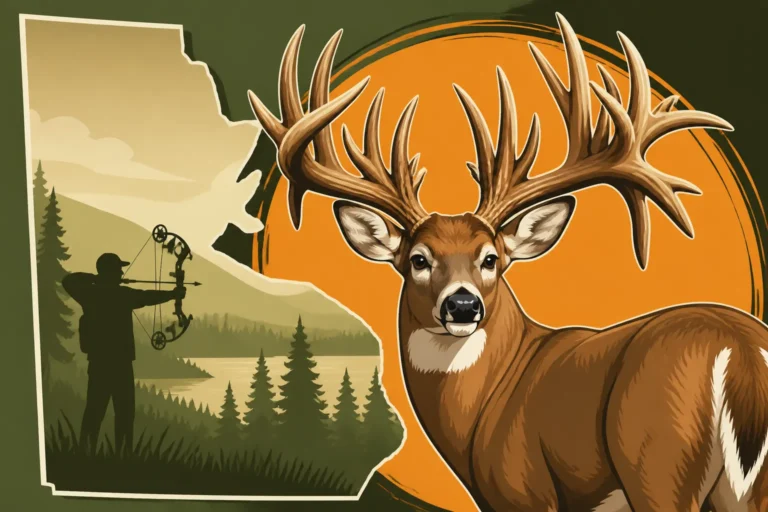
Pope & Young (P&Y) is dedicated specifically to trophies taken with a bow and arrow. Their scoring system is identical to Boone & Crockett's, but the method of harvest is the defining factor. For bowhunters, reaching the P&Y minimums is a tremendous accomplishment, as it speaks to the close-range skill and patience required for archery hunting.
The minimum entry score for a typical whitetail in Pope & Young is typically 125 inches, and for a non-typical, it's 155 inches. While these minimums are lower than B&C, they still represent an outstanding bowhunting achievement. Manitoba’s ample cover and challenging conditions make bowhunting for mature bucks a rewarding, albeit difficult, endeavor. The fact that Manitoba shows up in both B&C and P&Y lists speaks volumes about the quality of deer across various hunting methods. When Manitoba's Archery Deer Season Runs offers prime opportunities for these types of trophies.
Factors Contributing to Manitoba's Record Potential
So, why does Manitoba keep popping up in conversations about world-class whitetails? It's not just luck; it's a perfect storm of environmental conditions, genetics, and hunting pressure dynamics that allow deer to thrive and grow exceptional antlers.
Robust Genetics and Rich Nutrition
First and foremost, the whitetail deer in Manitoba possess excellent genetic potential. These aren't diminutive deer; they are naturally predisposed to growing large bodies and impressive racks. This inherent genetic advantage is then amplified by the province's incredibly rich environment. Much of Manitoba lies within fertile agricultural belts, surrounded by vast tracts of aspen parkland and boreal forest.
The agricultural lands, bursting with canola, corn, alfalfa, and various grains, provide a nearly year-round buffet of high-energy, protein-rich forage. This abundance of quality food directly fuels superior antler growth. Deer have access to everything they need to maximize their genetic potential, from vital minerals in the soil to calorie-dense crops. A buck that is well-fed throughout its life, especially during the critical antler-growing months, will simply grow bigger antlers. We often hear hunters talk about What a Big Manitoba Whitetail Weighs, and that body mass directly relates to antler potential.
Older Age Classes and Low Hunting Pressure
Perhaps one of the most significant factors is the ability of bucks to reach older age classes. In many heavily hunted areas, bucks are harvested before they can truly mature and express their full antler potential. In Manitoba, particularly in the more remote or difficult-to-access areas, a combination of factors helps bucks live longer. The vastness of the bush, the often-challenging weather conditions, and relatively lower hunting pressure in some regions mean that more bucks survive multiple hunting seasons.
A whitetail buck generally hits its peak antler growth between 4.5 and 7.5 years old. If a buck is consistently harvested at 2.5 or 3.5 years old, it simply doesn't have the chance to become a record-book contender. Manitoba offers those critical extra years. Furthermore, the sheer scale of the landscape makes some areas less accessible, effectively creating sanctuaries where bucks can mature undisturbed. This allows for deer that might otherwise be taken prematurely to grow into truly impressive specimens. It's often debated Why Bush Country Bucks Live Longer here.
Diverse and Expansive Habitat
Manitoba's habitat diversity is another key player. You'll find everything from open prairie farmland, dense aspen parkland, vast boreal forests, and intricate river valleys. This mosaic of environments provides deer with ideal cover for bedding, escape routes from predators and hunters, and a diverse range of food sources.
For example, a buck might bed deep in a thick willow run along a creek, browse on alfalfa in a nearby field at night, and then disappear into a poplar bluffs during the day. This varied landscape gives deer options and protection, making them harder to pattern and hunt, which again contributes to their longevity. Tools like the GoHunt app can be incredibly helpful for deciphering this complex landscape, showing various habitat types and potential deer strongholds when you're trying to figure out where to focus your scouting efforts. The combination of dense cover and abundant food creates pockets where bucks can grow massive. For those interested in specifics, checking out Manitoba's Game Hunting Areas can give you a clearer picture of this diverse landscape.
Hunting Strategies for Record Book Bucks in Manitoba
Chasing a record-book whitetail in Manitoba isn't just about showing up; it's about meticulous planning, understanding deer behavior, and adapting to the challenging environment. You're hunting a rare animal, and your approach needs to reflect that.
Intensive Scouting and Understanding Deer Movement
The first step to finding a record-book buck is intense, year-round scouting. This isn't just a pre-season walk-through; it involves understanding seasonal shifts, bedding areas, food sources, and travel corridors. Utilizing satellite imagery, like that found on platforms such as GoHunt, can be invaluable for identifying potential hotspots and planning your approach. Look for funnels, pinch points, and cover transitions that a mature buck might use.
In Manitoba, especially during the colder months, deer movement patterns can be dictated by snow depth and available thermal cover. They might yard up in dense coniferous stands or utilize standing crops for both food and shelter. Understanding these seasonal shifts and predicting how a big buck will react to changing conditions is paramount. Scouting With Satellite Imagery in Manitoba can give you a significant advantage, allowing you to cover vast areas virtually before ever stepping foot in the woods.
Targeting Older Age Classes and Patience
You're not just hunting a deer; you're hunting an old deer. This means passing up younger bucks, even respectable ones, in the hope of encountering a true giant. Mature bucks are notoriously reclusive and wary. They've survived multiple hunting seasons because they are smart, cautious, and incredibly adept at avoiding detection.
Patience is your biggest virtue. This might mean sitting in a stand for hours, even days, without seeing a single deer, or spending an entire season without pulling the trigger. It means resisting the urge to move too much or make hasty decisions. A record-book hunt is often a chess match, requiring you to anticipate a buck's moves rather than simply reacting to them. Remember that hunting The Rut in Early to Mid November is often your best bet for catching these reclusive giants on the move.
Adapting to Manitoba's Challenging Conditions
Manitoba weather is no joke, especially during prime hunting seasons. Cold temperatures, deep snow, and strong winds are common. Your gear needs to be up to the task, not just for comfort, but for safety and endurance. Remaining undetected and effective in these conditions is critical. This might involve investing in high-quality cold-weather clothing, insulated boots for long sits, and robust shelters like ground blinds or enclosed stands that offer protection from the elements.
The challenging conditions can also be an advantage, as many hunters might pack it in when the going gets tough. Those who persevere and are well-prepared often find themselves with less competition and more opportunities when others have retreated to warmth. Furthermore, the deep snow can sometimes concentrate deer or force them into more predictable travel patterns, especially when moving between bedding and feeding areas. Understanding Where Manitoba Whitetails Bed in Deep Snow can be key to success.
Utilizing Calls and Decoys Strategically
While mature bucks are wary, they are also driven by their instincts, especially during the rut. Using calls, particularly grunt tubes and rattling antlers, can be highly effective when used correctly. The key is subtlety and realism. Over-calling or unrealistic sounds can spook a wise old buck. Learn to read the situation and the deer's body language.
Decoys can also play a role, especially buck or doe decoys set up to simulate a breeding or challenging scenario. Positioning is crucial: always consider the wind direction and where you expect the buck to approach from. A well-placed decoy can draw a curious or aggressive buck into shooting range, giving you the critical opportunity you've been waiting for. For more insights on this, look into Rattling Volume in Open Parkland or Grunt Calls Late in Manitoba's Rut.
Collaborative Efforts and Learning from Others
While hunting for a record book buck can be a solitary pursuit, learning from experienced Manitoba hunters or even hiring a reputable guide can dramatically increase your odds. Guides often have years, if not decades, of experience in specific GHAs, understanding the local deer movements and patterns intimately. They can provide access to prime private lands or lead you to productive Crown land areas that are otherwise difficult to find.
Joining local hunting forums, clubs, or attending seminars can also be beneficial. Sharing knowledge, even if it's just about general deer behavior or local habitat conditions, can add to your overall understanding and help you refine your strategies. Remember that most record-book stories aren't just about a single moment, but a culmination of years of learning and effort.
| Record Book Type | Minimum Typical Score (Whitetail) | Minimum Non-Typical Score (Whitetail) | Primary Weapon Type |
|---|---|---|---|
| Boone & Crockett Club | 170" | 195" | All Legal Weapons (Firearms) |
| Pope & Young Club | 125" | 155" | Archery Only |
Manitoba's place in the record books is well-earned, a testament to its unique blend of genetics, nutrition, and vast, wild spaces. With the right approach and a healthy dose of persistence, the dream of a true trophy whitetail can absolutely become a reality here.
Disclaimer
This article is for general informational purposes only and does not constitute professional advice. Laws, prices and regulations vary by location and change over time. Consult a qualified professional for guidance on your specific situation.