How Wildfire Changes Northern Game Range
Stepping into a hunting area that was recently ravaged by wildfire can feel utterly disheartening; what was once familiar cover and feeding grounds now looks like a desolate wasteland. It’s easy to assume all the game has vanished, leaving you with little hope for a successful season. But the truth is, while fires initially disrupt the landscape, they also kickstart a natural renewal cycle that profoundly reshapes northern game ranges, eventually creating prime new opportunities for observant hunters. This guide will walk you through how wildfires transform Manitoba’s boreal and parkland environments, how different game species respond over time, and how you can adapt your hunting strategies to find success in these dynamic, post-fire landscapes.
The Immediate Aftermath: Survival and Scarcity
When a wildfire tears through the northern bush, the immediate impact is often devastating, both to the habitat itself and to the animals that call it home. It's a period of intense struggle and displacement, where survival instincts are pushed to their absolute limits.
Initial Impact on Habitat and Animals
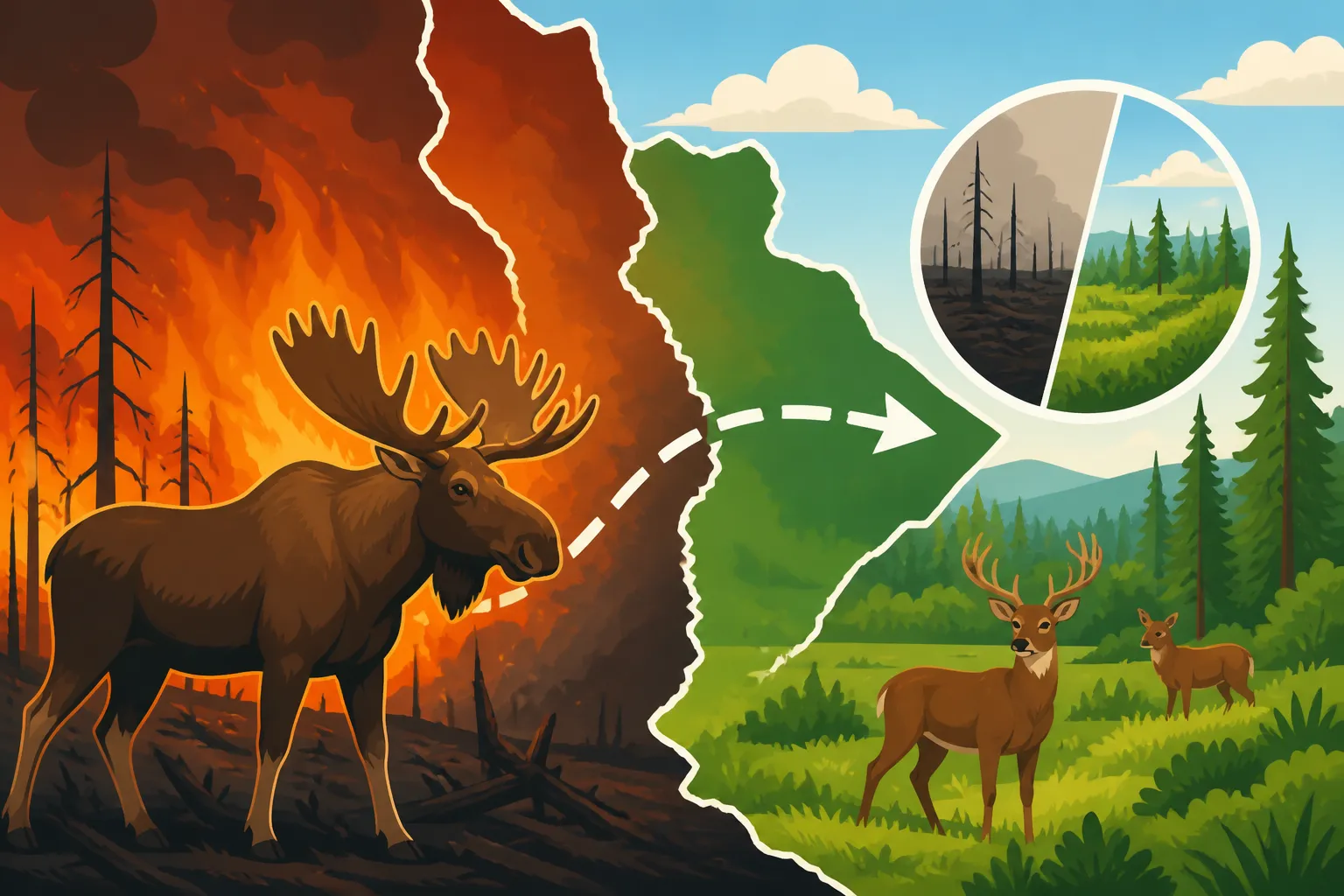
Imagine standing at the edge of a fresh burn. The air still smells of smoke, the ground is blackened, and once-towering trees are reduced to skeletal remains. This immediate change creates a harsh, almost moon-like landscape. The undergrowth, which provides crucial browse and cover for many species, is completely incinerated. Small rodents and ground-nesting birds suffer immense losses. Larger animals, like moose, deer, and bear, are forced to flee, often in a frantic dash, seeking refuge in unburnt pockets of forest, wetlands, or agricultural fringes if they’re close enough. Water sources can be contaminated by ash, and the immediate food supply is virtually non-existent.
For hunters scouting these areas, the first few months, or even a full year after a major fire, can be incredibly tough. You'll likely see very little sign of typical game activity. The immediate thought might be to write off the entire area for years, and understandably so. Wildlife is either gone, or huddled in stressed populations in adjacent, unburnt zones. This initial scarcity is a critical phase for understanding the long-term changes, as it sets the stage for what comes next. Observing the edges of these burns, and how far animals were displaced, can give you clues for future seasons.
Short-Term Displacement and Survival Strategies
Animals that survive the initial fire often become refugees, displaced from their established territories. This can lead to increased pressure on adjacent unburnt areas, causing those areas to become overcrowded and overbrowsed. Deer, for instance, might move into riparian zones or agricultural fields that weren't affected, seeking sustenance and shelter. Moose might retreat deeper into mature stands of black spruce and tamarack, or seek out unburnt muskeg islands. What Moose Eat Through the Year can really shift in these scenarios. Bears, being highly mobile and opportunistic, might travel significant distances to find new food sources, sometimes even venturing closer to human settlements out of desperation.
This displacement isn't just about finding food and cover; it's also about avoiding predators. When prey animals are concentrated in smaller areas, they become more vulnerable. Hunters might find pockets where game is temporarily more abundant, but these are often stressed animals in unfamiliar surroundings. It’s a scramble for survival, and the short-term landscape is characterized by this shift and concentration. Understanding these patterns of movement is key. Using tools like satellite imagery, perhaps from GoHunt, can help you identify these untouched pockets or corridors that animals might be using to escape the fire's direct impact. Knowing where game can't go is just as important as knowing where it might be.
The Green Shoots of Recovery: New Opportunities Emerge
While the immediate aftermath of a wildfire is bleak, nature quickly gets to work. The destruction itself is a catalyst for renewal, transforming the landscape and, in turn, creating new, often superior, habitat for many game species.
The Role of Early Successional Growth
Once the ash settles and the spring rains arrive, life begins to return with incredible vigour. The fire, by clearing out dense canopy and sterilizing the forest floor, makes way for a flush of new growth. Sunlight can now reach the ground, stimulating the growth of pioneering plants – grasses, forbs, and deciduous shrubs like willow, aspen, and birch. This "early successional growth" is incredibly nutritious and palatable for many ungulates. Within a year or two, a burned area can be teeming with young, tender shoots that are far more digestible and protein-rich than the mature forage found in an old-growth forest.
For species like moose and deer, this new buffet is a game-changer. Aspen and willow regeneration, for example, are prime food sources for moose, especially in the boreal forest. What Moose Eat Through the Year definitely includes this kind of post-fire browse. Whitetails will also be drawn to these areas, finding abundant browse and new, thicker cover as the shrubs mature. This burst of fresh growth is often called a "burn garden" by experienced hunters, and it’s precisely why some of the biggest animals can be found in these regenerating areas. Think about the incredible energy available – it’s like a nutrient supplement for the local wildlife.
Attracting New Species and Forage
The shifting vegetation also attracts a different array of wildlife. While some species might struggle, others thrive. Berry-producing plants, like saskatoons and blueberries, often flourish in post-fire environments, attracting black bears in droves. Black Bear Hunting in Manitoba can be particularly productive in these areas. The exposed soil and increased sunlight can also lead to an explosion of fungi, another favourite food source for bears. Small game animals, like snowshoe hare, benefit from the thick, young growth, and their increased numbers in turn support predators like lynx and wolves.
The opening of the canopy can even create new wetland habitats if the fire burns deep enough to expose underlying clay layers, or if burned-out root systems create depressions that collect water. These new wetlands can attract waterfowl, and the insects that thrive in them become food for upland birds and other species. It's a complex, interconnected chain reaction, and the discerning hunter will recognize that the "desolate wasteland" quickly becomes a vibrant, productive ecosystem. The trick is knowing when to return to these areas and what specific types of new growth to look for.
Long-Term Ecological Shifts and Hunter Adaptation
The changes brought by wildfire aren't just a short-term phenomenon; they represent a significant, long-term ecological shift in the northern game range. For hunters, this means adapting not just for a season, but for years, even decades, as the forest slowly regenerates.
Maturing Post-Fire Landscape and Species Succession
As the years turn into a decade or more, the early successional growth matures. The dense stands of young aspen and willow become taller, thicker, and eventually less palatable as the nutritional value of the browse decreases. This mid-successional stage often sees a different kind of habitat emerge – dense, almost impenetrable thickets that provide incredible cover and security for larger game. Bucks, in particular, will seek out these sanctuaries. Why Bush Country Bucks Live Longer in these types of habitats is because the dense cover protects them from predators and hunters alike, allowing them to reach older age classes.
Eventually, if left undisturbed, conifers will begin to re-establish, slowly shading out the deciduous species and returning the forest to a more mature, conifer-dominant state. Each stage of this ecological succession supports different game animals in different ways. Hunters need to understand this dynamic progression. A burn that was fantastic for moose browse five years ago might now be a prime whitetail bedding area, or a bear haven because of mature berry bushes. Tools like GoHunt can help track the age and growth patterns of these burns, offering insights into what species might be using them at different stages. Scouting With Satellite Imagery in Manitoba is invaluable for this long-term perspective.
How Hunters Can Adapt Their Strategies
Adapting your hunting strategies to post-fire landscapes requires a shift in mindset and tactics. First, recognize that these areas often become true "burn gardens" and can lead to incredible trophy opportunities. Why Burned Ground Grows Big Bulls is a testament to the rich forage that allows animals to put on significant mass and antler growth. However, hunting these areas also comes with unique challenges. Visibility can be excellent in the first few years, but as the young growth explodes, it can quickly become extremely dense, making tracking and still-hunting difficult.
Hunters should focus on finding the edges of these burns – where the new growth meets unburnt mature timber, or where different types of post-fire vegetation merge. These transition zones are often travel corridors. Also, look for natural funnels like old logging roads that might still be passable, or creek bottoms that offer a different type of vegetation. Hunting a Burned-Over Boreal Block is all about understanding these nuances. Consider tactics like stand hunting along natural travel routes, or still-hunting slowly through areas of moderate new growth. Be prepared for uneven ground, downed timber, and potentially deeper snow drifts in winter due to less canopy coverage.
Scouting and Planning Your Hunt in Burned Areas
Successfully hunting in wildfire-altered landscapes requires diligent scouting and careful planning. You can't just walk in blindly and expect to find game where it used to be. It's a whole new world, and treating it as such will put you ahead of the curve.
Using Technology and Boots on the Ground
The first step in scouting a burned area is often done from home. Start with satellite imagery and mapping applications. Look for the perimeters of the fire, noting how recently the area burned. Many mapping platforms, including GoHunt, offer historical imagery that can show you the progression of regrowth over several years. Identify unburnt pockets, riparian zones, or areas where the fire intensity varied, leading to a mosaic pattern of burned and unburnt timber. These "islands" of unburnt cover within a larger burn can be absolute gold mines for deer and moose. Old logging roads, hydro lines, or cutlines that passed through the burn might still be visible and act as access points or travel corridors. Hunting an Old Logging Road in the North is a great way to penetrate deeper into these areas.
Once you have a general understanding from your digital reconnaissance, it's time for boots on the ground. However, be prepared for rough terrain. Downed timber can make travel extremely difficult, and regeneration can be incredibly thick. Look for fresh tracks, rub lines, and droppings. Pay close attention to what the animals are browsing on. Are they hitting young aspen? Willow? Are there berry bushes being fed on by bears? The specific forage available will tell you a lot about which animals are using the area and when. This on-the-ground confirmation is crucial for validating what your maps suggest.
Safety Considerations in Burned Forests
Hunting in a burned forest also comes with unique safety challenges that every hunter needs to be aware of. The most obvious hazard is falling trees, often called "widowmakers." Dead trees, even those that appear solid, can have compromised root systems or trunks, making them highly unstable, especially in windy conditions or after heavy rain or snow. Always be alert to your surroundings and avoid lingering under tall, dead timber. Also, the ground can be treacherous; burned-out root systems can create hidden holes that you can step into, causing injury. Ash can also obscure uneven terrain and make footing unpredictable.
Navigation can also be tricky. Familiar landmarks may be gone, making it easy to get disoriented. Always carry a reliable GPS device, a compass, and a detailed physical map, even if you’re using a phone app like GoHunt. Cell service is often non-existent in remote northern areas, so don’t rely solely on your phone. Winter Truck Kit for a Manitoba Hunt details some essential gear for remote travel. Be extra cautious with open flames, as dried timber and ground litter can re-ignite easily, even years after the initial fire. And finally, when planning for Manitoba Big Game Season Dates, remember that some areas might still have restrictions or be slow to recover, so always check with local conservation offices for any specific advisories or closures related to wildfires.
| Post-Fire Stage | Timeline (Approx.) | Habitat Characteristics | Primary Game Attraction | Hunter Strategy |
|---|---|---|---|---|
| Immediate Burn | 0-1 year | Blackened, sparse, very little cover/food | Displaced to edges/unburnt pockets | Hunt adjacent unburnt areas, look for escape routes |
| Early Successional | 1-5 years | Abundant young grasses, forbs, deciduous shrubs (aspen, willow, birch) | Moose, Whitetail Deer (browse), Black Bear (berries, fungi) | Hunt edges, new clearings, focus on lush browse |
| Mid-Successional | 5-20 years | Dense, tall thickets of maturing deciduous trees and shrubs | Whitetail Deer (cover, bedding), Black Bear (cover, berries) | Focus on dense cover, travel corridors, natural funnels |
| Late Successional | 20+ years | Conifers re-establish, deciduous stands thin; resembles pre-fire forest | Dependent on returning forest type; less intense browsing | Hunt as per typical mature forest tactics |
This article is for general informational purposes only and does not constitute professional advice. Laws, prices and regulations vary by location and change over time. Consult a qualified professional for guidance on your specific situation.