Manitoba’s Ducks and Geese by Flyway
There's nothing quite like the sight of a thousand wings silhouetted against a prairie sunrise, or the sound of honking geese cutting through the crisp morning air. But for many hunters, understanding the sheer volume and diversity of waterfowl that pass through or reside in Manitoba can feel overwhelming, not to mention figuring out where they're going and why. This guide aims to clear the air, diving deep into the incredible world of Manitoba's ducks and geese, detailing their migration patterns, preferred habitats, and what makes this province a world-class destination for waterfowlers.
The Grand Migration: Manitoba's Pivotal Role in the Flyways
Manitoba isn't just another stop on the map for ducks and geese; it's a critical nexus, a vital staging area, and a significant breeding ground that funnels birds from vast stretches of the continent. Understanding this unique geographical advantage is the first step to truly appreciating why hunting here is so exceptional. We're talking about a province that straddles the invisible lines of major North American migratory pathways, offering a buffet of resources that migrating birds simply can't ignore.
Where Central Meets Mississippi: A Hunter's Advantage
Manitoba holds a truly unique position, as it's influenced by both the Central and Mississippi Flyways. Think of these as superhighways in the sky, guiding millions of waterfowl south from their northern breeding grounds. While technically most of Manitoba lies within the Central Flyway, the eastern edge of the province, particularly the Interlake and areas east, sees a significant crossover of birds typically associated with the westernmost reaches of the Mississippi Flyway. This dual influence means an incredible diversity of species, from prairie-hatched mallards to birds that summer far to the north in the boreal forests or even the Arctic tundra. This convergence means hunters often encounter a broader mix of ducks and geese than in areas further east or west, creating truly unique hunting scenarios.
Migration Corridors and Staging Areas
Within these broader flyways, Manitoba is crisscrossed by more localized migration corridors and critical staging areas. These aren't just random spots; they're chosen by generations of birds for their abundant food, secure resting sites, and strategic location. The vast agricultural fields, particularly in the southern and western parts of the province, act as massive refueling stations. Birds will linger here for weeks, gorging on waste grain to build up fat reserves for the next leg of their journey. Coupled with the province's innumerable potholes, marshes, and large lakes, these staging areas become bustling hubs of waterfowl activity. Hunters who take the time to understand these specific corridors and preferred staging points often find themselves in the thick of the action.
How Geography Shapes the Flight Paths
Manitoba's geography is the ultimate determinant of waterfowl flight paths. From the vast, open agricultural lands of the south to the mosaic of wetlands and forests in the Interlake, and up into the expansive boreal forest and tundra of the north, the landscape itself funnels birds. Large bodies of water like Lake Manitoba, Lake Winnipegosis, and the massive Lake Winnipeg act as natural leading lines, guiding birds along their shores. River systems, like the Assiniboine and the Red River, also serve as significant migration routes, providing consistent water sources and food opportunities. Even smaller features, like shelterbelts and treelines, can influence local flight patterns, especially for ducks moving from roosting wetlands to feeding fields. Understanding these topographical influences is key to successful Scouting Fields for Manitoba Waterfowl.
Manitoba's Plentiful Puddle Ducks: Diversity in the Wetlands
When most people picture duck hunting in Manitoba, their minds often go straight to puddle ducks. And for good reason! These dabbling ducks, which feed by tipping up in shallow water rather than diving, are abundant across the province and offer some of the most exciting and accessible hunting opportunities. Their preference for shallow marshes, flooded fields, and grain stubble makes them prime targets for hunters utilizing field setups and pothole blinds.
Mallards and Pintails: Kings of the Shallow Water
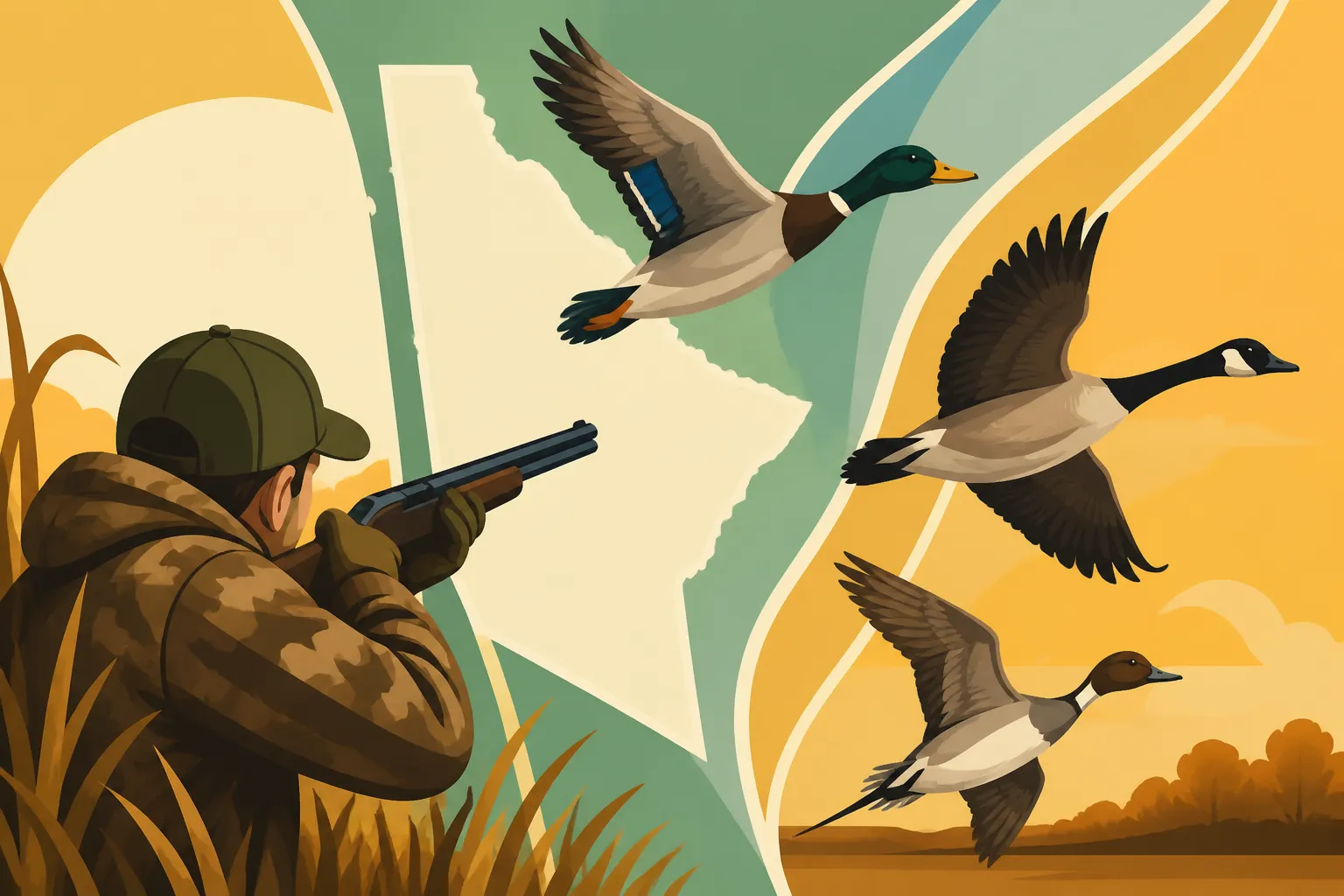
The undisputed king of Manitoba's puddle ducks is the mallard. With their iridescent green heads and distinctive quacks, mallards are a staple in almost every waterfowler's bag. They are incredibly adaptable, equally at home in small prairie potholes, sprawling marshes, or vast grain fields. Manitoba is a significant breeding ground for mallards, meaning strong local populations are often supplemented by waves of migrants. Pintails, with their elegant long necks and distinctive tail feathers, are another highly prized species. They're often found associating with mallards, particularly in harvested grain fields. Pintails are known for their fast, erratic flight and can offer challenging shooting. Identifying the specific feeding patterns and preferred roosting areas for these species is crucial, as they will often fly considerable distances between water and food.
Wigeon, Gadwall, and Teal: Fast-Flying Targets
Beyond mallards and pintails, Manitoba offers a rich assortment of other puddle ducks. American Wigeon, easily identified by the white patch on their wings and their distinct "whew-whew" whistle, are common across the province's wetlands. They often graze on emergent vegetation and stubble fields, making them suitable for field hunts. Gadwall, though often overlooked, are a fantastic table bird and present a unique challenge with their subtle grey plumage and quick flight. They prefer slightly deeper water than some other dabblers and can be found in larger marshes. Then there are the teals: green-winged, blue-winged, and even the occasional cinnamon. These small, acrobatic ducks are incredibly fast, offering some of the most exhilarating pass shooting. Blue-winged teal are often the first ducks to move south in late August and early September, providing exciting opportunities during the early season. Green-winged teal, hardier than their blue-winged cousins, tend to stick around longer into the colder months.
Wood Ducks and Other Unique Species
While less common than mallards or pintails in some areas, Manitoba does host breeding populations and sees migrations of other fascinating puddle duck species. Wood Ducks, arguably one of North America's most beautiful waterfowl, are typically found in timbered wetlands and along wooded river corridors, particularly in the eastern and central parts of the province. Their iridescent plumage and unique flight make them a prized trophy. Shovelers, with their oversized bills, are another common sight, often found sifting through shallow, muddy waters for invertebrates. While not always a hunter's first choice, they provide additional opportunities and contribute to the rich diversity of a Manitoba duck hunt. Understanding the specific habitat needs of these varied species can greatly enhance your hunting experience, allowing you to target particular areas that hold a broader range of birds.
Diving Ducks of Manitoba: Deep Water Challengers
While puddle ducks might dominate the shallow marshes and fields, Manitoba's larger lakes and deeper wetlands are magnets for an impressive array of diving ducks. These birds, equipped to forage for food beneath the surface, offer a different kind of hunting experience, often requiring larger watercraft, open water decoy spreads, and a willingness to brave the elements on expansive lakes.
Canvasbacks and Redheads: The Prized Divers
Among the most sought-after diving ducks in Manitoba are the Canvasback and Redhead. These magnificent birds are often found together, particularly on the massive, shallow, and food-rich lakes of the Interlake region, such as Lake Manitoba and Lake Winnipegosis. Canvasbacks, with their distinctive sloped profile and swift, powerful flight, are often considered the "king of ducks" by many waterfowlers. They feed heavily on tubers and rhizomes of aquatic vegetation, especially sago pondweed, which is abundant in Manitoba's fertile lakes. Redheads, with their vibrant red heads and similar feeding habits, also provide exceptional hunting. Targeting these species often involves large, open-water decoy spreads and patient waiting, as they can be notoriously wary. The reward, however, is a beautiful bird and an excellent meal.
Scaup Bluebills, Ring-necks, and Goldeneyes: Action-Packed Hunting
Beyond the marquee divers, Manitoba offers plenty of action with other diving duck species. Lesser Scaup, commonly known as "Bluebills," arrive in huge numbers, particularly during the late season when large flocks can be seen rafted up on open water. They are fast flyers and often respond well to large decoy spreads, providing excellent volume shooting. Ring-necked Ducks, easily identifiable by the ring at the base of their bill (though hard to see in flight), prefer smaller, forested lakes and marshes. They are strong flyers and offer challenging shooting as they zip across the water. Common Goldeneyes, known for their striking black and white plumage and rapid wingbeat, often appear later in the season when ice begins to form. They are tough, hardy ducks that offer thrilling hunts, often flying low over the water. Divers like these thrive in Manitoba's abundant deep-water habitats.
The Appeal of Diver Hunting
Diver hunting in Manitoba is an experience unlike any other. It demands different tactics, often involving larger boats, robust decoy spreads anchored in deeper water, and specialized blinds or natural cover on points and islands. The sheer spectacle of thousands of divers moving across a vast lake can be breathtaking. You might find yourself setting up near a major lake, perhaps in the Delta Marsh Wildlife Area, hoping to intercept birds funneling through the expansive wetlands. While the weather can be more challenging on open water, the rewards of connecting with a flock of fast-flying scaup or bagging a prized canvasback are immense. It's a testament to Manitoba's diverse waterfowl landscape that both puddle duck and diver enthusiasts find world-class opportunities here.
Majestic Geese: A Symphony of Wings Across the Prairies
If the sight of ducks is thrilling, the sound and spectacle of thousands of geese descending on a stubble field is nothing short of awe-inspiring. Manitoba is famous for its goose hunting, drawing hunters from across North America to experience the incredible numbers and diverse species that pass through or reside here. These powerful migrants offer a unique challenge and an unforgettable hunting experience.
Canada Geese: Resident and Migratory Giants
Canada Geese are a ubiquitous sight across Manitoba, from urban parks to remote fields. The province hosts both a substantial resident population and sees massive migrations of giant Canada Geese from northern breeding grounds. These birds are adaptable, feeding in agricultural fields and loafing on large bodies of water. Hunting Canada Geese often involves setting up large decoy spreads in grain stubble fields, using realistic full-body decoys or effective silhouettes. Calling is crucial, and mastering various honks and clucks can draw wary birds into range. Early season hunting can focus on local birds, while later in the fall, massive flights of migratory geese provide incredible opportunities. GoHunt has some excellent resources for understanding goose behavior in different field types, which can be invaluable when planning a hunt.
Snow Geese: The White Tide and Conservation Opportunities
Manitoba is a major staging ground for Snow Geese, particularly during their spectacular fall migration. Billions of these white birds, with their black wingtips, funnel through the province on their journey south. The sheer numbers can be overwhelming, creating a "white tide" over certain regions. Snow geese are often hunted differently than Canada geese, requiring even larger decoy spreads, often numbering in the hundreds or even thousands of white rags, socks, or full-body decoys to mimic a feeding flock. Electronic calls are often permitted for snow geese due to their abundant population and conservation objectives. These hunts can be fast-paced and high-volume, offering a truly unique waterfowl experience. Many hunters will travel specifically to Manitoba just to experience Hunting Manitoba's Snow Goose Migration.
Specklebellies: The Elusive Grey Geese
For many goose hunters, the elusive Greater White-Fronted Goose, affectionately known as the "Specklebelly" or "Speck," represents a pinnacle. These medium-sized grey geese, with their distinctive white facial patch and dark bars on their belly, are highly prized for their challenging nature and excellent table fare. Specklebellies are incredibly wary and often respond best to realistic decoy spreads and expert calling, particularly quiet clucks and gaggles. They often feed in specific types of grain fields, favouring peas, lentils, or barley, and will often mix with Canada Geese or even Cranes. Finding the X for specklebellies requires diligent scouting and often multiple days of observation to pattern their movements. Their distinctive call, often described as a high-pitched "laugh," is a sound that sets many a hunter's heart racing. Hunting Specklebellies Over Decoys is a true art form.
Prime Waterfowling Destinations in Manitoba
Manitoba is a large and geographically diverse province, and its waterfowl hunting opportunities vary significantly from one region to another. Understanding these differences can help you focus your efforts and tailor your hunt to the species and experience you're seeking.
The Renowned Interlake Region
Without a doubt, Manitoba's Interlake region, situated between Lake Manitoba and Lake Winnipeg, is a waterfowl Mecca. This unique area is a mosaic of shallow lakes, sprawling marshes, and agricultural fields, creating a perfect habitat for both breeding birds and vast numbers of migrants. Large bodies of water like the Delta Marsh and the Netley-Libau Marsh on Lake Winnipeg are internationally recognized as critical staging areas. Here, you'll find incredible concentrations of mallards, pintails, canvasbacks, redheads, and a variety of geese. The sheer volume of birds can be staggering, offering opportunities for both marsh hunting and field hunting. This region truly defines Marsh Hunting Ducks in the Interlake and is a primary destination for many serious waterfowlers.
Western Manitoba: Farmland and Pothole Powerhouses
Moving west, the landscape transitions into the rich agricultural belts and pothole country that defines much of Western Manitoba. Areas around Dauphin, Minnedosa, and the Swan River Valley are renowned for fantastic duck and goose hunting. This region is dotted with thousands of small wetlands, or "potholes," interspersed with vast fields of wheat, barley, canola, and corn. Puddle ducks thrive here, with mallards, pintails, and various teals being abundant. Geese, particularly Canada Geese and Snow Geese, utilize these fields extensively for feeding. The key to hunting Western Manitoba is often securing permission on private land, as many of these prime feeding areas are privately owned. Diligent scouting and landowner relations are paramount for success here.
Southern and Eastern Manitoba: Hidden Gems and Diverse Habitats
Southern Manitoba, particularly the Red River Valley and areas east of Winnipeg, offers its own unique set of waterfowl opportunities. While heavily agricultural, it also features significant river systems and smaller marsh complexes. Canada Geese are very common here, often providing excellent field hunting. Snow geese also stage in impressive numbers during migration. Eastern Manitoba, transitioning into the Canadian Shield, offers more timbered wetlands and smaller, clearer lakes. While perhaps not as high-volume as the Interlake for ducks, it can provide excellent hunting for species like wood ducks, ring-necks, and even some ruffed grouse or spruce grouse on the same trips. Hunting the Sandilands Provincial Forest or the Whiteshell can offer a more rugged, diverse experience.
Northern Manitoba: Remote Adventures and Breeding Grounds
While less accessible for casual day hunts, Northern Manitoba holds immense significance as a breeding ground for many waterfowl species. The vast boreal forest, countless lakes, and river systems provide pristine nesting habitat. For the adventurous hunter, remote fly-in trips to northern regions can offer unique opportunities for geese and various ducks, often in solitude. These areas are vital for sustaining the overall populations that migrate south, and while not typically targeted for high-volume field hunting, they represent the wild heart of Manitoba's waterfowl story.
Decoding the Flight: Factors Influencing Waterfowl Success
Waterfowl hunting is far more than just showing up with a gun and decoys. Success hinges on a deep understanding of the forces that drive these birds – primarily weather patterns, agricultural landscapes, and the health of their habitat. Failing to consider these elements can quickly turn a hopeful outing into a frustrating one.
Weather's Hand in the Migration
Weather is arguably the single most influential factor in waterfowl migration. A strong cold front pushing down from the north can trigger a mass exodus of birds, emptying one area only to flood another with fresh arrivals. Conversely, mild weather can prolong the staging period, keeping birds in Manitoba longer than anticipated. Wind is another critical element; ducks and geese prefer to fly and land into the wind, making wind direction a crucial consideration when setting up decoys and blinds. Overcast days with light precipitation often provide excellent hunting conditions, as birds fly lower and are generally more active. Bluebird skies can make birds wary and keep them high. Understanding the forecast, even days in advance, can make or break a hunt. Staying informed about long-range forecasts is part of the serious waterfowler's routine, often guiding decisions on when and where to focus their efforts.
Agricultural Landscape: A Feast for Fowl
Manitoba's vast agricultural landscape provides an irresistible banquet for migrating waterfowl. Fields of harvested wheat, barley, peas, lentils, and especially corn, offer high-energy food sources critical for birds building fat reserves. Different species often prefer different crops. Snow geese and Canada geese, for instance, are notoriously fond of leftover grain in stubble fields. Ducks will also utilize these fields but are equally drawn to flooded portions of fields or ditches, particularly after heavy rains. The cycle of planting, growing, and harvesting directly influences where and when birds will feed. Early harvest can mean early access to food sources, while a delayed harvest can keep birds tied to different areas. Hunting a Swathed Grain Field at Dusk or Hunting a Standing Canola Field Edge requires specific knowledge of how birds use these resources. A great tool for understanding these patterns and crop types is a good mapping application, such as the one offered by GoHunt, which can help visualize the agricultural landscape and potential feeding areas.
Habitat Preservation and Its Critical Impact
The long-term health of Manitoba's waterfowl populations, and thus the future of hunting, is intrinsically linked to habitat preservation. The ongoing efforts to conserve and restore wetlands, grasslands, and riparian areas are paramount. Organizations like Ducks Unlimited Canada have played a monumental role in ensuring that vital breeding grounds and staging areas remain intact or are enhanced. Loss of wetlands due to agricultural expansion or development directly impacts the number of ducks and geese that can successfully breed or safely stage in the province. As hunters, our licence fees and conservation stamps directly contribute to these vital programs. Understanding the importance of healthy habitat also guides ethical hunting practices, encouraging respect for the land and the birds that rely on it.
Essential Gear, Tactics, and Safety for Manitoba Waterfowlers
Successfully hunting Manitoba's diverse ducks and geese requires more than just knowing where the birds are. It demands the right gear, honed tactics, and an unwavering commitment to safety. The harsh realities of changing weather, cold water, and often remote locations mean preparedness is key.
Decoys, Blinds, and Concealment Strategies
Decoys are the cornerstone of nearly every waterfowl hunt. For ducks, a spread of 3-4 dozen mallard and pintail decoys can be effective in a pothole, while a larger spread is often needed for divers on open water. Goose hunting, especially for snow geese, might involve hundreds, or even thousands, of decoys to truly mimic a massive feeding flock. Blinds are essential for concealment. This could be anything from natural cover like cattails in a marsh, to a layout blind in a stubble field, or a custom-built boat blind for open water. The key is to blend seamlessly into your environment, breaking up your outline and remaining still as birds approach. Understanding how birds react to different setups is crucial; a large spread might work for snow geese, but wary Canada geese might require a more minimalist, hyper-realistic approach. Setting a Goose Spread in Swathed Barley demonstrates how important fieldcraft is.
Mastering the Call: Attracting Ducks and Geese
Calling is an art form that can dramatically increase your success. For ducks, mastering the basic mallard feed call, greeting call, and comeback call can be highly effective. For geese, a repertoire of honks, clucks, and moans is vital, especially for Canada geese. Different species and even different flocks of geese will respond to various calling styles. For snow geese, electronic calls are often permitted and are crucial for replicating the massive sounds of a feeding frenzy. Practice is key, and listening to live birds can teach you more than any instructional video. Knowing when to call, and more importantly, when to stop calling, is a skill that comes with experience. Many hunters will spend countless hours perfecting their technique, as a well-timed call can turn a distant flock into birds cupping their wings over the decoys.
Shotgun Selection, Ammunition, and Non-Toxic Shot Requirements
A reliable 12-gauge shotgun is the standard for Manitoba waterfowl, though 20-gauge can also be effective, especially for younger or smaller-framed hunters. Pump-action, semi-automatic, or over/under shotguns are all popular choices. Crucially, all migratory bird hunting in Canada requires the use of non-toxic shot. This means steel, bismuth, or tungsten-based loads, as lead shot is strictly prohibited to protect waterfowl from lead poisoning. Shot size and payload will depend on the species targeted; larger shot (like BB or 2s) is common for geese, while smaller shot (like 3s or 4s) works well for ducks. Choke selection is also important, with modified or improved cylinder generally good all-around choices. Always ensure your gun is safe and properly maintained, especially when exposed to damp, cold conditions. Remember to bring plenty of ammunition; high-volume hunts, especially for snow geese, can burn through shells quickly. Understanding Non-Toxic Shot for Manitoba Waterfowl is a legal and ethical imperative.
Waterfowl Hunting Safety on Land and Water
Safety must always be the top priority. This includes basic firearm safety: always treat every gun as loaded, keep the muzzle in a safe direction, and be absolutely sure of your target and what's beyond it. Wearing appropriate blaze orange (if required for other species or during certain seasons) and eye/ear protection is also vital. When hunting near water, especially during colder weather, hypothermia is a real risk. Wear layers of synthetic or wool clothing, and always have a waterproof outer layer. If hunting from a boat, ensure it's in good working order, carries all required safety equipment (PFDs, whistle, rope, bailing device), and don't overload it. Let someone know your hunting plan, including your location and estimated return time. Many waterfowl hunting areas can be remote, so carrying a first-aid kit, emergency shelter, and sufficient food and water is essential. Never hunt alone if possible, especially on large bodies of water.
Navigating Regulations and Embracing Conservation
Hunting in Manitoba means adhering to a clear set of rules designed to ensure sustainable populations and ethical practices. While it might seem like a lot to take in, understanding these regulations is fundamental to being a responsible and effective waterfowler. Moreover, recognizing the crucial role of conservation means every hunter plays a part in preserving this incredible resource for generations to come.
Understanding Licences and Permits
Before you even step foot in a field, you'll need the proper documentation. For all migratory game bird hunting in Manitoba, you'll need two key federal documents: the Canadian Migratory Game Bird Hunting Permit and the Canadian Wildlife Habitat Conservation Stamp. These are mandatory and directly fund conservation efforts. Additionally, you'll need a provincial Manitoba hunting licence. These can be purchased online through the Manitoba Wildlife Federation or at authorized vendors. Non-residents, both Canadian and foreign, have specific requirements, including potentially needing a licensed guide for certain species or areas. Always carry all your required licences and permits on your person while hunting. Understanding Manitoba Migratory Bird Permits and their requirements is step one for any waterfowl hunter.
Bag Limits, Season Dates, and Important Rules
Season dates and bag limits are set annually by both federal and provincial authorities to ensure sustainable harvests. These can vary significantly by species and by specific hunting zones within Manitoba. For instance, duck seasons might open earlier for certain species like teal, and later for others. Goose seasons can have different daily bag and possession limits depending on the species and the zone. Snow goose seasons often have extended periods and higher limits due to their abundant population. It's your responsibility to know these limits and dates for the specific area and species you are hunting. Ignorance is not an excuse. Beyond limits, other rules apply, such as legal shooting hours (typically one-half hour before sunrise to one-half hour after sunset), rules regarding baiting (generally illegal for migratory birds), and vehicle use. Always consult the current year's Manitoba Hunting Guide and the federal Migratory Birds Regulations for accurate and up-to-date information.
Contributing to Waterfowl Conservation
Every hunter in Manitoba is a conservationist. The funds generated from the sale of hunting licences and the federal Habitat Conservation Stamp directly support critical habitat preservation, research, and management programs. Organizations like Ducks Unlimited Canada, Delta Waterfowl, and the Manitoba Wildlife Federation are actively working on the ground to restore wetlands, enhance breeding habitats, and conduct vital research that informs management decisions. By participating in regulated hunting, you are contributing financially and practically to these efforts. Beyond fees, ethical hunters also practice responsible stewardship, leaving no trace, respecting private land, and making every effort to retrieve downed birds. Conservation isn't just about preserving numbers; it's about safeguarding the entire ecosystem that supports these magnificent migratory birds.
Planning Your Ultimate Manitoba Waterfowl Hunt
A successful Manitoba waterfowl hunt doesn't just happen; it's the result of careful planning, diligent effort, and often, a bit of flexibility. Whether you're a seasoned local or a first-time visitor, approaching your hunt strategically will maximize your enjoyment and your chances of success.
Scouting and Landowner Relations
Scouting is paramount for waterfowl hunting. Birds are creatures of habit, but their habits can change daily based on weather, crop rotation, and hunting pressure. Before a hunt, drive the roads, glass fields, and observe flight patterns from a distance. Look for freshly cut crops, puddles, and concentrations of birds. Pay attention to how they enter and exit fields. Tools like satellite imagery (e.g., through GoHunt's mapping features) can be invaluable for identifying potential hotspots and access points from home. Once you've identified a promising field, securing landowner permission is crucial. This means knocking on doors, being polite, and always respecting their property and wishes. Building positive relationships with landowners can lead to long-term hunting opportunities. Always remember to ask for permission for Getting Permission for a Goose Field – it’s not just polite, it’s the law on private land.
The Value of a Reputable Outfitter
For hunters new to Manitoba, or those seeking a highly organized and potentially higher-success hunt, booking with a reputable outfitter can be an excellent option. Manitoba boasts many experienced waterfowl outfitters who specialize in ducks, Canada geese, snow geese, and even combination hunts. An outfitter provides invaluable services: they have established relationships with landowners, spend countless hours scouting to put you on the "X," and provide all the necessary gear, from elaborate decoy spreads to comfortable blinds. They also navigate the complex regulations and often assist with game care. While it's an investment, a good outfitter can significantly reduce the learning curve and increase your chances of a memorable and successful hunt, especially for specific hunts like Waterfowl Hunting Manitoba's Grain Fields. Always vet potential outfitters thoroughly, checking references and confirming what's included in the package.
Packing for Success and Unexpected Weather
Manitoba weather in the fall can be famously unpredictable, swinging from mild Indian summer days to bitter cold and snow in a matter of hours. Layering is critical. Start with moisture-wicking base layers, add insulating fleece or down, and top with a waterproof and windproof outer shell. Bring waterproof boots, warm gloves or mittens, and a good hat. Hand warmers are often a hunter's best friend. Don't forget essentials like a thermos of hot coffee, water, snacks, headlamps, and any personal medications. A good set of binoculars is invaluable for scouting. For those travelling long distances, ensure your firearms are properly cased and declared, and understand the rules for transporting game meat. Being prepared for anything Mother Nature throws your way is key to staying comfortable and focused in the field.
| Species | Typical Habitat | Primary Diet | Key Identification | Hunting Challenge |
|---|---|---|---|---|
| Mallard | Shallow marshes, flooded fields, grain stubble | Grains, seeds, aquatic plants, insects | Green head (drake), orange feet, blue speculum | Common, but wary; responds well to calling and decoys |
| Pintail | Shallow marshes, open grain fields | Grains, seeds, aquatic plants | Long, slender neck; pointed tail (drake) | Fast, often high flyers; challenging to decoy |
| Canvasback | Large, deep marshes & lakes | Submerged aquatic vegetation (tubers) | Sloped profile, red eye, reddish head (drake) | Wary, requires large spreads & open water |
| Redhead | Large, open marshes & lakes | Submerged aquatic vegetation | Rounded head, red head (drake), blue bill | Often found with Canvasbacks, responds to divers |
| Canada Goose | Grain fields, open water, pastures | Grains, grasses, aquatic vegetation | Black neck/head, white chin strap | Wary, excellent eyesight, requires good calling |
| Snow Goose | Grain fields, large shallow lakes | Grains, grasses, roots | White body, black wingtips | Massive flocks, high volume, requires huge spreads |
| Specklebelly | Grain fields (peas, barley), marsh edges | Grains, grasses | Grey body, white face patch, black belly bars | Extremely wary, requires realistic spreads, subtle calls |
Disclaimer
The information provided in this article is for general guidance and informational purposes only. Hunting regulations, season dates, and bag limits are subject to change annually and can vary by specific Game Hunting Areas (GHAs). It is the hunter's sole responsibility to consult the most current Manitoba Hunting Guide and federal Migratory Birds Regulations published by the provincial and federal governments before engaging in any hunting activities. Always ensure you have the appropriate licences and permits, adhere strictly to all laws, and prioritize safety in the field.