Hunting Manitoba Late When Roads Drift In
There’s nothing quite like the late season in Manitoba. The crisp air, the glistening snow, and the quiet hush of the forest under a blanket of white all combine to create a truly magical hunting experience. However, this beauty often comes with a significant challenge: drifting snow that can quickly make roads impassable, turning familiar routes into formidable obstacles. This guide aims to prepare you for those exact conditions, offering practical advice and strategies to help you successfully navigate and hunt Manitoba's late season when the roads are less than cooperative.
The Unique Challenges of Late Season Hunting in Manitoba
Hunting in Manitoba during the late season, especially once the really heavy snows start falling and the winds pick up, presents a unique set of hurdles that hunters in milder climates simply don't face. It's not just about colder temperatures; it's about deeply altered landscapes and vastly different access realities.
Understanding Snow Drifting Patterns
If you've spent any time in rural Manitoba in winter, you know that snow doesn't just fall and lie flat. Oh no, it drifts. It piles up in certain areas, leaving others relatively clear, and these patterns are predictable if you know what to look for. Wind is the primary driver, sweeping snow across open fields and depositing it wherever it encounters an obstacle. This means shelterbelts, cuts in the bush, farmyards, and even slight changes in elevation can become massive drifts. Gravel roads, in particular, are notorious for drifting shut. The wind often scours the exposed portions, then dumps snow into any low-lying areas, cuts, or where a field meets a bush line. You might find a perfectly clear stretch followed by a ten-foot wall of snow that materialized overnight. Understanding these patterns, often visible on satellite imagery from tools like GoHunt, allows you to anticipate where access will be most difficult and plan alternative routes or methods for getting in. It’s not uncommon to see a local farmer using a massive snow blower just to get out of their yard, only for the road to drift back in hours later.
Impact on Access and Scouting
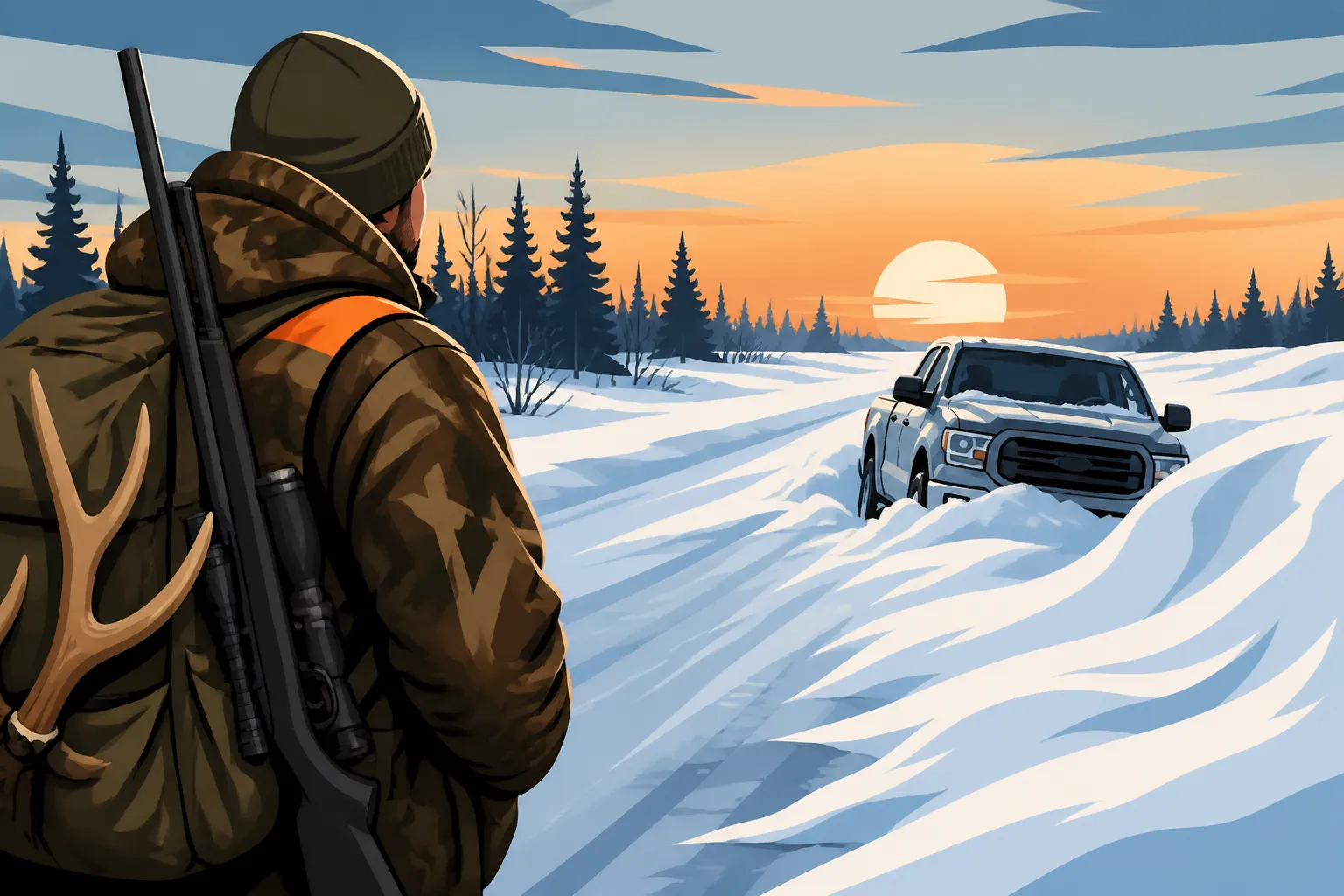
When those roads drift in, your trusty pickup truck suddenly becomes a very expensive snow anchor. This dramatically impacts your access to prime hunting areas. What was a quick 15-minute drive to your favourite stand location might become an hour-long trek on snowshoes, or completely unreachable. This means traditional scouting methods, like driving perimeter roads looking for tracks, become far less effective. Instead, you need to think differently. Animals, particularly deer, change their movement patterns drastically when faced with deep snow. They'll stick to areas of less resistance, often yarding up in thick cover, or using existing trails and even frozen waterways. This shift in animal behaviour, coupled with your limited access, means that simply revisiting your early-season spots might lead to disappointment. You'll need to adapt your scouting to find where deer are concentrated, often looking for those crucial wintering areas. This also highlights the importance of having a robust Winter Truck Kit for a Manitoba Hunt The frustration of driving all that way only to be stopped cold by a drift is a common, and often costly, late-season experience.
Essential Gear and Vehicle Preparation for Deep Winter Access
To truly tackle late-season hunting in Manitoba when the roads become a mess, you need to be prepared. This isn't just about comfort; it's about safety and ensuring you can actually get to where the game is. Neglecting preparation can turn an exciting hunt into a dangerous ordeal.
Vehicle Modifications and Recovery Gear
Let's be realistic: a standard two-wheel-drive pickup isn't going to cut it when Gravel Roads Drift Shut. For any serious late-season foray, a four-wheel-drive truck with good ground clearance and aggressive winter tires (think BFG KO2s or similar) is almost a necessity. Tire chains can be a lifesaver in truly deep or icy conditions, providing traction where conventional tires spin. Beyond the vehicle itself, recovery gear is paramount. A robust winch, mounted to the front or rear, is non-negotiable. Couple that with a tree saver strap, D-rings, and heavy-duty tow straps. Carry multiple shovels – a sturdy long-handled one for breaking through hardpack, and a compact one for quick digs. Traction aids like recovery boards (Maxtrax or similar) can provide the grip needed to get moving when one or more tires lose traction in soft snow. Remember, you might be miles from the nearest help, and cell service can be spotty in many remote Manitoba areas, so self-sufficiency is key. Ensure your battery is strong, and consider an engine block heater if you're leaving your truck in sub-zero temperatures for extended periods.
| Item | Purpose | Notes |
|---|---|---|
| 4×4 Truck/SUV | Essential for traction and ground clearance | Aggressive winter tires are a must |
| Tire Chains | Maximize traction in deep snow/ice | Practice installing them beforehand |
| Winch (front/rear) | Self-recovery from deep snow or mud | Requires sturdy mounting and recovery points |
| Tow Straps/Ropes | Pulling power (vehicle-to-vehicle, or with winch) | Rated for heavy loads, no metal hooks |
| Recovery Boards | Provide traction under spinning tires | Good for getting unstuck on flatter ground |
| Shovels | Clearing snow drifts, digging out tires | One long-handled, one compact, robust |
| Hi-Lift Jack | Lifting vehicle in uneven terrain for tire changes/recovery | Requires suitable lift points on vehicle |
| Axe/Saw | Clearing fallen trees, cutting brush for traction | Essential for bush country access |
| Jumper Cables/Pack | Starting a dead battery in extreme cold | Cold weather can drain batteries quickly |
| Extra Fuel Can | Running out of fuel is not an option in remote areas | Securely stored outside the passenger compartment |
Personal Gear for Extreme Cold and Isolation
Being stuck in a drifted-in road isn't just about your vehicle; it's about surviving the elements while you wait for help or self-recover. This means your personal gear needs to be top-notch, especially when Hunting Whitetails at Thirty Below. Layering is critical: a good base layer to wick moisture, insulating mid-layers (fleece, down), and a waterproof/windproof outer shell. Bring more layers than you think you need, including extra hats, gloves, and thick socks. Insulated, waterproof boots are non-negotiable if you plan on extended walking. For communication, don't rely solely on your cell phone. A satellite communicator device (like a Garmin inReach or Zoleo) can literally be a lifesaver, allowing you to send messages and an SOS signal when there's no cell service. Pack a substantial emergency kit: fire starting materials, a first-aid kit, high-energy food bars, extra water (or a way to melt snow), a headlamp with extra batteries, and a space blanket or bivvy. A small, lightweight camp stove can be invaluable for melting snow for water or heating a warm drink. Think about what you would need to survive 24-48 hours comfortably if your vehicle broke down completely and you couldn't get back to town. Many hunters attest that Hunting Safely in Deep Winter Cold starts long before they even step out of the truck.
Strategies for Locating Game When Roads Are Impassable
With limited vehicle access, finding game shifts from traditional road-cruising to more intensive, boots-on-the-ground (or skis-on-the-snow) tactics. You have to think like the animals do, especially when deep snow changes everything.
Shifting Animal Patterns Due to Snow
Deep snow acts like a natural funnel, pushing animals into areas of dense cover and limited movement. For whitetails, this often means "yarding up" in thick coniferous stands or dense willow bottoms that offer thermal cover and some protection from the wind. These are the places Where Manitoba Whitetails Bed in Deep Snow. They'll conserve energy by creating a network of trails within these yards, minimizing travel through deep drifts. For moose and elk, south-facing slopes with good browse can be magnets, as the sun helps melt snow and expose forage. Look for areas with a mix of food sources (like aspen or willow for deer, or browse for moose) and heavy cover. Pay close attention to subtle changes in topography, as even a slight rise can offer a windbreak and shallower snow. This is where your skills in Reading Sign After a Fresh Snow become absolutely crucial. Fresh tracks are your best indicator of recent activity, and understanding where animals are moving from and to will give you an edge. They’re not going to waste energy navigating deep drifts just for the fun of it; they'll take the path of least resistance.
Alternative Access Methods
When the roads are blocked, it’s time to get creative with how you reach your hunting grounds. Snowmobiles and ATVs/side-by-sides with track systems become invaluable tools for covering ground over deep snow. However, always be aware of Quad and Side-by-Side Rules on Crown Land and on any private land you have permission for. These machines can get you deeper into the bush, but they also require careful operation and can get stuck themselves, so always travel with a buddy and recovery gear. For more stealthy, or even deeper, access, snowshoes or cross-country skis are your best friends. They allow you to cover significant distances quietly and efficiently, getting you into areas untouched by vehicle traffic. This often means packing light and planning for an all-day hunt, possibly even thinking about Sitting All Day in a Manitoba Blind if you make the effort to get to a prime spot. Don't underestimate the power of simply walking in. Sometimes, the best spots are just a kilometer or two beyond where the road becomes impassable, a distance many other hunters won't bother with. Frozen sloughs and rivers can also serve as highways into remote areas, but extreme caution regarding ice thickness is paramount.
Navigating and Staying Safe in Remote, Snow-Covered Terrain
Manitoba's winter wilderness is beautiful, but it demands respect. Getting lost or running into an emergency situation miles from help in deep snow and bitter cold can quickly turn deadly.
Advanced Navigation Techniques
Your primary navigation tool should be a reliable GPS unit with detailed topographic maps. Smartphone apps like GoHunt, Gaia GPS, or onX Hunt, when combined with downloaded offline maps, are incredibly powerful. They allow you to mark your vehicle, stand locations, and game sightings, and trace your path even without cell service. Before you leave, study satellite imagery (perhaps on GoHunt's platform) to identify potential game funnels, bedding areas, and alternative routes. Look for subtle terrain features like ridges, creek bottoms, and changes in timber type that can guide you. Always carry a physical compass and a waterproof map as a backup, and know how to use them. The batteries in electronic devices can drain rapidly in the cold, so spare power banks are essential. When venturing into unfamiliar territory, especially with deep snow, constantly orient yourself and look for landmarks. It's easy to get turned around when everything is covered in a uniform blanket of white. Being able to successfully navigate and scout with tools like Scouting With Satellite Imagery in Manitoba will significantly increase your odds.
Emergency Preparedness and Survival
Hypothermia is a silent killer in cold weather. Be vigilant for its symptoms in yourself and your hunting partners: shivering, confusion, slurred speech, and loss of coordination. The best defense is prevention: stay dry, layer appropriately, and keep moving to generate heat when not on stand. If someone starts showing signs, get them into dry clothes, a warm sleeping bag or emergency bivvy, and provide warm, sugary drinks. Getting stuck is a real possibility, and knowing What to Do If You Get Stuck in the Bush could save your life. If your vehicle breaks down or gets hopelessly stuck, prioritize shelter and warmth. Stay with your vehicle if possible, as it provides a larger, more visible target for rescuers. Start a fire for warmth and to signal for help. If you have a satellite communicator, activate the SOS. If you must walk out, be absolutely certain of your direction and capacity. In truly remote areas, consider packing a small, lightweight survival sled that can carry extra gear, a sleeping bag, and a robust first-aid kit. Leave a detailed hunt plan with someone responsible, including your route, destination, and expected return time.
Field Care and Extraction When Deep Snow is a Factor
Successfully taking an animal in deep snow is only half the battle. The next challenge is proper field care and getting it out of the bush, especially when your vehicle access is limited. This is where foresight and specialized techniques really pay off.
Efficient Field Dressing in Extreme Cold
When you have an animal down in the bitter cold, speed is of the essence, but so is precision. You want to get the hide off the meat quickly to allow it to cool, but you also need to protect the meat from freezing solid before you can properly process it, and from contamination. Meat Care in Manitoba's Cold Snaps is a critical skill. Immediately after the shot, get the animal field dressed to remove the entrails, which carry the most heat. This also significantly lightens the load for moving. In freezing temperatures, the concern is less about spoilage and more about the meat freezing too quickly before rigor mortis sets in, which can make it tough. If possible, try to quarter the animal on the spot, especially if it’s a large deer or a moose, as this makes extraction much more manageable. Keep your knives sharp, and wear good gloves that allow for dexterity while still providing warmth. Having a tarp or game bag to lay the meat on will keep it clean and prevent snow contamination.
Specialized Extraction Methods
Getting a full-sized deer, let alone a moose or elk, out of deep snow and drifted roads is a Herculean task. Forget about dragging it whole if you're alone and far from the truck. This is where quartering the animal becomes non-negotiable. Breaking the animal down into manageable pieces allows you to pack it out on a frame pack. Another excellent tool for extraction in deep snow is a game sled. These plastic sleds are incredibly durable and designed to glide over snow, allowing one or two people to pull quarters or even a whole, smaller deer with less effort than dragging. You might need to break trail first, either with snowshoes or by repeatedly walking a path to pack down the snow. If you're lucky enough to have snowmobile access, a larger utility sled attached to the snowmobile can haul out an entire animal. Just make sure the animal is securely tied down to prevent it from bouncing out on rough terrain. For really difficult terrain or long distances, you might need to make multiple trips or cache meat, protecting it from scavengers, and return with additional help or specialized equipment. Knowing how to successfully get an animal out when Getting a Deer Out on a Frozen Trail can turn a successful hunt into a triumphant one.
Disclaimer
This guide offers general information and recommendations for hunting in Manitoba's late season. Hunting regulations, safety protocols, and weather conditions can change rapidly. Always consult the most current Manitoba Hunting Guide, adhere to all provincial and federal laws, and prioritize your safety above all else. Proper training and experience are crucial for safe wilderness travel and hunting.