Boots for Sitting Still in Deep Cold
When you're out there in a Manitoba deer stand, the crisp air biting at your exposed skin, waiting patiently for that elusive whitetail buck, the last thing you want is cold feet. It's a truly miserable experience that can cut your hunt short and leave you shivering, cursing every minute. This guide is all about getting down to the nitty-gritty of choosing the right hunting boots to keep your feet toasty and comfortable, even when you're sitting still for hours in the bone-chilling deep cold that Manitoba's late season often delivers.
The Unique Challenge of Sitting Still in Extreme Cold
Many hunters find that boots that work perfectly fine when they're actively walking, tracking, or still-hunting become miserably inadequate the moment they settle into a stand or blind. The truth is, moving generates body heat, keeping your circulation up and your extremities warm. When you're sitting still, your body's furnace isn't roaring, and your feet, being the farthest from your core, are often the first to feel the chill. Manitoba's late fall and early winter can bring temperatures well below freezing, sometimes dipping into the -20s or -30s Celsius, even before factoring in wind chill. That's a whole different ballgame.
Why Your Regular Boots Fail When Stationary
Think about it: those insulated hiking boots you love for grouse hunting might be rated for "cold weather," but that rating usually assumes a certain level of activity. The insulation is designed to trap the heat your body is producing. If you're not producing much heat, like when you're motionless in a treestand or ground blind, that insulation has very little to work with. Your feet become passive conduits for heat loss, slowly radiating warmth into the frozen air or through the frozen ground. Many a hunter has ended their day early, teeth chattering and toes numb, because they underestimated this critical difference. It's not just about the thermometer reading; it's about your metabolic rate during the hunt.
The Impact of Cold Feet on Your Hunt
Beyond the obvious discomfort, cold feet can seriously impact your hunting success and safety. When your feet are freezing, your focus shifts entirely from scanning the bush edge or listening for movement to simply trying to warm up. You'll fidget, stomp your feet, or even give up on a prime stand location too soon. Worse still, prolonged exposure can lead to actual frostbite, a serious medical concern. It's not worth risking your health or ruining a hard-earned opportunity just because you skimped on footwear. A successful hunt, especially in deep cold, requires you to be comfortable and focused, ready to seize the moment a buck steps out. You'll find a lot of folks discussing the best way to tackle this challenge, often on forums or even through outfitters listed on platforms like BookYourHunt, who know the local conditions well.
Key Features to Look For in Deep Cold Hunting Boots
Choosing the right boots for sitting still in deep cold isn't just about grabbing the thickest pair on the shelf. It's a careful balance of insulation, waterproofing, fit, and sole design. Each element plays a crucial role in maintaining warmth and comfort when you're motionless for hours on end.
Maximum Insulation (Thick is Good, But Not All Insulation is Equal)
This is arguably the most critical factor. For stationary hunting in deep Manitoba cold, you need serious insulation. Boots are typically rated in grams of Thinsulate or similar synthetic insulation. While 400-600 grams might suffice for active cold-weather hunting, for sitting still in -20°C or colder, you're looking at 1000 grams, 1200 grams, or even more. Some traditional "Pac boots" can offer even greater thermal barriers using removable felt liners, which can sometimes equate to 2000 grams or more of synthetic insulation.
The type of insulation matters too. Synthetic insulations like Thinsulate are fantastic because they retain much of their warmth even when damp, unlike down. This is important if your feet sweat at all, or if you encounter slush or wet snow during your walk to the stand. Look for boots with insulation not just in the footbed but extending well up the shaft, creating a full warm envelope around your lower leg. For example, if you're planning a trip around the late November rut, which can be brutally cold, you'll want the highest insulation rating you can find. Hunting the Rut in Early to Mid November is a great resource for understanding those conditions.
Waterproofing and Breathability
It might sound contradictory, but effective waterproofing is vital, even in seemingly dry, cold conditions. Snow melts, ice turns to slush, and even a damp boot from a previous day's hunt can rapidly become a cold boot. A waterproof membrane (like Gore-Tex or similar proprietary technologies) in the boot's construction is essential to keep external moisture out.
However, breathability is equally important, though often overlooked. Your feet sweat, even in the cold, especially during the walk to your stand. If that moisture can't escape, it gets trapped inside the boot, cools, and inevitably makes your feet colder. That clammy feeling? That's your sweat turning into a heat-sucking enemy. Look for boots that boast both excellent waterproofing and a high degree of breathability in their membrane. This ensures that while external water stays out, internal moisture can vent, keeping your feet drier and therefore warmer.
Proper Fit and Room for Layering
This is where many hunters go wrong. A boot that's too tight restricts blood circulation, and poor circulation means cold feet, no matter how much insulation you have. When trying on boots for deep cold, always wear the thickest wool socks you intend to hunt in. You should have enough room to wiggle your toes comfortably, even with thick socks on. This creates a small air pocket, which acts as an additional insulating layer.
Conversely, a boot that's too loose can cause friction, leading to blisters, and also allows cold air to circulate too freely. It's a fine balance. Many hunters size up half a size or even a full size from their regular shoe size when buying extreme cold hunting boots to accommodate thick socks and ensure adequate circulation. Consider the shape of your foot and any orthotics you might use. Remember, you'll be wearing these for potentially 8-10 hours, so comfort is paramount.
Sole Construction and Traction
The sole of your boot is your direct contact with the cold ground, and it can be a significant source of heat loss if not designed correctly. Look for thick, multi-layered soles that provide a substantial barrier between your foot and the frozen earth. A thick rubber outsole with a deep lug pattern is essential for traction on snow, ice, and uneven terrain. You don't want to be slipping on a frozen log or a patch of hidden ice when carrying your gear or, hopefully, your harvested game.
Some boots incorporate air pockets or specialized insulating materials within the sole itself to further reduce heat transfer. A stiff sole can also be beneficial, providing better support and stability on challenging terrain, which is common in Manitoba's diverse hunting areas, from the bush country to frozen sloughs. For example, if you're venturing out onto a frozen slough crossing, good traction is absolutely non-negotiable. Hunting a Frozen Slough Crossing covers the terrain, and your boots are your first line of defense.
Understanding Different Boot Types for Manitoba's Cold
When you're facing down those frigid Manitoba temperatures, not all boots are created equal. The market offers a variety of styles, each with its own advantages and disadvantages for the stationary hunter. Knowing the difference can be the key to all-day comfort.
Traditional Pac Boots
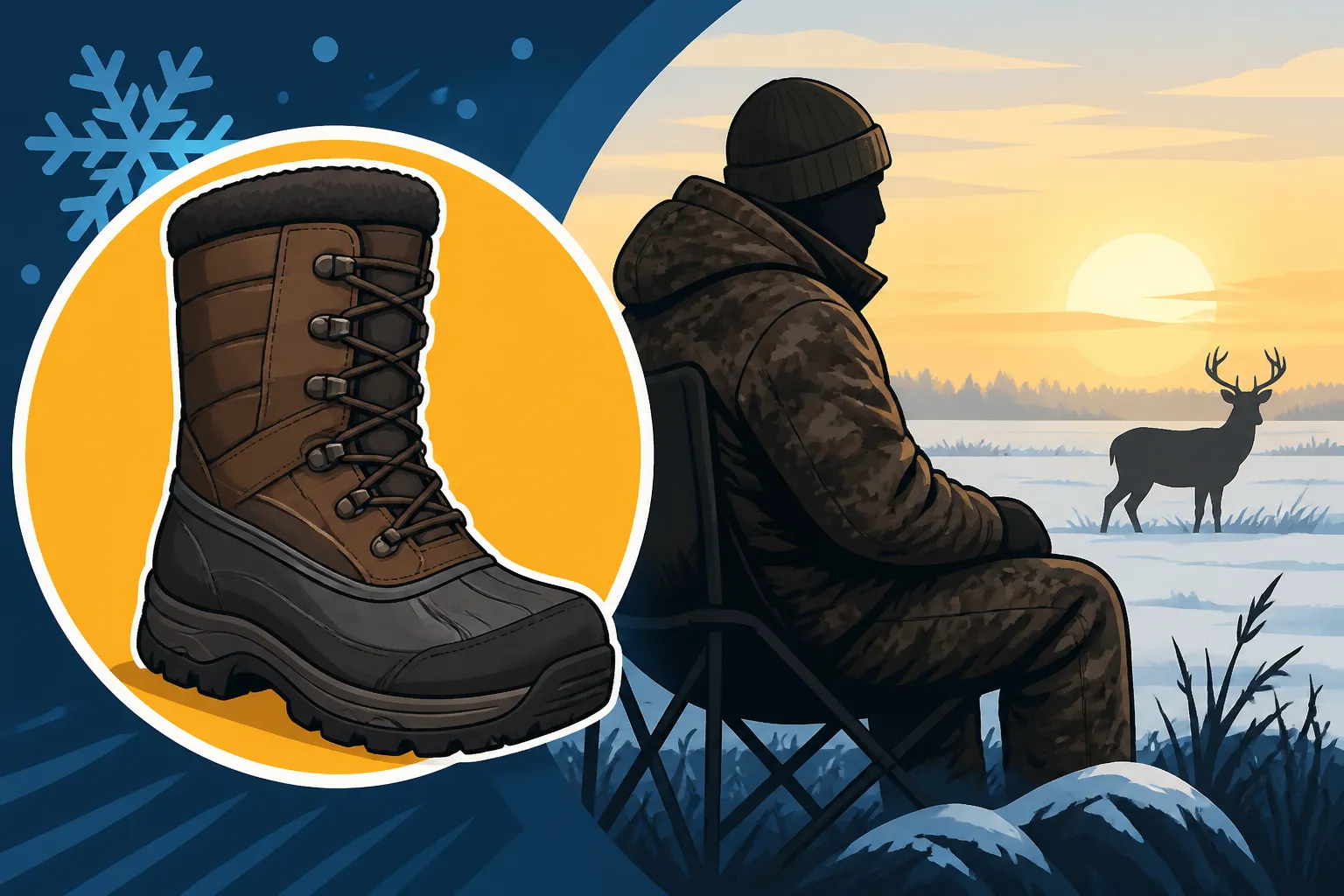
These are often the go-to for extreme cold and stationary hunting, and for good reason. Pac boots typically feature a rubber lower section (the "pac") that is inherently waterproof, combined with a leather or synthetic upper. Their hallmark is a thick, removable felt or multi-layer insulated liner. These liners can be incredibly warm, often offering insulation equivalent to over 2000 grams of synthetic material.
The beauty of the removable liner is two-fold:
- Drying: You can easily pull out the liners at the end of the day to dry them by the fire or near a heat source, ensuring they're dry and warm for the next morning. This is crucial for preventing cold feet from lingering moisture.
- Versatility: Some hunters even purchase extra liners, so they always have a dry pair ready.
The downside of pac boots is often their bulk and weight. They're not designed for long, active hikes. However, for sitting in a blind, traversing a short distance to a treestand, or Sitting All Day in a Manitoba Blind, they are often unmatched in warmth. Brands like Sorel, Baffin, and Muck make excellent pac boots suitable for our conditions.
Heavily Insulated Hunting Boots
These boots often resemble more traditional hiking or work boots but are packed with a substantial amount of synthetic insulation, usually 800 grams to 2000 grams. They offer a good balance of warmth, mobility, and support, making them a popular choice for hunters who might do a mix of still hunting and some moderate walking. They typically feature a waterproof/breathable membrane directly integrated into the boot.
The advantage here is a more athletic fit and less bulk than a traditional pac boot. This can be more comfortable for walking to and from your stand, or if you need to move stealthily through thicker cover. However, because the insulation isn't removable, drying them thoroughly can be more challenging if they get wet from the inside or out. They need proper airing out each night. These are a solid choice for Hunting Whitetails in Manitoba's Bush Country where you might be sitting for long stretches but also need to navigate varied terrain. Platforms like GoHunt often feature reviews and comparisons of these types of boots, which can be a valuable resource for research.
Evaluating Other Factors: Weight, Height, and Lacing Systems
While warmth is king, other factors contribute to the overall effectiveness and comfort of your boots.
- Weight: Heavier boots can be fatiguing, especially if you have any distance to cover. However, for stationary hunting, a heavier boot might offer more robust insulation and protection. It's a trade-off.
- Height: Taller boots (10-16 inches) provide more warmth and protection from deep snow. They also help keep snow out if you're breaking trail. For conditions like Hunting Safely in Deep Winter Cold, taller boots are usually a good idea.
- Lacing Systems: Look for durable laces and hardware. Quick-cinch systems can be convenient, but ensure they hold tension well. A good lacing system allows you to achieve a snug fit without cutting off circulation, and to adjust it easily with gloved hands.
Choosing the right type depends on your specific hunting style, the exact conditions you expect, and your personal comfort preferences.
Beyond the Boots: Maximizing Foot Warmth
Even the best boots in the world can't do it all on their own. To truly conquer cold feet when sitting still in Manitoba's deep freeze, you need a holistic approach that includes smart layering, supplementary warmth, and diligent care.
The Critical Role of Socks
Socks are not just an afterthought; they are a crucial component of your cold-weather footwear system. Forget cotton – it holds moisture and loses all insulating properties when wet. For deep cold, you need high-quality wool or synthetic blend socks.
- Wool (Merino is best): Merino wool is fantastic because it's soft, wicks moisture, insulates even when damp, and resists odor. Opt for thick, heavy-weight wool socks.
- Layering Socks: Some hunters prefer a two-layer system: a thin, moisture-wicking synthetic or merino liner sock directly against the skin, covered by a thicker, insulating wool sock. The liner wicks sweat away from your foot, preventing it from chilling, while the outer sock provides the bulk of the warmth.
- Avoid Over-layering: Don't try to cram too many thick socks into a boot that doesn't have enough room. This will restrict circulation and defeat the purpose. Stick to one or two well-chosen pairs that allow your toes to wiggle freely.
Always bring an extra pair of dry socks with you. If your feet get sweaty during the walk in, changing into a fresh, dry pair once you're settled in your stand can make a world of difference.
Chemical Foot Warmers and Heated Insoles
Sometimes, even with the perfect boots and socks, extreme cold demands a little extra help. Chemical foot warmers are small packets that generate heat through an oxidation reaction when exposed to air. They come in various shapes, designed to fit over your toes, under your arch, or across your entire footbed. They can provide hours of supplemental warmth, often between 8-10 hours, which is perfect for a long sit.
Heated insoles, either battery-operated or rechargeable, are another excellent option. These can be more expensive upfront but offer adjustable heat settings and are reusable. Just make sure the batteries will last for your intended sit time and carry spares if necessary. When you're Hunting Whitetails at Thirty Below, these supplemental heat sources can be absolute game-changers, turning a miserable sit into a tolerable, and even enjoyable, one.
Boot Care and Maintenance
Proper care extends the life of your boots and ensures they perform when you need them most.
- Drying: At the end of each day, always dry your boots thoroughly. If they have removable liners, take them out. If not, open the boots wide and place them in a warm, dry area. Avoid direct, intense heat sources (like a roaring fire or furnace vent) as this can damage materials and adhesives. Boot dryers are a great investment for active hunters.
- Cleaning: Regularly clean off mud, dirt, and debris. Use a soft brush and warm water. For leather boots, apply a quality leather conditioner to keep the leather supple and prevent cracking.
- Waterproofing Treatment: Over time, the DWR (Durable Water Repellent) coating on the exterior of your boots can wear off, and even waterproof membranes can degrade. Reapply a waterproofing treatment periodically, especially to the fabric and leather portions of the boot, to maintain their water repellency.
- Storage: Store your boots in a cool, dry place, away from direct sunlight, when not in use. This helps preserve their materials and insulation.
By combining the right, heavily insulated boots with smart sock choices, supplementary warmth, and diligent care, you'll be well-equipped to sit still and stay warm, even in Manitoba's most extreme winter hunting conditions. This preparation ensures you can focus on the hunt, not on your freezing toes.
Disclaimer
This article is for general informational purposes only and does not constitute professional advice. Laws, prices and regulations vary by location and change over time. Consult a qualified professional for guidance on your specific situation.