What Camp Food Is Usually Like
One of the questions that often weighs on a hunter's mind, especially for those new to guided trips or remote camps in Manitoba, isn't about the size of the deer or the weather, but something far more fundamental: "What on earth am I going to eat?" It's a common concern, a blend of anticipating rustic deprivation and hoping for some semblance of comfort after a long day in the bush. This guide is here to give you a realistic peek into the culinary world of hunting camps, helping you set expectations and prepare for the nourishment that fuels your Manitoba adventure.
The Reality of Camp Food: More Than Just Beans and Wieners
Let's be honest, when you picture "camp food," visions of endless canned beans, instant coffee, and questionable dehydrated meals might dance in your head. And while those things certainly have their place in some truly remote, minimalist setups, the truth about most Manitoba hunting camps is far more varied and often, thankfully, much more appealing. It's rarely fine dining, but it's typically designed with purpose: to provide hearty, energy-rich meals that keep you going from pre-dawn until well after sunset.
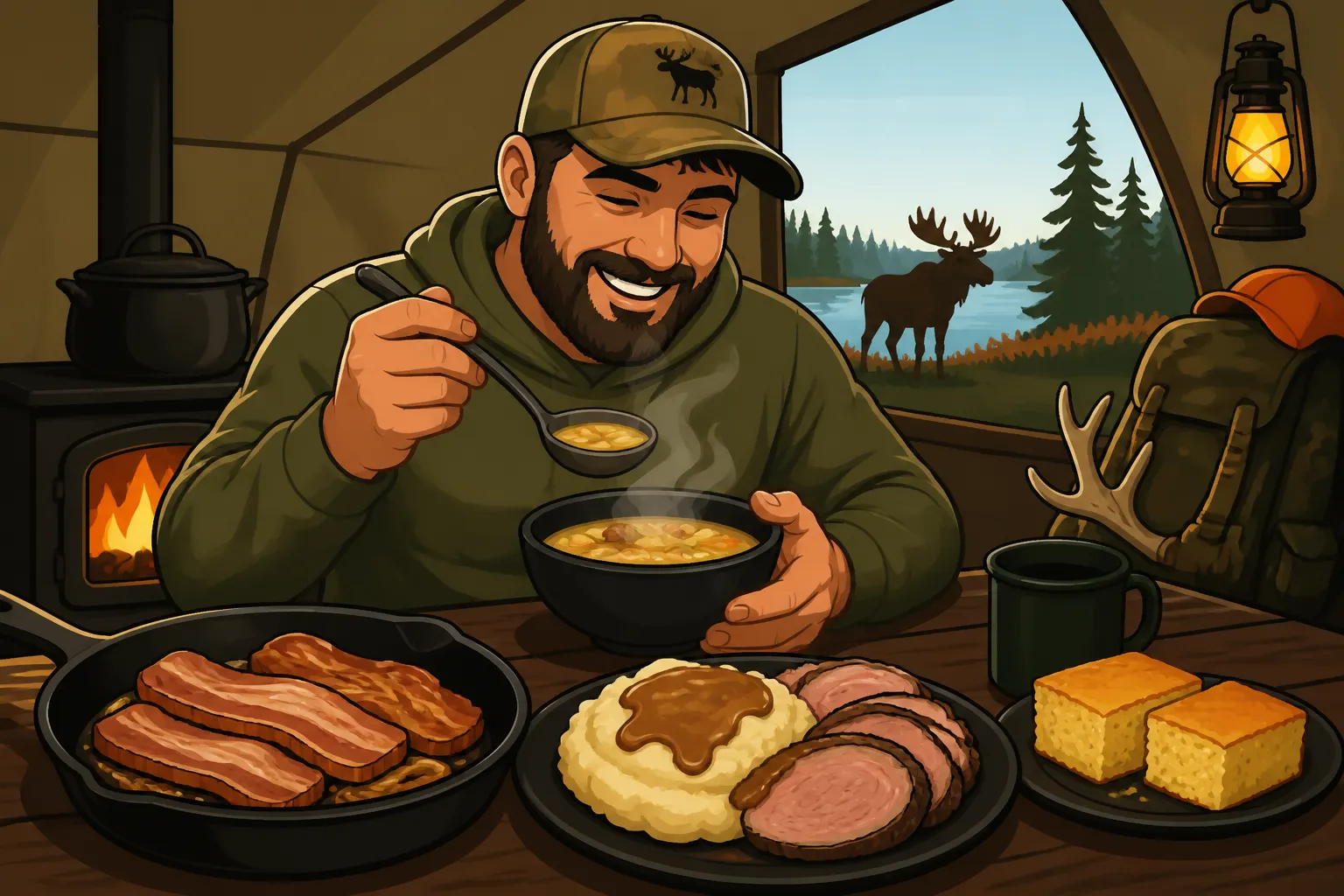
The goal of camp cooking is fuel and comfort, not Michelin stars. You’re often dealing with limited refrigeration, less-than-gourmet equipment, and cooks who are more adept at satisfying hungry hunters than perfecting presentation. Expect generous portions, robust flavours, and meals that stick to your ribs. The aroma of bacon frying or chili simmering after a cold morning in the stand can be one of the best parts of the day.
Rustic Comfort vs. Gourmet Expectations
When it comes to camp food, there's a wide spectrum. On one end, you might find truly rustic, no-frills sustenance – think a basic breakfast of oatmeal and toast, packed sandwiches for lunch, and a simple stew or pasta for dinner. These camps are often focused purely on the hunt, with food being a necessary means to an end. They prioritize practicality and ease of preparation in remote conditions.
On the other end, some outfitters take genuine pride in their camp kitchen, offering surprisingly diverse and delicious meals. Imagine fresh-baked goods, cuts of wild game (often from previous successful hunts), and more elaborate side dishes. These camps understand that good food contributes significantly to the overall hunting experience and the morale of the hunters. It's still comfort food, mind you, but it’s comfort food elevated, often with a homemade touch that feels like a warm hug after hours spent braving the Manitoba elements.
The Role of the Outfitter or Guide
The quality and style of your camp food are almost entirely dependent on your outfitter and the type of hunt you've booked. A fully-catered lodge hunt, for instance, will invariably offer a different culinary experience than a bare-bones drop camp where you're largely responsible for your own provisions. Outfitters understand that satisfied clients often mention the food as a highlight, or a lowlight, of their trip.
Experienced outfitters, especially those who run multi-day or week-long operations, know the importance of keeping hunters well-fed and energized. They often employ dedicated cooks or have guides who are also skilled in the kitchen. When you're researching potential trips, perhaps on platforms like BookYourHunt or GoHunt, pay close attention to descriptions of their camp amenities, including what they promise regarding meals. Some will even share sample menus, giving you a valuable sneak peek into their kitchen philosophy. It’s worth asking directly about the food when you're Questions to Ask Before Booking.
Typical Meals You Can Expect
So, what exactly does "hearty and energy-rich" look like on a plate in a Manitoba hunting camp? While every camp is unique, there are some common themes you'll encounter that form the backbone of a hunter's diet in the field. These meals are designed to provide sustained energy for long days and quick recovery for tired muscles.
Breakfast: Fueling Up for the Hunt
The most important meal of the day, especially when you're facing a chilly pre-dawn start, is breakfast. Most camps understand this implicitly. You can generally expect a substantial spread that aims to get you properly fueled before you head out. Think hot coffee, tea, and juice to kick things off. Then, depending on the camp, you might see staples like scrambled eggs, bacon, sausage, or ham. Pancakes or French toast are often on the menu, sometimes with local berry toppings if available. Toast, oatmeal, and fresh fruit are also common.
Imagine rolling out of your bunk in the dark, the air crisp and cold, and walking into a warm cabin where the smell of coffee and frying bacon fills the air. That hot plate of eggs and a stack of pancakes isn't just a meal; it's a vital part of preparing physically and mentally for the day's hunt. This foundational meal sets the tone, ensuring you have the energy to sit in a stand for hours or track game through the bush.
Lunch: On-the-Go Sustenance
Lunch is where things often get a bit more portable and pragmatic, especially if you're out in the field all day. Many camps will pack a lunch for you to take with you, which is an absolute blessing when you're miles from camp. These usually consist of hearty sandwiches or wraps, often with cold cuts, cheese, and vegetables that hold up well. Alongside, you'll likely find an apple or orange, some granola bars, cookies, or other easily digestible snacks. Thermoses of hot coffee or soup can also be a godsend on particularly cold days.
For hunts where you might be returning to a main lodge or a day-use warming shack, lunch might be a slightly warmer affair – perhaps a bowl of chili, a hot dog, or leftover soup from the previous night's dinner. The key here is convenience and keeping you from getting bogged down. Eating a quick, efficient meal means more time for hunting. It's not always glamorous, but a well-packed lunch means you're not succumbing to hunger pangs when that trophy buck finally steps out.
Dinner: The Main Event After a Long Day
Ah, dinner. This is usually the meal everyone looks forward to most, especially after a full day of hunting. It's the time to relax, share stories, and truly refuel. Most Manitoba camps aim for robust, comforting dinners that replenish your energy stores and warm you from the inside out. Stews, roasts (sometimes even wild game, like moose or elk if the camp has harvested it previously), pasta dishes with meat sauce, hearty casseroles, or grilled burgers and steaks are all common. These are typically served with generous sides of potatoes (mashed, roasted, or baked), a vegetable or two, and often a simple dessert like pie or cake.
The dinner table in a hunting camp is more than just a place to eat; it’s a gathering spot. It’s where you recount the day's near misses and triumphs, discuss strategies for the next morning, and bond with your fellow hunters and guides. The food served here is designed to be satisfying and familiar, a well-deserved reward for your efforts. Think comfort food that reminds you a little of home, but with that unique camp flavour.
Factors Influencing Your Camp Food Experience
While we can talk about general expectations, it's crucial to understand that no two hunting camps are exactly alike. Several factors play a significant role in shaping the specific culinary experience you'll encounter in Manitoba's wild spaces. Understanding these can help you choose the right outfitter and set your own expectations appropriately.
Camp Type and Location
The most significant influence on your camp food will be the type of camp and its remoteness. A lodge that's accessible by road, for example, will likely have easier access to fresh produce, meats, and specialty items. They can resupply regularly, keep larger freezers and refrigerators, and generally offer a wider, fresher variety of food. These types of camps often feature proper kitchens with full stoves, ovens, and plenty of prep space, allowing for more elaborate meal preparation.
On the other hand, a fly-in camp deep in the boreal forest or tundra, which relies on a float plane for all supplies, will have a much more limited menu. Manitoba Fly-In Camps and Float Planes often have strict weight limits on what can be brought in, meaning perishables are at a premium. Here, you'll see more canned goods, dried foods, and items that travel well and have a long shelf life. The cooking setup might be more basic, perhaps a wood stove or propane burner, limiting the culinary complexity. The trade-off, of course, is unparalleled access to pristine hunting grounds.
Outfitter Philosophy and Budget
Just like any business, outfitters have different philosophies and budgets, which directly impact the food service. Some outfitters view food as a critical component of their client's satisfaction and are willing to invest more in quality ingredients, a dedicated chef, and diverse menus. They understand that a well-fed hunter is a happy and more effective hunter. These might be the camps where you hear rave reviews about the food, often adding significant value to the overall cost of the hunt.
Other outfitters might prioritize other aspects of the hunt, like prime hunting areas or specialized guiding techniques, seeing food as simply a necessary utility. Their meals might be perfectly adequate and filling but without any particular flair or variety. It's important to align your expectations with the outfitter's overall approach. This is often reflected in the price point of a guided hunt; generally, a more expensive package may offer a more robust food experience. When considering What a Manitoba Guided Hunt Costs, remember that food is a significant part of that equation.
Dietary Restrictions and Preferences
This is a big one, and it's absolutely critical to communicate any dietary restrictions or severe allergies well in advance of your trip. Most reputable outfitters will do their best to accommodate specific needs, whether it's a gluten intolerance, a nut allergy, or vegetarian preferences. However, their ability to do so significantly decreases if you spring it on them last minute, especially in remote locations where grocery runs aren't a daily occurrence.
Don't expect a la carte service like a restaurant, but a heads-up allows them to plan and stock appropriate alternatives. Be realistic about what can be achieved in a camp setting. A complex vegan diet might be harder to maintain than simply avoiding red meat. Clear communication during the Planning a Manitoba Hunting Trip phase is your best bet to ensure you're adequately fed and safe throughout your stay.
Here's a quick overview of how camp types might influence your meals:
| Camp Type | Access | Food Variety & Quality | Preparation Style | Common Items |
|---|---|---|---|---|
| Full-Service Lodge | Road/Boat | Wide variety, often fresh, home-cooked, sometimes game | Dedicated cook, full kitchen | Roasts, fresh vegetables, baked goods, diverse breakfasts |
| Remote Fly-In Camp | Air (Float) | More limited, relies on non-perishables, robust | Guide/Camp Host, basic kitchen | Stews, canned goods, dried fruit, simple pasta, strong coffee |
| Drop Camp | Vehicle/Air | Minimal, self-provided or pre-packaged | Hunter cooks own, portable stove | Dehydrated meals, MREs, instant noodles, canned goods |
| Outfitter Tent Camp | ATV/Truck | Moderate, hearty, often BBQ or one-pot meals | Guide/Cook, camp stove/fire | Chili, burgers, simple pasta, pre-made sandwiches |
Making the Most of Camp Meals
You've got your licence, your gear is packed, and you're ready to chase game across Manitoba. But don't let the thought of camp food deter you. With a little foresight and the right mindset, your meals in the field can be a surprisingly enjoyable part of the overall experience.
Communication is Key
We touched on this, but it bears repeating: talk to your outfitter! Don't assume anything. Before you finalize your booking, have a clear conversation about the food plan. Ask about typical menus, how meals are served, and whether they can accommodate any specific dietary needs or restrictions you might have. Transparency on both sides ensures a smoother experience for everyone. It's much easier for an outfitter to plan for a vegetarian hunter if they know weeks or months in advance, rather than on arrival day. This dialogue is one of the most important aspects of Booking a Manitoba Whitetail Hunt or any other guided trip.
Consider asking about their typical breakfast schedule, if lunches are packed or eaten in camp, and what kind of dinners they usually serve. This helps you mentally prepare and decide if you need to supplement. Knowing What Manitoba Outfitters Provide in Camp beyond just the sleeping arrangements, including kitchen facilities and meal times, helps set realistic expectations.
Bring Your Own Snacks and Treats
While outfitters provide the main meals, there's absolutely no harm in bringing along some of your favorite snacks, comfort foods, or specialty energy bars. These can be lifesavers on long days in the field or simply provide a little taste of home when you're far away. Think about things like:
- Energy bars or gels: Great for a quick boost when you're miles from camp.
- Dried fruit and nuts: Healthy, non-perishable, and packed with energy.
- Your favourite coffee or tea: If you're particular about your morning brew.
- Chocolate bars or hard candies: A little morale booster on a cold afternoon.
- Jerky or other non-perishable protein snacks: Excellent for sustained energy.
Just be mindful of weight and space, especially if you're flying in. Small, dense, high-calorie items are usually best. Having a secret stash of your favorite treats can make a significant difference to your comfort and enjoyment. It's a small detail, but a warm cup of your preferred tea or a piece of good chocolate can truly enhance the experience of Sitting All Day in a Manitoba Blind.
Embrace the Experience
Ultimately, camp food is part of the overall hunting adventure. It's often simple, honest, and designed to meet the demands of an active outdoor lifestyle. Try not to go in with restaurant-level expectations, but rather with an open mind and a healthy appetite. Some of the best meals you'll ever have are those eaten around a campfire, after a successful day, surrounded by good company.
The memories you make around the camp table, sharing stories and laughs over a hearty plate of food, will often be as vivid and cherished as the hunting itself. It’s a chance to connect with your guides and fellow hunters, learn more about the region, and appreciate the rustic charm of the Manitoba bush. So, eat up, enjoy the company, and let the food fuel your next great hunting story!
Disclaimer
This article is for general informational purposes only and does not constitute professional advice. Laws, prices and regulations vary by location and change over time. Consult a qualified professional for guidance on your specific situation.