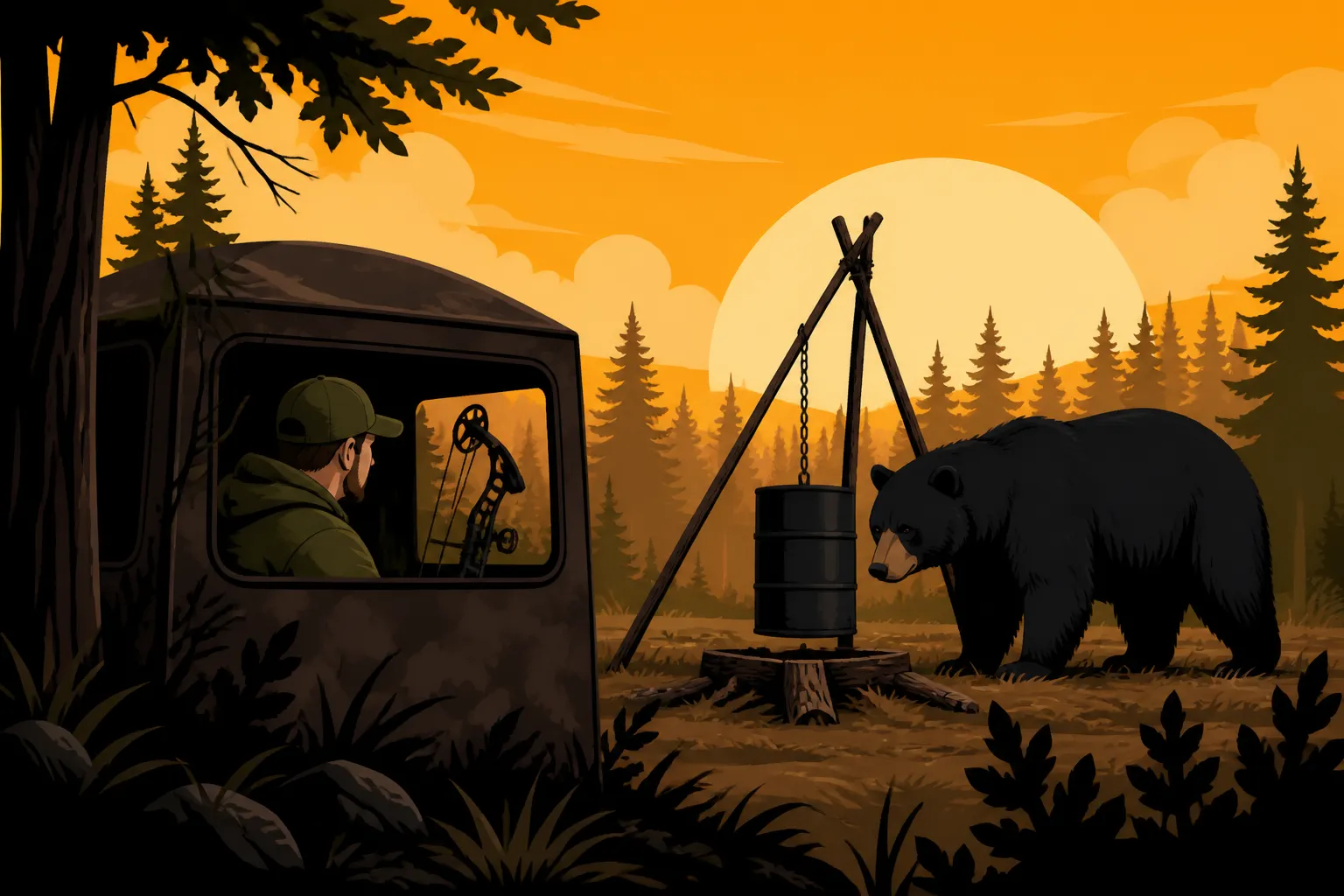
Sitting a Bear Bait From a Ground Blind
The moment you settle into a ground blind for a bear hunt, a familiar frustration often creeps in: the cramped space, the stifling air, and the feeling that you're practically broadcasting your presence to every critter in the woods. Many hunters feel like they're sacrificing stealth for comfort, or vice-versa. But it doesn't have to be that way. This guide will walk you through setting up and effectively hunting from a ground blind over a bear bait, maximizing your chances of success while maintaining a comfortable and concealed position in Manitoba's varied terrain.
The Advantages of a Ground Blind for Bear Baiting
Hunting bears over bait from a ground blind offers a unique blend of advantages, especially in Manitoba's dense bush country where visibility can be limited and close encounters are the norm. It's a strategic choice that can significantly impact your hunt, giving you an edge over the keen senses of a black bear.
Stealth and Scent Control
One of the primary benefits of a well-placed ground blind is the enhanced stealth and scent control it provides. Bears possess an incredibly acute sense of smell, far superior to a deer's. They can pick up human scent from hundreds of yards away, and any unusual odour around their bait site will immediately put them on high alert.
A quality ground blind, especially one with a dark interior, acts as a visual barrier, making it difficult for a bear to discern your outline even at close range. More importantly, the fabric of the blind, when properly brushed in and maintained, can help contain and dissipate your scent. While it won't eliminate scent entirely, it certainly helps to break up and reduce the overall scent cone drifting from your position, especially when combined with scent-eliminating sprays and clean hunting clothes. Think about how a dense canopy of spruce might hold scent closer to the ground; a blind works similarly, preventing your scent from wafting out directly into the bear's approach path. This containment becomes absolutely critical on those calm evenings when a swirling breeze can betray your presence in an instant, a common frustration for hunters in open areas. Baiting Black Bear in Manitoba relies heavily on minimizing human disturbance, and a ground blind is a key tool in that effort.
Comfort and Endurance
Let's be real: bear hunting from a static position can involve long, often uneventful hours. Comfort might seem like a luxury, but it's essential for maintaining focus and endurance. Sitting still for four, five, or even eight hours in a treestand can become incredibly taxing, leading to fidgeting, cramps, and ultimately, missed opportunities.
A ground blind offers protection from Manitoba's unpredictable weather, whether it's a sudden spring shower, the relentless assault of mosquitoes in early summer, or the chill that can set in during a fall hunt. You can bring a comfortable chair, multiple layers of clothing, and even a small heater on colder days, all of which contribute to your ability to sit longer and remain alert. This isn't just about feeling good; it's about staying in the game when that big boar finally decides to visit. The ability to shift position slightly, stretch a bit, or silently grab a snack without fear of being silhouetted or easily detected can make all the difference, particularly for newer hunters or those who struggle with prolonged stillness.
Versatility and Set-up Considerations
Unlike a treestand, which requires suitable trees and can be limited by terrain, a ground blind offers immense versatility in placement. You can set it up virtually anywhere, from dense poplar bluffs to the edge of a willow run, or even against a rock outcrop in more rugged Shield country. This adaptability allows you to position yourself perfectly according to wind direction, the bear's expected travel paths, and optimal shooting lanes.
The initial setup is also generally quicker and less strenuous than hanging a treestand, especially if you're packing it in deep. Blinds are also excellent for hunters with mobility issues or those who simply prefer to keep their feet on solid ground. You can easily brush in a ground blind with local vegetation, making it disappear into the surroundings. This ease of setup also means you can adjust your position or even move the blind entirely if trail camera intel or changing winds demand it, something much more challenging with a fixed treestand.
Essential Ground Blind Setup for Bear Hunting
Getting your ground blind set up correctly is half the battle. It's not just about popping it open and sitting down; it's a strategic process that involves careful scouting, camouflage, and creating optimal shooting opportunities.
Location, Location, Location
Choosing the right spot for your ground blind is paramount. While the bait itself draws the bear, your blind placement dictates your shooting opportunity and ability to remain undetected. Start by identifying the primary approach paths bears are using to reach the bait. Look for well-worn trails, scat, or tracks in the mud around your Setting a Bear Bait Site in Manitoba.
Wind direction is your absolute best friend or worst enemy. Always position your blind so the prevailing wind carries your scent away from the bait and the bear's likely approach. This often means placing the blind downwind or crosswind of the bait. Consider thermals as well; in the mornings, air currents typically move downhill, and in the evenings, they rise. If you're hunting a draw or a valley, these subtle shifts can be critical. Finally, think about natural cover. Place your blind against a dense bush line, a cluster of spruce, or a small hill to help break up its outline and provide additional concealment. A good outfitter, or a thorough self-scout, will spend significant time on this aspect. Platforms like GoHunt, with their detailed mapping features, can be invaluable for analyzing topography and prevailing wind patterns to select prime locations for your bait and blind.
Blending In and Anchoring the Blind
Once you've chosen your spot, it's time to make that blind disappear. A ground blind, even if it has a great camo pattern, still looks like a box in the woods if it's not brushed in properly. Use natural materials from the surrounding area – branches, deadfall, tall grass, or anything else that blends – to break up its hard lines and make it part of the natural landscape. Don't overdo it, but make sure the blind doesn't stick out like a sore thumb.
Anchoring your blind is equally important. Manitoba can get windy, and nothing ruins a hunt faster than your blind flapping like a flag or, worse, blowing over entirely. Use the provided stakes, and if possible, tie off critical points to nearby trees or heavy branches. Some hunters even use sandbags or rocks inside the blind for extra stability. If you're setting up well in advance of the season, consider letting the blind sit for a week or two. This allows local wildlife to get accustomed to its presence and for any initial human scent to dissipate, making the area feel less disturbed when you finally sit down for your hunt.
Shooting Lanes and Archery Considerations
From inside your blind, identify clear shooting lanes to the bait. Bears often approach cautiously, circling the bait before committing. You'll want unobstructed views and clear shots from various angles. If you're a bowhunter, this is absolutely crucial. You need specific lanes that allow for full draw and arrow flight without hitting branches, leaves, or the blind itself. This usually means clearing a few strategic lines of sight.
For rifle hunters, a slightly larger window might suffice, but still, ensure nothing will deflect your bullet. Always practice shooting from your blind before opening day. Get comfortable with the sight picture, the dimensions of the windows, and any potential obstacles. Make sure your chair height is correct and that you can comfortably shoulder your weapon or come to full draw without scraping against the blind walls. Consider the angle of the shot into the bait site as well; a broadside bear at 20 yards from a ground blind presents a much different shot opportunity than from a 20-foot treestand. Manitoba's black bear season dates vary, so ensure your practice is well in advance of your hunting dates.
Strategies for a Successful Ground Blind Bear Sit
Sitting a ground blind for bears demands a combination of patience, discipline, and attention to detail. It's about more than just showing up; it's about being prepared for the encounter and maximizing your chances when a bear finally arrives.
Timing Your Approach and Exit
The timing of your arrival and departure from the blind is critical. Bears are most active during the low-light hours of dawn and dusk. For an evening hunt, aim to be in your blind well before prime time, ideally two to three hours before sunset. This gives the woods time to settle down after your entrance and allows any curious animals to move on.
Approach your blind quietly and efficiently, taking a route that avoids walking directly past the bait site if possible. Try to minimize disturbing the area around the bait, as fresh human scent can make a bear wary. Once you're in the blind, stay put. Resist the urge to peek out or adjust things until it's completely dark or you've harvested a bear. Leaving the blind requires similar stealth; wait until full darkness before quietly exiting, again, choosing a path that keeps you away from the bait. Bears, particularly larger boars, are often late visitors, sometimes only showing up well after legal shooting light begins to fade.
Patience, Scent Discipline, and Noise Management
Patience truly is a virtue when bear hunting. Unlike some deer, bears don't typically rush in. They'll often approach slowly, circling downwind, testing the air. Expect to sit for long hours, observing the activity around the bait.
Scent discipline extends beyond just your blind. Wear clean clothes, use scent-eliminating sprays on your gear, and avoid strong-smelling foods or colognes. Consider wearing rubber boots to minimize leaving a strong scent trail on your approach. Inside the blind, keep movement to an absolute minimum. Even subtle shifts can be picked up by a bear's keen eyesight, especially if it's looking directly at your blind. Silence is golden; avoid talking, rustling gear, or checking your phone too often. Even a small noise can make a bear pause or bolt. If you're dealing with flies or mosquitoes, a small, silent fan can provide relief without creating much noise. Sometimes, a subtle call, like a soft cub distress or a sow grunt, can bring a hesitant bear in, but use them sparingly and with confidence.
Gear for the Long Haul in the Blind
Being prepared with the right gear ensures you can sit comfortably and effectively for extended periods. Beyond your weapon, a comfortable, silent chair is paramount. One that swivels silently is a huge bonus for scanning different approach angles. Good binoculars or a spotting scope are essential for identifying bears, especially to differentiate between a sow with cubs and a lone boar, a critical distinction for Manitoba Bear Bag Limits and ethical hunting.
Bring a small cooler with snacks and drinks, but choose items that are easy to open quietly and don't have strong odours. A headlamp or small flashlight for navigating to and from the blind in the dark is a must. Bug spray (non-scented, ideally) or a Thermacell can be a lifesaver during spring and summer hunts. Finally, always carry a first-aid kit, a knife, and any other personal safety items you might need. A good rangefinder is also vital for confirming distances, especially if the bear looks bigger (or smaller!) than you initially judged.
Common Challenges and Troubleshooting
Even with the best preparation, hunting from a ground blind over bait presents its own set of unique challenges. Knowing how to anticipate and address these issues can save your hunt.
Dealing with Curious Critters and Non-Target Animals
It's almost guaranteed you'll have visitors at your bait site that aren't bears. Raccoons, skunks, foxes, squirrels, and even birds are often drawn to the same attractants. These animals, while sometimes entertaining, can be a nuisance. They can consume bait, create noise, and potentially alert a cautious bear.
The key is often to ignore them. Any movement or noise you make to scare them off might also spook the bear you're waiting for. Learn to identify the sounds of different animals. A rustle in the leaves could be a squirrel, or it could be a massive boar slowly making its way in. Only react when you are certain it's a bear you want to harvest. If a non-target animal is being particularly disruptive, you might consider a very subtle, soft noise to encourage it to leave, but always prioritize stealth. This is where patience really pays off, waiting for the true prize to reveal itself.
Weather Woes and Staying Comfortable
Manitoba weather is famously fickle. A warm, sunny afternoon can quickly turn into a cool, damp evening, or a pop-up thunderstorm can surprise you. Spring bear hunts can bring anything from scorching heat to snow flurries, and fall hunts can see temperatures plummet rapidly. This variability directly impacts your comfort and ability to remain still and focused.
Always dress in layers, even if the day starts warm. A good rain suit is a non-negotiable item, even if the forecast looks clear. Waterproof boots are also essential, especially in Manitoba's often marshy or damp environments. If you anticipate cold, chemical hand and foot warmers can make a huge difference. For bug-heavy seasons, a head net and gloves, in addition to repellent, can keep you from being driven out of your blind prematurely. Staying dry and warm prevents shivering, fidgeting, and ultimately, losing focus on your hunt.
When a Bear Doesn't Show Up
Perhaps the most common frustration for any bear hunter is the empty sit. You've done everything right: perfect blind placement, excellent bait, meticulous scent control, and hours of unwavering patience. But no bear. This can be disheartening, but it's part of the hunting experience.
When a bear doesn't show up, it's time to analyze the situation. Was the wind truly consistent? Did you make any subtle mistakes? Is the bait fresh and appealing? Check your trail cameras (if you're using them) for activity patterns you might have missed. Sometimes, a bear simply isn't hungry, or a larger, more dominant bear has chased others off. Don't be afraid to adjust your strategy. It might mean moving the blind slightly, refreshing the bait with a new attractant, or even trying a different bait site if you have multiple setups. Sometimes, the problem isn't your setup, but simply that the bear you're after is nocturnal or has shifted its pattern due to pressure or food sources. This is where researching local bear habits, perhaps even with the help of guides found on platforms like BookYourHunt, can provide valuable insights.
Here's a quick comparison of ground blinds versus treestands for bear baiting:
| Feature | Ground Blind | Treestand |
|---|---|---|
| Concealment | Excellent visual break-up, good scent containment | Good visual concealment, less scent containment |
| Scent Control | Fabric and brushing aids in scent diffusion | Scent disperses more freely from height |
| Comfort | High (can use chairs, heaters, more space) | Moderate (limited movement, exposed to elements) |
| Visibility | Limited ground-level view, specific lanes | Elevated view, wider field of vision |
| Stealth | Movement easily hidden, noise muffled | Movement more exposed, noise carries easily |
| Set-up Time | Generally quicker to deploy and brush in | Can be time-consuming, requires suitable trees |
| Versatility | Can be placed almost anywhere | Limited by tree availability and structure |
| Safety | On solid ground, no fall risk | Risk of falling, especially without harness |
| Portability | Varies by size, some very portable | Varies by type (climber, hang-on, ladder) |
Ultimately, sitting a bear bait from a ground blind is a highly effective and rewarding method of hunting in Manitoba. With careful planning, a keen eye for detail, and a generous dose of patience, you can significantly increase your odds of success. Remember, every moment in the blind is an opportunity to learn about the incredible wildlife around you, even if the big one doesn't show. Enjoy the bush, embrace the challenge, and stay safe out there. Black Bear Hunting in Manitoba offers some fantastic opportunities, and a ground blind can be your secret weapon. For more on the specifics of the season, check out Fall Bear Season Dates and Baits. And if you're exploring options for guided hunts that often include ground blind setups, you might want to look into What a Manitoba Guided Black Bear Hunt Costs. Don't forget to practice your setup well before you head out, and always confirm your Manitoba Hunter Education Requirements. Knowing What a Big Boreal Black Bear Weighs can also help manage expectations for your hunt.
Disclaimer
This article is for general informational purposes only and does not constitute professional advice. Laws, prices and regulations vary by location and change over time. Consult a qualified professional for guidance on your specific situation.