Ammunition Rules at the Border
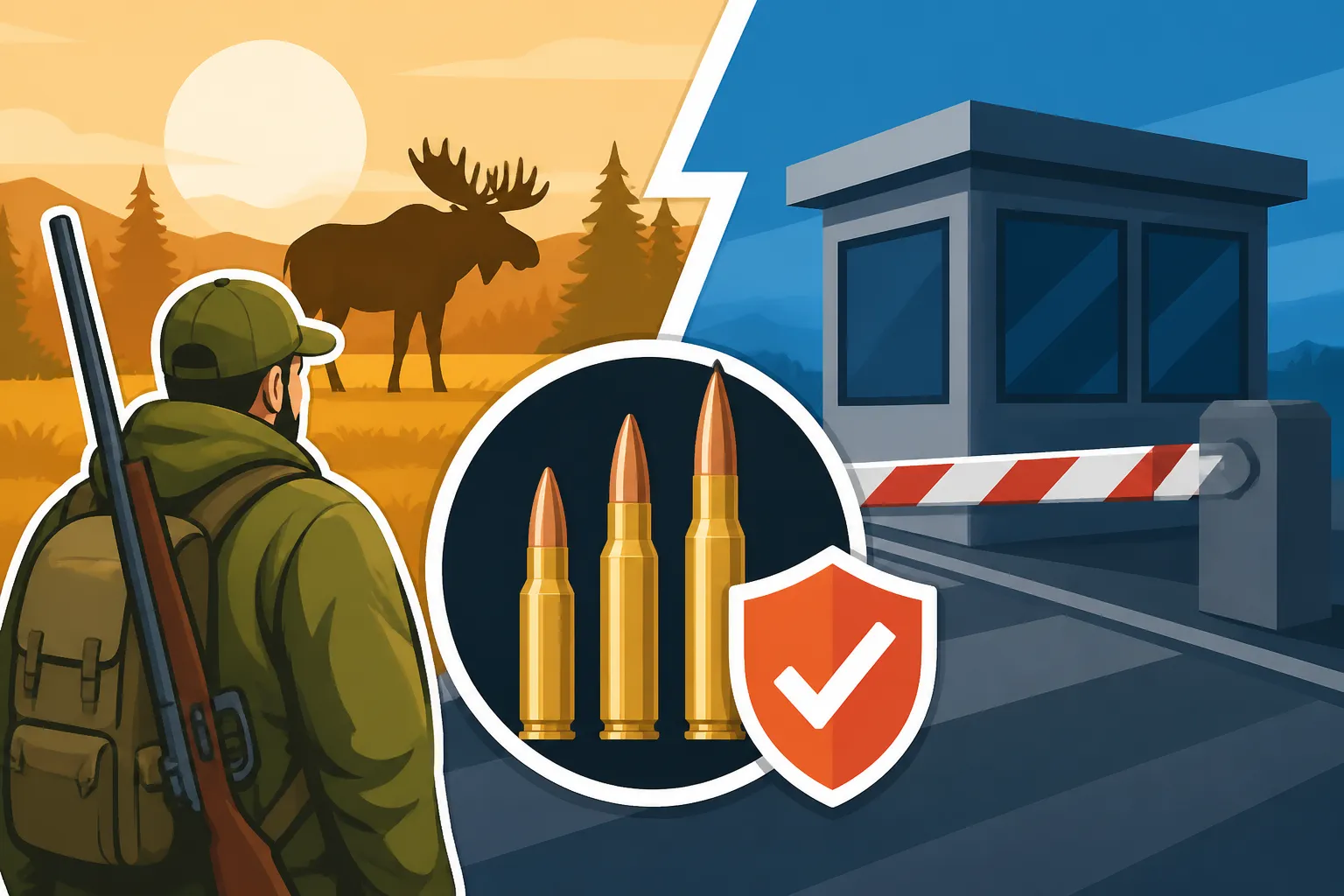
There's a specific kind of knot that forms in a hunter's stomach when they're packing for a cross-border trip to Manitoba, especially when it comes to ammunition. You've got your rifle cleaned, your gear sorted, but the thought of navigating international regulations for your ammo can be truly daunting. Nobody wants a great hunting adventure to turn into a nightmare at the border. This guide is here to untangle those regulations, offering clear, empathetic advice on how to properly handle your ammunition when entering Canada for your Manitoba hunt.
Understanding Canadian Ammunition Import Regulations
Crossing into another country, even one as friendly as Canada, means you're stepping into a different set of rules. What's perfectly legal and standard practice in your home country might have nuances or outright prohibitions north of the 49th parallel. When it comes to ammunition, the Canadian Border Services Agency (CBSA) and the Royal Canadian Mounted Police (RCMP) are the authorities, and they take these regulations very seriously. It's not just about what you're bringing, but also how much and what type. Many hunters get caught off guard, not because they're trying to be sneaky, but simply because they didn't know the specifics.
Navigating these regulations can feel like trying to hit a moving target, especially with how often rules can be updated. It pays to do your homework well in advance of your trip. Don't rely on what your buddy did five years ago, or what you think the rules might be. The official government websites are your best friend here, but sometimes the legalese can be a bit much. Let's break down the practical aspects.
Quantity Limits for Hunters
One of the most common questions is "How much ammo can I bring?" You're planning a trip, maybe for whitetail deer or black bear, and you want enough rounds for sighting in, the hunt itself, and maybe a little practice if the opportunity arises. Canadian regulations impose specific limits on the amount of ammunition you can import, typically without requiring a special import permit, provided it's for personal use during your hunting trip.
These limits are designed to ensure you have enough for your legitimate hunting activities but prevent commercial quantities or stockpiling. It's usually a generous enough amount for a single hunting trip, but it's important not to push it. Hunters often assume that if it fits in a case, it's fine, but that's not always the case. Exceeding the stated limit, even by a few boxes, can lead to serious headaches, including seizure of your ammunition, fines, and even denial of entry. Always check the current official limits before you pack.
Think of it like this: if you're coming for a week-long deer hunt, a few boxes of rifle ammunition for your specific calibre, plus maybe some shotgun shells if you're doing a combo hunt, is generally understood as "personal use." Bringing several cases of assorted calibres, even if they're all legal, will raise red flags and invite scrutiny. Be reasonable and stick to what you genuinely need for the duration of your planned hunt. This is one area where less can definitely be more when crossing the border.
Prohibited Ammunition Types
Beyond quantity, certain types of ammunition are simply not allowed in Canada, regardless of whether you're a hunter. This is where many well-meaning individuals run into trouble, especially if they're used to a broader range of ammunition options in their home country. The Canadian government has specific classifications for ammunition, and some types are considered "prohibited" for civilian use, full stop.
For instance, certain armour-piercing, incendiary, or tracer rounds are strictly prohibited. While most hunters wouldn't typically use these for big game, it's crucial to be aware. Another area that can cause issues is ammunition designed for handguns, or certain military-style firearms that are themselves prohibited in Canada. Even if you're not bringing the firearm, possessing the matching ammunition can be a problem. This also extends to certain types of shotgun slugs or specialty rounds that might be seen as overly destructive or not fitting the standard "hunting ammunition" definition.
It's not just about the bullet type; sometimes the casing or overall design can also factor into the classification. When in doubt, err on the side of caution. If you have any specialty rounds or anything that seems out of the ordinary for typical hunting purposes, research it thoroughly or leave it at home. A simple mistake here can turn into a very complicated legal situation, impacting not just your current trip but potentially future travel to Canada. You want your Manitoba hunt to be memorable for the right reasons, not a border incident.
Legal vs. Illegal Calibers and Loads
While specific calibers aren't inherently illegal for hunting in Canada (assuming the firearm itself is legal), the context and the type of bullet can make a difference. The rules around legal firearms for big game often dictate minimum calibers and bullet energy, but that's for the hunt itself. At the border, the concern is more about ammunition that might be classified as "prohibited" or "restricted."
For example, most common hunting calibers like .270, .30-06, .308, 7mm Rem Mag, and similar are perfectly fine, assuming they are loaded with standard hunting projectiles like soft-point or expanding bullets. The issue arises with military surplus ammunition, or rounds with full metal jacket (FMJ) bullets designed for target practice or military applications, which might not be explicitly illegal but can sometimes lead to questions, especially if they appear to be non-expanding. While FMJ might be legal in some jurisdictions for target shooting, bringing it across the border for hunting could be problematic if not clearly understood by border officials.
It's also essential to distinguish between ammunition for long guns (rifles and shotguns) and handguns. Handguns themselves are highly restricted in Canada, and while non-residents can bring certain types of restricted firearms under very specific conditions (like for a competition), bringing handgun ammunition without a corresponding, legally imported restricted handgun is a definite no-go. Stick to the ammunition appropriate for the legal hunting firearms you are bringing, and ensure it's clearly identifiable as standard hunting ammunition. Having a clear understanding of Legal Firearms and Bows for Big Game will help you choose appropriate ammunition.
Preparing Your Ammunition for Border Crossing
Once you've done your homework on what's permissible, the next crucial step is ensuring your ammunition is packed and presented correctly. This isn't just a suggestion; it's a requirement. The way you transport your ammunition demonstrates your understanding of the rules and your respect for Canadian law. It can also significantly speed up your border crossing experience and prevent unnecessary delays or scrutiny from border services officers. Remember, they're looking for signs of careful compliance, not casual disregard.
Proper preparation also protects your ammunition from damage during travel, especially if you're flying or driving over rough terrain to get to your hunting area in Manitoba. It’s a win-win: you stay compliant and your hunting gear arrives in prime condition, ready for the field. Don't underestimate the impact of a well-organized and correctly presented package when you pull up to the inspection booth.
Proper Packaging and Storage
Canadian regulations are very clear about how ammunition must be stored during transport. For the safety of everyone, and to prevent any misunderstanding, your ammunition must be securely packaged and stored separately from your firearms. This isn't just a suggestion; it's a legal requirement. Generally, ammunition should be stored in a sturdy, lockable container, separate from the firearm itself. This means no loose rounds rattling around in your backpack, and certainly no ammunition loaded into magazines or firearms.
If you're driving, your ammunition should be kept in a separate, locked compartment, ideally in the trunk or a secured storage box in your vehicle. If you're flying, specific airline regulations (which often align with government regulations) will dictate that ammunition must be in a hard-sided, locked container, usually checked as baggage, with the ammunition itself often required to be in its original manufacturer's packaging or secure plastic cases. Crucially, it must be declared to the airline at check-in.
When storing ammunition for crossing, always keep it in its original commercial packaging or in secure, purpose-built ammunition boxes. This makes it easy for border agents to identify the calibre, type, and quantity. Avoid hand-loads unless you have meticulous documentation and are prepared for extra scrutiny – for casual hunting trips, factory new ammunition is generally far simpler to manage at the border. Remember, presentation matters. A tidy, well-organized setup shows you've done your homework.
Required Documentation
Just as important as your ammunition itself is the paperwork that goes with it. You wouldn't travel without your passport, and similarly, you shouldn't travel without the proper documentation for your hunting trip and firearms. While there isn't usually a separate "ammunition permit" for personal quantities, your firearm declaration form will implicitly cover the ammunition you are bringing for that firearm.
The key document here is the Non-Resident Firearm Declaration Form (RCMP 5589/CAFC 909). This form acts as a temporary licence for your non-restricted firearms (which most hunting rifles and shotguns are) and is crucial for importing both your firearm and its associated ammunition. You'll fill this out in triplicate, declare it to the CBSA officer upon arrival, and pay a verification fee. Without this form, you cannot legally import your firearm, and by extension, your ammunition. Make sure you have it filled out before you get to the border, but do not sign it until you are in front of a CBSA officer, as they need to witness your signature. This process is fully explained in our guide on The Non-Resident Firearm Declaration.
In addition to this, always have your hunting licence information for Manitoba readily accessible. While not directly about ammunition, it proves your legitimate purpose for bringing firearms and ammunition into the province. Proof of a booked hunt, such as an outfitter confirmation or a Manitoba Hunting Licences and What They Cost purchase receipt, can also be helpful. The more you can demonstrate that you are a legitimate hunter on a legitimate trip, the smoother your experience will likely be.
Declaring Your Ammunition at the Border
This is perhaps the single most critical step in the entire process: declare everything. There is absolutely no benefit to being vague, forgetting, or trying to hide anything when you reach the border. When the CBSA officer asks if you have anything to declare, your answer regarding firearms and ammunition must be an immediate and unequivocal "Yes."
When you declare, be specific. "Yes, I have hunting firearms and ammunition." They will then direct you on where to go for the inspection process. Do not volunteer more information than asked, but be ready to provide all the details about your firearms (make, model, serial number, calibre) and your ammunition (calibre, quantity, type). Remember, they are trained to spot inconsistencies and evasiveness. Honesty and transparency are paramount.
Think about it from their perspective: they are responsible for national security and enforcing import laws. A hunter who clearly declares their items, has the correct paperwork, and follows proper storage procedures is seen as a low risk. Someone who hesitates, gives vague answers, or worse, is found to have undeclared items, immediately raises suspicion. This could lead to a secondary inspection, significant delays, fines, and even seizure of your items or refusal of entry. Declaring your ammunition is not just a formality; it's a fundamental part of the legal import process when Driving Into Manitoba With Firearms or even Flying to Manitoba With a Rifle.
Common Pitfalls and How to Avoid Them
Even with the best intentions, hunters sometimes stumble over the ammunition rules when crossing into Manitoba. These pitfalls often stem from a lack of current information, assumptions, or simply underestimating the seriousness of international border crossings. It's easy to get caught up in the excitement of an upcoming hunt and overlook the details, but those details can make or break your trip.
I've heard countless stories over the years from hunters who ran into trouble because of something they "didn't know" or "thought was okay." The border is not the place for guessing games. Being proactive and meticulously prepared is your strongest defense against an unpleasant experience. Let's look at some of the most common issues and how you can sidestep them entirely.
Misinformation and Assumptions
One of the biggest traps hunters fall into is relying on outdated information or making assumptions. "My buddy said…" or "I read online somewhere…" are phrases that often precede a border headache. Regulations change. Sometimes subtly, sometimes significantly. What was true last year, or even last month, might have been updated.
Never assume that rules for domestic travel apply to international borders. The Canadian legal framework around firearms and ammunition is distinct from that of the United States or other countries. For instance, the classification of certain firearms as "non-restricted," "restricted," or "prohibited" in Canada might not align with classifications you're familiar with. While this largely pertains to firearms, it directly impacts the types of ammunition that are relevant. Always consult official Canadian government sources (like the RCMP and CBSA websites) for the most current information. Better yet, call the CBSA directly if you have specific, complex questions. Getting it straight from the source is the only truly reliable method.
It's also tempting to assume that if you're only bringing a small quantity, it won't matter. It does. Even a single undeclared round can be considered a violation. Approach the border with the mindset that every single item counts, and every rule must be followed to the letter. Don't let a casual approach ruin your Manitoba hunting adventure.
The Importance of Specificity
Border officers deal with a wide range of travelers and goods. They appreciate clarity and specificity, especially when it comes to regulated items like ammunition. Vague answers or a lack of precise detail can easily lead to suspicion and further questioning. When they ask about your ammunition, be ready to state the calibre, the number of rounds, and the type of projectile.
For example, don't just say "some rifle ammo." Say, "Yes, I have one hundred rounds of .30-06 soft-point ammunition for hunting." This demonstrates that you know exactly what you're carrying, that it's for a legitimate purpose, and that you're in compliance with the rules. Have your ammunition in clear, original packaging or transparent, labeled cases so that an officer can easily verify your declaration without extensive rummaging through your gear.
This level of detail extends to all aspects of your hunting trip. Be specific about your destination (e.g., "I'm hunting whitetail in GHA 20A near Riding Mountain National Park with Smith's Outfitting"), the duration of your stay, and your plans. Having all your ducks in a row for your Planning a Manitoba Hunting Trip will always serve you well. The more information you can offer clearly and concisely, the less likely they are to perceive you as a potential risk.
Staying Updated on Regulations
The world of hunting regulations, particularly those concerning international travel with firearms and ammunition, is not static. Laws and policies can change due to various factors – new government priorities, public safety concerns, or even international agreements. What's current today might see amendments down the line.
Therefore, it's not enough to check the rules once a year before your annual trip. If there's a significant time gap between your research and your crossing, or if you hear news about changes in firearm laws, always double-check. The Canadian government websites are the authoritative sources. Look for specific sections on importing firearms and ammunition for non-residents. Sometimes, hunting outfitters will also provide updated information to their clients, but it's always wise to verify it independently.
Consider setting a reminder a month or two before your trip to review the official websites of the CBSA and RCMP. This ensures you have the most up-to-date information for your travel plans. Being proactive in staying informed protects you from unexpected surprises at the border and allows you to adjust your packing or documentation as needed. A small amount of time spent verifying information can save you hours of stress, potential fines, or even having your hunting trip derailed.
What to Expect at the Border
You've done your research, packed your gear correctly, and you're mentally prepared. Now, what actually happens when you pull up to the Canadian border crossing? It’s a moment that can still give even seasoned international travelers a bit of a jolt. Knowing the process and what to expect can significantly reduce anxiety and help you navigate the situation confidently.
The primary goal of the border services officers is to ensure the safety and security of Canada while facilitating legitimate travel and trade. They are professional and thorough. Your role is to be cooperative, honest, and patient. Understanding their procedures can help you meet their expectations smoothly.
The Declaration Process
When you approach the primary inspection booth, the officer will ask you a series of standard questions: "Purpose of your visit?" "How long will you be staying?" "Are you bringing any firearms or prohibited items into Canada?" This is your cue. Even if they don't explicitly ask about ammunition, your firearms declaration covers it.
Your answer should be clear: "Yes, I am bringing firearms and ammunition for a hunting trip." The officer will then typically direct you to a secondary inspection area or office. This is standard procedure for all firearms declarations and is not an indication that you've done anything wrong. It's simply where the detailed verification occurs. Once there, you'll present your completed (but unsigned) Non-Resident Firearm Declaration Form. The officer will review it, verify your identity, and witness your signature. You'll pay the applicable fee at this point.
They will also likely inspect your firearms and ammunition. This means they will ask you to retrieve them from your vehicle or luggage. Be prepared for this. Do exactly as they instruct, and only access your firearms or ammunition when directed. They'll ensure the firearms are unloaded, and they'll check your ammunition packaging and quantity against the declaration. This whole process is designed to ensure you are legally able to enter Canada and pursue your planned activities, such as Whitetail Hunting in Manitoba or Black Bear Hunting in Manitoba.
Interaction with Border Services Officers
Interacting with border services officers requires respect and honesty. They are performing their duty, which includes enforcing federal laws. Being polite, cooperative, and answering questions directly and truthfully will always lead to the best outcome. Avoid arguing, being defensive, or making jokes, especially about firearms or illegal substances.
The officers may ask questions about your hunting plans, your destination, your outfitter (if applicable), and how familiar you are with Canadian firearm laws. This isn't meant to trick you; it's to ensure you understand your responsibilities as a visitor. If you don't know an answer, it's okay to say, "I'm not sure, but I have my outfitter's contact information" or "I have my permit/licence here." They are looking for legitimate hunters who are compliant and well-prepared.
Remember that their goal is to assess risk. Your calm, confident, and transparent demeanor, coupled with perfectly prepared documentation and ammunition, will go a long way in making the process smooth. They are accustomed to dealing with hunters, so don't feel like you're an anomaly. As long as you respect the process and their authority, your interaction should be straightforward. Having a good understanding of Rules for Non-Residents Hunting Manitoba also helps in these interactions.
Consequences of Non-Compliance
It's important to understand the potential ramifications of not adhering to Canadian ammunition rules at the border. The consequences for non-compliance can range from inconvenient to severe, and they can impact your ability to enter Canada for future visits. This isn't just about a slap on the wrist; it can be a serious legal matter.
Minor infractions, like slight overages in ammunition quantity (if not accompanied by other issues), might result in the seizure of the excess ammunition and possibly a warning or a small fine. However, more serious violations, such as undeclared firearms or ammunition, prohibited ammunition types, or false statements on your declaration form, can lead to much harsher penalties. These can include:
- Significant fines: Financial penalties can be substantial.
- Seizure of all firearms and ammunition: You could lose your hunting gear entirely.
- Arrest and criminal charges: Depending on the severity of the offense, you could face criminal prosecution in Canada.
- Denial of entry to Canada: You would be turned back at the border and your hunting trip immediately cancelled.
- Future inadmissibility: A serious violation could result in you being flagged and potentially barred from entering Canada for many years, or even permanently.
This is why preparation, honesty, and attention to detail are so incredibly vital. No fantastic Manitoba hunt is worth risking these consequences. Take the time to understand the rules, pack appropriately, and declare everything accurately. Your hassle-free entry will set the stage for a much more enjoyable and successful hunting experience.
Disclaimer
This article is for general informational purposes only and does not constitute professional advice. Laws, prices and regulations vary by location and change over time. Consult a qualified professional for guidance on your specific situation.