Vehicle Rules on Manitoba Crown Land
Navigating Manitoba's vast Crown land can feel like a maze, especially when you're trying to figure out where you can and can't take your vehicle. It’s a common frustration for hunters; you want to get deep into the backcountry, but you also want to respect the land and stay on the right side of the law. This guide aims to clear up the often-confusing regulations surrounding vehicle use on Manitoba Crown land, ensuring your hunting trips are both successful and compliant.
Understanding Crown Land Access and Vehicle Basics
Manitoba is blessed with an incredible amount of public land, often referred to as Crown land, which is open for various recreational activities, including hunting. However, "open" doesn't always mean "open to all vehicles everywhere." The province has specific rules in place to manage access, protect wildlife habitats, and prevent environmental damage. Knowing these basic principles is your first step to responsible and legal hunting.
What Constitutes Crown Land in Manitoba?
Crown land in Manitoba covers a huge portion of the province, from the rich farmlands of the south to the vast boreal forests and tundra of the north. It includes provincial forests, wildlife management areas (WMAs), and other undeveloped territories. The challenge often lies in identifying exactly where Crown land begins and private land ends, especially in areas with a patchwork of ownership. This is where tools like onX Hunt and GoHunt become invaluable, as they can overlay property lines onto satellite imagery, helping you pinpoint those crucial boundaries. While much of this land is accessible, the type of access, especially for vehicles, can vary significantly.
General Principles of Vehicle Use
The overarching principle for vehicle use on Crown land is environmental stewardship and minimizing impact. This means staying on established trails and designated routes, avoiding sensitive areas, and understanding that not all "tracks" are legal trails. Just because someone else drove through an area doesn't mean it's permitted. The province emphasizes that hunters should be aware of the rules that apply to specific areas they intend to use. Ignoring these rules, even unknowingly, can lead to fines and other penalties. It’s about more than just convenience; it’s about preserving these precious resources for future generations of hunters and outdoor enthusiasts.
Specific Rules for Different Vehicle Types
The type of vehicle you operate on Crown land makes a big difference in where you can legally go. Manitoba's regulations distinguish between highway-licensed vehicles and off-road vehicles (ORVs), each with its own set of rules designed to manage their impact.
Trucks and Other Highway-Licensed Vehicles
For your standard truck, SUV, or other highway-licensed vehicle, the rules are generally straightforward: you must stay on maintained roads, provincial highways, municipal roads, and designated access routes. This might sound restrictive, but it's crucial for preventing habitat destruction and ensuring public safety. Driving off-road with a highway vehicle is almost always prohibited on Crown land, unless specifically marked otherwise, such as for accessing a designated camp spot or boat launch. Many hunters run into trouble by mistakenly thinking a faint two-track trail is a legal road; often, these are old logging roads that are no longer maintained or sanctioned for public vehicle access. It's always best to err on the side of caution. Even on designated trails, care must be taken, especially during wet conditions, to avoid rutting or damaging the path. If you're unsure about a specific route, checking with the local conservation office or using mapping apps to verify legal access points can save you a lot of headaches. Hunting a Manitoba GHA Map can be a great starting point for identifying general access.
All-Terrain Vehicles (ATVs) and Utility Task Vehicles (UTVs)
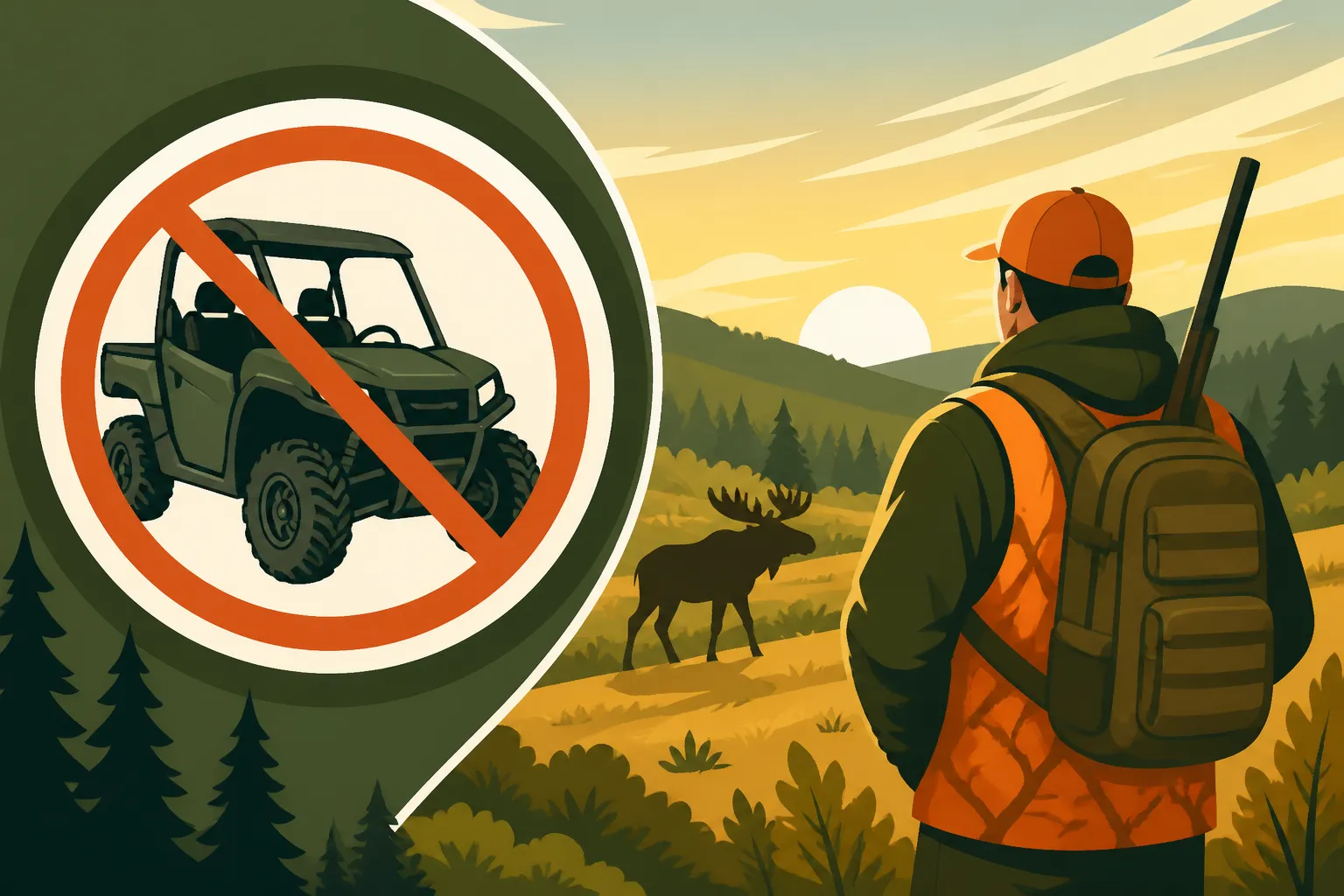
ATVs and UTVs (often referred to as side-by-sides) offer unparalleled access to remote hunting grounds, but their use on Crown land is perhaps the most regulated. The province has specific legislation governing off-road vehicles. Generally, ATVs and UTVs are permitted on designated ORV trails, old logging roads, and cutlines that are not otherwise restricted. However, they are not typically allowed to create new trails, travel through wetlands, or go off-trail in areas not explicitly designated for ORV use.
Here’s a quick overview of common ATV/UTV rules:
| Vehicle Type | General Rule on Crown Land | Common Restrictions/Considerations |
|---|---|---|
| Highway-Licensed | Must stay on maintained roads, highways, and designated access routes. | No off-roading; old tracks may not be legal roads. |
| ATV/UTV | Permitted on designated ORV trails, old logging roads, and non-restricted cutlines. | No creating new trails, no wetlands, obey signage, helmet required. |
| Snowmobile | Permitted on designated snowmobile trails and in appropriate conditions. | Not allowed off-trail in summer; observe sensitive winter areas. |
It's critical to note that specific Game Hunting Areas (GHAs) or Wildlife Management Areas (WMAs) may have additional, stricter rules regarding ATV/UTV use, including total prohibitions in some sensitive zones. Before heading out, always check the specific regulations for your chosen GHA. Helmets are usually mandatory for ATV/UTV riders, and operators must be of a certain age and often hold a valid driver's license. For specific guidance, review the official provincial Off-Road Vehicle Act and regulations. Remember, Quad and Side-by-Side Rules on Crown Land can vary significantly, so local knowledge and up-to-date information are key.
Snowmobiles
When the snow flies, snowmobiles become the primary means of backcountry travel for many hunters in Manitoba's colder seasons. Similar to ATVs, snowmobiles are generally allowed on designated snowmobile trails and can be used for hunting access in appropriate snow conditions. However, the same principle of staying on established routes applies. It's illegal to drive a snowmobile in a manner that damages vegetation or wildlife habitat, which often means avoiding areas with insufficient snow cover. In late winter or early spring, when snow starts to melt and expose the ground, operating a snowmobile off designated trails can quickly lead to damage and potential fines. Always be mindful of open water and thin ice conditions, particularly when Hunting a Frozen Slough Crossing or Hunting a Beaver Dam Crossing areas. Winter Road Access in Northern Manitoba might open up certain areas to snowmobile travel that are otherwise inaccessible.
Environmental Responsibility and Restricted Areas
Beyond the general vehicle rules, hunters have a profound responsibility to understand and respect environmentally sensitive zones and specific restricted areas on Crown land. These areas are often crucial for wildlife reproduction, migration, or simply too fragile to withstand vehicle traffic.
Wildlife Management Areas (WMAs) and Ecological Reserves
Manitoba has established numerous Wildlife Management Areas (WMAs) and Ecological Reserves with specific mandates for wildlife protection and habitat conservation. While hunting may be permitted in many WMAs, vehicle use is often highly restricted or completely prohibited off designated main access roads. For example, some WMAs might allow ATVs only on specific marked trails, while others might require foot access only beyond a parking area. Ecological Reserves, by their very nature, are typically much more restrictive, often prohibiting all forms of vehicle entry to protect unique ecosystems. It's not enough to know you're on Crown land; you must also know if you're in a WMA or Ecological Reserve and what specific rules apply there. Always consult the specific WMA regulations before planning your trip. Understanding Manitoba Wildlife Management Area Rules is critical for legal access.
Avoiding Sensitive Habitats and Wetlands
Driving vehicles, especially off-road vehicles, through sensitive habitats like wetlands, marshes, riparian zones (areas along rivers and streams), or fragile grasslands can cause irreparable damage. These areas are vital for many species, providing food, water, and cover. Vehicle tracks can compact soil, destroy vegetation, introduce invasive species, and disturb wildlife. Even seemingly dry areas can become incredibly susceptible to rutting and erosion after a rain or during spring thaw. The general rule is to avoid driving through any area that appears particularly wet, soft, or ecologically delicate. Use common sense, and if in doubt, walk or choose another route. Responsible hunters prioritize the health of the habitat above all else. This foresight is part of being a good steward of the land, ensuring that future hunting seasons are just as vibrant as today's.
Special Restrictions and Signage
Always be on the lookout for signage. Provincial Parks often have very strict rules, and Hunting Near a Provincial Park Boundary means you need to be extra vigilant about where you're driving. Temporary closures or restrictions can also be implemented due to wildfire risk, extreme weather conditions, or specific conservation efforts. These closures are usually well-marked or publicly announced. It’s your responsibility as a hunter to check for any local advisories or restrictions before you head out. Relying on apps like onX Hunt or GoHunt can help you visualize these boundaries and restrictions, but they should always be cross-referenced with official government sources for the most up-to-date information. Ignorance of a sign is rarely an excuse when dealing with conservation officers. Understanding Where Hunting Is Prohibited Outright is vital to avoid serious issues.
Consequences of Non-Compliance: What You Need to Know
Ignoring vehicle rules on Manitoba Crown land isn't just a minor infraction; it can lead to serious consequences, including significant fines, vehicle seizures, and even loss of hunting privileges. It's important to understand the potential repercussions so you can always make informed decisions in the field.
Fines and Penalties
Manitoba conservation officers are highly trained and have the authority to enforce vehicle regulations on Crown land. Penalties for non-compliance can range from monetary fines to more severe actions. For instance, driving an off-road vehicle in a prohibited area or causing environmental damage can result in substantial fines. These fines are often designed to be deterrents, reflecting the cost of environmental rehabilitation and the seriousness of disturbing wildlife habitat. The exact amount can vary widely depending on the nature and severity of the offense, but they are rarely cheap. Beyond the financial impact, there's the personal cost of potentially losing your hunting time and dealing with legal proceedings. Manitoba Penalties for Hunting Violations can be steep, so it's always better to be safe than sorry.
Vehicle Seizure and Impoundment
In more egregious cases, or for repeat offenders, conservation officers have the authority to seize and impound vehicles used in violation of Crown land regulations. Imagine being deep in the bush, having your ATV or truck impounded, and being left to find your way out. This scenario, while rare for first-time minor infractions, is a very real possibility if you are caught causing significant damage, driving in highly restricted areas, or resisting compliance. The cost of retrieving an impounded vehicle, including towing and storage fees, can quickly add up, turning an enjoyable hunting trip into a very expensive nightmare. This potential loss of your primary means of transportation in the wilderness is a powerful incentive to always know and follow the rules.
Impact on Hunting Privileges
Perhaps most concerning for dedicated hunters is the potential impact on your hunting privileges. Repeated or severe violations of Crown land vehicle rules can lead to the suspension or revocation of your hunting licence. This means you could be barred from hunting in Manitoba for a period, or even permanently, depending on the severity and frequency of the offenses. For many, hunting is a cherished tradition and a way of life, and losing the privilege to participate is a devastating consequence. It underscores the importance of not just following the letter of the law, but truly embracing the spirit of responsible land stewardship. When you're out there, always ask yourself: "Am I doing what's right for the land and for hunting's future?" By taking the time to learn and respect Manitoba's Crown Land Access rules, you contribute to a positive future for everyone.
This article is for general informational purposes only and does not constitute professional advice. Laws, prices and regulations vary by location and change over time. Consult a qualified professional for guidance on your specific situation.