Night Hunting Permits and Approved Land
For many hunters, the idea of hunting after dark conjures images of covert operations or maybe even something forbidden. In Manitoba, the rules around night hunting have been a point of confusion and frustration for years, evolving significantly to balance safety, conservation, and the rights of various communities. This comprehensive guide will walk you through the specifics of obtaining a night hunting permit, understanding where you can legally hunt after sunset, and ensuring you stay within the bounds of the law for a safe and responsible experience.
Understanding Manitoba's Night Hunting Regulations
Historically, hunting after dark has been heavily restricted in most jurisdictions, and Manitoba was no exception. These rules were often put in place due to significant safety concerns and the difficulty of ensuring ethical hunting practices without adequate light. However, recognizing the unique needs and rights of Indigenous communities, and aiming for a more inclusive and practical approach to wildlife management, Manitoba has introduced specific pathways for night hunting under strict conditions.
The Historical Context of Night Hunting Restrictions
For generations, the default stance on night hunting across North America has been a resounding "no." The reasons were, and largely remain, incredibly valid. Imagine trying to identify your target species, confirm it's a legal animal, and ensure a clear backdrop in the pitch black. The potential for misidentification, accidental shooting of non-target animals, or even worse, hitting livestock or residential properties, was simply too high. Early regulations were designed to prevent these tragic incidents and maintain public safety. Hunters also recognized the inherent ethical challenges; an animal taken in darkness might not be recovered easily, leading to wasted game.
Why Night Hunting Was Restricted Here
Specifically in Manitoba, the prohibition on night hunting stemmed from the same foundational principles: public safety, responsible resource management, and the ethical pursuit of game. The province, with its mix of remote wilderness, agricultural lands, and scattered rural communities, presented a complex landscape where a blanket ban was seen as the most straightforward way to mitigate risks. Concerns included accidental shootings, spotlighting from vehicles (which could be used for poaching), and the challenge of enforcing hunting regulations when visibility was poor. For decades, hunting hours were strictly defined from half an hour before sunrise to half an hour after sunset. Many seasoned hunters will remember the frustration of having to pack up their gear even when the game was just starting to move, simply because the clock dictated it. For more background, you can delve into why night hunting was restricted here.
The Shift Towards Modern Management
The landscape of wildlife management is always evolving, and in recent years, there's been a significant shift towards acknowledging and accommodating diverse hunting practices, particularly those rooted in Indigenous cultures. Manitoba, through its commitment to reconciliation and the recognition of Treaty and Aboriginal rights, has introduced a structured permitting system. This system aims to provide a legal framework for night hunting while maintaining stringent safety standards. It's a delicate balance, ensuring that traditional practices can continue, while also addressing the safety and conservation concerns that led to the original restrictions. This modern approach is a testament to the ongoing dialogue between government, Indigenous communities, and the broader hunting public. The Safe Hunting and Shared Management Act has been instrumental in shaping these changes, promoting both responsible hunting and collaborative wildlife management.
Who is Eligible for a Night Hunting Permit?
Understanding eligibility is the first and most critical step if you're considering night hunting in Manitoba. This isn't a permit accessible to just anyone with a hunting license; it's specifically designed with certain groups in mind, primarily to address the historical context of Indigenous hunting rights and to manage specific wildlife issues.
Residency Requirements and Hunter Education
Currently, night hunting permits in Manitoba are primarily issued to qualified Indigenous hunters exercising their inherent or Treaty rights, and in specific circumstances, to landowners or their designees for wildlife control purposes, often related to crop protection. This means that for the vast majority of non-Indigenous resident or non-resident hunters, the traditional sunrise-to-sunset hunting hours still apply. You can find comprehensive details about who can get a night hunting permit directly from Manitoba's provincial resources. Even if you fall into an eligible category, possessing a valid hunter education certificate is a fundamental requirement for responsible hunting in Manitoba. This foundational training ensures a basic understanding of firearm safety, wildlife identification, and ethical hunting practices, which become even more critical when operating in low-light conditions.
Specific Criteria for Indigenous Hunters
Manitoba’s night hunting permit system is intrinsically linked to the recognition of Aboriginal and Treaty hunting rights. Indigenous hunters who wish to hunt at night must apply for a specific permit, which acknowledges their rights while incorporating modern safety and reporting requirements. These permits are not simply an extension of a regular hunting license; they are a separate authorization that specifies the conditions under which night hunting can occur. This includes designated locations, species, and reporting obligations. It's a system that respects traditional practices but also integrates them into a regulated framework to ensure sustainability and safety for all involved.
Other Considerations for Applicants
While Indigenous hunters represent the primary group for night hunting permits for subsistence and cultural practices, there are limited circumstances where non-Indigenous individuals might be granted a permit for specific wildlife management purposes, such as controlling chronic crop damage caused by deer or elk. These permits are typically issued to landowners, or individuals designated by them, to address particular nuisance wildlife problems outside of regular hunting seasons or hours. Such permits are highly situational, often tied to specific parcels of land, and come with their own set of stringent conditions and reporting requirements. They are not a general authorization for recreational night hunting. If you are a landowner experiencing significant crop damage, contacting Manitoba's wildlife branch would be the first step to explore these specific, problem-solving permits.
Approved Land and Designated Areas
The "where" of night hunting is just as crucial as the "who" and "how." Not all land in Manitoba is open to night hunting, even with a valid permit. The regulations are very precise about approved land for night hunting, aiming to concentrate activities in areas where it can be managed safely and effectively, typically away from high-density human populations and livestock.
Identifying Approved Crown Land for Night Hunting
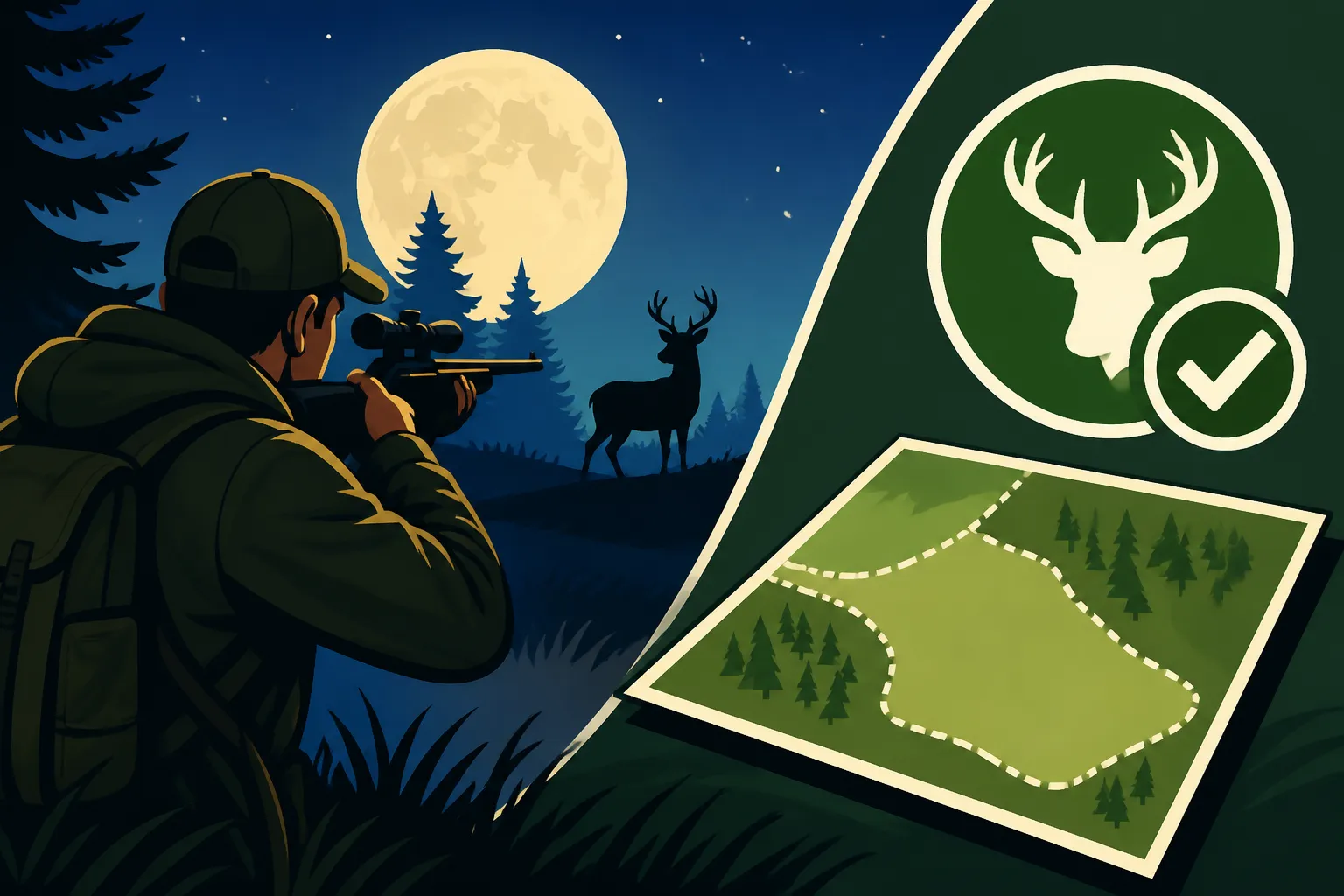
Manitoba has designated specific Crown lands as "approved land" for night hunting under permit. These are typically remote areas, often within certain Game Hunting Areas (GHAs), where the risk to public safety is minimized. It's not a free-for-all across all Crown land; hunters with permits must consult detailed maps and official resources to pinpoint these exact locations. These maps might show shaded regions or specific GHA boundaries where night hunting is authorized. For example, some remote northern GHAs might be designated, while Crown land directly adjacent to a rural town or a busy highway would certainly not be. Understanding these specific boundaries is paramount, as hunting outside approved areas, even with a permit, constitutes a serious violation. When you are applying for a Manitoba night hunting permit, the provincial government will provide resources to help you identify these areas, and it is the hunter's responsibility to understand and adhere to these boundaries.
Understanding Treaty and Aboriginal Rights-Based Hunting Lands
For Indigenous hunters exercising their rights, the concept of "approved land" takes on a broader meaning. Treaty and Aboriginal rights allow for hunting across traditional territories, which can encompass a vast array of Crown lands and sometimes even private lands with permission. However, even within this framework, there are always considerations for public safety zones, proximity to residences, and other restrictions. The night hunting permits issued to Indigenous hunters often specify the regions or GHAs where their authorized night hunting can occur, or outline general safety parameters to be followed regardless of location. This is where the importance of community dialogue and clear communication between Indigenous communities and the provincial government is vital to ensure that hunting rights are exercised responsibly and safely.
Navigating Maps and Digital Tools
In today's world, hunters have access to incredible digital tools that make identifying land boundaries, property lines, and designated hunting areas much easier. For those with night hunting permits, using these resources is non-negotiable. Platforms like GoHunt, or other GIS-based mapping applications, can be invaluable. These tools often allow you to overlay different layers, such as Crown land boundaries, GHA delineations, and sometimes even specific "no hunting" zones or areas designated for night hunting. Before heading out, it is absolutely essential to thoroughly scout with satellite imagery in Manitoba and verify your intended hunting location against official provincial maps. A good mapping app can save you from accidental trespass or hunting in a prohibited zone. Always double-check with the latest provincial regulations, as digital maps might not always be updated instantly with new closures or designations. Furthermore, getting a specific Manitoba GHA map is crucial for any hunting activity, but especially for night hunting where visibility is limited.
The Permit Application Process
Getting a night hunting permit isn't as simple as picking up a general hunting license. It's a more involved process designed to ensure that only eligible individuals who understand and respect the strict regulations are granted permission. The process emphasizes safety, responsibility, and adherence to specific conditions.
Step-by-Step Guide to Applying for a Permit
The exact application process for night hunting permits in Manitoba will vary depending on whether you are applying as an Indigenous hunter exercising rights or under a specific wildlife management scenario (e.g., crop protection). For Indigenous hunters, the application typically goes through relevant First Nation councils or directly to Manitoba Conservation and Climate, requiring documentation that affirms their status and intent to hunt. For other specific purposes, applications would be made to the local wildlife manager, detailing the specific problem, location, and desired mitigation. It's never a generic online form like a regular hunting license. You’ll need to provide details about where you intend to hunt, what species, and for what purpose. It's a proactive process where you demonstrate your understanding of the rules and your commitment to safety. For specific guidance, the provincial government's page on applying for a Manitoba night hunting permit is the authoritative source.
Required Documentation and Fees
Regardless of the type of permit, expect to provide significant documentation. This could include proof of Indigenous identity, landowner declarations, maps of affected property, and details about your hunter education certification. The fees associated with night hunting permits are generally minimal or non-existent for Indigenous rights-based hunting, focusing more on regulatory oversight than revenue generation. For crop damage permits, there might be administrative fees. The emphasis is on validating your eligibility and your understanding of the responsibilities involved. It’s not just about filling out a form; it’s about demonstrating a clear need and a commitment to safe and ethical practices.
Understanding Processing Times and Validity
Because night hunting permits are often granted under specific, sometimes urgent, circumstances (like crop damage) or require careful review of Indigenous rights, the processing times can vary. It's not an instant issuance like a general hunting license. Plan ahead, submit all your documentation accurately, and be prepared for potential follow-up questions from provincial staff. Once issued, a night hunting permit will have a very specific validity period, often tied to a particular season, problem duration, or calendar year. It's not a lifetime permit. Always check the expiry date and ensure your permit is current before engaging in any night hunting activity. Carrying your licence in the field, including your night hunting permit, is legally required.
Permitted Species and Methods
Night hunting is not an open season on all game animals. The permits specify precisely what species can be hunted and the methods that are considered safe and ethical after dark. These limitations are critical for both conservation and safety.
What Night Hunting Actually Allows Here
Generally, night hunting permits in Manitoba are focused on certain species, primarily those that cause significant agricultural damage or are considered predators. Deer and coyotes are often included, especially in agricultural zones, where these animals can impact crops or livestock. Moose or elk are less commonly targeted under night hunting permits, although exceptions may exist for specific wildlife management issues in very remote areas. It's crucial to understand that even if a species is listed on your permit, you must still adhere to all other regulations, such as bag limits and season dates (if applicable), unless explicitly exempted by the permit. The permit will clearly outline what night hunting actually allows here, so read it carefully.
Approved Equipment and Ammunition
Safety is paramount, and this extends to the equipment used. While some forms of night vision or thermal optics might be permitted under specific conditions and permits, the use of spotlights or artificial lights to "blind" or "immobilize" animals is strictly regulated and often prohibited for ethical reasons, except in specific wildlife control scenarios where provincial staff are involved. The type of firearms and ammunition must comply with general Manitoba hunting regulations for the specific species being hunted. For example, legal rifle calibres for big game must still be used. It’s not a situation where any weapon goes; standard ethical and legal equipment guidelines still apply, with additional restrictions for night operations to enhance safety.
Prohibited Practices and Ethical Considerations
Night hunting carries an even higher burden of ethical responsibility. Shooting from a vehicle is generally prohibited, as is shooting across a road. The permit will often include specific conditions related to minimum distances from residences, livestock, and public roads. The goal is to prevent any accidental harm to non-target animals or people. Extreme care must be taken to identify the target, ensure it's the correct species and sex (if applicable), and confirm a safe backdrop before pulling the trigger. Wasting game meat is always illegal, and this rule is particularly emphasized in night hunting scenarios where recovery can be more challenging. Hunters must be prepared to track and recover their game efficiently, even in the dark.
Navigating the Restrictions and Safety Measures
Even with a permit, night hunting comes with a heightened level of responsibility and numerous safety measures. It’s not just about what you can do, but how you must do it to ensure the safety of yourself, others, and the animals.
Safety Protocols for Hunting After Dark
When visibility drops, every safety protocol becomes even more critical. Blaze orange rules and exceptions are still relevant, even though the primary visibility benefit is during daylight. Knowing your surroundings, having a detailed map (physical and digital), and communicating your location to others are non-negotiable. Hunting with a partner, especially one who can also assist with identification and tracking, is highly recommended. Always assume there are other people in the area, whether they are other hunters, trappers, or recreational users of Crown land. Proper firearm handling, muzzle control, and target identification are paramount, as the reduced visibility amplifies the risk of accidents. Safety isn't just a suggestion; it's the core principle of night hunting. Hunting safely in deep winter cold also extends to night hunting, as cold temperatures can affect gear and human performance.
Reporting Requirements and Compliance
Night hunting permits often come with strict reporting requirements. This could include reporting the harvest of any animal, the location, time, and even details about the hunt itself. This data is vital for wildlife management purposes and for monitoring the effectiveness and safety of the night hunting program. Failure to report as required can lead to penalties and could jeopardize future permit applications. Compliance isn't optional; it's a condition of the permit. This detailed reporting helps the province understand the impact of night hunting and make informed decisions about its future.
Penalties for Non-Compliance
Violating the terms of a night hunting permit or engaging in unauthorized night hunting can result in severe penalties. This could range from hefty fines to the confiscation of firearms and vehicles, and even imprisonment. Additionally, you could face a suspension of your hunting privileges for a significant period. Manitoba penalties for hunting violations are serious, and violations related to night hunting, given the heightened safety risks, are often treated with particular severity. It's not worth the risk to disregard the rules. Ensure you understand every condition of your permit and strictly adhere to the guidelines provided by Manitoba Conservation and Climate.
Comparing Night Hunting Permit Types
To give a clearer picture, let's look at the two main categories of night hunting permits in Manitoba: Indigenous Rights-Based Permits and Wildlife Damage Control Permits. While both allow hunting after dark, their intent, scope, and application differ significantly.
| Feature | Indigenous Rights-Based Permit | Wildlife Damage Control Permit |
|---|---|---|
| Primary Purpose | Exercise of Treaty/Aboriginal hunting rights for subsistence/cultural | Mitigate crop/livestock damage caused by specific wildlife |
| Applicant | Qualified Indigenous hunters | Landowners or their authorized designees |
| Species | Varies, often deer, moose, bear, small game (as per rights & permit) | Primarily deer, sometimes elk or other nuisance species |
| Land Type | Traditional territories (Crown land, with permission on private) | Specific private land experiencing damage, sometimes adjacent Crown land |
| Duration | Often annual, tied to specific seasons | Short-term, specific to duration of damage problem |
| Equipment | Standard legal hunting equipment, with night-specific safety caveats | Standard legal hunting equipment, may include specific tools for damage control |
| Focus | Rights-based hunting, traditional practices | Problem-solving, agricultural protection |
| Reporting | Mandatory harvest reporting to First Nation/Province | Mandatory reporting of activity and animals taken |
This table clearly illustrates that while both permit types allow night hunting, they serve distinct purposes and operate under different frameworks. Understanding these distinctions is key to comprehending Manitoba's nuanced approach to wildlife management after dark.
Final Thoughts on Responsible Night Hunting
Manitoba's approach to night hunting is a complex, yet necessary, evolution in wildlife management. It acknowledges historical rights and community needs while striving to maintain the highest standards of safety and conservation. For any hunter, Indigenous or otherwise, considering hunting after dark, the emphasis must always be on meticulous preparation, unwavering adherence to the law, and an absolute commitment to safety. Always consult the most current regulations from Manitoba Conservation and Climate, engage with local wildlife officials if you have questions, and ensure you are fully informed before venturing out. Responsible night hunting demands nothing less.
Disclaimer
The information provided in this guide is for general informational purposes only and does not constitute legal advice. Hunting regulations in Manitoba can change, and it is the responsibility of every hunter to consult the most current official regulations and obtain all necessary permits and licenses before engaging in any hunting activities. Always prioritize safety and ethical hunting practices.