CWD Sampling on an Outfitted Manitoba Hunt
It can feel like a lot to keep track of when you're planning an outfitted hunt in Manitoba, especially when new regulations and concerns like Chronic Wasting Disease (CWD) enter the picture. You're trying to line up your gear, confirm dates, and get excited for the trip of a lifetime, and suddenly you're wondering about collecting samples and submitting paperwork. It’s a common frustration, but it’s vital for the health of our deer herds. This guide will clarify your responsibilities and your outfitter's role in CWD sampling, ensuring you're prepared for every step of your Manitoba hunting adventure.
Understanding CWD and Manitoba's Sampling Program
Chronic Wasting Disease (CWD) is a serious concern for anyone who cares about Manitoba's wildlife, especially our deer, moose, and elk populations. It's a progressive, fatal neurological disease that affects cervids – that's deer, elk, moose, and caribou. CWD is caused by abnormal proteins called prions that slowly accumulate in the brain and other tissues, leading to severe neurological degeneration. Unfortunately, there's no vaccine or cure, and it's always fatal.
The disease spreads through direct animal-to-animal contact or indirectly through contact with contaminated environments, like soil, plants, or feed where infected animals have left saliva, urine, or feces. Once it's in an area, it's incredibly difficult to eradicate, which is why early detection and monitoring are so crucial.
Manitoba has been proactive in monitoring CWD, especially since cases have been detected in neighboring jurisdictions. Our provincial CWD sampling program is a critical component of this effort. Its main goal is to detect CWD early if it spreads into new areas or to monitor its prevalence where it has already been found. By testing harvested animals, particularly in specific high-risk or detection areas, we gain valuable data that helps wildlife managers understand the disease's spread and implement appropriate management strategies. This is a collective effort, and as hunters, we play a vital role in protecting our game animals. Knowing Manitoba's CWD Sampling Requirements is the first step to being a responsible participant.
Your Role as a Hunter on an Outfitted Hunt
When you book an outfitted hunt in Manitoba, you're partnering with an experienced professional who knows the land and the local regulations. However, even with an outfitter handling many of the logistics, your personal responsibility for CWD sampling remains paramount, particularly if you harvest an animal in a designated CWD zone.
Knowing the CWD Zones Before You Go
Before you even set foot in Manitoba, it’s wise to check the latest CWD regulations and map out where the designated CWD sampling areas are. These zones can change, so always refer to the most current provincial hunting guide. Many reputable outfitters will highlight this information for their clients, especially if their hunting territory falls within one of these areas. Platforms like BookYourHunt or GoHunt often provide details about outfitter operational areas, allowing you to cross-reference with CWD maps and confirm whether your intended hunting grounds are in a mandatory sampling zone. Knowing this upfront will save you stress and ensure you're prepared. You can also look up Manitoba's Mandatory CWD Sampling GHAs to see if your hunting area is affected.
Harvesting an Animal in a Designated CWD Zone
Let's say you're out with your guide, you've put in the hard work, and you've successfully harvested a deer, elk, or moose in a CWD-mandated GHA. Congratulations! Now, the next step is CWD sampling. It's not an optional request in these zones; it's a mandatory part of your harvest process. This means that a sample from your animal must be submitted for testing. Your outfitter should be well-versed in this requirement and guide you through the specifics.
Your Personal Responsibility for the Sample
While your outfitter will undoubtedly assist, ultimately, the responsibility to ensure the sample is collected and submitted properly falls to you, the hunter. Think of it like tagging your animal – it's a non-negotiable step. You'll need to be aware of how the sample is taken, how it's packaged, and the process for submission. This might sound daunting, but it's usually quite straightforward once you understand it. It's always best to ask your outfitter about their specific CWD protocol when you're discussing What an Outfitter Needs From You Beforehand.
The Outfitter's Involvement in CWD Sampling
One of the great advantages of an outfitted hunt is having an expert by your side to navigate the intricacies of local regulations, and CWD sampling is no exception. A good Manitoba outfitter will be knowledgeable and prepared to assist you through this process.
How Outfitters Facilitate the Process
Reputable outfitters operating in CWD-designated areas understand their role in contributing to wildlife health and compliance. They often have established protocols for CWD sampling. This might include having specific tools on hand for sample collection, knowing the exact anatomical locations for the required lymph nodes or brainstem tissue, and understanding the proper handling and storage of samples. Your guide will typically be the one to actually collect the sample from your animal in the field or back at camp, thanks to their experience and familiarity with the process. They're there to make this step as seamless as possible for you.
Services an Outfitter Might Provide
The level of service regarding CWD sampling can vary slightly between outfitters, but here’s what you can generally expect:
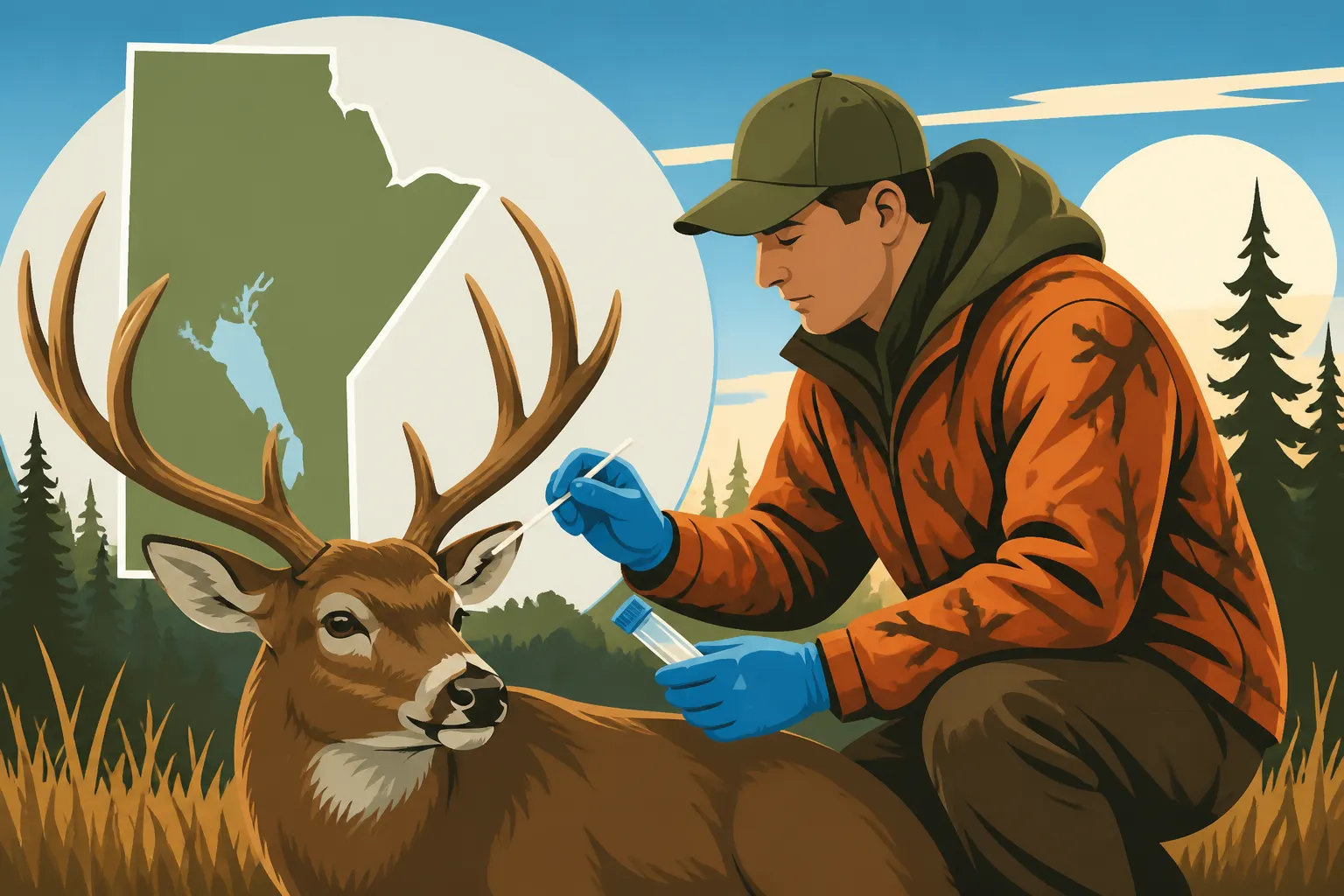
- Field Collection: Your guide will likely collect the necessary tissue sample (usually the retropharyngeal lymph nodes from the throat area or a portion of the brainstem) right after field dressing.
- Sample Preparation: They will ensure the sample is properly placed in a provided sample bag or container, labelled with all the required information, such as your licence number, GHA, and harvest date. This is crucial for accurate tracking and results.
- Temporary Storage: The sample might need refrigeration or freezing until it can be transported to a submission point. Outfitters will have facilities for this at their lodge or camp.
- Submission Logistics: While you might be responsible for physically dropping off the sample, many outfitters will help with transportation to a designated drop-off location or even handle the submission entirely as part of their service. Always confirm this detail when booking.
These services help immensely, taking a lot of the guesswork and logistical burden off your shoulders, so you can focus on the hunting experience itself.
Clear Communication with Your Outfitter
The key to a smooth CWD sampling process on an outfitted hunt is clear communication. Before you finalize your booking, and certainly before your hunt begins, make sure to ask your outfitter these questions:
- Is the GHA we will be hunting in a CWD mandatory sampling zone?
- What is your protocol for CWD sampling if I harvest an animal?
- Will you collect the sample in the field?
- How will the sample be stored?
- Who is responsible for submitting the sample to the province, and where are the closest submission points?
- What happens if a CWD sample tests positive? (Understanding What an Outfitter Does With a Positive Result is important.)
Don't be shy about asking these questions. A professional outfitter will appreciate your diligence and be happy to provide thorough answers. It shows you're a responsible hunter, and they’re partnering with you for a successful and compliant hunt.
The Sampling Process: Step-by-Step for Hunters
Even with your outfitter's help, it's good to understand the general steps involved in CWD sampling. This way, you're not left in the dark and can ensure everything is done correctly.
1. Collecting the Sample
The most common samples taken for CWD testing are the retropharyngeal lymph nodes, located in the throat area near the jawline, or a portion of the obex (brainstem). Your outfitter or guide will be skilled in removing these tissues.
- Lymph Nodes: These are typically easier to access after the head has been removed from the carcass or during the caping process if you're planning a full shoulder mount. They are small, almond-shaped glands that sit just behind the jaw hinge, often covered in fat.
- Obex: If a brainstem sample is required, it involves careful removal of a small part of the brainstem, usually accessed from the back of the skull. This is a more delicate procedure.
Your guide will use clean tools to extract the sample, minimizing contamination. If you're considering Extracting Your Own CWD Sample, ensure you have the correct tools and knowledge, but on an outfitted hunt, it's usually best to let your experienced guide handle it.
2. Proper Packaging and Labelling
Once the sample is collected, it needs to be properly packaged and clearly labelled. Provincial authorities provide specific bags or containers for this purpose, which your outfitter should have on hand.
- Packaging: The sample will be placed in a sealed bag or container. It’s important that it's leak-proof and protected from physical damage.
- Labelling: This is critical. The sample package will need to be clearly marked with:
- Your hunting licence number.
- The Game Hunting Area (GHA) where the animal was harvested.
- The date of harvest.
- The species (e.g., Whitetail Deer, Elk).
- Your contact information (name, phone, email).
- Sometimes, additional details like GPS coordinates of the kill site or sex of the animal are requested.
This detailed labelling ensures that the sample can be correctly tracked and that you receive the right results for your specific animal.
3. Submission Points and Deadlines
After the sample is collected and packaged, it needs to be submitted to a designated drop-off location within a specific timeframe.
- Submission Points: Manitoba typically has various CWD drop-off locations, which can include designated provincial offices, game check stations, or even some rural businesses that partner with the program. Your outfitter will know the closest and most convenient options.
- Deadlines: There are usually specific deadlines for submitting samples, often tied to the end of hunting seasons or within a certain number of days post-harvest. It’s vital to adhere to these to ensure your sample is processed and to remain compliant with regulations.
- Carcass Transportation: Remember that if you harvest an animal in a CWD-designated area, there are often restrictions on moving the entire carcass out of that area until a negative test result is confirmed. You might only be allowed to transport specific parts like deboned meat, caped hides, and skull plates (cleaned of all brain and nervous tissue) outside the zone. This is why Transporting Game Meat in Manitoba also has specific rules depending on CWD status.
4. Receiving Your Results
Once your sample is submitted, it will be sent to a lab for testing. The turnaround time for results can vary depending on the volume of samples and the time of year, but it's usually a few weeks.
- Notification: You will typically be notified by mail, email, or an online portal once your results are available. It's a huge relief to get that "CWD Not Detected" confirmation!
- Positive Results: In the rare and unfortunate event of a positive CWD test, provincial authorities will contact you directly to provide guidance on next steps. This is another reason clear labelling and accurate contact information are so important. They'll also inform your outfitter and the relevant GHA will be highlighted for future monitoring.
Submitting a CWD sample is a small but significant contribution to wildlife conservation. By working closely with your outfitter and understanding the process, you're not just complying with regulations; you're actively helping to safeguard Manitoba's incredible hunting future for generations to come.
| Aspect | Hunter's Primary Responsibility | Outfitter's Primary Role (on an Outfitted Hunt) |
|---|---|---|
| Knowing Regulations | Be aware of CWD zones for your hunt. | Inform clients if hunting in a CWD zone; advise on requirements. |
| Harvesting in CWD Zone | Mandatory submission of sample. | Guide on proper animal handling post-harvest. |
| Sample Collection | Consent to sample collection. | Collect the required tissue sample (lymph nodes/obex). |
| Packaging & Labelling | Provide personal licence details and harvest info. | Ensure sample is correctly packaged and fully labelled. |
| Submission | Ensure sample reaches a drop-off point by deadline. | Assist with logistics, transport, or direct submission. |
| Understanding Results | Monitor for results, follow up if needed. | Advise on expected turnaround, discuss implications of results. |
| Carcass Movement (Restrictions) | Adhere to transport restrictions until results are known. | Inform client of transport restrictions and assist with compliance. |
Disclaimer
This article is for general informational purposes only and does not constitute professional advice. Laws, prices and regulations vary by location and change over time. Consult a qualified professional for guidance on your specific situation.