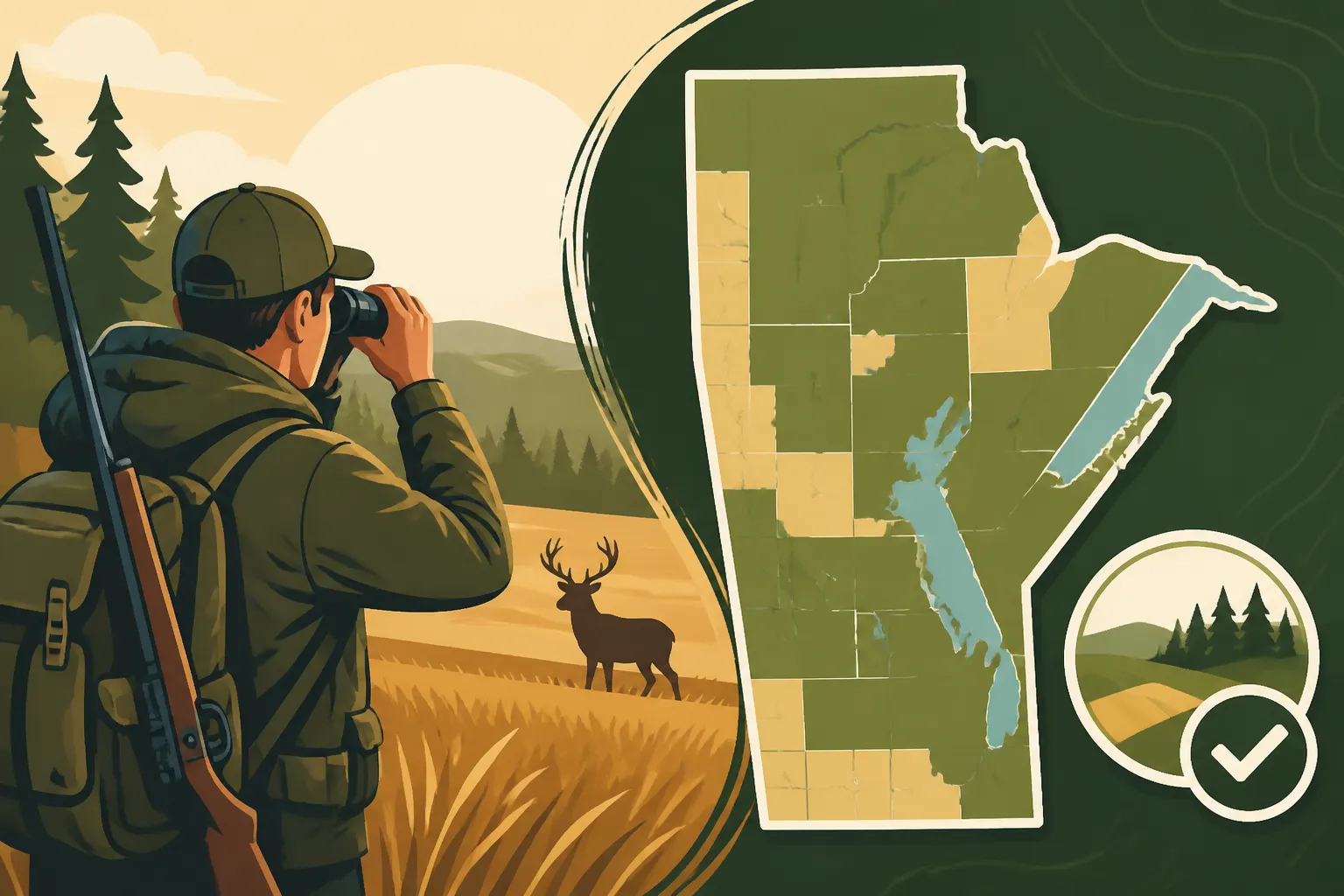
Manitoba’s Crown Land Access
Finding quality hunting land can feel like an impossible puzzle in many places, especially when you're trying to figure out what's private, what's public, and how to even begin accessing it. Here in Manitoba, we're incredibly fortunate to have vast tracts of Crown Land available to hunters, but actually understanding where it is, how to use it, and what the rules are can be daunting. This guide will walk you through everything you need to know about accessing and respectfully hunting Manitoba's incredible Crown Land.
Understanding Crown Land in Manitoba
When we talk about "Crown Land" in Manitoba, we're really talking about public land – land owned by the provincial government on behalf of all citizens. It's distinct from federally owned land, like national parks, and, of course, from privately owned parcels. The idea behind Crown Land is that it provides a shared resource for various activities, including forestry, mining, recreation, and, thankfully for us, hunting. This concept of shared public ownership is a cornerstone of our outdoor heritage, allowing access that many other jurisdictions can only dream of.
Defining Crown Land
At its core, Crown Land is simply land that isn't privately owned and hasn't been designated for other specific uses that restrict hunting, such as provincial parks or certain protected areas. It covers a massive portion of the province, stretching from the agricultural south all the way up into the northern boreal forest and tundra. These lands are managed by the province, primarily through Manitoba Natural Resources and Northern Development, which sets the regulations for their use. It’s important to understand that while it’s “public,” it’s not unregulated. There are rules about everything from vehicle access to camping, and these rules are in place to ensure sustainability and minimize conflicts between different user groups. Always remember that your access is a privilege, not an absolute right, and respecting the land and its rules is paramount to keeping it accessible for future generations.
The Sheer Scale of Public Access
The sheer amount of Crown Land in Manitoba is staggering. Imagine vast, unbroken stretches of forest, sprawling wetlands, and remote wilderness areas, all open for exploration. This isn't just small, scattered parcels; we're talking about millions of acres. This incredible expanse means that even in more populated areas, you can often find significant blocks of public hunting ground, and as you move north, it becomes practically boundless. This offers an incredible advantage to Manitoba hunters, providing opportunities to pursue a wide range of game species without the constant worry of finding private land permission. It also means that for those willing to venture a little further, or invest in a more remote hunt, truly untouched wilderness experiences are still very much a reality here. Manitoba's Crown Land Access is a huge topic, and understanding its extent is the first step to leveraging it for your hunting adventures.
Navigating Access Rules and Regulations
While Crown Land offers incredible opportunities, it's not a free-for-all. There are specific rules and regulations governing its use, and as hunters, it's our responsibility to know and abide by them. These rules are designed to protect the environment, ensure public safety, and manage wildlife populations sustainably. Failing to understand or follow these regulations can lead to fines, loss of hunting privileges, and, more importantly, can jeopardize the future of public land access for everyone. It’s not just about avoiding trouble; it’s about being a responsible land user.
General Hunting Regulations on Crown Land
First and foremost, all provincial hunting regulations apply universally, whether you're on Crown Land or private land. This includes season dates, bag limits, shooting hours, and legal methods of take for various species. You still need your appropriate licences and tags, and you must adhere to all safety requirements, like wearing blaze orange when required. What sometimes trips people up on Crown Land are the more subtle nuances of access. For example, while you might be able to walk in anywhere, certain areas within Crown Land might have additional restrictions, such as Wildlife Management Areas (WMAs) which often have specific rules regarding firearm discharge zones or baiting. Always check the annual hunting guide and specific GHA (Game Hunting Area) regulations for any additional rules pertaining to the particular parcel of Crown Land you intend to hunt. This due diligence is crucial for a lawful and enjoyable hunt.
Vehicle and ATV Use Restrictions
One of the biggest areas where hunters can inadvertently run afoul of the rules on Crown Land is vehicle and ATV use. While many areas allow vehicle access on established roads and trails, off-road travel is strictly regulated and often prohibited, especially during certain times of the year or in sensitive habitats. The rules for Quad and Side-by-Side Rules on Crown Land can vary depending on the specific designation of the Crown Land (e.g., Provincial Forest versus general Crown Land) and the season (e.g., wet conditions might lead to temporary closures). The intent is to prevent habitat destruction, minimize erosion, and reduce disturbance to wildlife. Always look for signage, consult GHA maps that denote permitted access routes, and, when in doubt, stick to marked trails or plan to walk in. Driving around arbitrarily on Crown Land, especially through wetlands or new cut lines, is a surefire way to damage the landscape and create a bad impression of hunters.
Camping and Overnight Stays
For those planning multi-day hunts, understanding the rules around camping and overnight stays on Crown Land is essential. Generally, random camping is permitted on most Crown Land, but there are exceptions. In Provincial Forests, for example, specific rules might apply, and you might need to obtain a Crown Land Use Permit for longer stays or larger groups. Some areas might also have restrictions on fire pits, especially during dry periods, or rules about proper waste disposal. It’s never acceptable to leave trash behind. Pack out everything you pack in, and aim to leave your campsite cleaner than you found it. Always check the specific regulations for the area you plan to visit, particularly regarding fire bans or designated camping zones. Being prepared with knowledge about camping regulations ensures you can focus on the hunt rather than worrying about unexpected issues.
Finding and Identifying Crown Land
Knowing that Crown Land exists is one thing; actually finding it and confirming its boundaries in the field is another challenge entirely. Many hunters spend countless hours poring over maps, trying to distinguish public from private. Thankfully, modern technology has made this process much more accessible and accurate than it used to be, but traditional map-reading skills remain invaluable. This combination of old and new methods is truly the key to unlocking vast hunting opportunities.
The Role of Digital Mapping Tools
In today's hunting world, digital mapping applications are absolute game-changers for identifying Crown Land. Tools like onX Hunt and GoHunt provide detailed satellite imagery layered with property boundaries, showing exactly where public land begins and private land ends. These apps typically use GPS to pinpoint your exact location in real-time, displaying whether you're standing on Crown Land, private property, or a specific WMA. This is incredibly valuable for preventing accidental trespass, especially in checkerboard areas where public and private parcels are intertwined. Before you even leave home, you can spend hours digitally scouting, identifying potential access points, travel corridors, and bedding areas. You can mark waypoints, measure distances, and even download maps for offline use, which is critical in remote areas without cell service. Scouting With Satellite Imagery in Manitoba has never been easier, and these apps are at the forefront of that revolution.
Interpreting GHA Maps and Legal Descriptions
While digital apps are fantastic, they complement, rather than replace, official GHA maps and legal descriptions. GHA (Game Hunting Area) maps, provided by Manitoba Natural Resources and Northern Development, outline the specific boundaries for hunting zones and often include important topographical features and some land ownership information. They are the official source for regulatory boundaries. Learning to read these maps, cross-referencing them with satellite imagery, and understanding the basic legal descriptions (like sections, townships, and ranges) can give you a deeper understanding of the landscape. For instance, sometimes a GHA map might indicate a large block of Crown Land, but a digital app can show you the intricate details within that block, such as old logging roads or clearings. Combining both methods gives you the most comprehensive picture. It's also vital to consult the annual hunting guide, which details any specific rules for each GHA, often linking back to these larger land management units. For a deep dive, check out Reading a Manitoba GHA Map Before You Go.
Physical Markers and Signs
In the field, you'll sometimes find physical markers indicating Crown Land boundaries. These might be small, yellow posts, paint on trees, or official signage at trailheads or entry points. However, you cannot rely solely on these markers, especially in vast wilderness areas where they might be sparse, damaged, or non-existent. Weather and time can degrade signs, and in deep bush, they might simply not have been placed. This is where your digital map and your understanding of the landscape become critical. Always cross-reference any physical signs with your mapping tools. If you’re near a known private property, watch for fences, "No Trespassing" signs, or other indicators. When in doubt, err on the side of caution and assume it might be private. It’s far better to walk around a questionable boundary than to inadvertently trespass.
Types of Crown Land and Their Hunting Potential
Not all Crown Land is created equal when it comes to hunting opportunities and access. Manitoba's vast public lands encompass a diverse range of ecosystems, each offering unique challenges and rewards for the hunter. Understanding these distinctions will help you better plan your hunts and identify the best areas for the species you're pursuing. From sprawling forests to critical wetland habitats, our Crown Land has it all.
Provincial Forests and Their Opportunities
Manitoba's Provincial Forests make up a significant portion of our Crown Land. These are areas designated primarily for sustainable timber harvesting, but they are also managed for wildlife habitat and recreation. Think of places like the Duck Mountain Provincial Forest, Porcupine Provincial Forest, or the Sandilands. These forests typically offer a mix of mature timber, regenerating clearcuts, and old logging roads, which create excellent habitat and access for big game like white-tailed deer, moose, and black bears. The network of logging roads, while sometimes challenging to navigate, provides miles of access, allowing hunters to get deeper into the bush than they might on general Crown Land. However, active logging operations mean you need to be aware of heavy machinery and potential temporary closures. Always respect logging equipment and operations. These areas are fantastic for those willing to put in some foot mileage or utilize a quad for deeper penetration. Hunting the Duck Mountain Provincial Forest is a prime example of the kind of opportunities these areas can offer.
Wildlife Management Areas (WMAs)
Wildlife Management Areas (WMAs) are special designations within Crown Land, established specifically for the conservation and enhancement of wildlife and their habitats. While they are public land, they often come with more specific and sometimes stricter regulations than general Crown Land, tailored to protect their unique ecological values. For example, some WMAs might have restrictions on certain types of hunting, vehicle access, or even dog use. Many WMAs, especially in the south, are critical waterfowl staging and nesting areas, making them premier destinations for duck and goose hunting. Others protect vital big game wintering areas. They are usually well-signed and managed, and details about their specific rules are always found in the annual hunting guide or on provincial government websites. It's absolutely crucial to check the specific WMA rules before you hunt, as they can differ significantly. Manitoba Wildlife Management Area Rules are a must-read for anyone considering hunting in these valuable conservation areas.
Remote Boreal and Tundra Country
Venturing into Manitoba's remote boreal forest and even further north into the tundra transition zone offers some of the most challenging but ultimately rewarding Crown Land hunting experiences. This is truly wild country, often accessible only by float plane, winter road, or extended canoe trips. Here, hunting pressure is minimal, and the opportunities for moose, black bear, and barren-ground caribou can be exceptional. These areas are characterized by vast stretches of untouched wilderness, massive lakes, and intricate river systems. While access is a major logistical challenge, the rewards of hunting in such pristine environments are unparalleled. However, with this remoteness comes significant responsibility. Self-sufficiency is paramount, and detailed planning for safety, navigation, and game retrieval is essential. You'll need reliable communication devices, extensive survival skills, and a deep respect for the unforgiving nature of the northern landscape. For a true wilderness adventure, exploring the remote reaches of Manitoba's Crown Land is an unforgettable journey. Hunting Manitoba's Far North on a Fly-In is a perfect illustration of the kind of remote opportunities available.
Here's a quick comparison of different public land types:
| Land Type | Primary Purpose | General Access for Hunting | Key Considerations |
|---|---|---|---|
| General Crown Land | Broad public use, resource extraction | Generally open, vehicle restrictions apply | Varies greatly in habitat, check for specific closures |
| Provincial Forests | Timber management, recreation, wildlife | Good road network, logging activity common | Respect logging operations, some specific rules apply |
| Wildlife Management Areas | Wildlife conservation, habitat enhancement | Often restricted vehicle access, specific rules for hunting methods/times | Critical habitats, check specific regulations carefully |
| Provincial Parks | Recreation, conservation (no hunting) | Hunting generally prohibited | Boundaries often abut huntable Crown Land, know the line |
Challenges and Considerations for Crown Land Hunters
While Crown Land offers incredible opportunities, it's not without its challenges. Hunters venturing onto public lands need to be prepared for various scenarios, from dealing with other users to navigating vast, remote areas. Acknowledging and planning for these considerations will make your hunting experience much smoother and safer.
Dealing with Hunting Pressure
Let's be honest, you're rarely truly alone on accessible Crown Land, especially during peak seasons like the whitetail rut or the waterfowl migration. More accessible parcels, particularly near population centers, can see significant hunting pressure. This means you might encounter other hunters, hikers, birdwatchers, or even ATV riders. Managing this pressure requires a respectful and strategic approach. Often, the best way to escape the crowds is to go deeper into the bush than most are willing to walk, or to hunt during weekdays when pressure is typically lower. Using mapping tools like onX Hunt to identify harder-to-reach pockets of Crown Land, perhaps requiring a longer hike or a crossing over rough terrain, can put you onto game that sees less disturbance. Remember that everyone has a right to be on public land, so a friendly wave and a courteous attitude go a long way. Developing strategies for Hunting a Manitoba Quarter Section that sees pressure often means thinking outside the box and finding hidden pockets of cover.
Remote Access and Logistics
While some Crown Land is easily accessible from paved roads, much of it, particularly the most productive big game country, requires significant logistical planning. We're talking about areas where cell service is non-existent, roads are unimproved gravel or dirt (and can become impassable after rain or snow), and the nearest town is hours away. Hunters must be entirely self-sufficient, carrying emergency supplies, extra fuel, and reliable navigation tools. For those venturing far north, float planes or winter roads become the only viable options. This remoteness amplifies the importance of a robust Winter Truck Kit for a Manitoba Hunt and having a detailed emergency plan. Always let someone know your itinerary, expected return time, and specific hunting area. Understanding the limits of your vehicle and your physical capabilities is critical before heading into truly remote sections of Crown Land.
Respecting Adjacent Private Land Boundaries
This is a big one. Even when you're hunting lawfully on Crown Land, you'll often find it borders private property, especially in the more agricultural southern half of the province. Accidentally trespassing is a serious offense and can quickly sour landowner relations, potentially leading to further restrictions on public access for everyone. It's your responsibility to know exactly where those lines are. This is where those digital mapping tools really shine – they can show you property lines with remarkable accuracy, even down to specific fields. Always err on the side of caution. If you're unsure, don't cross. If a piece of game runs onto private land, you absolutely must obtain permission from the landowner before pursuing it. Do not assume implicit permission. Building a good rapport with local landowners, even if you’re primarily hunting Crown Land, can also open doors to opportunities like asking for permission to cross a corner of their property for easier access to public ground. This respectful approach is essential for Manitoba Landowner Permission Law.
Ethical Hunting and Conservation on Crown Land
Hunting on Crown Land comes with a profound responsibility: to act as stewards of the land and its wildlife. Our actions not only reflect on us as individuals but on the entire hunting community. Ethical behavior and a commitment to conservation are essential for maintaining healthy ecosystems and ensuring that these public lands remain vibrant hunting grounds for generations to come.
Pack It In, Pack It Out Principles
This principle is simple but absolutely critical: whatever you bring onto Crown Land, you must take back out with you. This includes all trash, spent casings, food wrappers, and any other refuse. Leaving behind garbage, even something as seemingly innocuous as an apple core, pollutes the environment and detracts from the wilderness experience for others. Beyond physical trash, "pack it out" also applies to your impact. Avoid cutting down live trees for firewood (unless specifically permitted and deadfall is used), refrain from leaving permanent structures like blinds or stands (unless they adhere to specific regulations, often requiring removal after the season), and minimize your footprint. When you leave an area, it should look as if you were never there. This commitment to leaving no trace is a hallmark of a responsible outdoor enthusiast and directly contributes to the pristine nature of our public lands.
Wildlife Management and Sustainable Harvest
Hunting on Crown Land is intrinsically linked to wildlife management. The seasons, limits, and regulations set by Manitoba Natural Resources and Northern Development are designed to ensure sustainable harvest and healthy populations. As hunters, it's our ethical duty to adhere to these rules precisely. This includes proper tag validation, accurate species identification, and respecting bag limits. We also play a crucial role in monitoring wildlife health, for instance, by participating in programs like Manitoba's CWD Sampling Requirements. Reporting unusual wildlife sightings or concerns to conservation officers contributes to the broader management efforts. Ultimately, our continued access to hunting on Crown Land depends on the health of the game populations. A sustainable approach ensures that we don't just "take" from the land, but that we contribute to its long-term vitality.
Being a Good Neighbor to Other Users
Crown Land is for everyone, not just hunters. You'll encounter hikers, campers, birdwatchers, photographers, ATV riders, and even trappers. Respecting all users of public land is paramount. This means being mindful of noise, especially early in the morning or late in the evening. It means giving way on trails, keeping a safe distance, and being aware of sightlines and backgrounds when discharging a firearm. Communication is key; a friendly greeting can go a long way in fostering positive relationships. For example, if you're setting up for waterfowl near a popular hiking trail, be aware of when hikers might be present. Avoid confrontations and de-escalate any potential conflicts. When everyone shares the land respectfully, the outdoor experience is better for all. This collaborative approach helps to ensure that hunting remains a valued and accepted activity on Manitoba's shared public lands.
Disclaimer
This article is for general informational purposes only and does not constitute professional advice. Laws, prices and regulations vary by location and change over time. Consult a qualified professional for guidance on your specific situation.