Which Manitoba Species Test Positive Most
It's completely understandable to feel a bit overwhelmed and even anxious when you hear about Chronic Wasting Disease (CWD) in Manitoba's wild game. As hunters, we want to ensure the health of the herds we pursue and, of course, the safety of the meat we bring home to our families. One of the most common questions I get is, "Which Manitoba species are actually testing positive for CWD, and which ones should I be most concerned about?" This guide aims to clear up that confusion, giving you a realistic look at the current situation and what it means for your hunting efforts.
Understanding Chronic Wasting Disease in Manitoba's Deer Family
First, let's get a solid grip on what CWD actually is. It's a fatal, progressive neurological disease that affects cervids – that's the fancy scientific term for members of the deer family, which includes our beloved whitetails, majestic moose, and impressive elk. It's caused by abnormal proteins called prions, which accumulate in the brain and other tissues, slowly damaging the nervous system. Think of it like a slow-motion, irreversible decay of the brain. The disease is highly contagious within cervid populations and can be spread through direct animal-to-animal contact or indirectly through environmental contamination, such as soil or plants tainted with infected bodily fluids.
The frustrating part about CWD is its insidious nature. Animals can be infected for a long time – sometimes over a year – before they start showing any visible signs. This "incubation period" means an animal can look perfectly healthy while still carrying and potentially spreading the disease. When symptoms do appear, they include severe weight loss (hence "wasting"), stumbling, poor coordination, drooling, excessive thirst and urination, and a general lack of fear of humans. It’s truly heartbreaking to see an animal suffering from it.
Manitoba has been proactively monitoring for CWD for years, long before it was actually detected here. This vigilance is crucial because once it's in an area, it's incredibly difficult, if not impossible, to eradicate. The goal is to detect it early, understand its spread, and implement management strategies to mitigate its impact on our wild cervid populations. This commitment to surveillance is why you'll often hear about mandatory sampling efforts in certain Game Hunting Areas (GHAs), especially as CWD creeps closer from our western neighbours. If you're wondering how this affects the overall deer population, you might find it helpful to read about What CWD Has Done to Manitoba Deer.
The Species Most Commonly Testing Positive
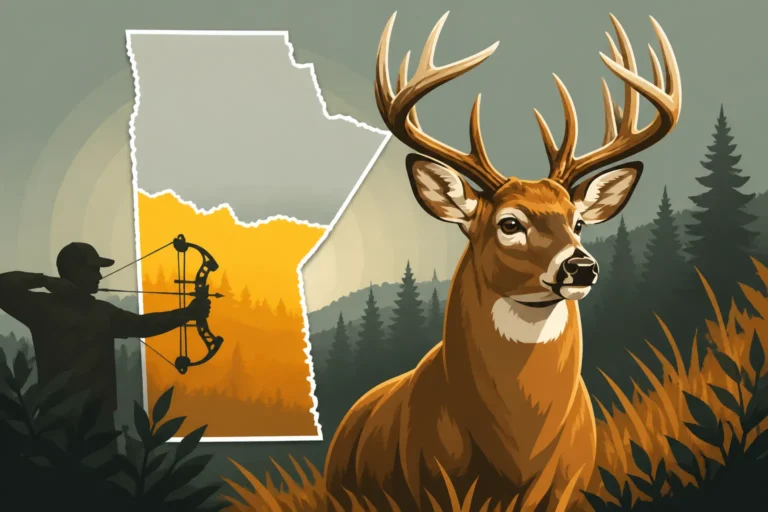
When we talk about CWD positive results in Manitoba, the overwhelming majority, practically all, have come from white-tailed deer. These animals are the primary reservoir for the disease in our province and are currently the main focus of surveillance efforts. It's not because other animals are immune, but rather due to a combination of factors related to population density, social behaviour, and habitat use.
Why Whitetails Are the Primary Concern
White-tailed deer in Manitoba are abundant and widely distributed, especially in the agricultural and parkland areas where CWD has been detected. Their social structure, often forming larger groups, particularly in winter, increases the chances of direct contact between individuals. They also tend to utilize smaller home ranges compared to some other cervids, which can lead to higher concentrations of prions in localized environments. Imagine a group of deer feeding, bedding, and drinking in the same few acres for weeks on end; any infected animal shedding prions is essentially contaminating that shared space.
When positive cases have been found in Manitoba, they've almost exclusively been within specific GHAs, primarily along the western and southwestern parts of the province. These areas often border Saskatchewan, where CWD has been present for a longer time and is more widespread. The movement of deer, even subtle movements across a few miles, can slowly expand the affected zones. Staying informed about Which Manitoba GHAs Require CWD Sampling is critical for any hunter planning a trip to these areas. Websites and apps like GoHunt are fantastic resources for checking the most current GHA boundaries and CWD regulations before you head out.
Other Cervids: Moose and Elk
While white-tailed deer are the main story for CWD positives in Manitoba, it’s important to remember that moose and elk are also susceptible to the disease. They are cervids, after all. However, to date, positive results in moose and elk in Manitoba have been exceedingly rare, if any have been publicly confirmed.
There are several reasons for this observed difference. Moose, for instance, are generally more solitary animals than whitetails, especially outside of the rut. They also typically inhabit different environments, preferring the boreal forest and wetland complexes rather than the dense agricultural landscapes where deer often congregate. This naturally reduces the opportunities for direct nose-to-nose contact and lessens the likelihood of encountering heavily contaminated environments. Similarly, while elk live in herds, their densities are often lower than whitetails in many areas, and their movements can cover vast distances, which might dilute the concentration of environmental prions.
That said, surveillance efforts still include testing of harvested moose and elk, particularly in or near known CWD-affected deer zones. This ongoing monitoring is vital to catch any potential spillover into these species early on. As a responsible hunter, if you harvest a moose or an elk in a designated CWD sampling area, it’s crucial to submit your sample.
Here’s a quick overview of the observed susceptibility and testing frequency in Manitoba:
| Species | Susceptibility to CWD (General) | Observed Positive Cases in Manitoba | Hunter Harvest & Sampling Frequency | Key Factors Affecting Rate in MB |
|---|---|---|---|---|
| White-tailed Deer | High | High (primary concern) | Very High | High population density, social behaviour, shared habitats |
| Mule Deer | High | Low/Rare (limited range) | Moderate | Limited range in MB, some overlap with whitetail CWD zones |
| Elk | Moderate to High | Very Low/None (rare) | Moderate | Larger range, different social dynamics, lower density |
| Moose | Moderate | Very Low/None (rare) | Moderate to Low | Solitary nature, different habitat, lower density |
| Caribou | Moderate to High | None (distant northern range) | Low (remote hunt) | Geographically isolated from current CWD zones |
This table really drives home the point that while CWD can affect all cervids, our whitetail deer are currently the front-line species in Manitoba when it comes to positive test results.
Why Different Species Show Varying Rates
It's natural to wonder why white-tailed deer are predominantly affected, especially when other cervid species are also present in Manitoba's landscape. The reasons are multifaceted, involving a complex interplay of biology, behaviour, and even human influence.
Biological and Behavioral Factors
Firstly, there can be genetic susceptibility. While research is ongoing, some studies suggest that certain genetic variations in cervids might make them more or less resistant to CWD infection. It’s possible that Manitoba’s whitetail population, or certain lineages within it, might possess genes that make them particularly vulnerable.
Social structure and population density play a huge role. As mentioned, whitetails tend to live in higher densities and form more cohesive social groups, particularly during fall and winter. This close proximity facilitates direct transmission (animal-to-animal contact, grooming, shared food/water sources). Moose, on the other hand, are generally more spread out and less prone to direct contact, especially outside the rut. Elk herds are also social, but their extensive ranges might mean less concentrated environmental contamination over time, or simply fewer opportunities to encounter the disease at critical infection thresholds.
Habitat use is another major determinant. The CWD prions can persist in the environment for years, even decades. Areas with high deer traffic – specific feeding grounds, mineral licks, or natural travel corridors – can accumulate prions. If these areas are predominantly used by whitetails and less so by other cervids, then whitetails will naturally have a higher exposure risk. This is particularly true in the mixed agricultural and bush country where CWD has established a foothold. You can gain some perspective on the larger movement of CWD into the province by looking at How CWD Reached Manitoba From the West.
Sampling Efforts and Hunter Harvest Rates
Beyond the biological realities, sampling bias can also influence the perceived rates. Whitetail deer are, by far, the most commonly hunted big game animal in Manitoba. The sheer volume of whitetail harvests means a much larger number of samples are submitted for testing compared to moose or elk. If you test more of one species, you are statistically more likely to find positives within that species, assuming the disease is present.
Furthermore, CWD sampling efforts are strategically concentrated in specific "CWD surveillance zones" which are often GHAs with a known risk, typically due to proximity to infected areas or previous positive findings. These zones often align with prime whitetail habitat and high hunter harvest areas. So, where the sampling effort is highest, the detection rate is also likely to be higher. This doesn't necessarily mean other species are completely free of the disease, but rather that the focus and opportunities for detection are heavily skewed towards white-tailed deer.
The trends in our cervid populations also come into play. For instance, Manitoba's Moose Population Trend and Manitoba's Elk Herds and Their Range show different population dynamics and distributions across the province compared to whitetails. These differences in population size, health, and location naturally impact the chances of detecting a disease like CWD within them.
Implications for Hunters and Conservation
Understanding which species are most affected by CWD has direct implications for hunters and for the broader conservation efforts in Manitoba. This isn't just about statistics; it's about making informed decisions for your hunt and contributing to the health of our wildlife.
Mandatory Sampling and Hunter Responsibility
The province implements mandatory CWD sampling in designated GHAs specifically because white-tailed deer are the most common carriers. This isn't meant to be an inconvenience, but a crucial tool for monitoring the spread of the disease. As hunters, participating in these sampling programs is a vital part of our role in conservation. It’s how we provide the data needed to understand the disease’s prevalence and geographic spread. If you hunt in an area requiring a CWD sample, knowing Manitoba's CWD Sampling Requirements is essential. It usually involves dropping off the head of your harvested animal at a designated depot or submitting specific lymph node samples. Tools like GoHunt can help you quickly locate these drop-off points or understand the specific requirements for your GHA.
Carcass Handling and Reducing Spread
Beyond sampling, knowing that whitetails are the primary concern means taking extra precautions with carcass handling, especially if you hunt in an affected zone. The CWD prions are concentrated in brain, spinal cord, lymph nodes, spleen, and eyes. While muscle meat is considered a lower risk, careful handling can minimize any potential environmental contamination. This means leaving the "high-risk" parts at the kill site or at designated disposal facilities if you're in a CWD zone. Transporting whole carcasses out of these zones is typically restricted, so it's critical to know the rules about Moving a Carcass Out of a Sampling Area. These regulations are in place to prevent inadvertently spreading the disease to new areas.
Staying Informed and Long-Term Management
Conservation efforts are continuously adapting to the challenges posed by CWD. This includes research into population management strategies, public education campaigns, and ongoing surveillance. As hunters, we are critical partners in these efforts. Staying informed about the latest CWD updates, particularly regarding the species and GHAs of concern, is crucial. Regularly checking the provincial wildlife branch's website or using reliable hunting platforms like GoHunt can keep you up-to-date on any new positive detections, changes in regulations, or sampling requirements.
Finally, while the risk of CWD transmission to humans is considered extremely low, health authorities still recommend that meat from CWD-positive animals not be consumed. It's an important ethical consideration that, if you're ever in a position where you receive a positive test result for your harvested animal, you understand the guidance on Whether CWD Meat Is Safe to Eat. Our shared goal is to protect not only our hunting heritage but also the health of our wild populations and the safety of our communities.
Disclaimer
This article is for general informational purposes only and does not constitute professional advice. Laws, prices and regulations vary by location and change over time. Consult a qualified professional for guidance on your specific situation.