Wolf Pack Size in the Boreal Forest
The vast, silent stretches of Manitoba's boreal forest can feel truly wild, and few animals embody that wilderness spirit more than the grey wolf. But for hunters venturing into these northern woods, understanding the elusive nature of a wolf pack—especially its size—can feel like trying to grasp smoke. It’s a challenge to gauge how many eyes might be watching you from the shadows, or how many mouths are relying on the same prey species you're pursuing. This guide dives deep into the realities of wolf pack sizes in Manitoba's northern landscapes, exploring the complex factors that influence them and how hunters can better understand these apex predators.
The Core Dynamics of Wolf Pack Size in Manitoba's Boreal
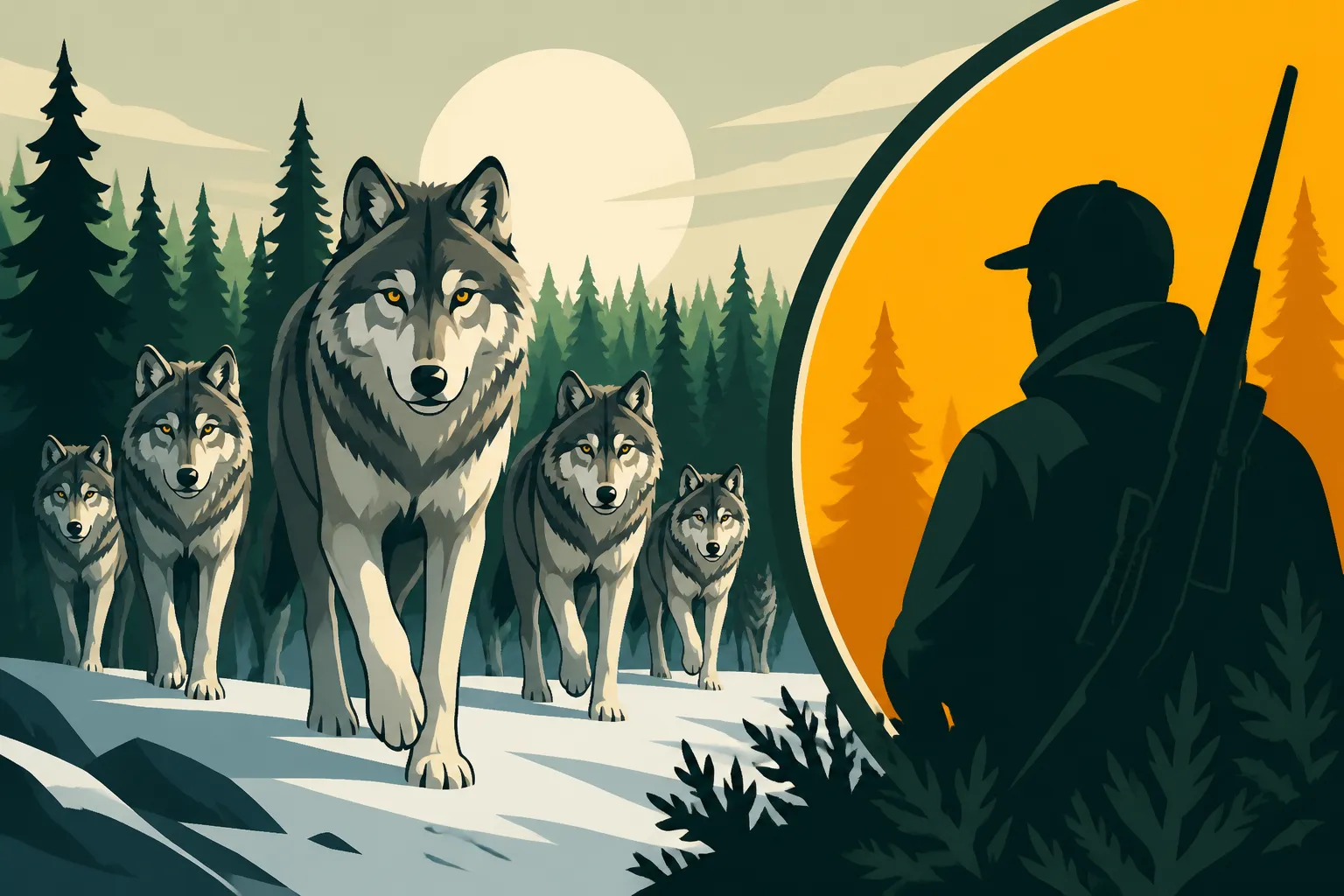
When we talk about wolf packs, it's easy to conjure up images from nature documentaries—a large, cohesive unit moving through snowy landscapes. While that's often true, the reality in Manitoba's boreal forest is more nuanced. Wolf packs are not static entities; their numbers, territories, and internal dynamics are constantly shifting, driven by a complex interplay of environmental factors and social structures. For hunters who spend time in these wild areas, recognizing the fluid nature of these groups is key to understanding the ecosystem.
Typical Pack Structure and Roles
At its heart, a wolf pack is essentially a family unit, usually consisting of a breeding pair (the alpha male and female), their offspring from the current year, and sometimes offspring from previous years. This core structure typically gives a pack a baseline size, often ranging from 4 to 8 individuals. The breeding pair leads the hunt, makes decisions about territory, and dictates the overall social order. Younger wolves learn critical hunting skills and pack etiquette from their elders. These roles are vital for the pack's survival, especially during the harsh northern winters. When you're out Hunting Wolves in Manitoba's North, observing how wolves interact, even from a distance, can give you clues about the pack's overall health and dynamics.
However, it's not always so simple. A pack can temporarily swell with transient individuals or split into smaller hunting groups for short periods, only to re-converge later. For instance, in areas with abundant prey, a pack might sustain a larger number of individuals, perhaps even up to 10 or 12. Conversely, a pack that has faced significant challenges, like disease, injury to key members, or low pup survival, might temporarily shrink to just the breeding pair and a single helper. Understanding these natural fluctuations helps manage expectations and interpret signs in the bush.
Seasonal Fluctuations in Numbers
The size of a wolf pack in Manitoba's boreal forest isn't consistent year-round; it ebbs and flows with the seasons, largely dictated by the annual reproductive cycle and food availability. Spring brings the birth of pups, typically in April or May, often adding 4 to 6 new members to the pack. During this period, the pack might be relatively centralized around the den site, with adult wolves constantly bringing food back for the growing litter. This is a time of immense energy expenditure for the adults, making them efficient hunters.
As summer progresses and pups grow, they become more mobile, joining the adults on short excursions from the rendezvous sites. By late summer and fall, these pups are nearly full-sized and participating in hunts, swelling the pack to its largest annual size. This larger group is highly effective at taking down big game like moose or caribou. However, winter can be a brutal culling agent. Harsh conditions, scarcity of prey, inter-pack conflicts, or disease can lead to attrition, and the pack often shrinks back to its core numbers by late winter, just before the next breeding season. This cycle is a stark reminder of the wild's unforgiving nature and the constant struggle for survival that these magnificent animals face daily.
Key Factors Shaping Pack Size in the Northern Wilds
While the family unit forms the backbone of a wolf pack, several external forces exert significant pressure on how large or small these groups can become. These aren't just minor influences; they are foundational elements that dictate the very structure and survival capabilities of a pack across the vastness of northern Manitoba. Hunters keen on understanding the broader ecosystem, and perhaps even engaging in Predator Hunting Across Manitoba, will benefit from recognizing these deep connections.
Prey Availability and Density
Perhaps the most critical factor influencing wolf pack size is the abundance and density of their primary prey animals. In Manitoba's boreal forest, wolves predominantly rely on large ungulates like moose and caribou, but they will also opportunistically hunt deer, beaver, and smaller game. When moose populations are healthy and widely distributed, packs generally have a more stable food source, which can support larger numbers of wolves, allowing more pups to survive and older offspring to remain with the natal pack for longer. A larger pack can more effectively bring down a mature bull moose, which provides sustenance for many days. This is a stark contrast to regions where prey is scarce, forcing packs to be smaller and more spread out.
Conversely, a decline in prey numbers—perhaps due to disease, severe winters, or overhunting—will inevitably lead to smaller wolf packs. Fewer mouths can be fed, leading to higher pup mortality, increased competition, and more frequent dispersal of younger wolves seeking new territories. This tight ecological link means that changes in Moose Across Manitoba's Boreal Forest populations, for example, have direct, tangible impacts on the local wolf dynamics. Hunters often notice these shifts, perhaps seeing fewer tracks or hearing fewer howls in areas where game has become sparse.
Territorial Imperatives and Competition
Wolves are highly territorial animals. Each pack maintains a specific home range, which it actively defends from neighboring packs. The size of these territories can vary immensely, from a few hundred square kilometers to well over a thousand, depending on prey density and the presence of other packs. When packs encounter each other at territorial boundaries, it often results in aggressive confrontations, sometimes even leading to fatalities. This competition for hunting grounds and resources acts as a natural cap on wolf populations and, by extension, on pack sizes within a given area.
A densely packed landscape with many wolf territories might mean that each pack is forced to operate with fewer members to avoid constant conflict and to ensure enough food within its smaller range. If a pack grows too large, it might strain the resources of its territory, forcing some members to disperse or leading to internal strife. This territoriality is why you might find consistent wolf sign in one area for years, while an adjacent block of seemingly good habitat remains largely wolf-free—it's likely another pack's turf. When you're using a tool like GoHunt to scout an area, looking at how game animals are distributed can give you clues about where wolves might have established territories, indicating prime hunting spots for predators and prey alike.
Human Impact and Hunting Pressure
Human activities, particularly hunting and trapping, are significant factors that can influence wolf pack sizes and dynamics in Manitoba's boreal regions. While wolves are resilient, direct pressure from hunters and trappers can certainly impact local pack numbers. In areas with legal Wolf Season Dates and Limits, selective harvesting can remove individuals, sometimes including critical breeding members. The loss of an alpha animal, especially the alpha female, can destabilize a pack, leading to a temporary reduction in size, a potential breakup, or even a takeover by new wolves.
Beyond direct harvesting, human presence through logging, mining, or recreational activities can also indirectly affect wolves. Road networks created for these activities can increase hunter access, but also expose wolves to more human encounters. While wolves generally avoid humans, habitat fragmentation can force them into new or smaller ranges, increasing competition with other packs. Understanding these impacts is crucial for sustainable wildlife management and for hunters to grasp the full picture of the ecosystems they enter. Hunting regulations, such as those related to Hunting Wolves in Manitoba's North, are often designed with these complex population dynamics in mind, aiming to balance wildlife management goals with hunting opportunities.
Reading the Landscape: How Hunters Detect Wolf Presence
For any hunter, being able to recognize the signs of wolf presence is a valuable skill, whether you're targeting predators or simply want to understand the movements of your primary big game quarry like moose or deer. Wolves are masters of camouflage and stealth, but they leave plenty of clues for those who know what to look for. Interpreting these signs can help you gain a better appreciation for the health of the boreal ecosystem and adapt your hunting strategy accordingly.
Interpreting Tracks and Scats
One of the most direct ways to confirm wolf presence, and even get a sense of pack size, is by carefully observing tracks in the snow or mud. Wolf tracks are typically larger than those of coyotes or domestic dogs, often measuring 4-5 inches long and 3-4 inches wide, with clear claw marks and a distinct, symmetrical toe pattern. Unlike a dog, a wolf often places its hind foot directly into the impression made by its front foot, creating a straighter, more purposeful trail. A string of tracks travelling in a relatively straight line, rather than meandering like a domestic dog, is a strong indicator of a wolf.
If you encounter multiple sets of wolf tracks, take the time to count them. Look for variations in size, as this can indicate different ages within the pack – larger tracks for adults, smaller for pups or yearlings. Finding several distinct track patterns moving together suggests a larger pack. Fresh tracks are, of course, the most informative. Following tracks a short distance can reveal travel patterns, like how they navigate a Hunting an Old Logging Road in the North or skirt the edge of a frozen lake. You can use mapping tools like GoHunt to mark these track locations, helping you build a pattern over time.
Scat (feces) is another invaluable sign. Wolf scat is usually rope-like, often containing visible hair and bone fragments from their prey. It's typically quite large, thicker and longer than coyote scat. The location of scat can also be telling; wolves often deposit scat in prominent places, like at trail intersections or on elevated spots, serving as a territorial marker. Finding multiple piles of fresh scat from varying sizes can further confirm pack activity in the area. The size and content of the scat can even give you an idea of what they've been eating, which is directly tied to the local prey populations.
Auditory Cues and Calling
There's nothing quite like the haunting sound of a wolf howl echoing through the boreal forest. Auditory cues are perhaps the most evocative signs of wolf presence and can even provide insights into pack size. Wolves howl for various reasons: to communicate their location to pack members, to mark their territory, to rally the pack before a hunt, or simply to express their social bonds.
If you hear multiple wolves howling in unison, or hear distinct individual voices within a chorus, it's a good indication of a larger pack. Lone wolves tend to have a more solitary, drawn-out howl. Listening for pups yipping or squealing in the background of a howl can tell you that there are young ones present, suggesting a breeding pack. While calling wolves is a specialized tactic, just listening for their natural communication can inform your understanding of their activity. Often, a pack will howl at dawn and dusk, or during periods of bright moonlight. Spending time still, especially in areas known for Manitoba's Northern Boreal wilderness, and simply listening can tell you a lot more than you might imagine about the pack dynamics around you.
Using Technology for Scouting and Tracking
In today's hunting world, technology can be a powerful ally in understanding elusive species like wolves. Satellite imagery and GPS mapping apps, for example, can help you scout vast expanses of boreal forest from home, identifying potential wolf travel corridors, dens, or rendezvous sites. Features like old logging cuts, hydro lines, river valleys, or dense bush pockets are often preferred wolf routes and hunting grounds. Utilizing platforms like GoHunt allows you to overlay different map layers, pinpointing areas that offer both cover for wolves and access to their prey. You can mark areas where you've seen tracks, heard howls, or found scat, building a comprehensive picture of wolf activity over time. This approach to Scouting With Satellite Imagery in Manitoba is increasingly common and effective.
Trail cameras, strategically placed along game trails or known wolf travel routes, can also capture images or videos of passing wolves. While a single camera might only catch a few individuals, reviewing footage over several weeks or months can reveal patterns of movement, individual identification (if distinct markings are visible), and even give you a rough count of how many unique wolves are using a particular area. Remember, though, that trail cameras should always be used ethically and according to local regulations. Understanding how wolves use the landscape, whether through old-school tracking or modern tech, helps you become a more informed and successful hunter. Don't forget to consult Reading a Manitoba GHA Map Before You Go to understand official boundaries and regulations.
Here's a quick overview of factors influencing wolf pack sizes:
| Factor | Impact on Pack Size (General Tendency) | Notes |
|---|---|---|
| Prey Abundance | High Prey = Larger Packs | Ample food supports more individuals, higher pup survival. |
| Prey Density | Dense Prey = Larger Packs | Concentrated food sources allow packs to stay together, hunt efficiently. |
| Territorial Pressure | High Pressure = Smaller Packs | More competition from other packs often means smaller, more defended territories. |
| Human Harvest/Hunting | Increased Pressure = Smaller Packs | Removal of key individuals can destabilize and reduce pack numbers. |
| Habitat Quality | High Quality = Larger Packs | Abundant cover and prey habitat can sustain more wolves. |
| Disease/Parasites | Presence = Smaller Packs | Outbreaks can significantly reduce pack numbers and survival rates. |
| Breeding Success | High Success = Larger Packs | More pups born and surviving means a larger pack, especially post-summer. |
| Season (Spring/Summer vs. Winter) | Summer/Fall = Larger Packs | Pups increase pack size; winter attrition can reduce numbers. |
Disclaimer
This article is for general informational purposes only and does not constitute professional advice. Laws, prices and regulations vary by location and change over time. Consult a qualified professional for guidance on your specific situation.