What a Big Manitoba Whitetail Weighs
It's the question every Manitoba hunter has asked or heard in the field after a successful harvest: "So, what do you think it weighs?" The excitement, the adrenaline, and the sheer joy of a hard-earned whitetail often lead to some truly impressive estimations around the tailgate. But let's be honest, those numbers can get a little… inflated. This guide is all about cutting through the campfire stories and giving you a realistic picture of what constitutes a truly big Manitoba whitetail, from field dressing to the actual scale.
Understanding Whitetail Weights in Manitoba: More Than Just a Number
When we talk about a "big" whitetail here in Manitoba, we're really touching on a culmination of factors: age, genetics, habitat, and even the sheer grit of surviving our challenging winters. It's a blend of raw numbers and the story behind the animal.
The Range of Weights You Can Expect
The weight of a whitetail deer can vary dramatically based on its sex, age, and where it lives within our vast province. A young doe, perhaps a year and a half old, might only tip the scales (dressed) in the 90-110 pound range. A mature doe, on the other hand, could easily be 140-180 pounds dressed.
Now, for the bucks, that's where the numbers really start to get interesting. A yearling buck (often called a "spike" or "forkhorn") might dress out anywhere from 120 to 160 pounds. These are young animals, still putting most of their energy into body growth rather than impressive antler development. However, once a buck hits three, four, or five years old, that's when you start seeing the real difference. These mature animals can be significantly heavier, especially those that have found consistent, high-quality forage throughout their lives.
Why Manitoba Whitetails Are Renowned for Their Size
There's a reason Manitoba holds such a reputation for producing monster whitetails, both in body and antler size. It's not just luck; it's a perfect storm of environmental factors. Our rich agricultural lands provide an abundant, high-protein diet for much of the year, allowing deer to pack on fat and muscle. Combine that with diverse natural browse in our vast bush and parkland regions, and you have ideal conditions for growth.
Another major factor is our harsh northern climate. The deer that survive multiple Manitoba winters are truly hardy animals, often carrying a denser bone structure and thicker hides to withstand the cold. This resilience contributes to their overall body mass. You often hear discussions about Why Northern Bucks Carry More Body Mass, and it's a well-founded observation based on the physiological demands of surviving prolonged periods of deep cold and snow. These animals simply have to be bigger to thrive here.
Factors Influencing a Manitoba Whitetail's Size and Weight
Beyond the obvious, several key factors intertwine to dictate just how big a whitetail deer can get in Manitoba. It's a complex equation involving time, genetics, and the bounty of their environment.
Age and Genetics: The Primary Drivers
The single most significant factor in a whitetail's weight, particularly for bucks, is age. A deer typically doesn't reach its full body potential until it's 4.5 to 5.5 years old, sometimes even older in areas with less hunting pressure. While a 2.5-year-old buck might have a decent rack, its body will still be relatively lean compared to a mature animal. As bucks age, their bone structure continues to strengthen, and their muscle mass increases, leading to substantial gains in overall weight.
Genetics also play a crucial role. Just like in humans, some deer are simply predisposed to being larger or smaller, regardless of their diet. A herd with a strong genetic lineage for large body size, combined with excellent nutrition and sufficient time to mature, will consistently produce bigger animals. Understanding the age of the deer you're pursuing can often give you a good idea of its potential size, even before it steps onto a scale. Learning how to identify older deer by their physical characteristics and by Aging a Deer by Its Teeth can be a valuable skill.
Habitat, Nutrition, and Climate: Fueling the Growth
Manitoba's diverse landscape offers a buffet for whitetails, directly impacting their size. In the southern agricultural zones, deer have access to high-calorie crops like corn, soybeans, and alfalfa. This constant supply of nutrient-rich food allows them to put on weight rapidly and recover quickly from the stresses of the rut and winter. Such conditions are prime for growing heavy-bodied animals.
Even in the more rugged bush country, diverse forage, including various shrubs, forbs, and trees like aspen and willow, provides essential nutrients. A healthy mix of habitat types means deer can find everything they need throughout the seasons. However, the severity of our winters can act as a natural culling mechanism. Prolonged periods of deep snow and extreme cold, especially without adequate food reserves, can lead to significant weight loss or even mortality. This is why understanding What Whitetails Eat Through a Hard Winter and observing How Deep Snow Moves Deer Into Cover is so important for hunters. The deer that make it through these tough conditions are often the most robust and genetically superior.
Regional Differences Across Manitoba's Landscapes
You'll notice distinct differences in whitetail size as you move across Manitoba's various ecological zones. Deer found in the rich agricultural belt and mixed parkland regions (like the Pembina Valley, or areas around Riding Mountain National Park) tend to exhibit the heaviest body weights. The abundance of cultivated crops, combined with pockets of protective bush and consistent water sources, provides optimal conditions. It's no surprise that many hunters specifically target these areas, perhaps even Hunting the Parkland Fringe for Big Bucks, because of the reputation for large animals.
As you move further north into the more extensive boreal forest, deer densities might be lower, and while still impressive, the average body size might subtly shift. These deer often rely more heavily on natural browse and might experience more intense competition for food during harsh winters. However, the deer that thrive in these northern reaches are often incredibly robust and can still reach impressive weights. Even so, deer in these areas typically don't have the same unlimited access to high-calorie crops that their southern counterparts do, which can impact their maximum potential weight.
The Reality of "Big" Whitetail Weights: Dressing vs. Live Weight
This is where the rubber meets the road, or rather, the deer meets the scale. There's often a significant disconnect between the perceived weight of a deer right after the shot and its actual, measurable weight.
Live Weight: The Hunter's Dream Number
The "live weight" refers to the deer's weight before any field dressing takes place. This is the weight of the animal as it stood in the woods, fully intact. It's the number that hunters often guess at, especially in the adrenaline-fueled moments after a successful harvest. You might hear someone confidently declare their buck "went 300 pounds live!" And while that's an exciting thought, it's rarely accurate for a wild Manitoba whitetail.
Truly 300-pound live weight whitetails are exceptionally rare giants, the stuff of legend, often found in very specific, highly managed areas with incredible genetics and nutrition. For most wild Manitoba whitetails, even truly large ones, a 300-pound live weight is an aspirational figure. The sheer bulk of an animal of that size is hard to comprehend without seeing it on a certified scale.
Dressed Weight: The Practical Measurement
For hunters, the most practical and honest measurement of a whitetail's weight is its "dressed weight" (or field-dressed weight). This is the weight of the animal after its internal organs (viscera) have been removed in the field. This process typically reduces the overall weight by about 20-30%, sometimes even more, depending on how thoroughly the animal is dressed.
For example, a buck that truly weighs 250 pounds live might dress out at 180-200 pounds. A mature doe might go from 180 pounds live down to 130-145 pounds dressed. This distinction is crucial for accurate comparison and for understanding how much meat you'll actually be taking home. When you hear weight claims, it's always good practice to clarify if it's live or dressed weight. If it's not specified, it's usually safer to assume it's a live weight estimate that might be a touch on the generous side. For anyone using tools like GoHunt to scout areas, understanding these real-world numbers helps set realistic expectations for the animals they might encounter.
Here's a quick comparison of what you might realistically expect for dressed weights of Manitoba whitetails:
| Deer Category | Typical Dressed Weight Range (lbs) |
|---|---|
| Yearling Doe | 90 – 110 |
| Mature Doe | 130 – 180 |
| Yearling Buck | 120 – 160 |
| Mature Buck (2.5-3.5 yrs) | 160 – 200 |
| Mature Buck (4.5+ yrs) | 190 – 250+ |
Note: These are general ranges. Individual deer may fall outside these estimates due to exceptional genetics, specific local conditions, or environmental factors.
The "Bush Scale" Phenomenon and Realistic Expectations
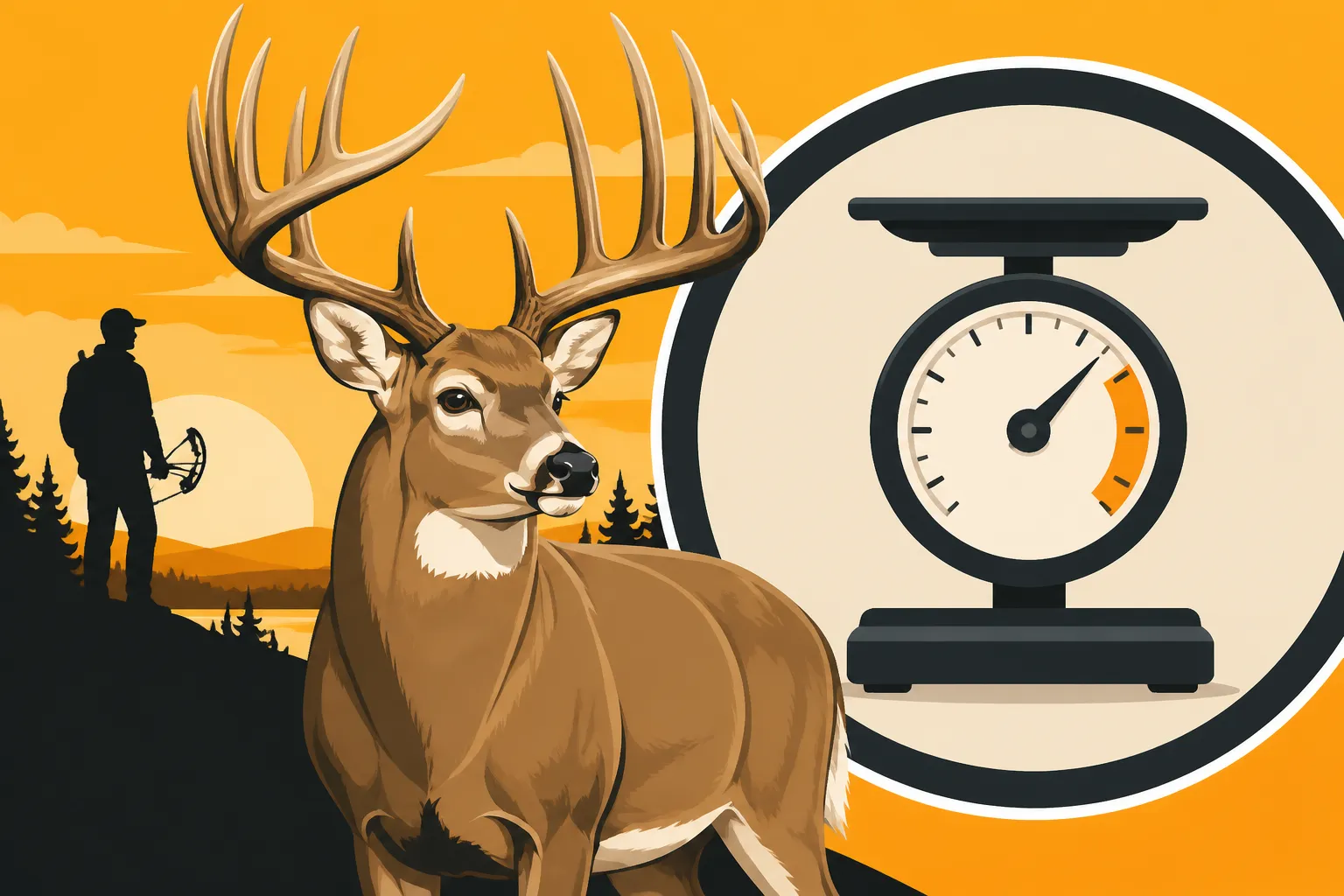
Ah, the "bush scale" – that notoriously optimistic piece of equipment that seems to add an extra 50 pounds to every deer! It's a common joke around hunting camps because it's so true. The excitement of the moment, the effort of dragging a heavy deer, and perhaps a touch of storytelling all contribute to inflated estimates. Many times, what feels like a "250-pound dressed" deer on the drag turns out to be a very respectable 190 pounds when it actually hits a reliable scale.
Setting realistic expectations is important. While Manitoba certainly produces exceptional deer, understanding the difference between live and dressed weight, and accounting for the "bush scale" effect, will help you appreciate your harvest for what it truly is. A 200-pound dressed whitetail buck is a truly magnificent animal anywhere, and especially so in Manitoba. When planning your hunt, use resources like GoHunt to analyze game data and better predict the size of animals in your chosen Scouting a Manitoba Game Hunting Area. This helps ground your expectations in reality, making the actual harvest all the more satisfying.
Beyond the Scale: What Truly Defines a "Big" Manitoba Whitetail
While the numbers on a scale are certainly part of the conversation, a truly "big" Manitoba whitetail is about so much more than just its weight. It encompasses the entirety of the hunting experience and the animal's place in the ecosystem.
Antler Size, Age, and Hunting Challenge
For many hunters, the definition of a "big" whitetail often includes impressive antlers. While body weight and antler size are generally correlated, they aren't always in perfect sync. A younger buck might have a decent rack but a relatively small body, while an older, heavy-bodied buck might have a more modest, but mature, set of antlers. The challenge of the hunt itself also adds to the "bigness" of an animal. Harvesting a smart, elusive buck from a tough, remote area, or after painstakingly learning Reading Whitetail Sign in Manitoba Aspen, often feels more significant than a quick shot on an easier animal.
Manitoba consistently produces bucks that make the record books, a testament to the quality of our deer herd. Discussions around Why Manitoba Whitetails Score So Well often highlight the unique blend of genetics and environment that contributes to both body and antler size. Ultimately, whether it's the mass, the spread, or the unique character of the antlers, combined with the deer's age and the effort involved in the harvest, these factors contribute as much to the perception of a "big" deer as the number on the scale. For serious trophy hunters, researching Manitoba's Record Whitetail Buck can offer insight into the top-end potential.
The Experience and Memories
At the end of the day, hunting is about the experience, the memories created, and the connection to nature. The actual weight of a deer, while interesting, often takes a backseat to the story of the hunt. The crisp morning air, the quiet anticipation, the skill and patience required, and the camaraderie shared with hunting partners—these are the elements that truly make a hunt "big," regardless of the final numbers.
The satisfaction of filling your freezer with healthy, organic meat, knowing you put in the effort to harvest it ethically, is a reward in itself. Whether you're Whitetail Hunting in Manitoba for meat, antlers, or simply the love of the chase, every deer taken is a valuable part of that experience. Using tools and resources like GoHunt to scout and plan helps maximize these valuable experiences by putting you in the right places with the right knowledge. The memories of a successful hunt, regardless of the precise weight, will last a lifetime.
Disclaimer
This article is for general informational purposes only and does not constitute professional advice. Laws, prices and regulations vary by location and change over time. Consult a qualified professional for guidance on your specific situation.