Manitoba’s Predators and Furbearers
For those of us who spend time in Manitoba's wild spaces, whether chasing big game or just enjoying the quiet, it's easy to focus solely on the primary quarry. But overlooking the intricate world of predators and furbearers means missing a huge piece of the puzzle that shapes our hunting grounds. This comprehensive guide will pull back the curtain on these often-misunderstood animals, explaining their roles, habits, and how they interact with the landscape we all love.
The Northern Hunter: Wolves in Manitoba
Wolves evoke a primal response in most of us. For some, it's fear; for others, awe. In Manitoba, particularly in the northern and forested regions, these intelligent predators play a critical role in maintaining ecosystem health. They are the ultimate wilderness dwellers, and encountering their tracks or hearing a distant howl is a truly unforgettable experience. Understanding their habits is key, whether you're actively hunting them or simply sharing their territory with other game species.
Wolf Pack Dynamics and Territories
Wolves are highly social animals, living and hunting in family units known as packs. A typical pack in Manitoba might consist of anywhere from two to a dozen animals, led by an alpha male and female. These packs maintain vast territories, often hundreds of square kilometres, which they aggressively defend from other wolf packs. Their movements are dictated by the availability of prey, primarily moose, deer, and caribou, as well as smaller mammals when the going gets tough.
Packs communicate through a complex system of howls, scent marking, and body language. When you hear a chorus of howls echoing through the boreal forest, it's often a pack communicating its location, either to regroup or to warn off rivals. This deep-seated social structure means that successful wolf hunting often involves understanding these dynamics rather than simply looking for a lone animal. It's a strategic game of chess, not checkers.
The presence of wolves significantly influences the behaviour of other game animals. Deer, for example, become more vigilant and tend to frequent areas with thicker cover where they can escape detection or pursuit. Moose populations, especially calves, are heavily impacted by wolf predation, which in turn can lead to localized shifts in their numbers. This natural ebb and flow is part of what makes the Manitoba wilderness so dynamic.
Hunting Wolves in Manitoba's Diverse Landscapes
Hunting wolves in Manitoba is a true test of patience, skill, and endurance. These animals are incredibly wary, possessing keen senses of smell, hearing, and sight. Success often hinges on understanding their travel corridors, denning areas (which are usually protected), and feeding patterns. Many hunters find that the best opportunities arise when they combine wolf hunting with other big game pursuits, as wolves will often follow game migrations or key wintering areas.
Different parts of Manitoba offer distinct challenges. In the vast boreal forests, particularly in regions like those north of The Pas or around the Whiteshell, wolves range widely, often using frozen lakes, rivers, and old logging roads as travel routes. In more accessible areas, like the fringe of the agricultural belt, wolves might be more opportunistic, preying on deer and even livestock, which can sometimes lead to conflict and increased hunting pressure. Many seasoned hunters will tell you that the cold, still air of deep winter is often the best time to locate them, as their tracks stand out clearly in the fresh snow. If you're serious about the pursuit, a look at resources like GoHunt can provide valuable insights into prime wolf country and strategies. For more detailed insights, you might want to check out articles like Hunting Wolves in Manitoba's North.
Strategically, setting up over a bait site, similar to how one might bait for bear, can be effective, especially in areas with high wolf density. Another tactic involves calling, mimicking distressed prey or rival wolves, which can sometimes draw in curious or territorial animals. This requires an intimate understanding of wolf vocalizations and when to use them. For specific information on regulations, you can check Wolf Season Dates and Limits to ensure you're hunting legally and ethically.
The Prairie Ghost: Coyotes Across the Farmland Belt
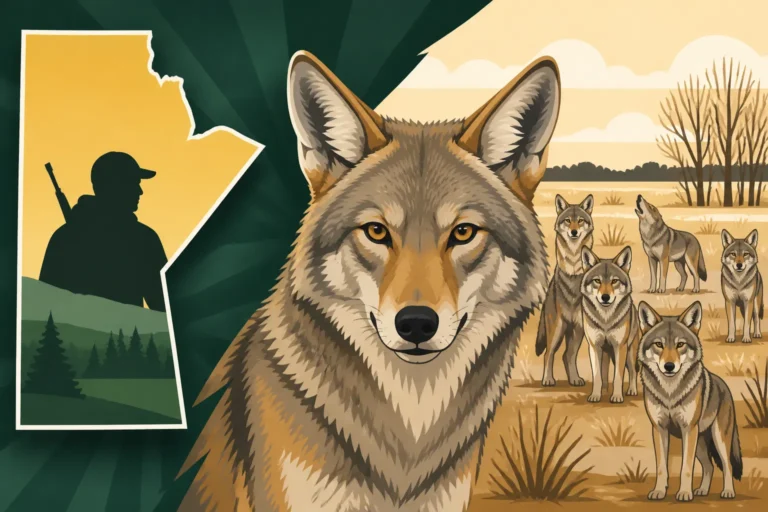
Coyotes are arguably one of Manitoba's most adaptable and widespread predators. From the farmlands of the south to the edges of the boreal forest, these clever canids have made themselves at home almost everywhere. For many hunters and farmers, coyotes represent both a challenge and a necessity to manage, given their impact on deer fawns, livestock, and other small game. Their calls, whether single yelps or full-blown group howls, are an iconic sound of the Manitoba night.
Coyote Behavior and Adaptability
Coyotes are opportunistic omnivores, meaning they'll eat just about anything they can get their paws on. Their diet shifts with the seasons, from small mammals like voles, mice, and rabbits, to insects, berries, and carrion. In agricultural areas, they often prey on deer fawns in spring and summer, and can sometimes be drawn to livestock, creating management issues for producers. This adaptability is precisely why they thrive in such diverse environments.
Unlike wolves, coyotes are generally less reliant on large pack structures, though family units will often hunt together. They are highly intelligent, learn quickly from past experiences, and can be incredibly elusive, making them a worthy adversary for any hunter. Their keen senses, particularly their hearing and sense of smell, are exceptional, requiring hunters to be meticulous about scent control and movement. They are most active during dawn and dusk, but can be seen at any time of day, especially in less disturbed areas.
Understanding their travel routes – often along field edges, treelines, coulees, and frozen ditches – is paramount to success. During winter, they often concentrate around areas with available food sources, such as deer wintering yards or even farmsteads where livestock may be present. They're masters of using cover and topography to their advantage, making them seem to appear and disappear like ghosts.
Calling Coyotes in Manitoba's Farm Country
Calling coyotes is an exhilarating challenge that combines strategy, patience, and a bit of luck. The most common method involves mimicking distress calls of prey animals like rabbits or fawns, or using howls to challenge their territory. Success often comes down to reading the landscape, understanding wind direction, and being absolutely still and camouflaged. It's a game of hide-and-seek where the coyote almost always has the home-field advantage.
Many hunters prefer the crisp, still mornings or evenings of fall and winter for calling coyotes. The colder temperatures mean less human scent lingers, and the animals are often more focused on finding food. When calling, it's crucial to set up with the wind in your favour, ideally with a clear view of an open area where a coyote might approach. Using a quality electronic caller can offer a wide range of realistic sounds, but mouth calls are also highly effective in the right hands. Consider checking out Calling Coyotes in Manitoba Farm Country for more specialized advice.
Beyond calling, some hunters utilize baiting, particularly during winter, to draw coyotes into a predictable location. This usually involves placing a carcass or other food source away from human activity and setting up a blind at a safe distance. This method requires regular monitoring and a good understanding of local regulations. Regardless of your chosen method, always be aware of your surroundings and ensure you know the Coyote Hunting Rules Year-Round before heading out. For planning your next hunt, resources like GoHunt can often point you towards areas with good coyote populations and offer gear recommendations.
The Apex Omnivore: Black Bears in Their Predatory Role
While typically considered big game, black bears are undeniable predators and significant furbearers in Manitoba's ecosystems. They possess incredible strength and intelligence, and their presence impacts everything from berry crops to fawn survival. Understanding their predatory tendencies and how they interact with other wildlife gives us a more complete picture of their role beyond just a hunting trophy.
Bear Ecology and Diet
Black bears are true omnivores, with their diet largely depending on seasonal availability. In spring, after emerging from their dens, they're primarily seeking green vegetation, roots, and carrion, especially deer or moose that didn't survive the winter. As summer progresses, their diet shifts to berries, nuts, and insects. However, bears are also efficient predators, especially on vulnerable prey. They will readily take deer fawns, moose calves, and even small livestock if the opportunity arises.
Their opportunistic nature means they will investigate anything that smells like a potential meal. This is why proper food storage in bear country is so critical, whether you're hunting, camping, or hiking. A fed bear is a dead bear, and we all have a responsibility to keep them wild. These animals play a vital role in nutrient cycling and seed dispersal, truly acting as ecosystem engineers in Manitoba's vast bush country.
Manitoba's vast tracts of boreal forest, particularly in the northern and eastern regions, provide ideal habitat for black bears. Areas with a mix of dense forest, wetlands, and abundant berry patches are prime bear country. Their movements are often dictated by food sources, so understanding seasonal changes in available forage can help predict where bears will be.
Understanding Bear Sign and Movements
When you're out in bear country, recognizing bear sign is crucial for both hunting and safety. Tracks, scat, claw marks on trees, and overturned rocks or logs are all indicators of bear activity. Scat can tell you a lot about what a bear has been eating, while claw marks on "bear trees" are often used for communication and territorial marking. Fresh sign suggests a bear is actively using the area, which is vital information for any hunter or outdoors person.
Bears often use natural travel corridors like game trails, old logging roads, and creek bottoms. They are creatures of habit to some extent, especially when a good food source is present. Knowing their preferred routes and feeding areas is key to encountering them, whether you're observing or hunting. For those who hunt them, understanding these patterns is essential for successful baiting or spot-and-stalk hunting. While this guide focuses on their predatory role, anyone planning a more dedicated pursuit should review resources like Black Bear Hunting in Manitoba for comprehensive hunting information.
Manitoba is home to a significant population of black bears, including many with unique colour phases beyond the typical black. From cinnamon to chocolate to blonde, these variations add to the intrigue of encountering these magnificent animals. Remember, when sharing the woods with bears, carrying bear spray and knowing how to use it is always a good idea, as is making noise while hiking to avoid surprising one.
The Elusive Feline Hunters: Lynx and Bobcats
Manitoba is home to two remarkable wild cat species: the Canada lynx and, more rarely, the bobcat. These highly specialized predators are masters of stealth and ambush, playing crucial roles in controlling small game populations, particularly hares. Seeing either of these elusive felines in the wild is a truly special event for any outdoors enthusiast.
The Elusive Lynx and Its Habitat
The Canada lynx is perfectly adapted to Manitoba's boreal forest. With its large, snowshoe-like paws, long tufted ears, and distinctive ruff of fur around its face, it's unmistakable. Lynx are highly dependent on snowshoe hare populations; their numbers rise and fall in direct correlation with the hare's famous 10-year population cycle. When hare numbers are high, lynx thrive; when hares crash, so do lynx. This fascinating predator-prey relationship is a cornerstone of the northern forest ecosystem.
Lynx are primarily nocturnal hunters, using their incredible hearing and eyesight to locate hares and other small prey like grouse or voles. They are solitary animals, silently patrolling their territories, often using dense stands of spruce and jack pine for cover. Their presence is a strong indicator of a healthy hare population, and thus, healthy forest habitat. For a deeper dive into this fascinating relationship, explore Lynx and the Snowshoe Hare Cycle.
Finding signs of lynx can be challenging due to their stealthy nature. Their tracks, which are large and rounded with no visible claw marks (claws are retractable), are the most common indicator. They often follow existing game trails or traverse frozen wetlands, leaving a distinctive trail in the snow. Trapping for lynx is a highly specialized pursuit, typically done by experienced furbearers in the northern reaches of the province.
Bobcats: A Rare Southern Visitor
Bobcats, while common further south in North America, are a much rarer sight in Manitoba. They are primarily found in the extreme southern parts of the province, usually inhabiting the rugged terrain of the Pembina Valley or dense river bottoms where there's sufficient cover and prey. They are smaller than lynx, with shorter ear tufts, smaller feet, and a more spotted coat. Their diet is similar to lynx, focusing on rabbits and other small mammals, but they are generally less tied to the snowshoe hare cycle and can tolerate a broader range of prey.
The presence of bobcats in Manitoba is often anecdotal, with sightings being rare and localized. They prefer areas with a mix of forest, open fields, and rocky outcrops, allowing them to hunt and find refuge. Due to their rarity, bobcats are not a primary furbearer for most trappers in the province, and dedicated hunting opportunities are virtually non-existent. Their occasional presence highlights the ecological diversity of Manitoba's southern fringe.
Both lynx and bobcats are indicators of healthy ecosystems. Their survival depends on intact habitats and robust prey populations. While most hunters will never directly pursue these magnificent cats, understanding their role enriches our appreciation of Manitoba's wild heritage. Their existence is a reminder of the wildness that still thrives in our province.
The Swift Hunters: Foxes of Manitoba
Manitoba is home to two distinct fox species: the widespread red fox and the more northern arctic fox. These cunning canids are masters of adaptation, each thriving in their respective environments and playing an important role in the food web. Their beautiful pelts also make them sought-after furbearers for trappers.
Red Fox Across the Prairie and Parkland
The red fox is easily the most recognizable and widespread fox species in Manitoba. Found throughout the agricultural lands, parklands, and even into the southern boreal forests, these animals are known for their intelligence and opportunistic nature. Their diet primarily consists of small mammals like voles, mice, and rabbits, but they'll also take birds, insects, and berries. They are highly adaptable, often living close to human settlements, where they can sometimes be seen darting across fields or along treelines.
Red foxes are generally solitary hunters, though a pair will often raise a litter of kits together. They use a distinctive "mousing leap" to pounce on unseen prey beneath the snow, a fascinating display to witness. In agricultural areas, they can provide a beneficial service by controlling rodent populations, though they can also prey on domestic fowl. Their stunning reddish-orange coat, often with a white-tipped tail, makes them a beautiful sight against a snowy backdrop. For further reading, check out Red Fox and Arctic Fox in Manitoba.
For trappers, red fox are a valuable furbearer, particularly during the winter months when their pelts are prime. Hunting them can be challenging, as their keen senses and wary nature make them difficult to approach. Similar to coyotes, calling can be effective, mimicking distressed prey to draw them in. Patience and a good understanding of their habits, especially their preferred travel routes along shelterbelts, ditches, and treelines, are essential for success.
Arctic Fox in Manitoba's Far North
Venturing into Manitoba's extreme far north, in the tundra transition zone and along the Hudson Bay coast, you'll find the arctic fox. This incredible animal is perfectly adapted to the harsh, cold environment. In winter, its coat turns a brilliant white, providing perfect camouflage against the snow. In summer, it sheds its white coat for a darker, often brown or grey, appearance to blend with the rocky tundra.
Arctic foxes primarily prey on lemmings, voles, and birds, but they are also opportunistic scavengers, often following polar bears and wolves to feed on their kills. They are known for their ability to cache food during periods of abundance, burying excess prey to retrieve later when food is scarce. Their resilience in such a challenging environment is truly remarkable.
Seeing an arctic fox in its natural habitat is an unforgettable experience, a testament to the raw beauty and ruggedness of Manitoba's northern frontier. Trapping for arctic fox is a specialized pursuit, undertaken by a hardy few who brave the extreme conditions of the far north. These furbearers are a vital part of the northern ecosystem, showcasing the incredible diversity of Manitoba's wildlife from south to north.
Other Furbearers: The Unsung Heroes of Manitoba's Wilds
Beyond the headline predators, Manitoba's forests and wetlands teem with a diverse array of other furbearers, each playing a unique role in the ecosystem. These animals are often less seen but are critical components of a healthy wilderness, and many are also important for the trapping industry.
Bush Country Furbearers: Marten, Fisher, Wolverine
Deep within Manitoba's boreal forest, you'll find agile and elusive furbearers like the pine marten and the fisher. Martens, often called "pine martens," are quick, tree-climbing predators that primarily hunt squirrels, voles, and birds. Fishers, larger and more robust, are known for their ability to hunt porcupines – a feat few other animals attempt. Both are important indicators of healthy, mature forest ecosystems and are valuable furbearers for northern trappers. For those exploring the deeper woods, learning about Marten and Fisher in the Boreal can offer fascinating insights.
Then there's the legendary wolverine, one of the toughest animals in North America. Though rare and primarily found in the remote northern forests and tundra, its presence speaks volumes about the untouched wilderness it inhabits. Wolverines are powerful scavengers and predators, capable of taking down animals much larger than themselves. Spotting a wolverine is a rare privilege, a true testament to the wildness of Manitoba's far north. Learning about Wolverine in the Northern Bush highlights their incredible resilience.
These bush country furbearers are challenging to hunt or trap due to their elusive nature and the remote, rugged terrain they inhabit. Their continued presence underscores the need to protect Manitoba's vast forest ecosystems.
Wetland and Water Furbearers: Beaver, Muskrat, Otter
Manitoba's countless lakes, rivers, and wetlands are home to a vibrant community of aquatic furbearers. Beavers, the ultimate ecosystem engineers, profoundly shape their environment by building dams and lodges, creating wetlands that benefit countless other species. Their work creates vital habitat for ducks, moose, and a host of other wildlife. While sometimes seen as nuisances by landowners due to flooding, their ecological importance cannot be overstated.
Muskrats, smaller cousins of the beaver, are also abundant in Manitoba's wetlands. These semi-aquatic rodents feed on aquatic vegetation and build small lodges or burrow into banks. They are a primary food source for many predators, including mink, foxes, and raptors. Both beavers and muskrats are staple species for trappers, particularly in the Interlake and northern regions. Explore Beaver and Muskrat Numbers Up North for a closer look.
River otters, playful and graceful, are found throughout Manitoba's waterways. These sleek predators are masters of the water, feasting on fish, frogs, and crustaceans. Their playful antics are a joy to behold, and their presence indicates healthy aquatic environments. Otters, like beavers and muskrats, are managed through trapping seasons, contributing to a sustainable furbearer harvest.
Prairie and Parkland Opportunists: Badger, Raccoon, Skunk
In the open landscapes of Manitoba's prairie and parkland, a different set of furbearers thrives. Badgers, with their powerful claws and distinctive striped faces, are burrowing specialists. They primarily hunt ground squirrels and gophers, digging them out of their burrows with impressive speed and efficiency. Seeing a badger on the prairie is a classic Manitoba sight, a true sign of healthy grassland ecosystems. Learn more about Where Badgers Dig on the Prairie.
Raccoons, highly intelligent and adaptable, are found across southern Manitoba, particularly in areas with a mix of woodlands and human settlements. They are nocturnal omnivores, skilled at finding food in a variety of environments, from natural foraging to raiding garbage cans. Their distinctive masked faces make them easily recognizable.
Skunks, another common sight in southern Manitoba, are best known for their potent defensive spray. While often considered a nuisance around homes, skunks play a role in insect and rodent control. Like raccoons, they are highly adaptable and thrive in varied habitats. Both raccoons and skunks are common furbearers, with trapping seasons to manage their populations.
Ecological Impact and Management of Predators and Furbearers
The intricate web of life in Manitoba is heavily influenced by its predators and furbearers. These animals aren't just isolated species; they are integral parts of a complex system where every action has a reaction. Understanding their impact and how we manage them is crucial for maintaining healthy ecosystems and sustainable hunting and trapping opportunities.
Predator-Prey Dynamics in Manitoba
The relationship between predators and their prey is a delicate dance, constantly shifting and evolving. Wolves and coyotes, for example, exert significant pressure on deer and moose populations, especially on the young, old, or weak animals. This natural selection process helps to keep prey herds healthy and robust. When predator numbers are high, prey populations may decline, and vice versa. It's a natural cycle that has played out for millennia.
Similarly, lynx populations are directly tied to snowshoe hare cycles, and many other furbearers, from weasels to fishers, rely on specific small mammal populations. A healthy predator population is often an indicator of a healthy prey base and overall ecosystem. These dynamics prevent overpopulation of any single species, reducing disease transmission and habitat degradation.
However, these dynamics can also lead to frustrations for hunters, especially when predator numbers seem high and game animals scarce. It's a constant balancing act, and our understanding of these interactions continues to evolve. Conservation efforts often involve monitoring both predator and prey populations to ensure a healthy balance.
Managing Predator Populations
Manitoba employs various strategies to manage predator and furbearer populations, balancing ecological health with human interests, including hunting, trapping, and livestock protection. Regulated hunting and trapping seasons are primary tools, designed to ensure sustainable harvests while providing opportunities for outdoors enthusiasts. For comprehensive information on how hunting and trapping are managed, including licence requirements, it's worth reviewing Manitoba Trapping and Furbearer Licences.
In specific instances, such as conflicts with livestock, additional permits or management actions may be authorized. It's important to remember that these management efforts are based on scientific data and aim to maintain healthy wildlife populations across the province. Responsible hunters and trappers play a vital role in this management, contributing data and adhering to regulations that protect these valuable resources.
Engaging with local wildlife organizations, staying informed through provincial wildlife guides (which can often be found on resources like GoHunt), and participating in discussions about wildlife management are all ways to contribute to the ongoing health of Manitoba's predator and furbearer populations.
Regulations and Ethical Considerations for Furbearers
Engaging with Manitoba's predators and furbearers, whether through hunting or trapping, comes with a clear set of responsibilities. Understanding and adhering to provincial regulations is not just about staying legal; it's about practicing ethical, sustainable wildlife management.
Navigating Licences and Seasons for Furbearers
Before pursuing any furbearer or predator in Manitoba, it is absolutely essential to acquire the correct licences and understand the specific season dates for the species you intend to harvest. For most furbearers, this will involve a trapping licence, which often requires specific training and adherence to trap placement and checking regulations. For predators like wolves and coyotes, a general hunting licence may suffice, but always double-check the specific regulations for the Game Hunting Area (GHA) you plan to be in.
Seasons for furbearers often run during the fall and winter months when pelts are prime, ensuring the highest quality harvest. However, regulations can vary significantly by species and GHA, so a thorough review of the latest Manitoba hunting and trapping guide is non-negotiable. This guide will detail bag limits, methods of take, and any specific restrictions or requirements. You can usually find the most up-to-date information through provincial government wildlife resources or by consulting with local conservation offices.
Ethical Hunting and Trapping Practices
Ethical conduct is the cornerstone of all hunting and trapping in Manitoba. This means respecting the animals, the land, and other users of the outdoors. For trappers, it involves using humane traps, checking traps regularly, and ensuring quick, clean kills. For hunters, it means taking responsible shots, understanding game recovery, and making every effort to retrieve and utilize harvested animals.
One of the most important ethical considerations is adhering to land access rules. Always obtain permission before hunting or trapping on private land. If you're on Crown land, be aware of any specific restrictions for that area, such as those within Wildlife Management Areas. This respect for landowners and public spaces ensures continued access for future generations.
Furthermore, hunters and trappers contribute significantly to conservation through licence fees, which directly fund wildlife management, habitat restoration, and enforcement efforts. By following all regulations, practicing ethical harvesting, and supporting conservation initiatives, we all play a part in ensuring Manitoba's diverse populations of predators and furbearers continue to thrive for years to come.
Manitoba Furbearer Overview Table
Below is a general overview of some common Manitoba furbearers, their primary habitat types, and typical season types. Always consult the most current provincial regulations for specific dates, licence requirements, and GHA details, as these can change.
| Species | Primary Habitat | Typical Season Type | Notes |
|---|---|---|---|
| Beaver | Lakes, rivers, wetlands, streams | Trapping (Fall/Winter) | Ecosystem engineer, creates wetlands. |
| Muskrat | Marshes, wetlands, shallow lakes | Trapping (Fall/Winter/Spring) | Important prey for many predators. |
| River Otter | Rivers, lakes, large streams | Trapping (Fall/Winter) | Playful, fish-eating aquatic predator. |
| Mink | Near water (rivers, streams, wetlands) | Trapping (Fall/Winter) | Agile predator of small mammals, birds, fish. |
| Marten | Mature boreal forest | Trapping (Fall/Winter) | Tree-dwelling hunter of squirrels and voles. |
| Fisher | Dense boreal and mixedwood forest | Trapping (Fall/Winter) | Known for hunting porcupines. |
| Red Fox | Prairies, parklands, farmland, southern bush | Hunting/Trapping (Fall/Winter) | Widespread, opportunistic, valuable pelt. |
| Arctic Fox | Tundra, far northern coastal areas | Trapping (Winter) | Adaptable to extreme cold, camouflaged coat. |
| Coyote | Prairies, parklands, farmland, forest fringes | Hunting/Trapping (Year-round) | Highly adaptable, significant predator of fawns. |
| Wolf | Boreal forest, northern wilderness | Hunting/Trapping (Fall/Winter) | Apex predator, critical to ecosystem health. |
| Badger | Prairies, open grasslands, farmland | Trapping (Fall/Winter) | Burrowing specialist, hunts gophers and ground squirrels. |
| Raccoon | Mixed woodlands, farmland, urban fringes | Trapping (Fall/Winter) | Nocturnal omnivore, highly adaptable. |
| Skunk | Mixed habitats, farmland, urban fringes | Trapping (Fall/Winter) | Best known for defensive spray. |
| Lynx | Dense boreal forest (high hare populations) | Trapping (Winter) | Specialized hunter of snowshoe hares. |
| Wolverine | Remote northern forests and tundra | Trapping (Winter – rare) | Powerful, elusive scavenger and predator. |
Disclaimer
The information provided in this guide is for general knowledge and informational purposes only. Hunting and trapping regulations in Manitoba are subject to change. It is the sole responsibility of the individual to consult the most current Manitoba hunting and trapping regulations and obtain all necessary licences and permits before engaging in any hunting or trapping activities. Always prioritize safety and ethical practices.