Rules on Hunting From a Vehicle
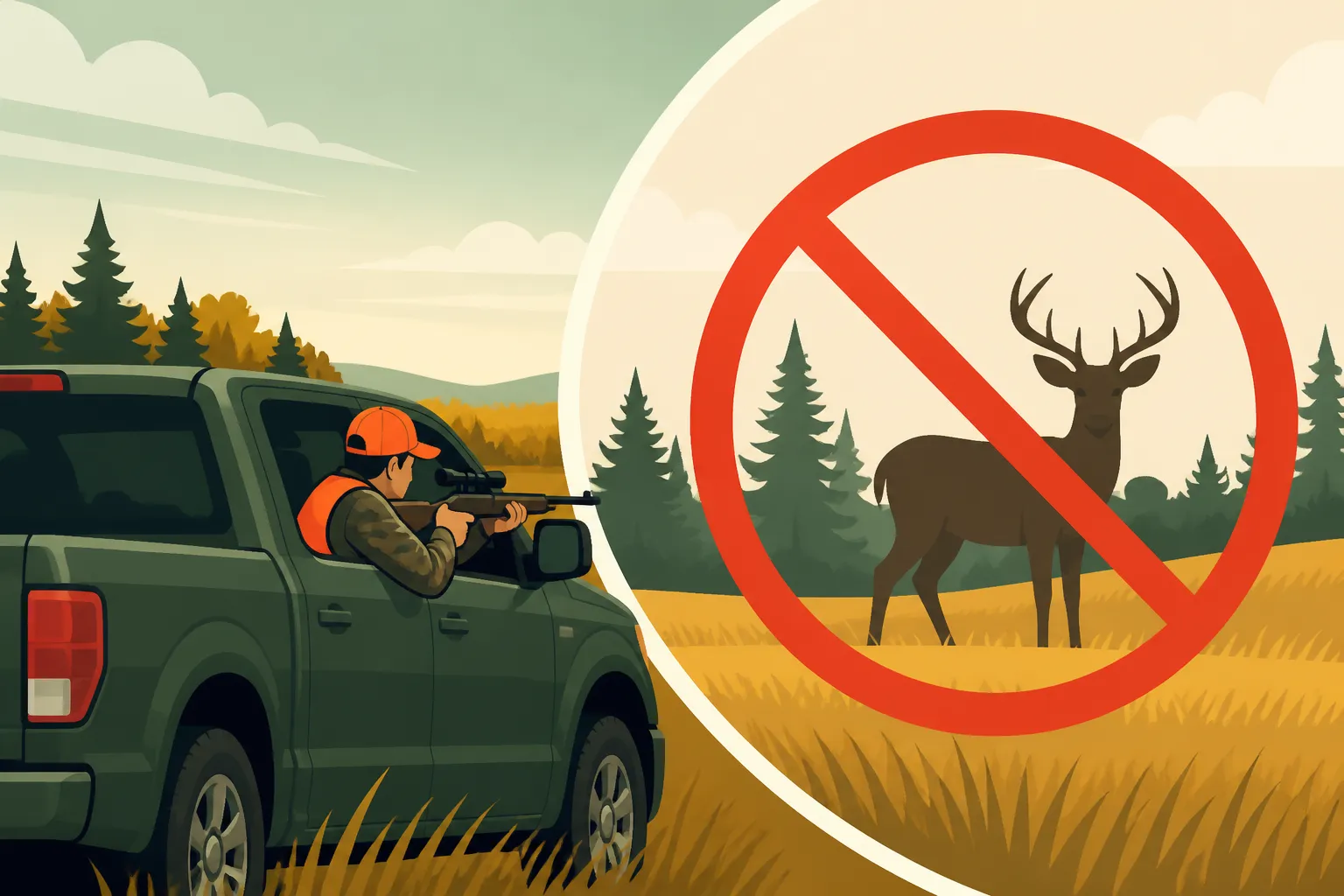
It's a common scene in movies or even just in casual conversation: someone spots a deer from the road, pulls over, and takes a shot. While that might make for dramatic television, it's a dangerous misconception that can land you in serious trouble in Manitoba. This guide will meticulously break down the actual rules surrounding hunting from or with a vehicle, helping you understand the legal boundaries and maintain ethical hunting practices in our beautiful province.
The Core Principle: Safety First, Legality Always
Hunting is a privilege, not a right, and it comes with immense responsibility. Manitoba's regulations regarding vehicles are designed to ensure public safety, promote fair chase, and uphold the ethical standards of our hunting community. Ignoring these rules not only puts you at risk of heavy penalties but also casts a shadow over all responsible hunters.
Why Vehicles are Not Hunting Platforms
The temptation to use a vehicle for convenience can be strong, especially when you’re covering vast expanses of Manitoba’s diverse landscape. However, the law is very clear: your vehicle is for transportation, not for active hunting. This principle is deeply rooted in both safety and ethics. From a safety standpoint, firing a weapon from or across a roadway, or even from a parked vehicle on an obscure trail, introduces an unacceptable risk to other road users, landowners, and even unsuspecting hikers or outdoor enthusiasts. Bullets can travel much farther than you think, and the uncontrolled environment of a vehicle can lead to tragic accidents.
Ethically, hunting from a vehicle often falls short of the "fair chase" principle. Fair chase dictates that hunters should not have an unfair advantage over the quarry. Using a vehicle to rapidly pursue or corner game, or to shoot from a position of immediate comfort and concealment, diminishes the challenge and respect inherent in the hunt. It reduces the experience to mere target practice, which is fundamentally against the spirit of hunting. For most hunters, the challenge of tracking, stalking, and understanding animal behaviour on foot is a significant part of what makes hunting so rewarding.
Defining "Hunting From a Vehicle"
In Manitoba, the regulations are quite specific about what constitutes "hunting from a vehicle" and what is prohibited. It's not just about pulling the trigger from inside your truck. The rules extend to:
- Discharging a firearm or bow from a vehicle: This is the most straightforward prohibition. You cannot shoot from a vehicle, whether it's moving or stationary. This includes cars, trucks, ATVs, UTVs, snowmobiles, or any other motorized vehicle.
- Discharging a firearm or bow at game while still connected to a vehicle: Even if you step out of the vehicle, if you immediately take a shot at game that was spotted while driving or that you just stopped for, it can still be interpreted as hunting from or with the aid of a vehicle. The intent is key here – if the vehicle was integral to spotting and immediately engaging the game, it's likely a violation.
- Discharging a firearm or bow across a provincial road or highway: This is a separate, critical safety regulation. Even if you are not hunting from a vehicle, you cannot shoot across a public road. This is incredibly dangerous and can lead to severe penalties.
- Using the vehicle to herd, harass, or drive game: Intentionally using a vehicle to push animals towards another hunter or into a more advantageous shooting position is strictly illegal. This applies to all game species and is considered a serious breach of fair chase principles.
- Having a loaded firearm in a vehicle (with exceptions): Generally, firearms must be unloaded and cased when transported in a vehicle. There are specific rules regarding the transportation of firearms, and it's essential to consult the provincial hunting guide.
These rules apply whether you are on a public road, a municipal road, an unregistered trail, or even private land (unless specific permissions and conditions are met, which are rare and usually relate to crop damage permits, not general hunting). Understanding these nuances is crucial for staying on the right side of the law when exploring Manitoba's Game Hunting Areas.
Specific Scenarios and Exceptions
While the general rule is "no hunting from a vehicle," Manitoba's regulations do account for specific situations and legitimate needs. It's essential to distinguish these exceptions from general prohibited activities.
Roadways and Rights-of-Way
The rules around hunting near roadways are particularly stringent and designed for public safety. You simply cannot discharge a firearm or bow from a provincial road, municipal road, or highway. This includes the road surface itself, the shoulder, and often a specified distance into the ditch or right-of-way. The exact distance can vary slightly depending on the type of road and local bylaws, so it's always best to err on the side of extreme caution and be well away from any travelled path. The danger of a stray bullet impacting another vehicle, a home, or a person is far too high. Think about it: a bullet from a high-powered rifle can travel for miles. Shooting across a road means you have no control over what or who is on the other side. You'll find detailed information about these safety zones in the annual Manitoba Hunting Guide or by looking up "Rules on Shooting Across a Road".
Furthermore, using a vehicle to simply drive around looking for game and then stopping, getting out, and immediately shooting, without allowing a reasonable amount of time or distance to elapse, can still be viewed by conservation officers as hunting with the aid of a vehicle. This falls back to the fair chase principle. If you spot a deer from the road, the expectation is that you must exit your vehicle, ensure your firearm is safely prepared, and then stalk the animal on foot, putting some distance between your vehicle and your shooting position. This adds an element of challenge and ensures you're actively hunting, not merely ambushing from your vehicle.
Disabled Hunter Permits and Mobility Aids
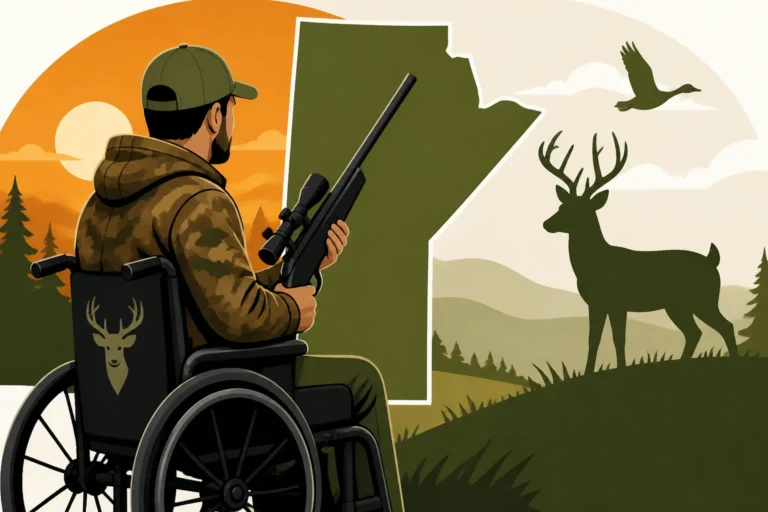
Manitoba recognizes that some hunters face physical challenges that may limit their mobility. For these individuals, there are specific provisions allowing for the use of vehicles as mobility aids, under strict conditions. A hunter with a disability may apply for a special permit, often referred to as a "disabled hunter permit," which can allow them to hunt from a stationary vehicle in designated areas, or to use a vehicle for access to areas otherwise unreachable.
These permits are not a blanket allowance to disregard all vehicle hunting rules. They typically require the hunter to be accompanied by an able-bodied individual, specify the types of vehicles allowed (e.g., ATV, UTV), and often restrict where such hunting can take place. The primary goal is to provide accessibility for individuals who would otherwise be unable to participate in hunting, while still maintaining safety and ethical standards. It's crucial for any hunter considering this option to fully understand the specific requirements, limitations, and application process for Manitoba Disabled Hunter Permits before planning a hunt. These permits are typically reviewed on a case-by-case basis and require medical documentation.
Retrieving Game and Off-Road Travel
Once you've successfully harvested an animal, the challenge shifts from hunting to retrieval. Using a vehicle, such as an ATV or UTV, to retrieve big game like a moose or a whitetail can certainly make the arduous task much easier. However, this is also an area where regulations must be carefully followed. The general rule is that you can use a vehicle for retrieval after the animal has been lawfully harvested and tagged, provided you have legal access to the land.
On Crown Land, there are specific Quad and Side-by-Side Rules on Crown Land that dictate where and when off-road vehicles can be used. Many areas have restrictions to prevent habitat damage or limit disturbance. It's vital to consult a GHA map or contact local authorities to understand the permissible trails and zones for off-road vehicle use. On private land, retrieving game with a vehicle requires explicit permission from the landowner, just as hunting on their land does. Always respect private property and the landowner's wishes. For more on this, check out "Manitoba Landowner Permission Law".
The key distinction here is the timing. A vehicle can be used for retrieval after the hunt is over, not as part of the hunting process itself. This means no driving around with a loaded firearm ready to shoot while looking for your downed animal, unless specifically allowed by a disabled hunter permit. The firearm should be unloaded and cased during retrieval, just as it would be during general transport.
Penalties and Consequences
Disregarding Manitoba's rules on hunting from a vehicle carries significant risks, not only to your immediate hunt but to your long-term ability to hunt and your standing within the hunting community. These aren't minor infractions; they are taken very seriously by conservation officers and the courts.
Legal Ramifications of Violating Vehicle Hunting Rules
The legal penalties for hunting from a vehicle in Manitoba can be severe and escalate depending on the nature and severity of the offence. If a conservation officer finds you in violation, you could face:
- Significant Fines: Expect substantial monetary penalties. These fines are often in the hundreds or even thousands of dollars per offence, and they can increase if multiple violations are discovered (e.g., loaded firearm in a vehicle and shooting from a vehicle).
- Licence Suspension: One of the most impactful consequences for any hunter is the suspension of their hunting privileges. This could mean you're prohibited from hunting for a year, several years, or even indefinitely, depending on the severity and frequency of the offence. This isn't just for Manitoba; a suspension here can impact your ability to hunt in other provinces and states due to reciprocity agreements.
- Seizure of Equipment: Your hunting equipment, including your firearm or bow, ammunition, vehicle, and even any harvested game, can be seized by conservation officers. This can result in permanent forfeiture of valuable gear. Imagine losing your truck or your favourite rifle!
- Imprisonment: In the most egregious cases, especially those involving multiple offences, reckless endangerment, or repeat violations, jail time is a very real possibility.
- Criminal Charges: Beyond wildlife act violations, certain actions (like shooting across a highway or wanton disregard for safety) could lead to criminal charges under the Criminal Code of Canada, which carries far more severe and lasting implications, including a criminal record.
It's clear that the province has a zero-tolerance policy for actions that compromise safety and fair chase. If you ever have questions about specific rules, it's always better to consult the official Manitoba Hunting Guide or contact a local conservation officer rather than guessing or relying on hearsay. Ignoring the rules is simply not worth the risk. For general knowledge about enforcement, you might want to read about "Manitoba Conservation Officer Powers".
Ethical and Public Perception Impacts
Beyond the very real legal consequences, violating vehicle hunting rules inflicts damage on the broader hunting community and the future of hunting in Manitoba. Every time a hunter is caught breaking a rule, especially one as publicly visible as shooting from a road or harassing game with a vehicle, it feeds into negative stereotypes about hunters.
- Erosion of Public Trust: Non-hunting members of the public, and even other hunters, view such actions as reckless and unethical. This erodes the public trust that is so vital for maintaining hunting as a legal and accepted activity. When the public sees hunters acting irresponsibly, it makes it harder for wildlife agencies and hunting organizations to advocate for hunter access, responsible management, and the continuation of hunting traditions.
- Damage to Hunter's Reputation: Word travels fast, especially in smaller rural communities. Being known as a "road hunter" or someone who cuts corners can permanently tarnish your reputation among fellow hunters and landowners. This can lead to loss of permission to hunt private land and social ostracism within the hunting community.
- Fueling Anti-Hunting Sentiment: Anti-hunting groups often seize upon such incidents as examples of why hunting should be banned or severely restricted. Your actions, whether good or bad, reflect on all of us. Responsible hunters are the best advocates for our sport, and irresponsible ones provide ammunition to those who wish to see it ended.
Ultimately, respecting the rules and embracing ethical practices is not just about avoiding a ticket; it's about safeguarding the future of hunting for generations to come. When you see violations, consider learning about "Reporting a Poacher in Manitoba" to help uphold the integrity of the sport.
Best Practices for Responsible Vehicle Use
Even with all the restrictions, your vehicle remains an invaluable tool for hunting in Manitoba. The key is knowing how to use it responsibly and legally, enhancing your hunting experience without breaking the rules or compromising ethical standards.
Scouting Safely and Legally
A vehicle is incredibly useful for covering large amounts of ground when scouting, especially across vast areas like Manitoba's farmland or boreal forest edges. You can efficiently check different access points, observe field edges, and identify potential bedding areas or travel corridors without expending all your energy on foot.
However, the line between scouting and illegal hunting can blur if you're not careful. When scouting, your firearms should be unloaded and cased, just as they would be during regular transport. Avoid stopping abruptly to intensely glass a field if there's any perceived intent to then quickly dismount and shoot. Instead, use your vehicle to get to a good vantage point, then turn off the engine, exit the vehicle, and use binoculars or a spotting scope for extended observation. This clearly separates the act of observing from the act of hunting.
Modern mapping apps like GoHunt can be a game-changer for scouting. They allow you to overlay land ownership, GHA boundaries, and topographical features directly onto a satellite image. You can mark potential stand locations, note fresh sign, and plan your foot approach routes from designated parking areas, all from the comfort and safety of your truck before you ever step out with your weapon. This helps you efficiently identify promising areas without needing to drive haphazardly or trespass. Remember, always have a good understanding of "Manitoba's Game Hunting Areas" when planning your scouting routes.
Transporting Firearms
Properly transporting your firearms is fundamental to responsible hunting and directly relates to vehicle rules. In Manitoba, the general rule for transporting firearms in a vehicle is that they must be:
- Unloaded: This means no ammunition in the chamber, magazine, or attached clip. For many firearms, this includes removing the magazine entirely.
- Cased: The firearm must be enclosed in a case, gun sock, or other non-transparent cover that prevents it from being readily accessible or visible.
There are some exceptions, such as for peace officers or individuals with specific permits, but for the average hunter, unloaded and cased is the law. Failing to comply can result in serious charges, even if you weren't actively hunting. This rule applies to all types of vehicles – cars, trucks, ATVs, snowmobiles. When driving to your hunting spot, or even between different hunting locations, ensure your firearms are properly secured. Don't fall into the trap of leaving a loaded rifle on the seat "just in case." It's illegal and incredibly dangerous.
When to Ditch the Wheels
The most crucial advice for legal and ethical hunting in Manitoba is simple: ditch the wheels for the hunt. Your vehicle is for transportation to and from your hunting area, or for retrieving game after the shot. The actual act of hunting – tracking, stalking, calling, or waiting in a blind – should almost always be done on foot.
Once you arrive at your chosen location, park your vehicle legally and safely off the main road or trail. Unload and case your firearm for transport to your actual hunting spot. From there, your feet become your primary mode of transportation. Walking allows you to move quietly, detect subtle signs of game, and fully immerse yourself in the hunting experience. It also ensures you are clearly separated from your vehicle when you eventually take a shot, removing any ambiguity about hunting from a vehicle. This commitment to foot travel not only keeps you legal but also greatly enhances the challenge and satisfaction of a successful hunt. Whether you're planning for "Whitetail Hunting in Manitoba" or "Black Bear Hunting in Manitoba", stepping away from the vehicle is key to an ethical hunt. Using tools like GoHunt to pre-plan your walking routes after parking can make your approach more efficient and less intrusive.
| Activity | Legal Status in Manitoba (General) | Notes |
|---|---|---|
| Shooting FROM a vehicle | ILLEGAL | Applies to all motorized vehicles (cars, trucks, ATVs, snowmobmobiles). |
| Shooting ACROSS a road | ILLEGAL | Serious safety violation, separate from hunting from vehicle rules. |
| Loaded firearm in vehicle | ILLEGAL (generally) | Must be unloaded and cased. Specific exceptions for peace officers or special permits. |
| Scouting from a vehicle | LEGAL (with precautions) | Firearms unloaded/cased. No immediate shooting after spotting. Use for observation, not pursuit. |
| Retrieving game with a vehicle | LEGAL (with access permission) | Only after game is lawfully harvested and tagged. Follow off-road vehicle rules for Crown Land. |
| Harassing/herding game with a vehicle | ILLEGAL | Unethical and illegal under fair chase principles. |
| Disabled hunter permit | LEGAL (with specific permit/conditions) | Special permit required; allows specific vehicle use for mobility only, under strict guidelines. |
| Using vehicle as a blind | ILLEGAL (generally) | Vehicle is not a hunting blind. Must exit and establish position away from vehicle. |
Hunting in Manitoba is an incredible experience, but it demands respect for the rules and a commitment to ethical conduct. By understanding and adhering to the regulations regarding vehicle use, you contribute to a positive future for hunting in our province.
Disclaimer
The information provided in this guide is for general informational purposes only and does not constitute legal advice. Hunting regulations in Manitoba can change, and interpretations may vary. It is the responsibility of every hunter to consult the most current Manitoba Hunting Guide, relevant provincial legislation, and local conservation authorities before engaging in any hunting activities. Always ensure you are fully compliant with all applicable laws and regulations.