Driving Into Manitoba With Firearms
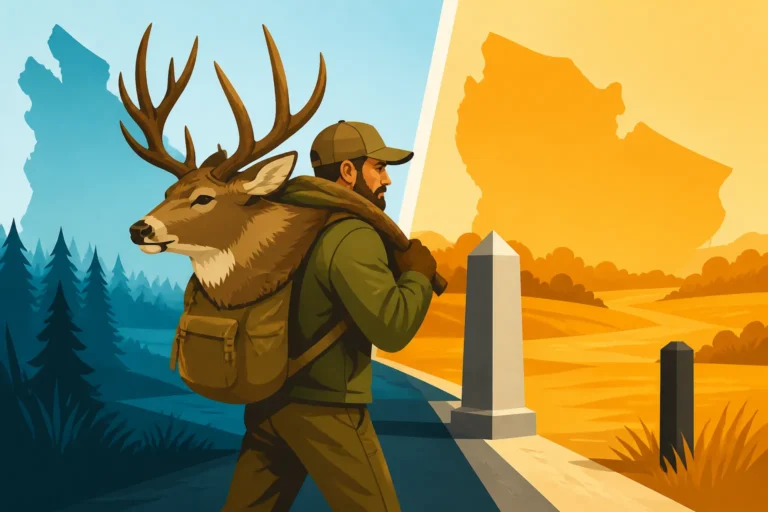
Heading north into Manitoba for a hunt is an exciting prospect, but the thought of navigating international borders with your firearms can cast a shadow of anxiety over the whole trip. It's a common worry for many hunters crossing from the United States, fearing a misstep that could jeopardize their hunt or even their ability to enter the country. This guide aims to demystify the process of driving into Manitoba with firearms, ensuring you have all the information and confidence you need for a smooth border crossing and a successful hunt.
Understanding Canadian Firearm Classification
Before you even pack your bags, it's crucial to understand how Canada classifies firearms, as it's quite different from what many are used to south of the border. What might be perfectly legal and common in your home state could be prohibited or subject to strict regulations in Canada. Getting this wrong at the border can lead to serious headaches, including confiscation of your firearms and refusal of entry.
Non-Restricted Firearms
For most hunters, the "non-restricted" category is where their common hunting rifles and shotguns will fall. These are generally long guns that are not designed to be fired with one hand, have an overall length greater than a certain measure, and are not easily convertible to a shorter configuration. This includes most bolt-action, lever-action, pump-action, and semi-automatic hunting rifles and shotguns, provided their barrel length and overall length meet the minimum requirements. These are the firearms you'll typically bring for big game like whitetails or moose, or for chasing waterfowl in the grain fields. Remember, magazine capacity also plays a role. Most non-restricted semi-automatic centre-fire rifles are limited to a five-round capacity, and shotgun magazines typically to five rounds, unless they were specifically designed for a larger capacity and aren't easily modified.
Restricted and Prohibited Firearms
This is where many hunters unknowingly run into trouble. Handguns, for example, are almost universally classified as "restricted" in Canada. Bringing a handgun into Canada for hunting or personal protection is exceptionally difficult, usually requiring specific authorization for target shooting competitions and rarely, if ever, permitted for hunting by non-residents. Certain rifles, often those that are easily convertible to full-auto, have short barrels, or resemble military-style firearms, can also fall into the "restricted" or "prohibited" categories. Prohibited firearms, as the name suggests, are generally not allowed into the country under any circumstances for non-residents. Unless you have explicit, pre-arranged authorization for very specific circumstances, assume that any handgun or tactical-style rifle is a non-starter for your hunting trip to Manitoba. Always check the exact model of your firearm against Canadian regulations before you even think of crossing. You don't want to find out at the border that your prized AR-style rifle, perfectly legal for hunting back home, is considered a restricted or prohibited weapon here.
The Non-Resident Firearm Declaration Form
This form is your golden ticket for bringing your hunting firearms into Manitoba. It's not just a suggestion; it's a mandatory legal document that essentially serves as a temporary licence for your firearms while you're in Canada. Skipping this step is a serious offence, so let's break down how to handle it. You can find more detail on this essential document in our article about The Non-Resident Firearm Declaration.
Completing the Form
The Non-Resident Firearm Declaration (form CAFC 909) is a straightforward document, but accuracy is paramount. You'll need to fill out details about yourself, your firearms (make, model, serial number, calibre/gauge, barrel length), and the purpose of your visit (e.g., hunting). It's best to print this form at home and fill it out in duplicate before you arrive at the border, but do not sign it. You must sign it in front of a Canadian Border Services Agency (CBSA) officer. If you make a mistake, it's better to start fresh with a new form than to have messy corrections.
Fees and Validation
There is a fee associated with validating the declaration. This fee is payable in Canadian dollars, and usually, the border services officer can process it right there at the port of entry. Once validated, this declaration acts as a temporary licence for a maximum of 60 days. Keep the validated form with your firearms at all times while in Canada. Losing it can lead to significant problems. Think of it like your hunting licence – you wouldn't go afield without that, so don't be without your validated firearm declaration. Some reputable outfitters, often found through platforms like BookYourHunt, can offer advice on this process, or confirm if their past clients have had any issues with specific firearm types.
Required Documents
To complete and validate your declaration, you'll need a few key pieces of identification:
- Valid Passport: This is a given for international travel.
- Driver's Licence: Another standard piece of ID.
- Proof of Purpose: This could be your Manitoba hunting licence confirmation, an outfitter booking confirmation, or an invitation letter for a specific hunting event. Having a copy of your Manitoba Hunting Licences and What They Cost will be helpful, as will any Manitoba Big Game Season Dates you're planning to hunt.
- Firearm Registration/Ownership (if applicable in your home state): While not always strictly required by Canadian law for the declaration, having proof of ownership from your home jurisdiction can sometimes speed things up or clarify any questions the officer might have.
Crossing the Border Smoothly with Firearms
The border crossing itself can be a point of stress, but with proper preparation and a respectful attitude, it can be a quick and easy process. Remember, border officers have a tough job, and your cooperation helps everyone.
Declaring Your Firearms
When you pull up to the customs booth, the very first thing you should do, without prompting, is declare that you have firearms with you. State clearly: "I am declaring firearms." Do not wait for the officer to ask. This immediate declaration demonstrates honesty and transparency. Be prepared to state the type and quantity of firearms. For instance, "I have two non-restricted hunting rifles in my vehicle." The officer will then guide you through the process, which usually involves parking and going inside the customs office to complete the validation.
Transporting Your Firearms and Ammunition
Canadian law has specific requirements for transporting firearms, even within your vehicle while driving to your hunting camp.
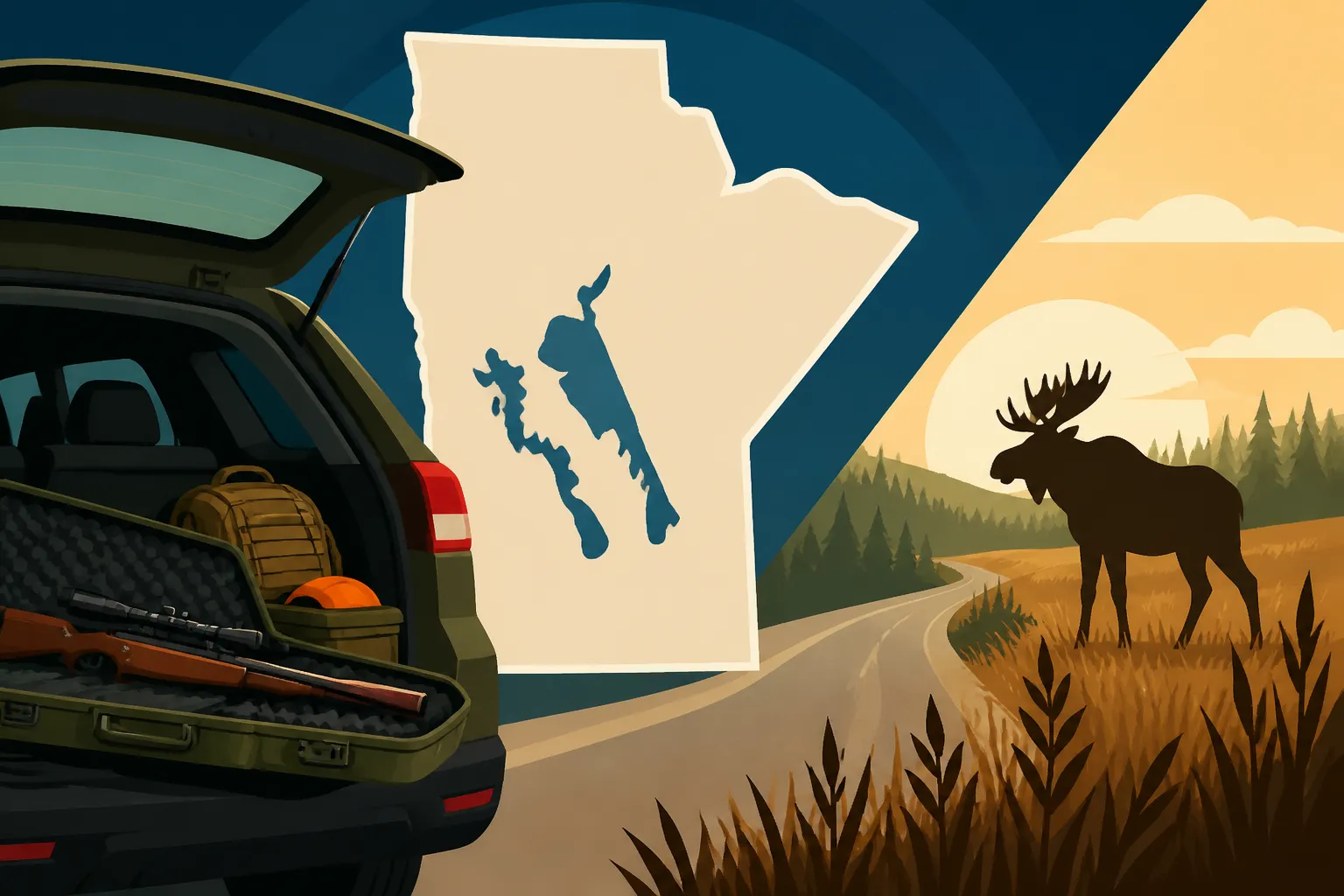
- Non-restricted firearms: Must be unloaded and either trigger-locked, or in a locked case, or in the trunk of a car (if the car has a separate, lockable trunk that is not readily accessible to the vehicle's occupants). If it's not a trunk, it must be out of sight and unloaded.
- Ammunition: Must be transported separately from the firearms, preferably in a locked container, and not readily accessible. Do not have loaded magazines in the same case as the firearm. While driving, your ammunition should be stored securely and separately. You'll also want to familiarize yourself with Ammunition Rules at the Border to ensure you're not bringing in prohibited types or excessive quantities.
A good rule of thumb for both firearms and ammunition: out of sight, unloaded, and secured in a locked case or compartment. This prevents any ambiguity or suspicion.
What to Expect at the Border
The CBSA officer will likely ask you to park and come inside the office. They will review your completed Non-Resident Firearm Declaration form, verify your identification, and physically inspect your firearms. This inspection is to confirm the make, model, serial number, and classification of the firearms against what you've declared. They may also check to ensure they are unloaded and safely stored. Answer all questions honestly and politely. This is not the time to be flippant or attempt to rush the process. They are simply doing their job to ensure everyone's safety and compliance with the law. Having all your documents neatly organized and readily accessible will make this process much smoother.
Maintaining Compliance During Your Hunt
Getting across the border is one hurdle, but staying compliant throughout your hunting trip in Manitoba is just as important. The rules don't end once you're on Canadian soil.
Carrying Your Declaration and Licence
Always keep your validated Non-Resident Firearm Declaration with you, ideally with your Manitoba Resident Hunting Licence Cost or non-resident licence, whenever you are transporting or using your firearms. Think of it as your temporary firearm possession licence. If you are stopped by a Conservation Officer or law enforcement for any reason, they will expect to see these documents. Failing to produce them could lead to significant inconvenience and potential penalties.
Legal Use of Firearms in Manitoba
Beyond transport, be mindful of the rules for actually using your firearms for hunting. Ensure your firearm meets the requirements for the game you're pursuing. For instance, there are specific Legal Rifle Calibres for Big Game and rules around shotgun gauges and shot sizes for waterfowl. Always adhere to Manitoba Shooting Hours for Big Game and understand the requirements for Blaze Orange Rules and Exceptions. Don't forget that if you're not a Canadian resident, you generally must use the services of a licensed Manitoba outfitter or guide for certain species. Our article Which Species Foreign Hunters Must Book Guided has more information on that. Outfitters often provide a great deal of information and logistical support. Many hunters research their trips on sites like GoHunt, which can provide valuable insight into specific Game Hunting Areas (GHAs) and regulations, but always cross-reference with official Manitoba government sources.
Dealing with Issues or Changes
Life happens, and sometimes plans change. If your hunting trip is extended beyond 60 days, or if you plan to sell or transfer a firearm while in Canada (highly unlikely for a non-resident hunter, but possible), you would need to contact the Canadian Restricted Firearms Program for guidance. However, for a typical hunting trip, the 60-day validation period is usually ample. If you encounter any issues at the border, such as a firearm being deemed inadmissible, calmly ask for clarification and information on how to proceed. It's better to address it at the border than to proceed illegally.
Here’s a quick overview of what to prepare:
| Item | Status/Requirement | Notes |
|---|---|---|
| Non-Resident Firearm Declaration (CAFC 909) | Print in duplicate, fill out except signature | Must be signed in front of a CBSA officer. |
| Valid Passport | Required | Your primary identification for international travel. |
| Driver's Licence | Required | Secondary identification. |
| Manitoba Hunting Licence | Proof of purpose, confirmation number or printed licence | Essential for demonstrating your intent to hunt. |
| Outfitter Booking Confirmation | If applicable, proof of guided hunt | Helpful for showing purpose of visit, especially for species requiring a guide. |
| Firearms | Unloaded, trigger-locked/cased, secured, out of sight | Ensure all Canadian classification rules are met (non-restricted only for most hunters). |
| Ammunition | Stored separately from firearms, locked container, not readily accessible | Check quantity and type restrictions for Ammunition Rules at the Border. |
| Cash/Credit Card | For declaration fee (CAD) | The declaration has an associated fee. |
By following these guidelines and approaching the border with respect and all your paperwork in order, your drive into Manitoba with firearms will be just another step on your exciting journey to a fantastic hunting adventure.
Disclaimer
This article is for general informational purposes only and does not constitute professional advice. Laws, prices and regulations vary by location and change over time. Consult a qualified professional for guidance on your specific situation.