Hunting a Manitoba Wildlife Refuge Boundary
It's incredibly frustrating when you've scouted a promising area, found fresh sign, only to realize the prime spot you've been eyeing is right on the boundary of a wildlife refuge. We've all been there, wondering if the risk is worth the reward, or how close is too close. Hunting near a Manitoba wildlife refuge boundary can be a truly productive strategy, drawing animals seeking sanctuary and food, but it also carries significant risks if you're not absolutely dialed into the regulations and your surroundings. This guide is all about helping you understand the intricacies of these unique hunting situations, ensuring you stay legal, ethical, and safe while maximizing your chances of success.
Understanding Wildlife Refuges and Their Purpose
Let's face it, when you're thinking about hunting, the word "refuge" doesn't exactly scream "opportunity." But understanding why these areas exist is the first step to knowing how to hunt effectively and legally around them. These aren't just arbitrary lines on a map; they serve a crucial role in wildlife conservation.
What is a Wildlife Refuge and Why Do They Exist?
At its core, a wildlife refuge is a designated protected area set aside to provide sanctuary for various species, shielding them from human disturbance, particularly hunting pressure. In Manitoba, these can take many forms. You might encounter federal Migratory Bird Sanctuaries, which are critical staging and breeding grounds for ducks, geese, and other waterfowl, like portions of the massive Delta Marsh. Then there are provincial wildlife management areas (WMAs) or even specific provincial park designations where hunting is either restricted or entirely prohibited. Hunting in a Wildlife Management Area is often about understanding very specific local rules.
The primary rationale behind establishing these refuges is to offer a safe haven where animals can feed, rest, breed, and raise their young without fear of being pursued by hunters. For migratory birds, these spots are vital resting points during their long journeys, ensuring they have undisturbed areas to refuel. For big game like whitetail deer or moose, a refuge might serve as a crucial wintering ground, providing thermal cover and limited foraging where they can conserve energy during the harshest months. Bears often den in remote, undisturbed corners that might fall within these protected zones. It's a fundamental part of wildlife management, aiming to sustain healthy populations by providing unmolested core areas.
The Types of Boundaries You'll Encounter
Navigating these boundaries requires more than just a passing glance at a map. The type of boundary can vary significantly, and each presents its own set of challenges and demands for careful attention.
Firstly, you'll encounter physical markers. These are the most straightforward, though sometimes still ambiguous. Think of signage, often posted on trees or fence lines, clearly stating "Wildlife Sanctuary – No Hunting" or similar warnings. Fences themselves, especially around private land or specific managed areas, can serve as a physical boundary. Sometimes, natural features like a major river, a large lake, or a distinct change in timber type might informally define an edge, though these are never legally binding without official designation.
More often, especially in Manitoba's vast landscape, you'll be dealing with invisible lines that exist purely on maps and GPS devices. These are defined by specific legal descriptions, such as Game Hunting Area (GHA) boundaries that coincide with a refuge, or property lines for private lands that abut a protected area. This is where digital mapping tools like onX Hunt or GoHunt become absolutely invaluable. They overlay precise property lines, public land boundaries, and refuge designations onto satellite imagery, allowing you to see exactly where you are in relation to these crucial lines. You can literally watch your dot move on the screen and know if you're about to cross into forbidden territory.
It's also critical to understand the difference between federal, provincial, and even local land designations. A federal Migratory Bird Sanctuary, for example, operates under federal law, while a provincial WMA or a specific non-hunting zone within a provincial forest falls under provincial jurisdiction. Each level of government can have its own specific rules and regulations. This layered approach means that a general understanding isn't enough; you need to dig into the specific rules for the exact refuge you're hunting near. Reading a Manitoba GHA Map Before You Go is a skill you'll absolutely need to master.
The Opportunities and Challenges of Hunting Near Refuges
Hunting near a refuge boundary isn't just about avoiding trouble; it's often about leveraging a unique wildlife behavior pattern. However, the benefits come hand-in-hand with heightened responsibilities and potential pitfalls.
Why Animals Use Refuge Boundaries
Animals, particularly big game and waterfowl, aren't oblivious to human pressure. They learn very quickly where they are safe and where they are not. This behavioral adaptation leads them to often congregate or stage just outside the boundaries of wildlife refuges. Think of it like a natural magnet.
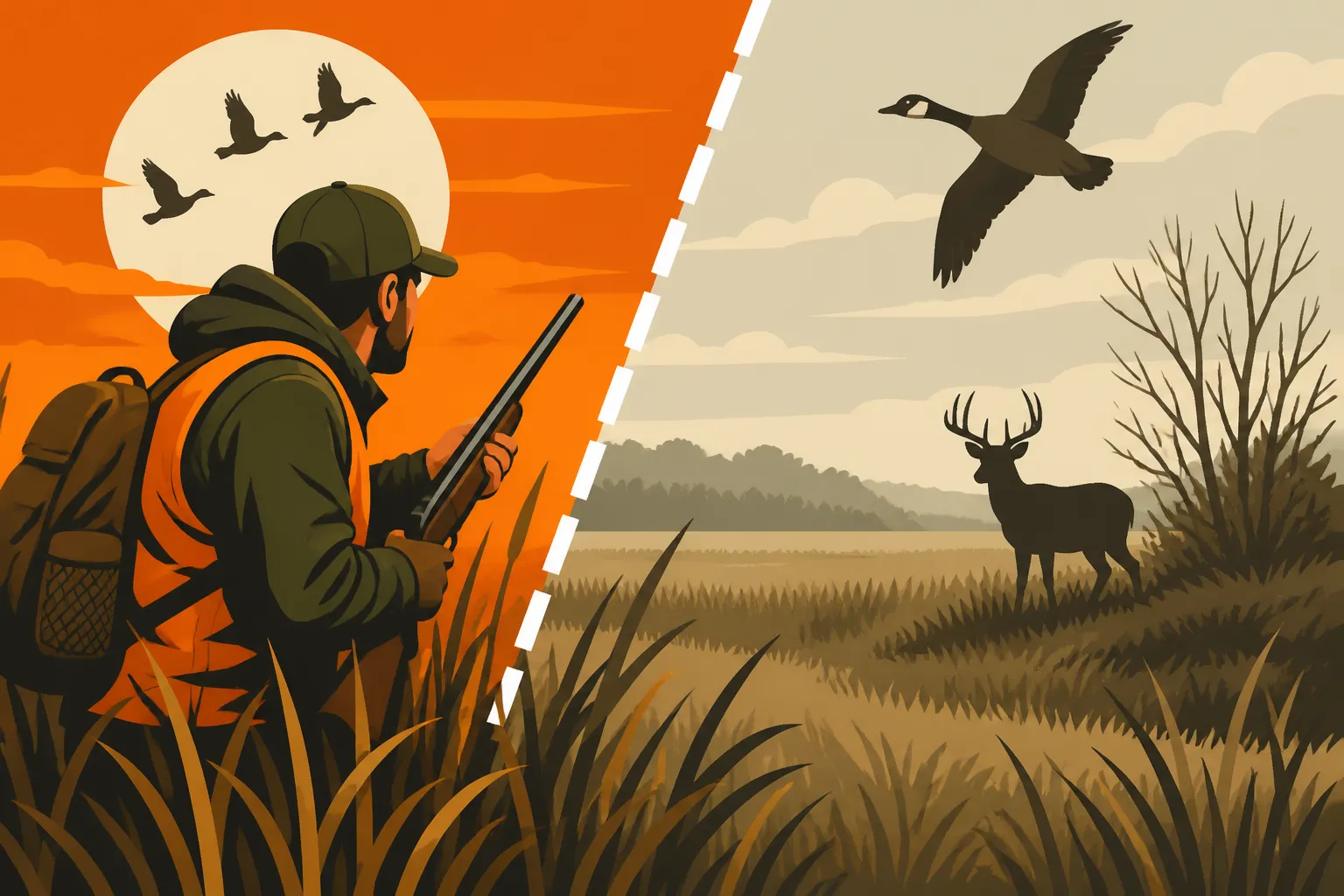
Whitetail deer, for instance, will often spend their daylight hours bedded deep within the refuge, where they feel secure from hunters. As dusk approaches, they'll often emerge from the sanctuary, crossing the boundary to access prime feeding grounds on adjacent private or Crown land. The reverse happens at dawn – they'll filter back into the refuge as the sun rises. This creates predictable movement patterns right along the edge. Similarly, moose might use thick cover within a refuge for bedding and then move to browse along the perimeter. Even black bears, known for their preference for solitude, will often utilize dense bush within a protected area as a core home range, occasionally venturing out along the edges to find food sources like berries, oats, or bait sites. Why Manitoba Bucks Grow Heavy Bodies often has to do with access to plentiful, often protected, food sources.
Waterfowl are perhaps the most classic example. Migratory Bird Sanctuaries are designed for them, and during migration, thousands of ducks and geese can pack into these protected wetlands or fields. Hunters will set up elaborate decoy spreads and blinds on adjacent private fields, knowing that the birds will fly back and forth, eventually seeking out new feeding areas just outside the sanctuary. Hunting a Manitoba Wildlife Refuge Boundary is a strategy often employed in waterfowl hunting.
The key draw is a combination of perceived safety and access to resources. These edges often provide a transition zone, offering cover, food, and water that might be less disturbed than areas deeper in traditionally hunted zones. Hunting pressure from other areas can also "push" animals towards these sanctuary edges, making them an attractive target for savvy hunters.
The Risks of Misunderstanding Boundaries
While the opportunities are real, the risks associated with misinterpreting or disrespecting refuge boundaries are substantial and can have severe consequences. This isn't just about a minor infraction; these are serious matters.
The most immediate risk is accidental trespass. Even a single step onto protected land while pursuing a wounded animal, or a shot fired that lands within the refuge, constitutes a violation. This isn't always malicious; it's often a genuine mistake, but ignorance of the law is rarely an excuse. It's incredibly easy to misjudge a distance, especially in varying terrain or low light. What looks like an obvious boundary might shift slightly due to natural erosion or changes in land use.
The legal penalties for such violations can be stiff. Depending on the severity and whether it's a provincial or federal offence, you could face significant fines, potentially reaching into the thousands of dollars. More painfully for a hunter, you could face licence suspension for a period, meaning you lose the privilege to hunt for a year or more. In some cases, your equipment – firearms, bows, even vehicles – could be seized and forfeited. These penalties are designed to be a strong deterrent, reinforcing the importance of these protected areas.
Beyond the legal ramifications, there are important ethical considerations. Disturbing animals in a sanctuary goes against the very principle of a refuge. It can cause undue stress to wildlife, especially during critical periods like nesting, fawning, or wintering. As ethical hunters, we have a responsibility to respect these spaces and ensure our actions reflect positively on the hunting community. We pride ourselves on conservation, and that includes respecting designated conservation areas.
The bottom line is that knowing exactly where you are at all times is paramount. A momentary lapse in judgment or a reliance on outdated information can turn a promising hunt into a legal nightmare.
Practical Strategies for Hunting Refuge Edges Legally and Ethically
Successfully hunting near a wildlife refuge boundary requires meticulous preparation, constant vigilance, and a commitment to ethical conduct. This isn't a place for casual hunting; it demands a high level of precision and respect.
Pre-Hunt Research and Mapping
Before you even set foot in the field, your most powerful tools are knowledge and detailed maps. This phase is non-negotiable for hunting refuge edges.
Start with detailed map study. This means poring over physical maps of the Game Hunting Area (GHA), specifically looking for any designated wildlife refuges, provincial parks, or protected zones. Cross-reference these with various sources if possible. Don't just look for the big, obvious ones; sometimes smaller, more localized refuges exist.
This is where digital mapping tools like onX Hunt and GoHunt truly shine. These apps are specifically designed to overlay public/private land boundaries, property ownership lines, and known conservation areas right onto your smartphone or GPS device. You can zoom in and see the precise legal boundary of a refuge, often down to the individual quarter section. Use them to identify potential access points, scout pinch points where animals might cross, and mark out zones that are absolutely off-limits. You can draw "no-go" lines on your map, creating a virtual fence that alerts you if you get too close. This level of detail provides an unparalleled advantage in preventing accidental trespass. Reading Manitoba Crown Land Layers on onX will be essential here.
Next, you need to check provincial regulations specific to the refuge and GHA. The Manitoba Hunting Guide is your bible. Are there specific setbacks required from the boundary? Are certain weapon types prohibited in that particular GHA? Are there any special considerations for retrieving game that crosses the line? Always assume stricter rules apply near a refuge. What's legal 20 miles away might be a serious infraction here.
Finally, confirm the exact boundary lines and legal setbacks. Some refuges might have a buffer zone where hunting is restricted even outside the official boundary. It's not common, but it's vital to verify. Don't rely on assumptions; get current, verified information from the provincial hunting regulations or directly from the managing authority if you have doubts.
On-the-Ground Scouting and Marking
Once your digital homework is done, it's time to verify everything in the real world. Nothing replaces boots on the ground, especially when dealing with critical boundaries.
Physical scouting is essential. Walk the entire length of the boundary you intend to hunt. Look for any posted signs, fence lines, or natural features that coincide with your map data. Are there any discrepancies? Has a fence fallen down? Is a ditch overgrown and hard to see? Pay attention to any game trails that cross into or out of the refuge. These are your prime locations for stand or blind placement. This is similar to Hunting a Manitoba Bush Edge, but with an added layer of scrutiny.
While you're walking, use your GPS device or smartphone with your mapping app to drop waypoints. Mark the exact corners of the refuge, prominent boundary markers, or any points you've identified as critical. Some hunters even take a roll of brightly coloured, non-biodegradable flagging tape (which they remove after the season, of course!) to temporarily mark trees on their side of the boundary, giving themselves a clear visual reference in the field. Think of it as creating your own physical "no-go" line that corresponds to your digital map.
When setting up stand locations, always give yourself extra space. Don't place your stand right on the absolute legal edge. Position it well within legal limits, giving yourself a comfortable buffer zone. This isn't just about avoiding a ticket; it's about ethical hunting. If you're a bowhunter, you need to be especially mindful of shot distance and the potential for a wounded animal to quickly cross into forbidden territory. Scouting With Satellite Imagery in Manitoba can help you initially identify these spots, but ground truthing is key.
This "give yourself extra space" mentality is paramount. A few extra yards between your setup and the boundary can make all the difference, providing a margin for error in judgment, poor visibility, or an animal's unpredictable movement. You want to be hunting near the refuge, not in it.
Situational Awareness and Shot Placement
Once you're in your stand or blind near a refuge boundary, your vigilance needs to be at its peak. Every decision, especially shot placement, has to be made with the boundary firmly in mind.
Always know your target and what's beyond. This is a fundamental rule of firearm safety everywhere, but it takes on extra weight here. Before you even shoulder your rifle or draw your bow, confirm not only that it's a legal animal, but also that its current position and any potential path it might take after the shot will keep it on legal ground. If there's any doubt about where your shot might land or where the animal might run, hold off. No trophy is worth a violation.
The angle of your shot matters immensely. You should never, under any circumstances, take a shot that sends your bullet or arrow towards the refuge. Your shot should always be angled away from the protected area, into the legal hunting zone. This minimizes the risk of a missed shot, or even a pass-through, landing within the sanctuary. Be mindful of topography; a slight rise or dip could make a seemingly safe shot trajectory hazardous if it means your projectile could carry over into the refuge.
Consider wind direction for scent control, especially near edges where animals might be moving in and out of the sanctuary. You want your scent to blow away from the refuge, not into it, as you don't want to alert animals still within the protected zone to your presence, influencing their natural movements.
Finally, you need to plan for retrieval. This is a critical, often uncomfortable, but absolutely necessary discussion. What if you make a perfect shot, and the animal still manages to run a short distance and expire inside the refuge boundary? This is the hunter's worst nightmare scenario on a refuge edge. The plan is simple, but often hard to accept: do not pursue without explicit permission from a conservation officer. We'll delve into this more in the next section, but the mental preparation is crucial. It’s better to accept the potential loss of an animal than to commit a serious offense. Hunting Safely in Deep Winter Cold involves many similar considerations for preparedness.
Dealing with Retrieval and Unexpected Situations
Even with the best planning and execution, hunting involves unpredictable variables. When you're hunting near a refuge, these unpredictabilities can escalate quickly. Knowing how to react in critical situations is paramount.
When Game Crosses into a Refuge
This is the scenario every hunter near a refuge dreads: you make a good shot, but the animal bolts and crosses the boundary into the protected zone. Your immediate reaction must not be to pursue.
The absolute importance of not pursuing without permission cannot be overstated. Crossing into a wildlife refuge, even to retrieve a wounded animal, is trespassing and can lead to severe penalties, as discussed earlier. It feels deeply wrong to leave a wounded animal, but it is the legal and ethical requirement in this specific situation. Your responsibility is to prevent the animal from crossing in the first place, or if it does, to follow the established protocol.
Your next step is to contact conservation officers immediately. As soon as you realize the animal has gone into the refuge, stop, mark the last spot you saw it, and call the provincial conservation authority's reporting line. Explain the situation calmly and clearly: where you were hunting, where the animal was hit, and where it crossed the boundary. Provide as many details as possible. They will instruct you on what to do. In some cases, an officer may accompany you to retrieve the animal; in others, they may deem it too risky or disruptive to the refuge and deny permission.
Understanding that retrieval may not be possible, and accepting that, is the hardest part. It's a gut-wrenching prospect to lose an animal you've ethically harvested. However, the integrity of the refuge and the rule of law take precedence. If permission is denied, you must respect that decision. This is part of the inherent risk of hunting near these sensitive areas.
The specific process for notifying authorities and waiting for guidance usually involves remaining exactly where you are or retreating to a safe, easily accessible location to wait for an officer. Do not try to scout the boundary from the refuge side, do not make any attempt to enter, and do not try to "bump" the animal back out. Your cooperation and honesty are key. Manitoba Conservation Officer Powers are extensive, and they will know precisely how to handle such a situation.
Handling Interactions with Non-Hunters
Refuge boundaries can also be popular spots for other outdoor enthusiasts – hikers, birdwatchers, photographers, or even individuals who hold anti-hunting views. You need to be prepared for questions, scrutiny, or even confrontation.
Firstly, be prepared for questions or confrontation. People outside the hunting community often don't understand our practices, especially near areas they perceive as "animal sanctuaries." They might be curious, concerned, or outright hostile. Maintaining your composure is critical.
Maintain a calm, polite, and informed demeanor. If someone approaches you, respond respectfully. Introduce yourself, explain what you're doing (hunting legally on legal land), and if they have specific concerns, address them factually. For instance, if they ask why you're hunting so close to a bird sanctuary, you can explain that animals use the safe haven and move to adjacent fields for feeding, which is where you are legally allowed to hunt. You can point out your location on your mapping app if it helps clarify things. Manitoba Hunter Education Requirements includes a strong component on hunter ethics and public relations, which is invaluable here.
Crucially, know your rights and the rules, and be ready to articulate them respectfully. You are a legal hunter, exercising a lawful activity on legal land (assuming you've done all your homework!). There's no need to be defensive, but be confident in your knowledge. You don't have to engage in a lengthy debate, but a polite, factual explanation can often defuse tension. If someone is being overtly aggressive or interfering with your hunt, and you feel unsafe or unlawfully impeded, then it might be time to consider contacting authorities yourself.
| Aspect | Opportunities | Challenges |
|---|---|---|
| Game Density | Higher concentration of animals seeking refuge | Animals accustomed to less human disturbance |
| Movement | Predictable patterns (in/out of refuge) | Quick crossing into unhuntable zones post-shot |
| Scouting | Clear edges often simplify travel corridors | Identifying exact, legal boundaries can be complex |
| Legal Risk | High potential for accidental trespass | Significant fines, licence suspension, forfeiture |
| Ethical Risk | Disturbing animals in sanctuary, public perception | Upholding hunter's image, preventing game waste |
| Tools Needed | Detailed mapping (onX Hunt, GoHunt), GPS | Patience, discipline, excellent shot discipline |
| Retrieval | Animals might retreat to safety zone | Limited or no access to retrieve game if it crosses |
This article is for general informational purposes only and does not constitute professional advice. Laws, prices and regulations vary by location and change over time. Consult a qualified professional for guidance on your specific situation.