Ticks and Parasites in Big Game
There's nothing quite like the satisfaction of a successful hunt in Manitoba, but often, that excitement can be quickly overshadowed by a nagging worry when you're field dressing your animal: what if you find something… unexpected? It’s a common concern among hunters to encounter ticks, worms, or other parasites in big game, leading to questions about meat safety and their own health. This guide is here to shed light on these findings, help you understand what you might see, and provide practical advice for handling big game safely.
Understanding Common Parasites and Pests in Manitoba Big Game
Hunting in Manitoba means engaging with a vibrant ecosystem, and parasites are a natural, albeit sometimes unsettling, part of that world. It’s rare to find an animal that is completely free of some form of parasite, whether it's an external visitor or an internal resident. Knowing what to look for and what these findings typically mean can save you a lot of worry and ensure your harvest is handled correctly.
External Parasites: Ticks and Lice
When you're out in the bush, especially during the warmer months, you're constantly aware of ticks and other creepy crawlies. Our big game animals are no different, and they regularly play host to a variety of external parasites.
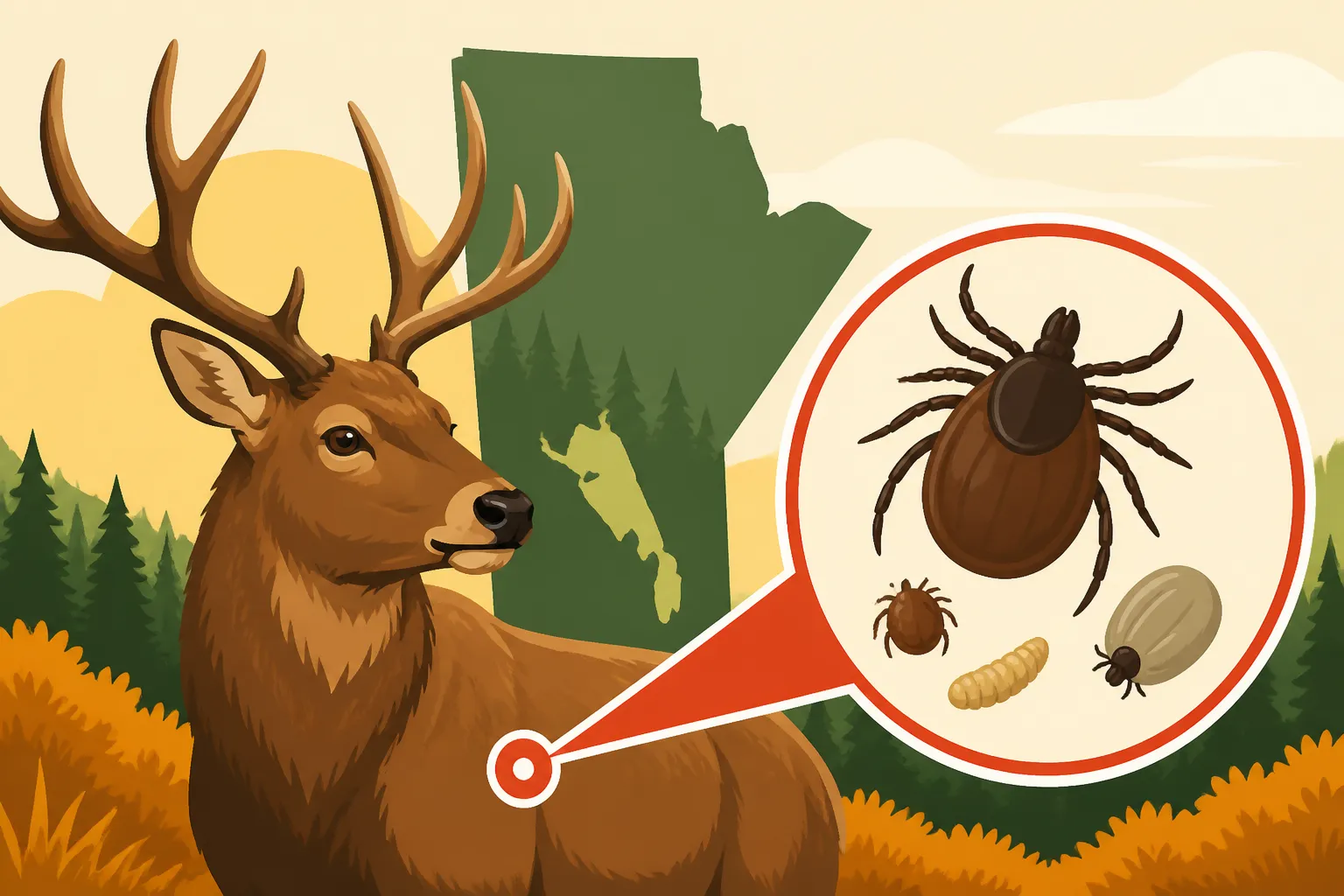
Manitoba's landscape, from the dense bush to the open parkland, is home to several species of ticks. The most common ones you'll encounter on game animals are generally wood ticks (dog ticks) and, increasingly, deer ticks (blacklegged ticks). You might find them embedded in the skin of a deer, moose, or bear, particularly around the head, ears, and flanks. They're often most noticeable during field dressing when you're handling the hide. Lice are less commonly a hunter's concern, but heavy infestations can occur, making an animal's coat look rough or causing hair loss in extreme cases.
These external parasites feed on the animal's blood. While a few ticks might just be an annoyance, a heavy infestation, especially during late winter or early spring, can significantly impact an animal's health. For example, How Winter Ticks Affect Boreal Moose highlights how severe tick loads can lead to hair loss, anemia, and even death in moose calves. For hunters, the primary concern with external parasites is not usually the meat, but the potential for these parasites to transfer to you or your pets. Always wear gloves when field dressing, and conduct thorough tick checks on yourself, your clothing, and your hunting dog after every outing.
Internal Parasites: Worms and Cysts
Stepping inside, the world of internal parasites is a bit more varied and can be a source of confusion for hunters. When you're field dressing a deer or moose, slicing through organs, it's not uncommon to encounter a few surprises.
The most frequently encountered internal "worms" in big game are usually lungworms, found in the lungs of deer and moose, or liver flukes, which reside in the liver and bile ducts. Lungworms often appear as small, white, spaghetti-like strands in the bronchi and bronchioles. Liver flukes, on the other hand, are flattened, leaf-shaped worms that can cause damage to the liver tissue, creating scar tissue or cysts. You might also find other types of roundworms in the stomach or intestines, though these are typically less visible and less concerning to the average hunter. Another common finding, particularly in older animals, can be muscle cysts. These are often the larval stages of tapeworms, appearing as small, fluid-filled sacs within the muscle tissue, sometimes referred to as "rice grain" cysts if they're calcified.
Most of these internal parasites are highly species-specific. This means the worms found in a deer are generally not a threat to human health, especially once the meat is thoroughly cooked. The presence of a few lungworms or flukes doesn't usually render the entire animal inedible, though heavily affected organs like a liver riddled with flukes might be discarded due to aesthetic or quality concerns. The critical takeaway is that proper cooking is your best defense.
Diseases Transmitted by Parasites and What Hunters Need to Know
While finding a worm might make you squeamish, the real concern with parasites often lies in their potential to transmit diseases. Certain parasites act as vectors, carrying pathogens that can affect the game animal itself, and in some cases, even pose a risk to humans.
Tick-Borne Illnesses in Big Game and Humans
Ticks, those tiny eight-legged nuisances, are notorious for their ability to transmit a range of diseases. In Manitoba, our most significant concern is the spread of Lyme disease, primarily carried by the blacklegged tick (deer tick). While Lyme disease doesn't typically cause severe illness in deer themselves, deer are crucial hosts in the tick's life cycle and help spread these ticks across the landscape. Other tick-borne illnesses like Anaplasmosis are also present and can affect both animals and humans.
For hunters, the risk is primarily personal. When you're out scouting a Manitoba Game Hunting Area or retrieving an animal from a brushy area, you're exposing yourself to tick habitats. If an infected tick attaches to you and feeds for a sufficient amount of time, you could contract Lyme disease. Symptoms in humans can range from a distinctive "bull's-eye" rash to fever, fatigue, and if left untreated, more severe neurological or joint problems. Prevention is key: wear appropriate clothing, use repellents, and perform thorough tick checks. For game animals, the presence of these ticks means the area has ticks, but it doesn't usually mean the animal is sick or the meat is contaminated in a way that cooking won't mitigate.
Other Parasite-Related Concerns: Hydatid Cysts and Liver Flukes
Beyond ticks, some internal parasites can also raise health flags. Hydatid cysts, caused by the larval stage of the tapeworm Echinococcus granulosus, are particularly noteworthy, especially in moose and deer in certain parts of Manitoba. These cysts are typically found in the lungs or liver, sometimes growing quite large and often appearing as white, fluid-filled sacs that can resemble a small balloon. The lifecycle of this tapeworm involves wolves or domestic dogs as the definitive host, shedding eggs in their feces, which are then ingested by ungulates.
If you discover hydatid cysts in the lungs or liver of your harvested animal, it's certainly unsettling. While the risk to humans is low if proper hygiene is maintained, ingestion of the eggs (which could occur if you handled infected organs and then touched your mouth) can lead to serious, slow-developing disease. For this reason, if you find these cysts, it's best to discard the affected organs and ensure your hands, knives, and cutting surfaces are thoroughly cleaned. Cooking the meat thoroughly will kill any remaining parasites within the muscle, though generally, these cysts are not found in the muscle tissue itself. Liver flukes, while not typically a direct human health concern from consuming the meat, can make a liver unappetizing due to widespread damage and scarring, leading many hunters to simply discard a heavily infested liver.
Safe Handling Practices and Hunter Precautions
Dealing with potential parasites doesn't have to ruin your hunt or your harvest. With a few smart practices, you can minimize any risks and ensure the meat you bring home is safe and delicious. It's all about being prepared and taking common-sense precautions.
Field Dressing and Processing: Minimizing Risk
This is where your first line of defense comes in. When you're gutting an animal in the field, you're directly interacting with internal organs and tissues where parasites might reside.
First and foremost, wear gloves. Disposable nitrile or latex gloves are inexpensive and provide an excellent barrier against any potential pathogens or parasites. Even if you don't see anything amiss, it's always better to be safe. When you're opening up the chest cavity and removing organs, take a moment to visually inspect them.
- Lungs: Look for any abnormal growths, nodules, or small, white worms. If you see lungworms, it's not usually a cause for alarm regarding the muscle meat, but it's good to note.
- Liver: Check for cysts, discoloration, or evidence of flukes. A few small, localized issues might mean trimming away the affected areas, but a liver heavily riddled with parasites should probably be discarded.
- Muscles: As you skin and quarter the animal, pay attention to the muscle tissue. Small, rice-grain cysts are the most common finding. These are generally harmless if the meat is cooked thoroughly, but many hunters choose to trim them out for aesthetic reasons.
- General Rule: If you encounter anything that looks severely diseased, discolored, or heavily infested beyond just a few isolated spots, it's prudent to consider discarding that specific organ or even the whole animal, depending on the severity and your comfort level. The Manitoba hunting regulations have clear guidelines about Rules on Wasting Game Meat, but this typically applies to situations where the animal's condition makes the meat truly unfit for consumption.
Once you’ve field dressed, make sure to thoroughly wash your hands, knives, and any tools you used. Transporting the carcass quickly to a cooler environment, especially if you're hunting in warmer weather, is also crucial for Meat Care in Manitoba's Cold Snaps.
Personal Protection in the Field
Beyond handling the animal, protecting yourself while you're hunting is paramount. Ticks are the biggest concern here.
- Dress Smart: When you're heading into the bush, especially in grassy or brushy areas, wear long pants and long-sleeved shirts. Tuck your pants into your socks or boots to create a barrier that ticks struggle to cross. Light-colored clothing can also help you spot ticks more easily against the fabric.
- Repellents: Use insect repellents that contain DEET or picaridin on exposed skin and permethrin on your clothing (allow it to dry completely before wearing). This can significantly reduce the chances of ticks latching on.
- Tick Checks: This is non-negotiable. After every hunt, especially if you’ve been in known tick habitats like the Interlake Between the Lakes region, perform a thorough tick check on yourself, your family, and any hunting dogs. Pay close attention to warm, hidden areas like armpits, groin, behind the ears, and in your hair. A shower can help wash away unattached ticks.
- Digital Scouting: Using mapping tools like GoHunt can sometimes offer insights into terrain types or areas that might be more prone to holding ticks. While it won't directly map tick populations, understanding the habitat types can help you anticipate where to be extra vigilant. For instance, areas with dense undergrowth or long grasses are prime tick territory.
When to Consult a Professional or Wildlife Biologist
While many parasite findings are benign, there are times when an unusual discovery warrants a professional opinion. You're part of the front line of wildlife health surveillance!
- Unusual Symptoms: If the animal you harvested appeared visibly sick, emaciated, or behaved abnormally before the shot, and you find significant internal abnormalities, it’s a good idea to contact a local conservation officer or the provincial wildlife health unit. They can provide guidance and potentially arrange for testing.
- Massive Infestations: If an organ or a large section of muscle meat is so heavily infested with parasites or cysts that it's unidentifiable or severely compromised, documenting it with photos and reporting it is beneficial. This helps wildlife biologists track disease prevalence.
- Specific Diseases: Manitoba has programs like Manitoba's CWD Sampling Requirements for deer. While CWD isn't a parasite, if you're in an affected GHA, submitting samples is mandatory and helps monitor the health of the herd. If you find something that you suspect might be related to other significant wildlife diseases, it's always best to err on the side of caution and report it. Your observations contribute valuable data to understanding the overall health of Manitoba's game species, like Manitoba's Moose Population Trend or White-Tailed Deer, Manitoba's Most Hunted Animal.
Separating Fact from Fiction: Common Misconceptions
The internet is rife with misinformation, and tales from the hunting camp can sometimes perpetuate myths about parasites and game meat. Let's clear up some common misunderstandings.
Parasites and Meat Edibility
One of the biggest fears when finding parasites is that the entire animal is ruined and the meat is unsafe to eat. For the vast majority of findings, this simply isn't true.
- Localized Issues: Most parasitic infections in wild game are localized. For instance, a liver riddled with flukes doesn't mean the muscle meat of the backstraps or hindquarters is affected. You can usually trim away or discard only the affected organs or sections. If you find a few cysts in the muscle, you can cut them out.
- Cooking is King: The most critical fact is that thorough cooking kills virtually all parasites and their larvae that might be found in game meat. Whether it's deer, moose, elk, or Black Bear Hunting in Manitoba, cooking meat to an internal temperature of at least 160°F (71°C) will render it safe. Freezing meat for extended periods (weeks to months, depending on the parasite) can also kill many parasites, but cooking remains the gold standard.
- Aesthetics vs. Safety: Often, the issue isn't safety but rather the aesthetic appeal. No one wants to see worms in their dinner, even if they're harmless once cooked. Trimming and proper preparation address this.
Impact on Game Animal Health
Another misconception is that any animal with parasites must be severely ill or "unhealthy." While chronic, heavy parasite loads certainly take a toll, many big game animals live long, productive lives despite hosting a variety of parasites.
- Natural Occurrences: Parasites are a natural part of the wildlife ecosystem. It's rare to find an entirely "parasite-free" wild animal. A few lungworms or a minor fluke infection are often just signs of a normal, wild existence, not necessarily an indication of an animal struggling to survive.
- Specific vs. Systemic: The presence of a localized parasite doesn't mean the entire animal is compromised. An animal might have a mild liver fluke infection but otherwise be in peak physical condition, with excellent muscle development. What a hard winter will often cull from the herds are the truly sick or weak animals, regardless of parasite load. What a Hard Manitoba Winter Culls will generally take the most compromised animals, not necessarily those with minor parasitic issues.
- Monitoring Health: For biologists and wildlife managers, understanding parasite loads can offer insights into herd health and environmental conditions. For example, high numbers of certain parasites might indicate overcrowding or stress in a population. However, from a hunter's perspective, a healthy-looking animal with a few minor parasitic findings is usually just a healthy wild animal. Remember to consult resources like Manitoba's Game Hunting Areas to understand population health trends in your hunting zones.
| Common Parasite/Pest | Location Found | Hunter Implication | Edibility of Affected Part | Edibility of Muscle Meat |
|---|---|---|---|---|
| Ticks (external) | Skin, hide | Personal risk of tick-borne illness. Inspect body, clothes, pets. | N/A | Unaffected |
| Lungworms (internal) | Lungs | Rarely a human health risk. | Discard lungs if heavily infested. | Unaffected, cook thoroughly. |
| Liver Flukes (internal) | Liver | Rarely a human health risk. | Discard liver if heavily infested or unappetizing. | Unaffected, cook thoroughly. |
| Hydatid Cysts (internal) | Lungs, liver | Rare human health risk from ingesting eggs. Handle with extreme care. | Discard affected organs. | Unaffected, cook thoroughly. |
| Muscle Cysts (internal) | Muscle tissue | Aesthetically unappealing, but harmless if cooked. | Trim out visible cysts. | Unaffected, cook thoroughly. |
Disclaimer
This article is for general informational purposes only and does not constitute professional advice. Laws, prices and regulations vary by location and change over time. Consult a qualified professional for guidance on your specific situation.