Hunting in a Manitoba Provincial Park
It's a common question that pops up around hunting season: "Can I hunt in a Manitoba Provincial Park?" Many hunters, especially those new to the province or exploring new areas, naturally look at large tracts of green space on a map and wonder if they're fair game. The truth, however, is often more nuanced and, frankly, can be confusing, leading to frustration if you don't know the specific rules. This guide is here to untangle that confusion, explaining exactly where you can and cannot hunt within Manitoba's diverse landscape, and how to tell the difference.
Understanding the Distinction: Provincial Parks Versus Other Public Lands
Let's cut right to the chase because this is where most of the misunderstanding happens. The concept of "public land" in Manitoba is broad, but not all public land is created equal when it comes to hunting. Many hunters mistakenly lump Provincial Parks in with other publicly accessible areas where hunting is permitted.
The General Rule for Manitoba Provincial Parks
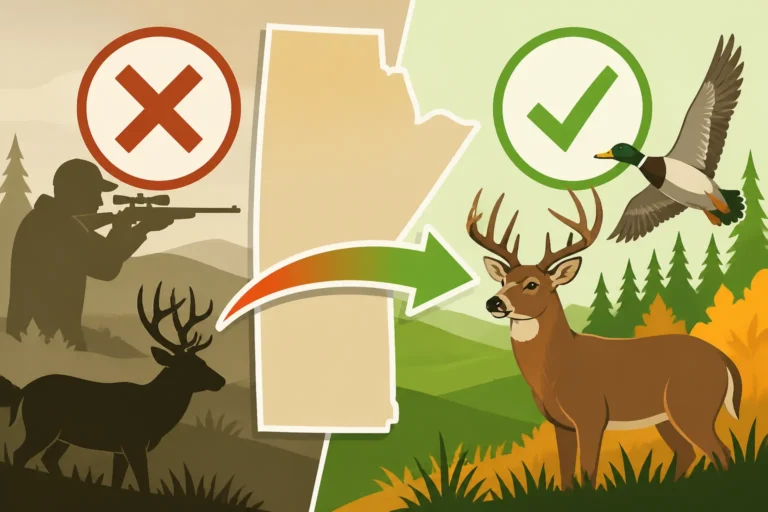
In almost all cases, hunting is strictly prohibited within the official boundaries of Manitoba Provincial Parks. These areas are designated for conservation, recreation, and the preservation of natural and cultural resources, often with a strong emphasis on non-extractive uses. This means activities like hiking, camping, fishing, and wildlife viewing are encouraged, but hunting, trapping, and firearms discharge are generally not allowed.
Imagine planning a deer hunt, meticulously scouting an area that looks perfect on a map, only to arrive and find a "No Hunting" sign specifically because it falls within a Provincial Park boundary. It's a disheartening scenario that can be entirely avoided with a clear understanding of the regulations. The intent behind these rules is to create sanctuaries where wildlife can thrive undisturbed by hunting pressure, and where other park users can feel safe and enjoy nature without the presence of hunters or firearms. This doesn't mean these parks are devoid of wildlife – far from it – but their primary purpose is different from that of a game hunting area.
Where Hunting Is Typically Permitted: Provincial Forests and WMAs
Now, for the good news! While Provincial Parks are largely off-limits, Manitoba boasts an incredible amount of other public lands where hunting is not only allowed but actively managed. The key distinction often lies in the designation of the land. Two primary types of public land where hunting is common are Provincial Forests and Wildlife Management Areas (WMAs).
Provincial Forests, such as the Duck Mountain Provincial Forest or the Porcupine Provincial Forest, are managed for multiple uses, including timber harvesting, recreation, and, crucially for us, hunting. These vast areas often contain a mix of forest types, wetlands, and open areas, providing excellent habitat for a variety of game species. Unlike Provincial Parks, the management objectives here often explicitly include sustainable wildlife populations and opportunities for hunters. If you're looking for extensive public ground to explore, checking out Manitoba's Provincial Forests is an excellent starting point.
Similarly, Wildlife Management Areas are established with a primary focus on wildlife conservation and management. These areas are specifically designed to provide habitat for various species and offer opportunities for hunting, trapping, and other wildlife-dependent recreation. Examples include the Delta Marsh Wildlife Management Area, renowned for its waterfowl, or areas within the Interlake region. These WMAs are managed under specific regulations that dictate what species can be hunted, during which seasons, and with what methods. Understanding the difference between these areas and the more restrictive Provincial Parks is paramount for any hunter in Manitoba. A helpful resource for figuring out where you can go is to study the official maps that detail Manitoba's Game Hunting Areas]).
Navigating Specific Regulations and Exceptions
While the general rule is clear, there are always nuances and exceptions that hunters need to be aware of. The province's landscape is complex, and so are some of its land designations.
Rare Instances of Permitted Hunting Within Park Boundaries
It's rare, but not entirely unheard of, for very specific, often limited, hunting opportunities to exist within what might generally be considered a Provincial Park. These are usually not available to the general public and are implemented for specific wildlife management purposes, such as population control of overabundant species that might be causing ecological damage or impacting other wildlife. These opportunities are highly regulated, typically involve special draw permits, and are often restricted to certain zones or times of the year.
For example, a specific deer population might be deemed too high in a certain park fringe area, leading the province to allow a highly controlled, short-term hunt to thin the herd. However, these are exceptions to the rule, not the norm, and they would be publicly announced with very clear guidelines. You wouldn't just stumble upon these opportunities; they require active research and specific application processes. Always check the very latest official Manitoba Hunting Guide or contact Manitoba Conservation and Climate directly for the most accurate and up-to-date information regarding any such special circumstances. Relying on old maps or hearsay could lead to significant legal trouble.
Understanding Park Management Zones and Designated Hunting Areas
Another layer of complexity comes from how some larger parks or protected areas are zoned. Sometimes, a Provincial Park might exist adjacent to or encompass smaller areas with different designations. For instance, a park might have a core "no hunting" zone, but its periphery or nearby lands could be part of a Provincial Forest or a WMA where hunting is allowed. The key is knowing exactly where these boundaries lie and what rules apply to each specific zone.
This is where detailed mapping resources become invaluable. Tools like the official Manitoba hunting maps or digital platforms that show land ownership and designation are critical. Many hunters rely on apps that layer land ownership, such as GoHunt, to ensure they are on legal hunting ground. Imagine a scenario where a prime whitetail buck crosses from a no-hunting park zone into an adjacent WMA – knowing that boundary precisely is the difference between a legal harvest and a serious infraction. You absolutely need to understand Reading a Manitoba GHA Map Before You Go]) to avoid any accidental trespassing or hunting in prohibited areas. These maps often delineate the precise lines between different land classifications.
Essential Resources for Identifying Legal Hunting Grounds
Navigating the various land designations and regulations can feel like a full-time job. But thankfully, there are excellent resources available to help you pinpoint where you can legally pursue game. Taking the time to use these tools is an investment in a successful and lawful hunt.
Utilizing Online Maps and Official Guides
The most critical resources at your disposal are the official maps and guides provided by the Province of Manitoba. The annual Manitoba Hunting Guide is your bible, detailing all seasons, limits, and rules for every species. It also includes general maps of Game Hunting Areas (GHAs) and clearly outlines prohibited areas.
For more granular detail, online mapping tools are a game-changer. The Province of Manitoba provides interactive maps that allow you to zoom in and see specific land designations. Third-party mapping applications, many of which are accessible on your smartphone, can be incredibly useful. These apps often feature layers that show Crown land, Provincial Forests, WMAs, and even private property lines. While using these, always ensure they are up-to-date and cross-reference with official provincial sources if there's any doubt. For example, some hunters use apps that show public and private land boundaries, making it easier to ensure they are on legal hunting ground. This is especially useful when trying to identify Manitoba's Crown Land Access]) points.
The Importance of Double-Checking Boundaries and Species
Never assume. This golden rule applies twice as much when it comes to hunting within or near protected areas. Before you even set foot in the field, you should meticulously verify your chosen hunting location against official maps. Print out relevant sections, mark boundaries, and transfer coordinates to your GPS device or hunting app.
Here’s a practical example: You might find a promising area in what you believe is a Provincial Forest. However, a small section of that forest might butt up against a Provincial Park, or even have a small parcel of private land within it that you need permission to access. Furthermore, even in areas where hunting is permitted, the species allowed and the season dates might differ. For instance, you might be able to hunt deer during the rifle season in a WMA, but moose hunting could be prohibited, or only allowed during an archery season. Always check Manitoba Big Game Season Dates]) specifically for your chosen GHA and species. Don't rely on general season dates for the entire province. This due diligence is not just about avoiding fines; it’s about ethical hunting and respecting the management goals of these lands.
Table: Examples of Manitoba Public Lands and General Hunting Status
| Land Designation | Primary Purpose | General Hunting Status | Examples |
|---|---|---|---|
| Provincial Parks | Conservation, recreation, preservation | Generally Prohibited | Whiteshell Provincial Park, Spruce Woods Provincial Park |
| Provincial Forests | Multiple use (timber, recreation, wildlife, hunting) | Generally Permitted | Duck Mountain Provincial Forest, Sandilands Provincial Forest |
| Wildlife Management Areas | Wildlife conservation and habitat, hunting/trapping | Generally Permitted (with specific regulations) | Delta Marsh WMA, Grant's Lake WMA, Pembina Valley WMA |
| Crown Land (unclassified) | Public ownership, various uses | Generally Permitted | Large tracts of northern bush, some agricultural fringe areas |
Note: Always consult the current Manitoba Hunting Guide and GHA maps for precise, up-to-date regulations.
Ethical Considerations and Safety When Hunting Near Park Boundaries
Even when you're diligently hunting in an area where it's explicitly allowed, it’s highly probable you'll be near an area where it's not – perhaps a Provincial Park boundary, a private property line, or a developed recreational site. This proximity demands an elevated level of ethical conduct and safety awareness.
Respecting Park Users and Non-Hunting Areas
Remember that while you're in the field focused on your hunt, others are likely enjoying the outdoors in different ways. Hikers, birdwatchers, campers, and families might be present, especially near park boundaries or popular access points. Your actions reflect on the entire hunting community. Being visible, aware, and respectful of other outdoor enthusiasts is paramount. This means understanding and adhering to regulations like Blaze Orange Rules and Exceptions]) to ensure your visibility.
Avoid shooting in the direction of park trails, campgrounds, or areas where non-hunters are likely to be. Even if you're on legal hunting ground, the sound of a gunshot can be alarming to someone unaware of your presence. It's not just about what's legal, but what's considerate. If you encounter non-hunters, a friendly nod or brief conversation about what you’re doing can go a long way in fostering positive relations between different user groups. Remember, we share these wild spaces, and respecting all users helps ensure continued access for hunters.
Safety Protocols and Emergency Preparedness
Hunting near boundary lines, especially those of Provincial Parks, often means hunting in areas with more public access or higher concentrations of other users. This increases the importance of rigorous safety protocols. Always identify your target and what lies beyond it. Never take a shot where you can't be absolutely certain of your backdrop. This is particularly crucial around the perimeter of any designated no-hunting zone. For example, knowing the Rules on Shooting Across a Road]) becomes critical if a park road forms part of a boundary.
Beyond general firearm safety, consider your personal preparedness. Hunting in these areas can still be remote, even if they're more accessible than the deep wilderness. Carry a well-stocked first-aid kit, communication devices (and understand where cell service might drop out), extra layers of clothing, and enough food and water. Let someone know your hunting plan, including your exact location and expected return time. If you do harvest an animal near a park boundary, be mindful of how you'll retrieve it. Ensure you have the proper permits and knowledge for Transporting Game Meat in Manitoba]) and that you stay within legal boundaries during retrieval. Being prepared for unexpected situations – from a minor injury to getting turned around – is part of being a responsible hunter, especially when navigating the complex mosaic of public lands in Manitoba.
Disclaimer
The information provided in this article is for general guidance only and is not a substitute for the official hunting regulations issued by the Province of Manitoba. Hunting laws and regulations can change frequently. Always consult the most current Manitoba Hunting Guide, GHA maps, and contact Manitoba Conservation and Climate directly for the definitive and most up-to-date information before planning your hunt. It is the hunter's responsibility to know and obey all applicable laws.