How Manitoba’s Draw Application Works
Applying for hunting draws in Manitoba can feel like navigating a maze blindfolded, leaving many hopeful hunters frustrated and confused about why some tags seem impossible to get. It’s a common hurdle for anyone looking to pursue big game like moose or elk, especially when the stakes are high. This comprehensive guide is here to demystify Manitoba's draw application process, walking you through every step to improve your chances and ensure you understand the system inside and out.
Understanding Manitoba's Draw System
Manitoba's draw system is a critical component of wildlife management, designed to ensure sustainable hunting opportunities for certain species and in specific Game Hunting Areas (GHAs). It's not just about getting a tag; it's about maintaining healthy animal populations and preventing overharvesting in areas where demand is high or populations are sensitive.
Why Draws are Necessary
The provincial government uses a draw system primarily for species where hunting pressure needs careful regulation, such as moose and elk. These animals have specific population targets, and their numbers can be highly susceptible to habitat changes, disease, and hunting impacts. By limiting the number of tags issued in a GHA through a draw, Manitoba Fish, Wildlife and Habitat ensures that harvests remain within sustainable limits, allowing populations to thrive for future generations.
Consider a scenario where a particular GHA has an excellent moose population, but the habitat can only support a certain number of animals being harvested annually without negatively impacting herd health. Without a draw system, an influx of hunters could easily decimate that population, leading to closures or severely restricted seasons for years to come. The draw protects these valuable resources, ensuring a balance between hunter opportunity and conservation.
Key Species Under Draw
While most general big game licences for species like white-tailed deer and black bear are available over-the-counter for residents, the draw system primarily governs access to moose and elk tags. Additionally, certain special antlerless deer draws might occur in specific GHAs where localized deer populations need management, or during extended seasons.
For many hunters, drawing a coveted moose or elk tag represents the pinnacle of their hunting aspirations in Manitoba. These tags are highly sought after, reflecting the challenge and prestige associated with hunting these majestic animals. The intense competition for these limited opportunities is precisely why understanding the draw mechanism is so crucial for any serious big game hunter in the province.
Eligibility and Application Basics
Before you even think about submitting an application, it’s essential to understand who can apply and how to access the system. Manitoba has specific requirements that applicants must meet, and familiarizing yourself with these foundational elements will save you a lot of headache down the road.
Who Can Apply
Generally, Manitoba residents receive priority in the big game draws, reflecting the province's commitment to its local hunters. However, Canadian non-residents and foreign residents can also apply, though they often face different rules and requirements. For instance, foreign residents hunting big game like moose or elk almost always require the services of a licensed Manitoba guide. It's crucial to check the most current regulations in the annual Manitoba hunting guide to confirm specific eligibility criteria for your residency status.
Beyond residency, applicants must meet the provincial hunter education requirements. If you're a new hunter or haven't hunted in Manitoba before, ensure you've completed the necessary courses. You can find more information on the specific prerequisites by looking into the Manitoba Hunter Education Requirements. This ensures that all hunters entering the field possess a foundational understanding of safety, wildlife identification, and ethical hunting practices.
The Application Portal
The cornerstone of Manitoba's draw system is its online application portal. This digital gateway is where all draw applications are submitted, managed, and where you'll eventually check your results. The first step is typically creating a profile or logging into an existing one on the province's official fish and wildlife licensing website. This personal profile links to your hunter education certification and any previous licences or draw applications.
Once logged in, you'll navigate to the "Draw Applications" section. Here, you'll be able to see which draws are open, review past applications, and submit new ones. It’s a good idea to familiarize yourself with the interface well before the application deadline, ensuring you’re comfortable with the process. For detailed instructions on purchasing any licence, whether over-the-counter or after a draw, you can always refer to the guide on Buying a Manitoba Licence Online.
Navigating the Application Process
Once you're eligible and have access to the portal, the real work begins: making your choices. This stage requires careful consideration, research, and an understanding of how your selections impact your chances of drawing a tag.
Choosing Your Draw Options
When you apply, you'll be prompted to select the species you're targeting (e.g., moose, elk), the specific Game Hunting Area (GHA) you wish to hunt in, and often the weapon type (e.g., archery, rifle, muzzleloader). This is where your homework really pays off. Researching different GHAs is paramount. Some GHAs might be known for higher success rates, while others might have lower hunter pressure but also fewer animals. Tools like GoHunt or Manitoba's official GHA maps can be invaluable resources during this phase, helping you visualize the terrain and understand potential animal movements.
Imagine you're aiming for an elk tag. Do you prioritize a GHA known for trophy bulls but with extremely low draw odds, or do you opt for a GHA with a more modest reputation but a higher chance of success? Your choice will largely depend on your personal hunting goals. It’s a strategic decision that combines personal preference with realistic expectations based on available data for the various Manitoba's Game Hunting Areas.
Party Applications
Manitoba allows hunters to apply as a party, typically consisting of two or more individuals. This can be a great option for hunting partners or family members who wish to hunt together. The key principle with party applications is "all or nothing": if one member of the party draws a tag, all members of that party draw a tag. Conversely, if one member does not draw, then no one in the party draws.
This system encourages careful selection of hunting partners. You want to apply with someone reliable who is committed to the same GHA and species choice. While it can enhance the shared experience of hunting, it also means your success is tied to the collective. Many hunters meticulously plan their party applications, discussing strategies and backup plans in case their primary choice doesn't pan out.
Factors Influencing Draw Odds
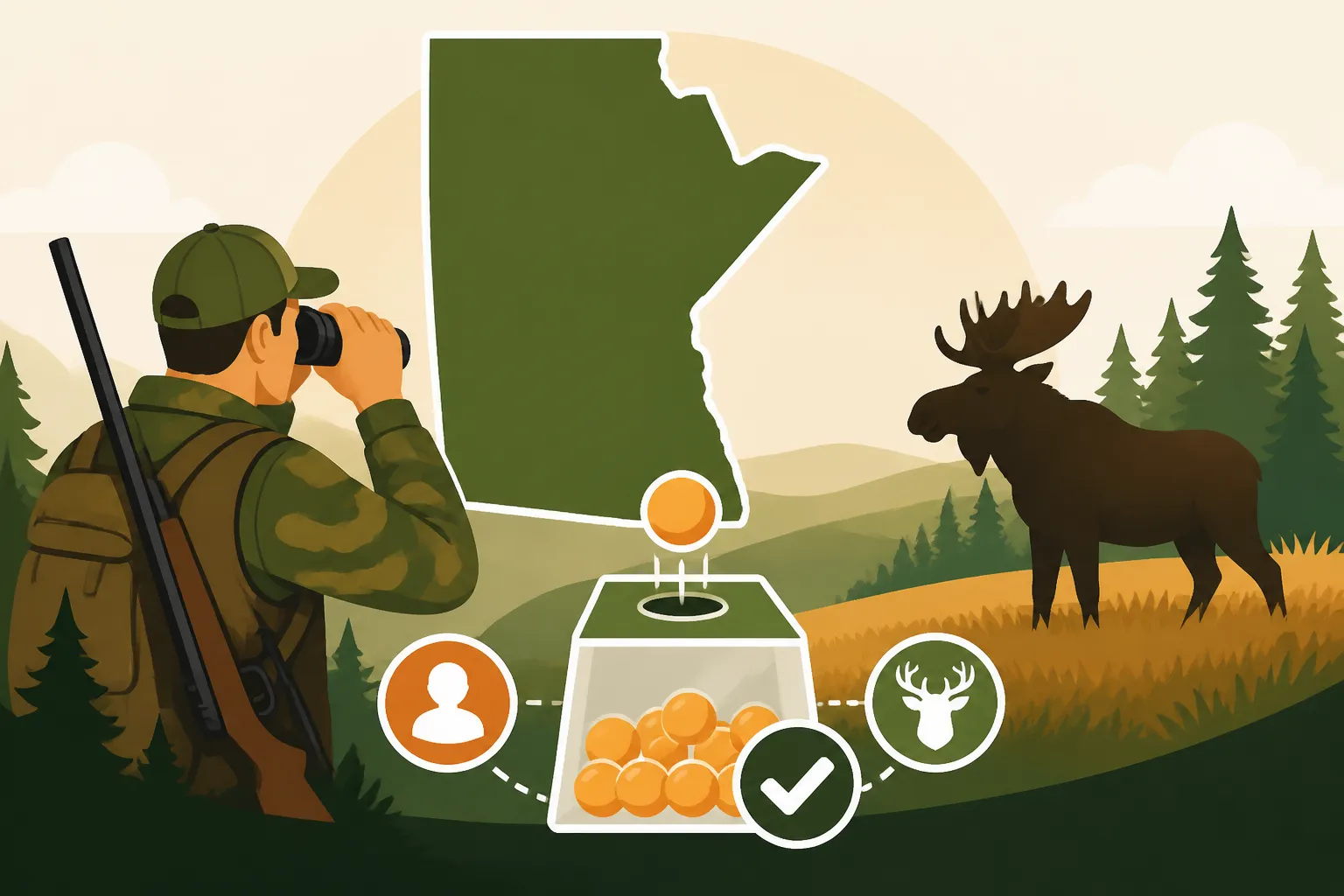
Unlike some jurisdictions that employ a preference point system, Manitoba's big game draws are primarily a lottery. This means that each year, eligible applicants are entered into a random draw for the available tags. While you might feel like you're building "points" by applying year after year, the system doesn't formally accumulate preference points to give you an advantage in subsequent draws. However, demand certainly plays a significant role. GHAs with high populations of trophy-class animals, or those that are easily accessible, will naturally see far more applicants, driving down the individual odds of success.
For species like elk and moose, where tags are extremely limited, draw odds can be notoriously low, especially in the most sought-after GHAs. Hunters should consult the publicly available draw results or leverage platforms like GoHunt that compile historical data to understand their realistic chances. Reviewing information such as Manitoba Elk Draw Odds by GHA and Manitoba Moose Draw Odds by GHA can provide crucial insights, helping you make informed decisions rather than simply crossing your fingers.
After You Apply: Deadlines, Results, and What's Next
Once your application is submitted, a period of anticipation begins. Understanding the timeline for results and what steps to take if you're successful (or not) is just as important as the application itself.
Critical Deadlines and Fees
Manitoba's draw application periods are typically quite specific, often opening in the spring for the upcoming fall and winter big game seasons. For moose and elk draws, these deadlines are usually in late spring or early summer. Missing the application window, even by a day, means you're out of luck for that year, regardless of how prepared you were.
There is usually a non-refundable application fee associated with each draw entry. This fee covers the administrative costs of running the draw system. Always double-check the fee structure and ensure your payment information is up-to-date when submitting your application. Setting reminders in your calendar or on your phone for application opening and closing dates is a simple yet effective way to avoid the crushing disappointment of missing a critical deadline.
Checking Draw Results
The moment of truth arrives when draw results are posted. Typically, the province will announce when results will be released, often in mid-summer for moose and elk. You can usually check your status by logging back into your online licensing portal. Some years, email notifications might also be sent, but it's always best to actively check the portal to avoid any delays or missed communications.
The feeling of seeing "Successful" next to your application is exhilarating, a culmination of hope and planning. Conversely, seeing "Unsuccessful" can be a letdown, but it's part of the draw system. If you don't draw, it's time to activate your backup plans, which might involve purchasing an over-the-counter licence for another species or GHA, or planning for next year's draw.
If You Draw: Licence Purchase and Validation
Congratulations, you drew a tag! The next crucial step is to purchase your actual big game licence and tag. This isn't automatically done when you're successful in the draw; you'll need to log back into the portal and complete the purchase. Pay close attention to the purchase deadline, as failing to buy your licence by this date can result in forfeiture of your drawn tag.
Once you have your physical tag in hand, understanding the validation rules is critical for ethical and legal hunting. After harvesting an animal, you must immediately validate your tag by notching or otherwise marking it according to the instructions provided. This is a non-negotiable step to avoid penalties. You can find comprehensive details on these rules, including what to do with your tag after a successful hunt, in guides like Manitoba Tag Validation Rules. Additionally, familiarizing yourself with Manitoba Big Game Season Dates will ensure you hunt within the legal timeframe for your specific GHA and species.
Strategic Approaches to Drawing a Tag
Drawing a tag often feels like pure luck, but there are indeed strategic approaches you can take to subtly increase your odds and make the most of the draw system. It's about being informed and making smart choices.
Researching GHA Success Rates
One of the most powerful tools in your arsenal is information. Before applying, spend significant time researching the success rates and hunter pressure for various GHAs. Manitoba's hunting guide and online resources often provide data on hunter numbers and harvest statistics for previous seasons. Beyond official sources, platforms like GoHunt can offer aggregated historical data and insights that help you identify trends and potentially less-pressured areas.
For example, a GHA might have excellent moose habitat, but if 90% of applicants choose it, your odds are drastically reduced. Conversely, a less-known GHA might have slightly fewer animals but significantly fewer applicants, leading to better draw odds. It’s a trade-off many hunters consider: do you apply for the "dream hunt" GHA with long odds, or a more realistic GHA that still offers a quality experience? Understanding Manitoba Elk Draw Odds by GHA and Manitoba Moose Draw Odds by GHA is a great starting point for this research.
Considering Alternative Species or Seasons
If drawing a prime moose or elk tag consistently proves difficult, don't be afraid to consider alternative strategies. Perhaps a specific GHA's archery season for elk has significantly higher draw odds than its rifle season. Or, if you're primarily after venison, applying for a special antlerless deer draw in a GHA known for high deer populations might be a more successful path than consistently striking out on highly coveted moose tags.
Manitoba also offers options like a Manitoba's Second Deer Licence Rules in certain areas, which can be an excellent way to secure additional hunting opportunities. Broadening your scope to include different species or weapon types can open up new possibilities and increase your overall time in the field, even if it's not for your initial "dream" tag.
Leveraging Information Tools
In today's digital age, hunters have access to an incredible array of information tools that can aid in draw strategy. Beyond official provincial resources, mapping applications, and hunting-specific platforms like GoHunt can provide satellite imagery, public land overlays, and historical weather data, all of which can inform your GHA selection. These tools help you scout potential hunting areas from afar, understand terrain, and identify areas that might be overlooked by other hunters.
While no tool guarantees a draw success, using them thoughtfully for Scouting a Manitoba Game Hunting Area can give you a significant advantage. Combine digital scouting with local knowledge and conversations with experienced hunters. The more information you gather about animal movements, habitat quality, and hunter access, the better equipped you'll be to select a GHA that aligns with your hunting style and offers reasonable draw odds.
| Species/Draw Type | Typical Application Period | Result Release | Online Portal Location |
|---|---|---|---|
| Moose (Antlered/Antlerless) | April 1 – May 31 | Mid-July | My Licenses/Draws |
| Elk (Antlered/Antlerless) | April 1 – May 31 | Mid-July | My Licenses/Draws |
| Special Deer (Antlerless) | Dates Vary by GHA (Check Annual Guide) | Varies | My Licenses/Draws |
Note: Dates are approximate and subject to change annually. Always consult the current Manitoba Hunting Guide for definitive dates and rules.
Common Pitfalls and How to Avoid Them
Even with the best intentions, it's easy to make mistakes when navigating draw applications. Being aware of the most common pitfalls can help you sidestep unnecessary frustration and keep your hunting dreams alive.
Missing Deadlines or Incomplete Applications
This is arguably the most common and most frustrating mistake hunters make. Life gets busy, and it's easy to forget a deadline, especially when it falls months before the actual hunting season. A missed deadline means no application, and no chance at a tag for that year. Similarly, an incomplete application – perhaps missing a required field, an incorrect GHA selection, or a payment issue – will typically be rejected.
To avoid this, treat draw applications like any other critical appointment. Set multiple reminders on your phone, mark it on your physical calendar, and consider submitting your application a week or two before the absolute deadline. This buffer time allows you to double-check everything and rectify any issues before the portal closes. It also means you won't be scrambling at the last minute, potentially making hurried errors.
Misunderstanding GHA Rules
Each Game Hunting Area (GHA) in Manitoba can have its own unique set of regulations, seasons, and restrictions. What's legal in one GHA might be prohibited in another, even for the same species. Forgetting to verify the specific rules for your chosen GHA can lead to applying for a hunt that isn't actually possible for you or your weapon type, or worse, inadvertently violating regulations if you do draw and hunt there.
It is absolutely crucial to read the current year's Manitoba Hunting Guide cover-to-cover, paying close attention to the GHA-specific tables and notes. Don't rely on memory from previous years; rules can and do change. Understanding Manitoba's Game Hunting Areas and their nuances is fundamental to making an informed and compliant application. Always verify the most up-to-date information before finalizing your choices.
Lack of Backup Plans
While it's great to aim for a highly desired draw tag, relying solely on that one application can leave you without a hunting plan if you're unsuccessful. Many experienced hunters develop backup plans. This might involve identifying GHAs where general, over-the-counter licences are available for species like white-tailed deer or black bear. It could also mean having a second-tier draw choice in mind for a less competitive GHA or species.
Thinking proactively means that if your primary draw doesn't pan out, you still have viable options for getting into the field. This could be exploring opportunities for Upland Bird Hunting in Manitoba or Waterfowl Hunting Manitoba's Grain Fields, which typically don't involve a draw. Having these alternatives ensures that your hunting season isn't entirely dependent on the lottery, allowing you to adapt and still enjoy the outdoors.
Disclaimer
The information provided in this guide is for general informational purposes only and is subject to change. Hunters are solely responsible for consulting the most current Manitoba Hunting Guide and provincial regulations before participating in any hunting activities. Official regulations always supersede the information presented here.