Treestand Rules on Manitoba Public Land
It's incredibly frustrating when you've put in the time scouting, found the perfect pinch point or feeding lane, and you're ready to hang a treestand on public land, only to second-guess yourself about the rules. Hunting public land in Manitoba offers incredible opportunities, but navigating the specific regulations around something as essential as a treestand can feel like a minefield. This guide is here to clear up the confusion, lay out the official rules for using treestands on Manitoba's Crown land, and help you hunt confidently and legally.
General Principles for Treestand Use on Manitoba Crown Land
When you step onto Manitoba's Crown land, you're entering a shared space. These lands are managed for a multitude of uses, from forestry and recreation to, yes, hunting. Because of this, the rules around structures, even temporary ones like treestands, are designed to ensure minimal impact, prevent litter, and maintain equitable access for everyone. It's not just about what you can do, but what you should do to respect the land and fellow users. The overarching philosophy tends towards "leave no trace," and this applies directly to how we utilize treestands.
Think about it from the perspective of a land manager: if every hunter bolted a permanent stand into a tree, or left decaying wood stands behind, the landscape would quickly become cluttered and potentially hazardous. So, the regulations are there to protect the environment, prevent safety issues for others, and ensure that the next hunter coming along has the same opportunities you did, without inheriting someone else's permanent fixtures. This means understanding the intent behind the rules is just as important as memorizing the rules themselves.
It’s crucial to remember that Crown land is not a free-for-all. While it's publicly accessible, it comes with responsibilities. This includes being mindful of potential conflicts with other users, like hikers, ATV riders, or even other hunters. A well-placed, legally compliant treestand respects all these considerations. The first step is always to verify you're actually on Crown land using resources like Finding Manitoba Public Land Boundaries or by consulting detailed maps.
What Constitutes a "Permanent" Structure?
This is where many hunters get tripped up, and it's a critical distinction on Manitoba Crown land. A "permanent" structure, in the eyes of the law, isn't just a cabin or a huge platform. When it comes to treestands, permanence is usually defined by the method of attachment and the intent for long-term placement. Anything that causes lasting damage to the tree, or is clearly meant to stay in place for years, will likely be considered permanent.
For example, using lag bolts, nails, or screws to attach your stand or climbing sticks directly into the tree is almost universally considered a permanent alteration. These methods drill into the cambium layer of the tree, creating wounds that can lead to disease, rot, and ultimately compromise the tree's health or structural integrity. Even if you remove the stand at the end of the season, the damage from the bolts remains, marking the tree for years. This kind of damage can weaken the tree, making it unsafe for future climbers or even causing it to fall prematurely.
Another aspect of permanence can be the sheer size or construction. A large, constructed platform that requires significant effort to build and dismantle, even if not bolted, might still be seen as a permanent fixture. The rule of thumb here is often about the level of modification to the environment. If you need a hammer and saw to put it up, and it looks like it's there to stay, it’s probably crossing the line into "permanent" territory. The intention is to prevent people from staking claims or leaving behind structures that become derelict eyesores or safety hazards over time.
Temporary Stands and Their Restrictions
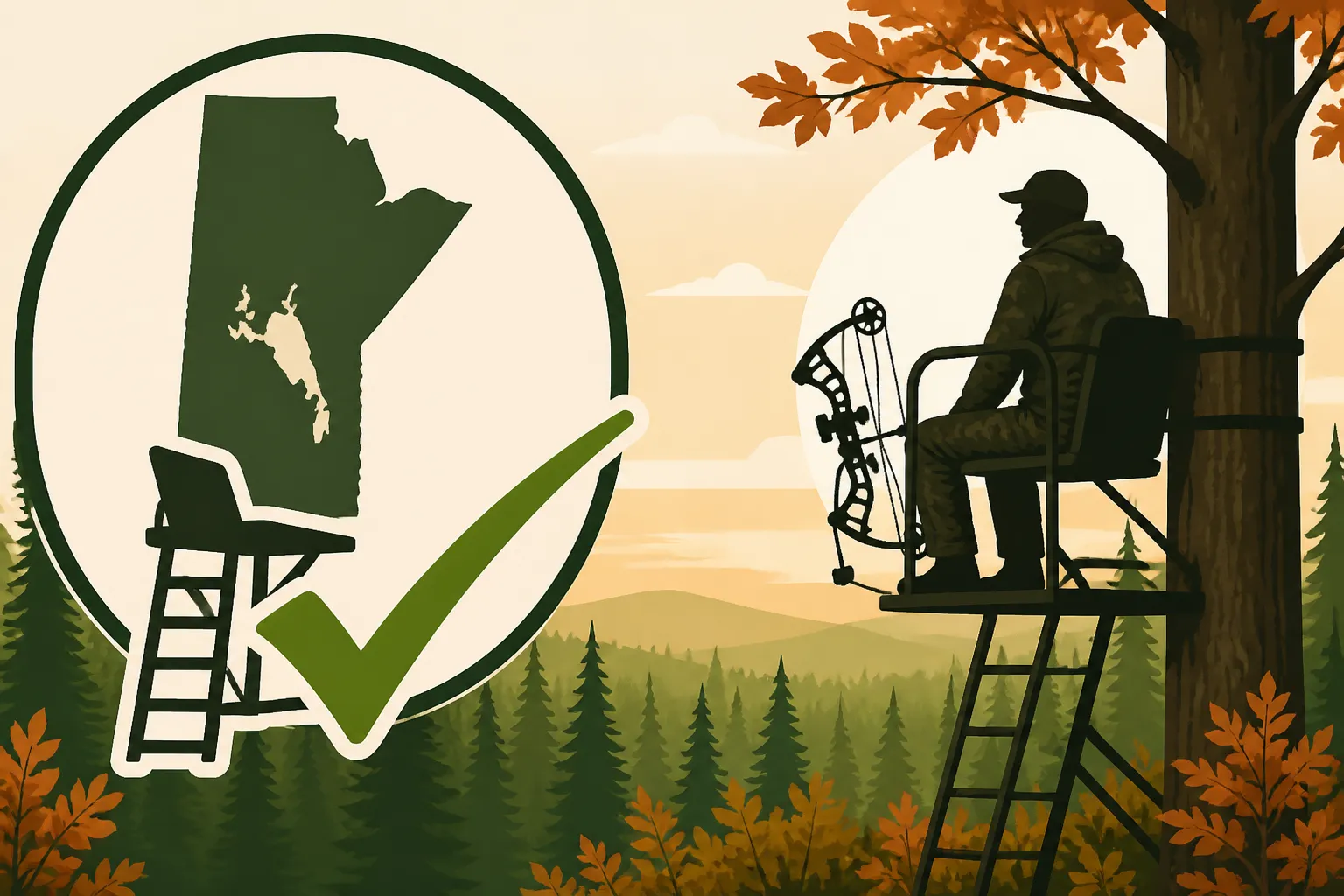
The good news is that temporary treestands are generally permitted on Manitoba Crown land, provided they meet specific criteria. The key here is "temporary" and "minimal impact." This usually means using methods that do not damage the tree and that allow for easy removal at the end of your hunt or the season. Think about leaving the tree exactly as you found it, or as close to it as possible.
The most common and accepted temporary treestand attachments involve straps or chains that wrap around the tree trunk without penetrating the bark. These systems rely on tension and friction to hold the stand securely. Tree-friendly straps, often made of nylon or other synthetic materials, are designed to distribute pressure evenly and prevent girdling the tree, which can happen if a wire or thin chain is left on too long or applied too tightly. Even with straps, it’s a good practice to use tree-saver straps or protectors to further minimize any potential bark damage, especially if you plan to leave the stand for more than a few days.
It’s not just the attachment method, though. The stand itself should be easily portable and designed for temporary placement. Climbing sticks or screw-in steps are generally allowed if they are removed with the stand and don't involve drilling. However, some areas or specific regulations might restrict even these, so always double-check the latest hunting guide. The emphasis is on accessibility and fairness; everyone should have the opportunity to set up a stand for their hunt without finding someone else's gear permanently entrenched.
Specific Regulations for Treestand Placement and Removal
Manitoba’s hunting regulations are designed to be quite clear on what’s allowed, especially when it comes to structures on public land. It’s not enough to just know what kind of stand you can use; you also need to know how and when you can use it, and perhaps most importantly, when it needs to come down. These specifics are outlined in the annual hunting guide, which every hunter should be familiar with, much like understanding Manitoba Big Game Season Dates or Manitoba Game Bird Seasons and Limits.
One common area of confusion revolves around leaving stands out for extended periods. While a temporary stand is permitted, leaving it out year-round or for multiple seasons often falls into a grey area that leans towards "not allowed." The general expectation is that your stand should be removed when you're done actively hunting, or at the very least by the close of the specific hunting season. This prevents stands from becoming abandoned property, which can then pose a hazard or simply turn into litter on the landscape.
Furthermore, there are often rules about marking your stand. Some jurisdictions require you to put your name, address, or licence number on any stand left on public land. This helps conservation officers identify ownership and ensures accountability. Even if not explicitly required in your specific GHA, it's a good practice to mark your stand discreetly but clearly, in case it's moved or reported. This simple act can save you a lot of grief and demonstrates responsible land use.
When Must Your Treestand Be Removed?
The question of "when" is just as important as "how." In Manitoba, generally speaking, any temporary treestand or ground blind placed on Crown land for hunting purposes must be removed by the end of the hunting season for which it was used. This isn't a suggestion; it's usually a regulation designed to prevent abandoned property and ensure the land remains pristine for all users. Leaving stands out year-round often leads to degradation of the stand itself, becoming unsafe, and contributes to visual pollution.
Imagine hiking through a beautiful piece of Crown land in July, far from hunting season, only to stumble upon a rusted, dilapidated treestand hanging precariously from a tree. It's an eyesore and a potential hazard. This is precisely what the removal deadlines aim to prevent. If you hunt multiple seasons, say early archery and then rifle season, you generally need to ensure your stand is still in good condition and removed after your final hunt of the year. It's a "use it, then take it with you" policy.
Failure to remove your stand can have consequences. Conservation officers, who regularly patrol Crown land, have the authority to remove and dispose of abandoned property. You could also face fines for littering or for violating specific regulations related to structures on Crown land. It's a small task at the end of the season that saves you potential legal trouble and upholds the integrity of our shared natural spaces. Treat the land as if you own it, and leave it better than you found it.
Ethical Considerations and Best Practices
Beyond the letter of the law, there are significant ethical considerations and best practices that responsible hunters should adhere to when using treestands on public land. These practices not only keep you on the right side of regulations but also foster a positive image of hunters and help preserve hunting access for future generations. Respect for the land, wildlife, and other users is paramount.
One key ethical consideration is the impact on trees. Even with tree-friendly straps, prolonged exposure, especially in areas with significant tree growth, can still cause damage. Regularly checking and adjusting straps, if you leave a stand up for more than a few days, can mitigate this. Also, choosing robust, healthy trees for your stand placement ensures safety for yourself and minimizes stress on the tree. Avoid using small, young trees or those that already show signs of disease or damage. Tools like onX Hunt can help you locate suitable timber and identify the best routes without causing unnecessary disturbance.
Another crucial aspect is sharing the resource. Public land means just that – public. While you might have found a prime spot, it doesn't mean you own it. Avoiding conflicts with other hunters by giving ample space, respecting others' stands if you find them (and ensuring they are compliant), and not trying to "claim" a spot with a permanent fixture, are all part of being a good steward. Consider the visibility of your stand; if it's left out for an extended period, it should be camouflaged or discreet to minimize its visual impact on other recreational users. Remember, a courteous and respectful approach ensures everyone can enjoy Manitoba's beautiful outdoors.
Rules on Trail Cameras and Other Equipment
While this article focuses on treestands, it's worth touching on related equipment often used in conjunction with stands, specifically trail cameras. The rules around trail cameras on public land are often similar to treestands: they must be temporary, cause no damage, and be removed in a timely manner. Like treestands, trail cameras left out indefinitely can be seen as abandoned property or even a form of surveillance that raises privacy concerns for other users.
Many jurisdictions consider trail cameras to be "temporary equipment" that falls under the same general guidelines as treestands. This typically means attaching them with straps that don't damage the tree and removing them at the close of the hunting season. You wouldn't want someone else's trail camera casing weathering and rusting on a tree, and neither does the land management agency. Marking your camera with your name and contact information is also a smart move, just in case it gets moved or falls. Using a scouting app like GoHunt can help you manage your trail cam locations and data efficiently, ensuring you track their deployment and retrieval.
When it comes to other equipment, like ropes, pull-up lines, or even extra scent wicks, the same principles apply. Anything you bring onto Crown land for your hunt must be removed when you leave. This commitment to "leave no trace" is fundamental to responsible public land hunting. It’s not just about the big items like stands, but every small piece of gear that can become litter or a hazard if left behind. Before you head into the bush, make a checklist of everything you're bringing in, and make sure you check it twice before you leave.
Avoiding Accidental Violations
It's easy to accidentally violate a regulation if you're not fully informed. Many violations stem from ignorance rather than malicious intent. One common mistake is assuming that rules are consistent across all types of public land. While the general principles might hold true, specific Wildlife Management Areas (WMAs) or Provincial Forests in Manitoba might have slightly different or more restrictive rules. Always consult the official Manitoba hunting guide and GHA-specific information. Resources like Reading a Manitoba GHA Map Before You Go are invaluable for this research.
Another accidental violation can occur with the timing of stand removal. Life happens, and sometimes you can't get back to remove your stand right at season's end. However, planning ahead for removal is just as important as planning the hunt itself. If you anticipate a conflict, it's better to remove the stand early or not put one up at all, rather than risk a violation. Enlist a hunting buddy if needed, to help with retrieval.
Finally, always be aware of private land boundaries. Even if you're largely hunting Crown land, it's very easy to accidentally cross onto private property, especially in checkerboard areas or along a Hunting a Fence Line Between Quarters. A treestand placed just a few feet over the line, even unintentionally, is a trespass violation. High-quality mapping apps, like onX Hunt, are absolutely essential for preventing this, allowing you to clearly see property lines and ensure your stand is legally placed. Double-check your location before setting anything up, and always obtain Getting Private Land Permission in Manitoba if you intend to hunt or place equipment on private property.
Conclusion: Responsibility and Respect for Manitoba's Public Land
Hunting with a treestand on Manitoba's public land is an incredible way to experience the province's rich wildlife and beautiful landscapes. It offers a unique vantage point and can be highly effective for many species, especially whitetails in the bush country or along a Hunting a Manitoba Bush Edge. However, with this privilege comes the responsibility to understand and abide by all regulations. By focusing on temporary, non-damaging methods, respecting removal deadlines, and practicing ethical hunting behaviors, you not only stay within the law but also contribute to the long-term health of our public lands and the positive perception of hunters.
Always consult the most current Manitoba Hunting Guide, available through official government channels, for the definitive and up-to-date regulations. Don't rely on hearsay or what a buddy did five years ago, as rules can and do change. Plan your hunt, scout your locations, and ensure your treestand setup is compliant and considerate. By doing so, you're ensuring that these vital hunting opportunities remain available for everyone, now and for generations to come.
Disclaimer
This article is for general informational purposes only and does not constitute professional advice. Laws, prices and regulations vary by location and change over time. Consult a qualified professional for guidance on your specific situation.