Why Northern Bucks Carry More Body Mass
It’s a common observation among hunters, especially those who’ve spent time pursuing whitetails in different parts of our beautiful province: bucks from Manitoba’s northern reaches often carry significantly more body mass than their southern counterparts. This isn't just a trick of the eye; there's a real, biological reason behind it, and understanding it can give you a deeper appreciation for these incredibly resilient animals. This guide will delve into the harsh realities, rich resources, and evolutionary adaptations that shape the impressive physiques of Manitoba's northern bucks.
The Raw Environment of Northern Manitoba
Northern Manitoba isn't for the faint of heart, and neither are its whitetails. The sheer environmental demands of living in this landscape play a massive role in shaping the deer that call it home. Survival here is a constant battle against the elements, and only the toughest, most efficient animals truly thrive.
Extreme Cold and Energy Demands
Picture a mid-January day in the boreal forest, the kind where the air bites at your exposed skin and the snow crunches loudly underfoot. Temperatures can plummet far below freezing, often hitting values that make you question your life choices if you’re not properly dressed for Hunting Whitetails at Thirty Below. For a whitetail deer, this extreme cold represents an enormous energy drain. Maintaining core body temperature requires a constant burn of calories, and a larger body simply has an advantage.
A bigger animal has a smaller surface-area-to-volume ratio, meaning it loses heat less rapidly than a smaller one. It’s basic physics, but it translates directly into survival. The more body mass a deer carries, especially in the form of insulating fat and muscle, the better equipped it is to withstand prolonged periods of intense cold. This is a critical factor when considering What a Big Manitoba Whitetail Weighs, especially those from the challenging northern climate. The deer that survive and pass on their genes are those best able to manage these energy demands.
Shorter Growing Seasons and Foraging Strategy
While the northern climate is brutal in winter, it also presents challenges during the warmer months. The growing season in northern Manitoba is notably shorter than in the agricultural south. This means less time for lush vegetation to develop and a more compressed window for deer to consume the high-quality forage they need to pack on weight. They have to be incredibly efficient at feeding and converting that food into energy stores.
This shorter, intense feeding period influences their foraging strategy. Northern bucks must maximize their intake of nutrient-dense plants and rapidly build up fat reserves, knowing that the lean months are always just around the corner. They don't have the luxury of extended mild falls like deer in more temperate zones might. Every calorie counts, and their bodies are designed to make the most of what's available during the brief periods of abundance, often found along areas like Hunting a Boreal Muskeg Edge or new growth near a Hunting a Beaver Flowage in the Bush.
Nutritional Richness and Habitat Quality
It might seem counterintuitive that a "harsher" environment could also be nutritionally rich, but the boreal forest and its transitional zones offer a unique buffet for whitetails. The type and quality of food available are paramount to building significant body mass.
Diverse Boreal Forest Forage
While the overall amount of forage might be seasonal, the diversity and nutritional quality of what's available in the boreal and mixedwood forests of the north can be surprisingly good. Deer here aren't typically feasting on vast fields of cultivated crops like their southern cousins. Instead, their diet consists of a wide array of woody browse, forbs, and fungi. Species like aspen, willow, birch, and various shrubs provide essential nutrients, especially protein and minerals vital for muscle and bone development, which directly contributes to What Whitetails Eat Through a Hard Winter.
These browse species, particularly new growth, are highly palatable and nutritious. Northern bucks become adept at finding these pockets of prime feed, often moving through dense cover to access them. A mapping tool like GoHunt can be invaluable here, helping hunters identify areas with good canopy gaps or specific plant communities that provide critical browse. The sheer variety often ensures a balanced diet, even if the overall volume fluctuates with the seasons.
The Impact of Forest Regeneration and Browse
One of the less obvious, but highly significant, factors contributing to the robust health of northern bucks is the dynamic nature of the boreal forest itself. Wildfires and logging operations, while initially disruptive, are powerful agents of regeneration. A few years after a major fire, for example, a Hunting a Burned-Over Boreal Block will explode with new growth – young aspen, willow, and various shrubs that provide an incredible amount of high-quality browse at deer-level.
Similarly, areas that have seen forestry activity, such as a Hunting an Old Logging Road in the North or fresh cutblocks, become deer magnets. The clearings allow sunlight to reach the forest floor, stimulating the growth of successional plant species that deer thrive on. This surge in digestible, nutrient-rich forage allows deer to put on significant fat and muscle during the growing season. It’s a natural cycle of disturbance and recovery that directly benefits the deer population, contributing to Why Bush Country Bucks Live Longer and grow larger.
Genetics and Survival of the Fittest
Beyond the immediate environmental and nutritional factors, there’s a strong genetic component at play. The northern environment acts as a relentless filter, ensuring that only the strongest, most genetically robust individuals survive to reproduce.
Adaptation to a Tougher Landscape
Over generations, whitetail deer in northern Manitoba have adapted specifically to their demanding environment. Natural selection favors those with traits best suited for survival – and in a cold, snowy, resource-competitive landscape, a larger body size is a significant advantage. Deer that are genetically predisposed to grow larger, metabolize food more efficiently, and store fat effectively are the ones that successfully navigate the harsh winters and pass those advantageous genes on to their offspring.
This isn't to say southern deer aren't tough, but the baseline for survival in the north is simply higher. It’s a constant culling process, ensuring that the breeding population consists of resilient animals. This continuous selective pressure has sculpted a population of whitetails that are intrinsically built to be heavier and hardier. When you consider How Deep Snow Moves Deer Into Cover, it's clear that only the strongest can consistently access food and evade predators in such conditions.
Older Age Classes in Remote Areas
Another key factor is the tendency for deer in more remote, northern areas to reach older age classes. Generally, hunting pressure tends to be lower in the vast, wild expanses of the Hunting the Northern Boreal compared to the more accessible farmlands further south. While certainly not immune to hunting, these areas often require more effort to access, meaning fewer hunters penetrate the deepest woods.
When deer live longer, they have more seasons to grow. A buck doesn't reach his full body weight potential until he's several years old. In areas where they have a better chance of surviving to maturity, bucks will naturally achieve larger sizes. This combination of genetic predisposition for large frames and the opportunity to express that potential over several years results in the truly massive-bodied bucks that northern Manitoba is famous for. For hunters using tools like GoHunt, understanding access points and typical hunter pressure can guide you to these less-traveled spots where older deer might roam.
Behavioral Adaptations for Survival
Deer aren't just physically built for the north; they also behave in ways that maximize their chances of survival, directly contributing to their impressive body mass. These behavioral strategies are honed over generations and are critical for navigating the extremes of a Manitoba winter.
Strategic Winter Yard Up
When the deep snows arrive and temperatures plummet, northern whitetails don't just wander aimlessly. They engage in a crucial survival behavior known as "yarding up." This involves congregating in specific areas, often dense stands of conifer trees like a Hunting a Jack Pine Ridge Up North, which offer critical shelter from wind and deep snow. These yards might be along river valleys, in thick stands of spruce, or in sheltered pockets within the bush.
Yarding allows deer to conserve energy by reducing exposure to the elements and by creating a network of trails that minimizes the energy expenditure required for movement. By consolidating their movements, they can focus their energy on browsing within these sheltered zones. The sheer density of deer in these yards, while sometimes putting pressure on local browse, speaks to the vital role these areas play in mitigating winter's harshness and helping them maintain their hard-earned body mass.
Fat Storage as a Survival Mechanism
For northern bucks, the autumn feeding frenzy isn't just about getting bigger; it's about life-sustaining fat storage. Their physiology is finely tuned to rapidly accumulate reserves during the relatively abundant fall months. This isn't just a bit of extra padding; it's their emergency fuel tank. This fat is stored subcutaneously (under the skin) and around internal organs, providing both insulation and a concentrated energy source.
When winter hits, and food becomes scarce or requires too much energy to access through deep snow, these fat reserves are slowly metabolized. A deer with insufficient fat reserves going into winter is essentially on borrowed time. This strategy is critical for survival and underpins the incredible resilience of these animals. It's why hunters often talk about the importance of Meat Care in Manitoba's Cold Snaps, knowing that a well-fed animal's fat layer can be impressive and needs to be handled appropriately to preserve the meat. Understanding these adaptations helps explain why northern bucks carry such substantial body mass – it's a direct result of their lifelong battle for survival.
Comparing Northern and Southern Manitoba Whitetails
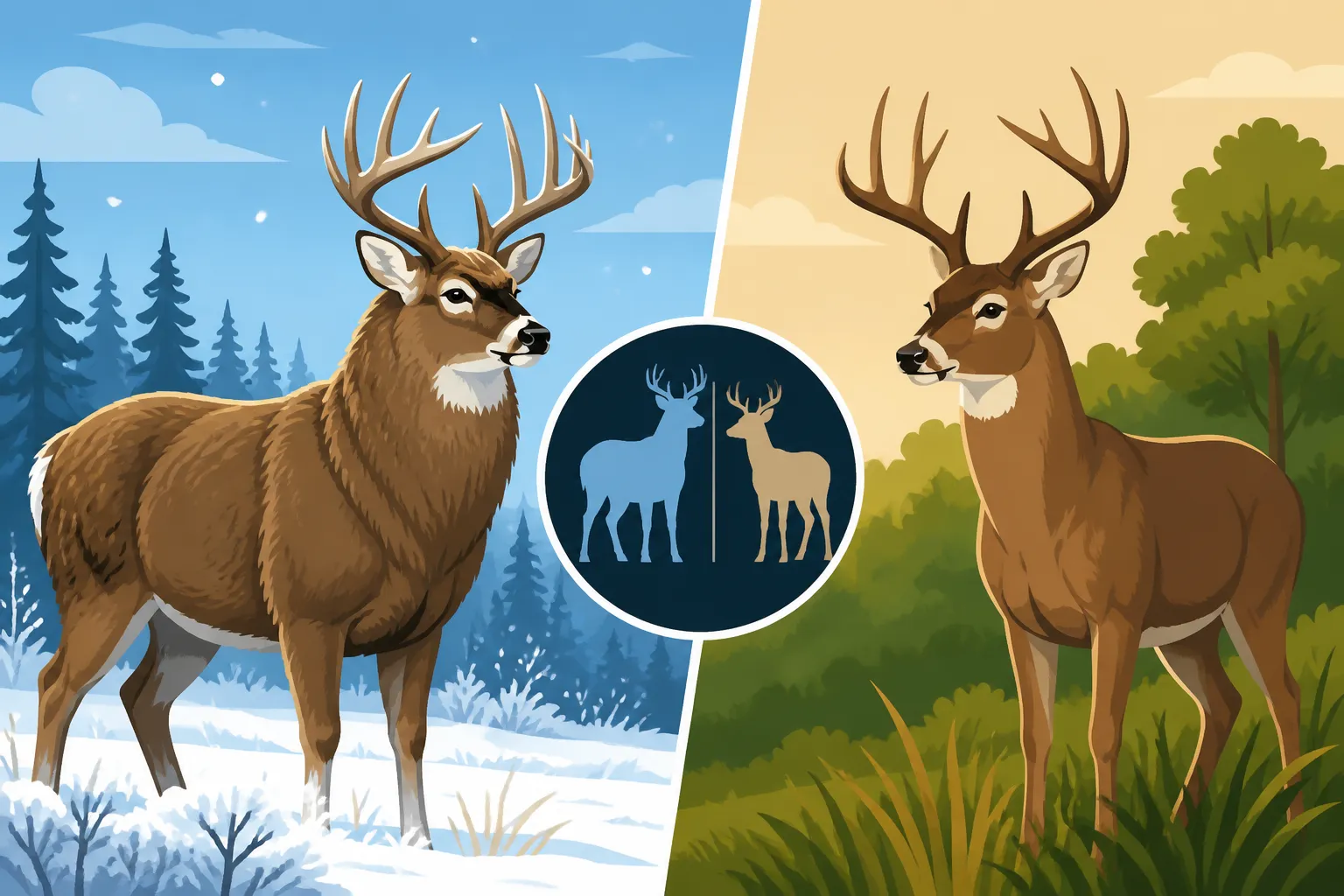
To truly appreciate the differences, it’s helpful to see them laid out side-by-side. While these are generalizations, they highlight the evolutionary pressures that shape whitetail populations across Manitoba.
| Feature | Northern Manitoba Whitetails | Southern Manitoba Whitetails |
|---|---|---|
| Average Body Mass | Significantly heavier, robust build, thick hide. | Lighter body mass, often leaner, especially after the rut. |
| Winter Conditions | Severe, prolonged cold; deep, persistent snow. | Variable, generally milder winters; less persistent deep snow. |
| Primary Forage | Diverse natural browse (willow, aspen, birch, shrubs). | Agricultural crops (corn, soybeans, canola), natural browse. |
| Habitat Type | Boreal forest, mixedwood forest, dense bush, clearcuts. | Farmland, shelterbelts, river bottoms, fragmented bush. |
| Hunting Pressure | Generally lower, especially in remote areas. | Generally higher, more accessible land. |
| Age Structure | Tendency for older age classes to survive due to lower pressure. | Mixed age structure, often younger average age due to higher harvest rates. |
| Antler Size | Often substantial, but can vary; body mass is primary characteristic. | Can grow large antlers due to rich agricultural diet. |
It's clear that the northern environment creates a crucible for whitetail development. Every aspect of their existence, from the food they eat to the genetic traits they carry, is optimized for survival in a challenging, cold landscape.
Protecting Manitoba's Northern Whitetails
Understanding why northern bucks carry more body mass isn't just about satisfying curiosity; it also underscores the importance of thoughtful wildlife management. These deer are a testament to nature's resilience, and ensuring their populations thrive requires respecting the unique pressures they face. From considering the impact of events like What Wildfire Did to Manitoba Game Range to acknowledging how How Logging Cutblocks Change Deer Range can create new food sources, responsible stewardship is key.
Hunters play a crucial role in this. By adhering to regulations, reporting poaching, and understanding the ecology of the areas we hunt, we contribute to the health of the herd. When you’re out in the bush, whether you're Scouting a Manitoba Game Hunting Area with a map app like GoHunt or simply observing the natural world, take a moment to appreciate the incredible adaptations that allow these animals to not just survive, but truly flourish, in such a demanding environment. It’s a privilege to share the land with such magnificent creatures.
Disclaimer
This article is for general informational purposes only and does not constitute professional advice. Laws, prices and regulations vary by location and change over time. Consult a qualified professional for guidance on your specific situation.