What Manitoba Trespass Law Requires
One of the most common anxieties for any hunter, especially when you're exploring new territory or trying to get off the beaten path in Manitoba, is the worry of accidentally trespassing. It's a frustrating thought, knowing you might be enjoying a peaceful day afield only to find yourself on private property without permission, potentially facing fines or ruining a landowner relationship. This comprehensive guide is here to demystify Manitoba's trespass laws, helping you understand your responsibilities and navigate private land access with confidence and respect.
The Foundations of Manitoba Trespass Law for Hunters
Understanding the legal framework around trespass in Manitoba is absolutely essential for any hunter. It’s not just about avoiding fines; it’s about upholding the integrity of our hunting community and respecting the rights of private landowners. The rules are designed to protect property, but also to give clear guidelines to those of us who want to responsibly enjoy our passion.
Understanding "Posted" Land and Signage
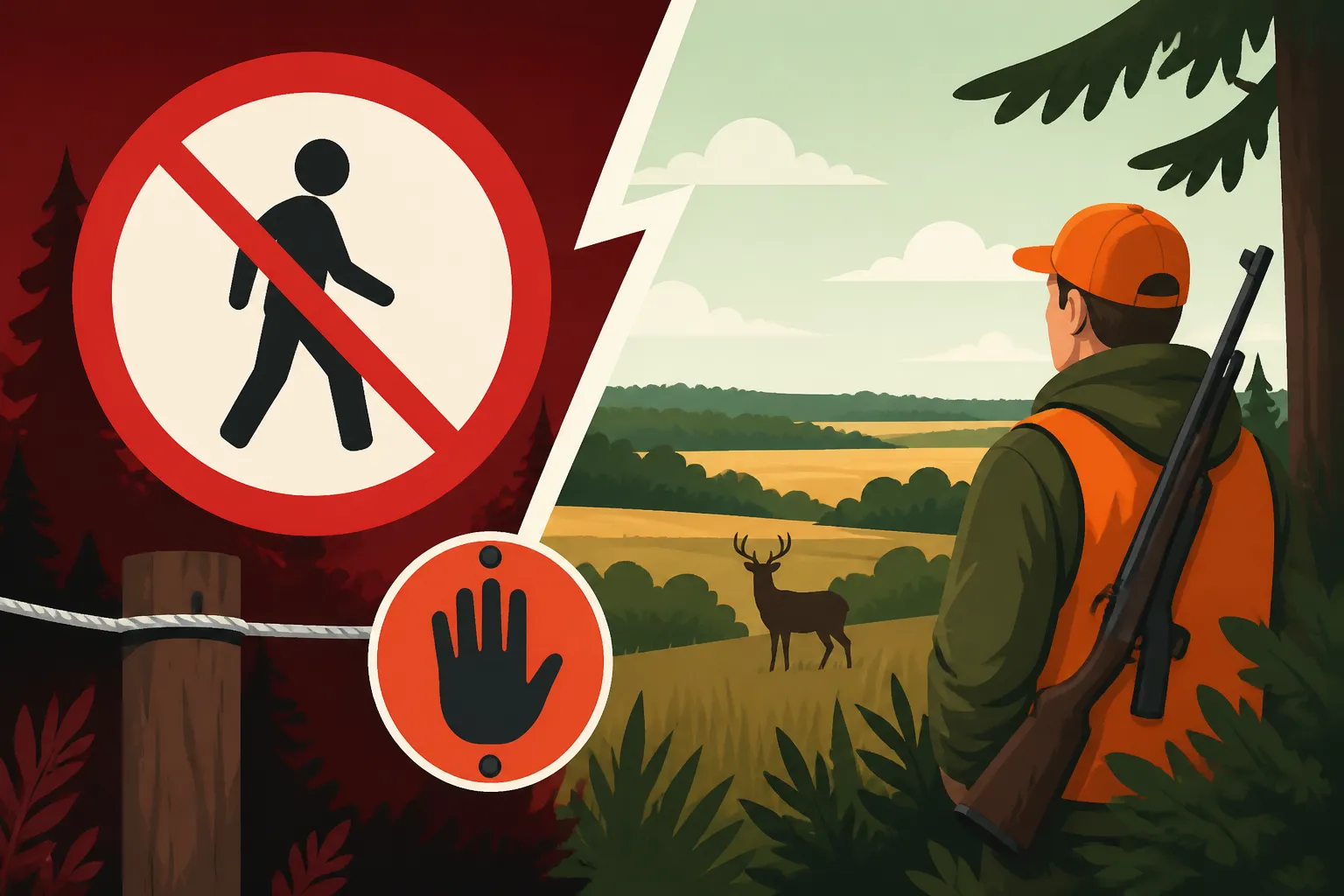
In Manitoba, the law is pretty clear when it comes to what constitutes "posted" land. While signs are often the most visible indicator, they’re not the only indicator, and ignorance isn't a valid excuse. Generally, land is considered private, and you need permission to enter, unless it's designated as Crown land open for hunting. When it comes to private property, landowners have the right to restrict access, and they can do this through various means.
Typically, "posted" land means there are clear signs indicating that entry is prohibited or requires permission. These signs should be visible and legible, often stating "No Hunting," "No Trespassing," or "Private Property." While there isn't a strict, province-wide standard for the exact size, colour, or spacing of every sign, the expectation is that they should be sufficient to give a reasonable person notice. If you're on a property and see signs, regardless of how rustic or professional they look, you should assume it's private and move on, or seek permission. The spirit of the law, as laid out in the Manitoba Posted Land and Signage Rules, is about clear communication.
However, it's a huge misconception to think that land must be visibly posted with signs for it to be considered private. If you are on land that is clearly cultivated, fenced, or has buildings on it, it's generally understood to be private property. This is where hunters need to exercise due diligence. You can't just wander onto an active hay field or into a woodlot adjacent to a farmyard and claim you didn't see a sign. It’s on us to know whose land we’re on. Always err on the side of caution. If you’re unsure, assume it’s private until you can confirm otherwise.
Implied Consent Versus Express Permission
This distinction is crucial for hunters in Manitoba, as it often causes confusion and can lead to unintended legal trouble. In many areas of daily life, there might be "implied consent" – like walking into a publicly accessible store during business hours. However, when it comes to hunting on private land, implied consent almost never applies, and definitely shouldn't be relied upon.
For hunting purposes in Manitoba, you nearly always need express permission to be on private land. Express permission means a clear, unambiguous statement from the landowner (or someone legally authorized by the landowner) that you are allowed to be there for the purpose of hunting. This isn't just a friendly wave from a farmer driving by; it's a direct conversation where you explicitly ask for and receive permission. Without this, even if gates are open or fences are down, you are likely trespassing. The Manitoba Landowner Permission Law makes it clear: it's your responsibility to obtain that permission.
Relying on implied consent is a dangerous game for hunters. Imagine a scenario where you see tracks leading into a woodlot and assume that because there are no "No Hunting" signs, it must be okay. You spend all day still-hunting, only to encounter an upset landowner who calls the conservation officers. Your assumption, no matter how innocent, won't hold up in court. The onus is on you to seek out and obtain explicit permission before stepping foot on private property with a firearm or bow in hand. Always have that conversation, clarify the terms, and if possible, get it in writing.
How to Legally Access Private Land for Hunting
Gaining access to private land can be one of the most rewarding aspects of hunting, offering opportunities that public lands sometimes can't. However, it requires a thoughtful, respectful approach. It's not just about getting permission; it's about building trust and fostering positive relationships with landowners, many of whom are busy running their farms and are often wary of strangers.
The Art of Asking for Permission
Approaching a landowner can feel intimidating, but it's a skill that pays dividends. The key is to be polite, respectful, and prepared. Don't just show up on opening day with your hunting gear on and expect a "yes." A better approach is to visit before the season, during a less busy time for farmers, like late summer or early fall. Dress neatly, not in camo, and be ready to introduce yourself properly. Explain who you are, where you're from, and why you're interested in hunting their land. Perhaps you noticed a great deer sign from the road, or you're simply looking for a new spot.
When you do knock on that door, remember, you're asking for a favour. Offer to share what you know about the local game movement, perhaps mention that you've been Scouting With Satellite Imagery in Manitoba and noticed some promising habitat. Be specific about what you want to hunt (e.g., "I'm hoping to chase some whitetails," or "I'm looking for a place to duck hunt in your stubble field"). Ask about specific areas you're interested in. Don't be afraid to offer to help out around the farm in exchange for access – sometimes an offer to fix a fence or help with chores can go a long way. This builds goodwill and shows you're not just there to take.
If they say no, accept it gracefully. Don't argue or try to convince them. A polite "Thank you for your time anyway, have a good day" can leave a positive impression, perhaps opening a door for another year. If they say yes, discuss the details: where you can park, which areas are off-limits, if they have any specific concerns about livestock or crops, and how long you have permission for. Many landowners appreciate when you also ask about their family's hunting plans – showing respect for their own traditions. Tools like GoHunt can be invaluable here, allowing you to research property lines and even landowner names before you even knock on the door, making your approach much more informed and professional.
Documenting Your Permission
While a verbal "yes" is permission, it's always best to get it in writing. This protects both you and the landowner. Misunderstandings can happen, memories can fade, and if a different family member or even a conservation officer questions your presence, having a signed document clears things up immediately. It doesn't have to be a fancy legal document, but a simple note can make a world of difference.
A written permission slip should ideally include the date, the landowner's full name and contact information, your full name and contact information, the specific property or area you're allowed to hunt (e.g., "the north quarter of Section 12, Township 15, Range 20W"), the species you're allowed to hunt, the duration of the permission (e.g., "October 10th to December 1st"), and any specific conditions or restrictions the landowner might have (e.g., "no hunting near the house," "stick to the bush line," or "access only via the west approach"). Both parties should sign and date it, and you should carry a copy with you while hunting.
Here's a simple example of what a permission form might look like:
| Item | Details |
|---|---|
| Date Issued | November 10, 2023 |
| Landowner Name | Johnathan Smith |
| Landowner Phone | (204) 555-1234 |
| Hunter Name | Sarah Doe |
| Hunter Phone | (204) 555-5678 |
| Property Location | NW 1/4 Section 12-15-20W (approx. 160 acres), near Anytown, MB |
| Species Permitted | White-tailed Deer (Archery & Rifle) |
| Duration of Access | November 10 – December 1, 2023 |
| Special Conditions | No access within 200 yards of residence. Close all gates. Park by the old barn. |
| Landowner Signature | _________________________ |
| Hunter Signature | _________________________ |
This kind of documentation clarifies expectations and responsibilities for everyone involved, reducing the chance of miscommunication. It's an important part of Manitoba Landowner Relations for Hunters and helps ensure you have a stress-free hunt.
Common Trespass Scenarios and How to Avoid Them
Even with the best intentions, hunters can sometimes find themselves in tricky situations regarding private land. Understanding these common scenarios and knowing how to handle them proactively is key to staying legal and maintaining a good reputation as a hunter.
Retrieving Game from Private Land
This is one of the most agonizing situations a hunter can face: you make a good shot on an animal, it runs, and then crosses a fence onto land you don't have permission to hunt. Your instinct is to pursue, but you absolutely must stop and gain permission first. In Manitoba, even if you lawfully shot an animal on land where you had permission, crossing onto adjacent private property without permission to retrieve it is still considered trespassing. The animal might be yours, but the land it lies on isn't.
The correct procedure is to immediately contact the landowner of the property where the animal went. Explain the situation calmly and politely ask for permission to enter and retrieve your game. If you can't reach the landowner, contact a Manitoba Conservation Officer. They can sometimes assist in gaining access or advise you on the next steps. Under no circumstances should you just hop the fence and go after it. That's a surefire way to get yourself into legal trouble and damage future access opportunities for all hunters. The rules around Retrieving Game From Private Land in Manitoba are quite specific, so always prioritize making that contact. It might mean a delay, or even losing the animal if permission is denied, but it's the legal and ethical way to proceed.
Accidental Trespass and Boundary Lines
It's a hunter's nightmare: you're deep in the bush, following a game trail, and suddenly realize you might have crossed onto private land. This often happens in areas where Crown land borders private property, or where property lines aren't clearly marked by fences or natural features. The frustration is real, especially when you're trying to figure out exactly where that line is. This is where modern technology becomes your best friend.
Mapping applications like GoHunt or other GPS-enabled apps are invaluable for showing property boundaries and identifying land ownership. Before you even step into the field, use these tools to study the area. Pay close attention to corners, natural breaks, and any visible markers. While on the ground, consistently check your GPS to confirm your location relative to property lines. Even a small handheld GPS unit can be a game-changer. I personally use GoHunt extensively to avoid accidentally hunting a Manitoba Quarter Section I don't have access to.
If, despite your best efforts, you realize you've accidentally stepped onto private land, the first thing to do is stop hunting immediately. Pack up your gear, and quickly but calmly, make your way back to where you believe you have legal access. If you encounter a landowner, apologize profusely, explain that it was an honest mistake, and show them your mapping app if you were using one to demonstrate your efforts to stay legal. Honesty and immediate rectification of the mistake can often diffuse a potentially tense situation. Remember, the goal is to hunt responsibly and respectfully, avoiding any unnecessary conflicts. This also highlights why understanding tools like Reading Manitoba Crown Land Layers on onX is so important for hunters utilizing digital mapping solutions.
Vehicle Use and Access Roads
Accessing hunting land, whether public or private, often involves driving on various roads and trails. It's crucial to understand the rules around vehicle use, as this is another area where hunters can inadvertently trespass or violate regulations. On private land, any road or trail, even if it appears to be a public right-of-way, is generally considered part of the private property unless explicitly designated otherwise.
If you have permission to hunt a parcel of private land, clarify with the landowner exactly where you can drive, park, and access the property. Don't assume that because a field approach is open, you can drive your truck or quad down it. Many farmers have specific areas where they prefer vehicles to be kept to avoid disturbing crops, compacting soil, or creating ruts. Always respect these wishes. It's also important to remember that just because you have permission to hunt a property, it doesn't automatically grant you permission to drive off-road anywhere you please on that property. Stick to designated trails or ask for explicit permission to go off-road.
Furthermore, there are specific regulations in Manitoba about Rules on Hunting From a Vehicle. You cannot shoot from or across a public road, and generally, vehicles cannot be used to pursue game. These rules apply whether you're on public or private land. On Crown land, there are also restrictions on where and how ATVs, quads, and other off-road vehicles can be used, often related to environmental protection or designated trails. Always check the specific Game Hunting Area (GHA) regulations or ask the landowner about their rules regarding vehicle access on their private property.
Consequences and Best Practices
Ignoring or misunderstanding Manitoba's trespass laws can lead to serious consequences, far beyond just an awkward conversation. It can affect your hunting privileges, your finances, and the public perception of hunters as a whole. Conversely, adopting best practices when it comes to private land access can enhance your hunting experiences and solidify your reputation as a responsible conservationist.
Penalties for Trespassing
Let's be blunt: trespassing while hunting in Manitoba is not a minor infraction. It's a serious offence under both the Wildlife Act and The Trespass Act. If you are caught trespassing, especially while carrying a firearm or bow, you could face significant fines. These fines can range from several hundred dollars for a first offense to much higher penalties for repeat offenders. In some cases, your hunting licence could be suspended or revoked, meaning you lose the privilege to hunt for a period of time, or even permanently.
Beyond the legal ramifications, there's the damage to your reputation and the broader hunting community. One negative interaction, one landowner reporting a trespasser, can sour an entire community's view of hunters. This can lead to more "No Hunting" signs going up, further restricting access for everyone. Landowners are often operating on tight margins, and their property is their livelihood. Trespass can mean damaged fences, stressed livestock, or safety concerns for their families. Validate their concerns, and understand that their property rights are paramount. For a full breakdown of what can happen, it's worth reviewing the Manitoba Penalties for Hunting Violations section in the provincial regulations. It's a sobering reminder of why adherence to the law is non-negotiable.
Building Positive Landowner Relationships
The most valuable resource a hunter can have, especially in areas with a mix of private and public land, is a strong relationship with landowners. This isn't just about getting access for one season; it's about building a long-term connection based on mutual respect and trust. If you've been granted permission, treat that land as if it were your own. Close gates, don't leave trash, be mindful of livestock, and drive carefully on their access roads. Consider contacting them after your hunt to report what you saw or thank them, whether you harvested an animal or not.
Going above and beyond can really make a difference. Offer to share a portion of your harvest if you're successful. A small gift around Christmas, like a gift basket or a homemade treat, can be a lovely gesture of thanks. Even offering to help with simple tasks, like retrieving a lost calf or helping with a small repair, shows your appreciation and builds incredible goodwill. Being proactive in your Manitoba Landowner Relations for Hunters means checking in periodically, not just when you want something. It's about being a good neighbour and a responsible user of the land.
Ultimately, every hunter who acts with integrity and respect helps to safeguard hunting opportunities for future generations. When landowners have positive experiences with hunters, they are more likely to continue granting access. This collective responsibility is vital for the health of our sport and ensures that the tradition of hunting in Manitoba can continue to thrive.
Disclaimer
The information provided in this article is for general guidance only and does not constitute legal advice. Hunting regulations and trespass laws can change, and interpretations may vary. It is the responsibility of every hunter to consult the most current Manitoba hunting regulations, bylaws, and relevant acts (such as The Trespass Act and The Wildlife Act) before engaging in any hunting activity. Always confirm specific land access rules and obtain explicit permission from landowners.