Hunting a Manitoba Crown Land Island
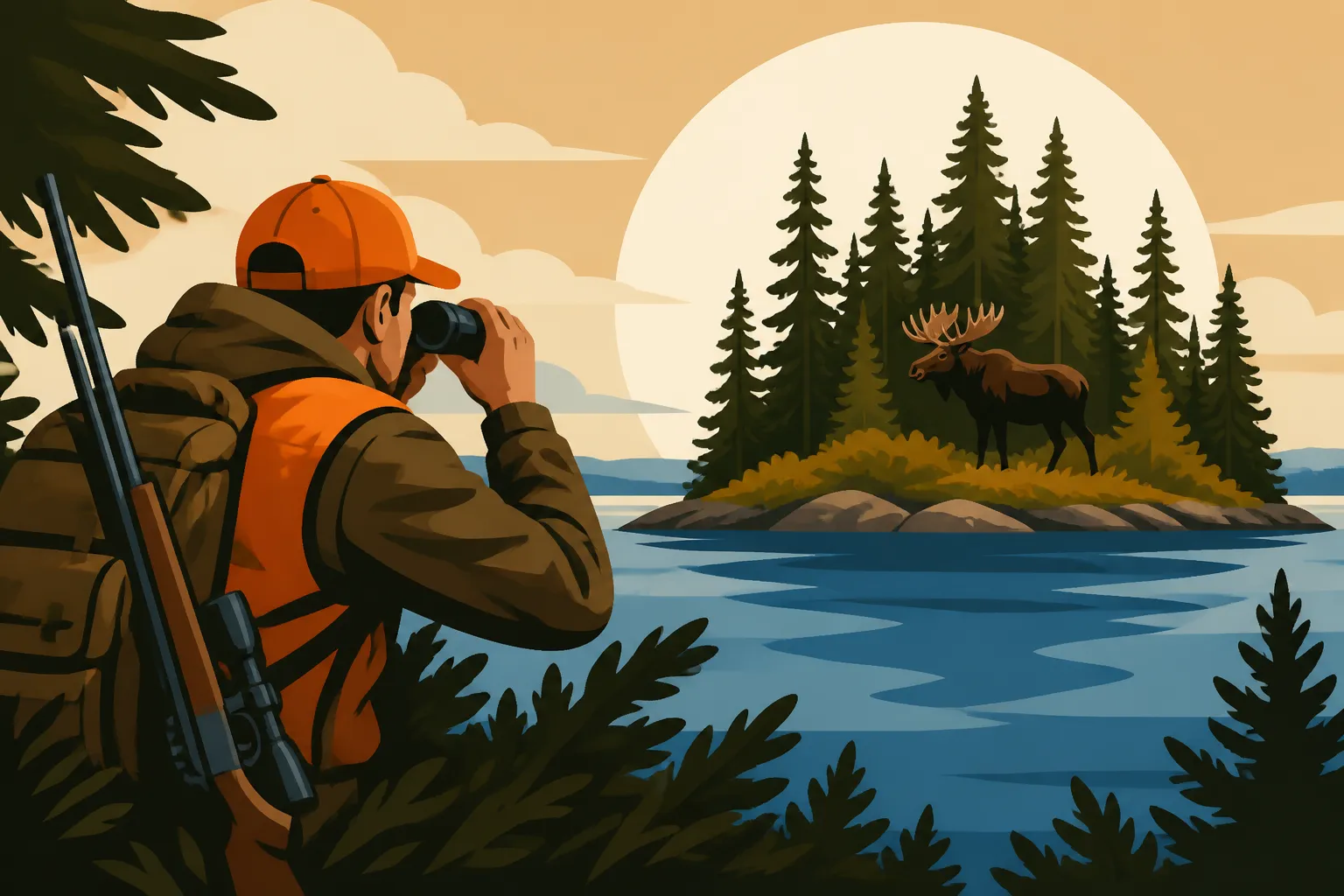
There's something uniquely captivating about the idea of hunting a remote island. In Manitoba, these aren't always tropical paradises, but often small, bush-covered oases of Crown Land nestled within larger lakes, rivers, or even vast prairie sloughs. Hunters often face the frustrating reality of seeing deer, moose, or bears using these isolated pockets of cover as sanctuaries, perfectly safe from road hunters and casual strolls through the woods. This guide is all about helping you unlock the potential of these hidden gems, understanding how to find, access, and effectively hunt a Manitoba Crown Land island, turning a distant observation into a successful hunt.
The Allure and Challenge of Crown Land Islands
Hunting an island of Crown Land presents a fascinating paradox: immense potential for undisturbed game, coupled with significant logistical hurdles. It's a venture that calls for preparation, patience, and a healthy dose of determination, but the rewards can be truly special.
Why Islands Are Game Magnets
Imagine a deer herd, constantly pressured by hunting activity, ATVs, and human encroachment on the mainland. Where do they go? Often, they'll seek the safety of an island, even a small one. Water acts as a powerful natural barrier, deterring most hunters and creating almost impenetrable sanctuaries. These islands often boast incredible, undisturbed cover – thick stands of spruce, aspen, willow, or even dense marsh grasses – providing perfect bedding areas and escape routes. They're usually rich in natural food sources, too, from browse to berries, and because they're less disturbed, the game often feels incredibly secure.
I've seen it firsthand: a small bush island, maybe only a few acres, surrounded by miles of open farmland and slough grass. During rifle season, while the surrounding fields were buzzing with activity, that little island would hold an incredible concentration of whitetails, having swum across the deeper channels to escape the pressure. It’s like a natural fort for game, and for those willing to make the effort, it can be a goldmine. The animals just know they're safe there.
The Realities of Access and Difficulty
Now, for the flip side of that allure: getting to these islands can be a real headache. This isn't your typical walk-in hunt. If the island is surrounded by water, you're looking at a boat or canoe trip. If it’s late fall or early winter, you might be dealing with thin ice or open water that quickly freezes over, making travel treacherous. You might need waders, a small craft like a Jon boat or canoe, or even a side-by-side with tracks if conditions allow. There’s often no road, no easy trail, just raw, untamed Manitoba bush and water.
I've known hunters who've dragged canoes for miles, waded through waist-deep marsh, and even navigated tricky channels in the dark to reach these spots. The physical effort can be immense, and there's always the risk of getting stuck, getting wet, or even getting stranded. It’s not for the faint of heart, or for someone looking for a quick, easy hunt. You need to treat it like a mini-expedition, with all the planning and gear that entails. And speaking of planning, knowing What to Do If You Get Stuck in the Bush is critical when venturing into such remote spots.
Finding and Scouting Your Island
Before you even think about setting foot on a Crown Land island, you need to find one that holds promise and then figure out how to get there safely. This involves a mix of modern technology and old-school reconnaissance.
Digital Scouting for Hidden Gems
Our world has changed so much, and thankfully, technology has given us incredible tools to scout from the comfort of our homes. Your first step should be to pull up satellite imagery and land ownership maps. Services like onX Hunt or GoHunt are absolute game-changers for this kind of work. You can zoom in on large lakes, expansive marshes, or river systems and start identifying those tantalizing patches of green surrounded by blue. These apps clearly delineate Crown Land boundaries, so you can confirm if that island you're eyeing is indeed public property.
Look for key features from the air:
- Size and Shape: Is it large enough to hold game, or just a small rock outcrop?
- Cover: Does it have dense bush, or is it sparse? Look for areas of thick conifer or aspen stands that provide thermal cover.
- Pinch Points: Are there narrow strips of land or shallow crossings that funnel game onto or off the island?
- Shoreline Features: Are there natural ramps for animals to access the water, or steep banks?
- Proximity to Mainland: How far is it from accessible public land or from areas where game might originate?
It's also crucial to look at historical satellite imagery if available. What does the island look like in different seasons? Is it completely surrounded by water in the fall, or does it become accessible by foot across frozen ground in December? Pay attention to any signs of beaver activity, old logging roads that might lead close to the shore, or even subtle changes in vegetation that could indicate higher ground. For a deep dive into using these tools, check out Scouting With Satellite Imagery in Manitoba and understanding Reading Manitoba Crown Land Layers on onX.
On-the-Ground Reconnaissance
Once you've identified a few promising candidates from your digital scouting, it’s time for some boots-on-the-ground action, even if those boots are in a canoe. A pre-season visit is invaluable. This is where you confirm access routes, assess water depths, and look for fresh sign.
Consider how you’ll get there. If it's early season and water levels are high, a canoe or kayak might be your best bet. If it’s late season and the water is frozen, you'll need to check ice thickness thoroughly and repeatedly. Never assume ice is safe; conditions can change in a matter of hours. When you do finally reach the island, get out and explore quietly. Look for tracks along the shoreline, rubs and scrapes on trees, well-worn game trails, and bedding areas. What are the dominant food sources? Is there evidence of heavy browsing?
Understanding the wind patterns around the island is also critical. An island can have its own micro-climates and wind shifts, so pay attention to how the breeze moves across the water and through the timber. What would be the best approach with a prevailing wind? What are the natural escape routes for the animals? Often, a narrow spit of land connecting to the mainland, even seasonally, can be a major travel corridor. For broader scouting tips, Scouting a Manitoba Game Hunting Area offers some great advice.
Strategies for Hunting a Crown Land Island
Now that you've found your island and figured out how to access it, it's time to talk about the actual hunt. Success here relies heavily on stealth, strategic setup, and a solid plan for getting your animal out.
Approach and Entry Tactics
The moment you leave shore and head towards your island is as critical as any other part of the hunt. You need to be as stealthy as possible. If using a boat, an electric motor is far superior to a gas outboard for minimizing noise and disturbance. A canoe or kayak offers the quietest approach of all, allowing you to slip through the water almost silently.
Time your approach to coincide with low light conditions – pre-dawn for a morning hunt, or mid-day for an evening sit. This gives you time to set up without spooking game that might be moving at first light or feeding in the evening. As you land, be incredibly mindful of your scent. Wear rubber boots, spray down with scent eliminator, and try to land on the downwind side of the island from where you intend to hunt. Think about leaving your canoe or boat tucked away discreetly, not only for stealth but also for security.
Remember, the animals on these islands are likely there because they feel secure. Any loud noises, excessive scent, or obvious human presence on your approach will quickly alert them, turning a potential hot spot into an empty woods.
Setting Up and Hunting the Island
Once on the island, move slowly and deliberately. The size of these islands can vary wildly, from a few acres to hundreds. Smaller islands might require you to be even more cautious, as your presence will be felt across a larger percentage of the available habitat. Look for natural funnels, pinch points, and cover transitions where animals are likely to travel. A thick stand of spruce meeting an open aspen ridge, or a narrow strip of dry ground through a marsh, can be ideal ambush points.
Tree stands or ground blinds can both be effective, depending on the terrain and vegetation. Consider prevailing winds not just from your approach, but throughout the entire day. Wind on water can be unpredictable, swirling and changing direction more frequently than on solid ground. Set up with the sun at your back for improved visibility and to make it harder for game to pick you out. Patience is key. Animals on islands might move less frequently during daylight hours because they feel safe and don't need to travel far for food or water. A long, quiet sit can be incredibly rewarding.
For deer, focus on bedding areas, known feeding spots, and trails leading between them. If you’re targeting moose, look for browse lines and signs of their massive tracks, especially near marshy edges or areas with willow and aspen. Bears will leave claw marks on trees, droppings, and overturned logs if they’re present. These are all great signs that game is using the island. Don't forget, understanding Hunting a Bush Edge can be incredibly helpful even when you're on a self-contained island, as the internal structure will have its own "edges."
Here's a quick look at the pros and cons of different access methods:
| Access Method | Pros | Cons | Best Conditions |
|---|---|---|---|
| Canoe/Kayak | Silent, low impact, highly maneuverable | Limited gear capacity, physical effort, weather-dependent | Open water, calm weather, shorter distances |
| Small Boat (electric) | More gear capacity, less physical effort, relatively quiet | Requires battery/charging, louder than paddle craft, draft issues | Open water, light chop, longer distances |
| Waders/Walking | Silent, hands-free, cost-effective | Limited depth/distance, very physical, mud/cold risk | Shallow water, firm bottom, short distances |
| ATV/Side-by-Side (on ice) | High capacity, fast, covers long distances | Extreme safety risk, requires thick ice, environmental impact | Very thick, stable ice, minimal snow |
| Snowshoes/Skis (on ice) | Silent, low impact, good for light snow | Physical effort, slow, limited gear, still ice-dependent | Thick ice, fresh snow, short distances |
Retrieval Challenges and Safety
This is the part many hunters overlook until it's too late: how will you get your animal off the island? If you shoot a mature whitetail buck or a moose, you have a serious challenge on your hands. Plan for retrieval before you even pull the trigger.
- Quartering: For larger animals, quartering them on the island is often the most realistic option. This means bringing knives, game bags, and perhaps a small saw. You’ll need to make sure you have enough time before dark, especially if you’re dealing with falling temperatures.
- Dragging/Hauling: If the animal is smaller and the distance to your boat is short, a game sled or even a tarp can help.
- Cold Weather: If you're hunting in late season, consider how to keep meat cool and clean during transport. Meat Care in Manitoba's Cold Snaps is an essential read to prevent spoilage.
Safety cannot be stressed enough. Hunting islands inherently involves more risk due to water, ice, and isolation. Always tell someone exactly where you are going, your planned route, and when you expect to return. Carry communication devices (satellite messenger if no cell service), first-aid, extra clothing, and emergency supplies. Be acutely aware of changing weather conditions – a calm morning can turn into a windy, choppy nightmare on the water, or a sunny day can quickly become a whiteout blizzard. Remember that when accessing these areas in winter, there's always the risk of falling through ice.
Legalities and Considerations for Island Hunting
Even though these islands feel wild and remote, they are still part of Manitoba, and all provincial hunting laws and regulations apply. Don't let the isolation make you complacent about the rules.
Understanding Crown Land Regulations
The primary advantage of hunting a Crown Land island is that it is public land. This means you don't need landowner permission, unlike hunting on private property. However, it's crucial to confirm that the island is, in fact, Crown Land and not a private holding or part of a protected area where hunting is restricted or prohibited. Your mapping apps will be invaluable here, but always double-check with the current Manitoba Hunting Guide or by contacting the provincial Natural Resources office if you have any doubts.
You'll also need to be aware of the specific Game Hunting Area (GHA) the island falls within. Different GHAs have different season dates, bag limits, and specific regulations for various species. Just because it’s an island doesn’t mean it’s exempt from these rules. For example, some GHAs might have moose conservation closures, or antler point restrictions for deer. Get familiar with Manitoba's Game Hunting Areas to ensure you're compliant. Also, understand the general rules for Manitoba's Crown Land Access, especially regarding vehicle use, as these might dictate how you can approach the shoreline. For instance, Quad and Side-by-Side Rules on Crown Land detail permitted usage.
Respecting Private Land Boundaries (If Applicable)
Many Crown Land islands are surrounded by private land or privately owned lakefront properties. While you have the right to hunt the Crown Land island itself, you do not have the right to trespass across private land to access it. This is a critical point. Always ensure your access route to the water, and your approach across the water, does not infringe on private property.
This means you might need to launch your boat from a public access point (like a provincial park boat launch or a municipal dock) and then navigate to the island entirely over public waters. If your only viable access involves crossing private land, you must obtain permission from the landowner. Ignorance of boundaries is not an excuse. Familiarize yourself with Manitoba Trespass Law for Hunters and the nuances of Getting Private Land Permission in Manitoba before you ever step foot on or near private property.
Environmental Stewardship
Finally, remember that as hunters, we are stewards of the land. These isolated islands are often pristine and delicate ecosystems. Practice strict "Leave No Trace" principles. Pack out everything you pack in, including all trash, spent casings, and any leftover food. Avoid damaging vegetation unnecessarily, and if you build a temporary blind, ensure it's dismantled and removed when you leave.
Proper carcass disposal is also important. If you quarter an animal on the island, scatter the remains to allow for natural decomposition, away from water sources or high-traffic areas. The goal is to leave the island as you found it, preserving its wild character for future generations of wildlife and respectful hunters.
This approach ensures that hunting these unique Crown Land islands remains an option for all of us, now and into the future. It's an opportunity to experience true wilderness hunting, a chance to outsmart game that feels secure, and a deep dive into the raw, beautiful landscape of Manitoba.
Disclaimer
This article is for general informational purposes only and does not constitute professional advice. Laws, prices and regulations vary by location and change over time. Consult a qualified professional for guidance on your specific situation.